

A well-kept lawn boosts curb appeal, strengthens property value, and creates a healthier outdoor space you’ll enjoy. By mowing at the right height with sharp blades, watering deeply and infrequently, and feeding as needed, you build a resilient, dense turf that resists weeds and pests. Soil health matters, so test pH and improve drainage. Aeration and overseeding boost density, while early prevention of problems saves time and money. Master these basics, and you’ll gain access to ongoing lawn success—and more insights await.
Key Takeaways
- Proper lawn care boosts curb appeal, signaling homeowner pride and attention to detail that enhances property value.
- Regular mowing, watering, and fertilization promote healthy growth, density, and resilience against weeds and pests.
- Soil health and pH management improve nutrient availability, drainage, and long-term turf vigor.
- Aeration, overseeding, and proper seasonal tasks prevent compaction, thin patches, and disease risk.
- A well-maintained lawn supports environmental sustainability, outdoor enjoyment, and year-round landscape aesthetics.
Introduction: Why Lawn Care Elevates Curb Appeal and Value

A well-kept lawn immediately boosts curb appeal and signals attention to detail, which can raise your home’s perceived value. You’ll notice a faster resale process when the exterior looks intentional and maintained. Lawn aesthetics matter because a healthy, tidy lawn frames your property and sets expectations for the rest of the landscape. By prioritizing orderly edges, uniform color, and clean lines, you project reliability and pride in workmanship. Plant diversity plays a role in visual interest and long-term viability; a thoughtfully varied blend strengthens resilience against pests, drought, and disease. You don’t need every turf trick—focus on consistency, smart seasonal adjustments, and minimal yet effective enhancements. In short, disciplined care elevates appearance, value, and homeowner confidence.
Master the Basics: Mowing, Watering, and Feeding Your Lawn
Mastering the basics—mowing, watering, and feeding—lays the foundation for a healthy lawn. You set the tone for sustained vigor by mowing at the correct height, sharpening blades, and keeping mower blades clean. Water deeply and infrequently to encourage deep roots; avoid daily light sprinkling, which promotes shallow roots. Feed with a balanced fertilizer according to your turf type and season, and time applications to coincide with active growth. Monitor grass color, texture, and growth rate to adjust frequency and rate. Maintain lawn aesthetics by consistent edging and weed control, and guarantee uniform coverage to prevent patchiness. This disciplined approach supports Garden landscaping goals and a curb-appealing exterior. Your lawn responds with stronger resilience, better density, and a polished, professional look.
Read Your Turf: Soil Health, Tests, and What They Mean
Soil health underpins every yard upgrade you’ve tackled, from mowing to feeding. Read your turf data to gauge what’s working and what needs adjustment. Begin with soil composition: texture, structure, organic matter, and moisture-holding capacity reveal nutrient availability and root growth potential. Next, test results show you pH balance, which directly affects nutrient solubility and uptake. Don’t overinterpret a single metric; compare multiple tests across seasons for trends. Use results to prioritize actions: improve drainage, aerate compacted areas, and adjust organic inputs to boost soil life. Aim for a stable pH that aligns with your grass species. Remember, accurate interpretation drives effective interventions, not guesswork. Regular testing keeps lawn health predictable, resilient, and ready for growth.
Craft a Smart Fertilizer Plan: Timing, Types, and Amounts

Plan your fertilizer with precise timing, selecting the right type for your grass, and setting clear application rate guidelines. Start by matching product timing to your lawn’s growth cycle, then choose a formulation suited to your turf and soil tests. Apply only the recommended rates to avoid waste and runoff, and adjust next season based on performance and conditions.
Timing For Fertilizer
Timing is critical: apply fertilizer when your lawn can best use it, not just when it’s available. You should align feeding with active growth periods and measurable soil fertility needs, typically when cooler temps or warming trends signal growth resumes. Time your applications to minimize loss from rainfall and irrigation, and avoid stress periods like extreme heat or drought. Use a split-season approach: a light starter or maintenance dose early, followed by a second application at a precise interval if your soil tests indicate reserves remain. Incorporate organic practices where possible; organic compost can complement chemical inputs, supporting gradual release and soil biology. Also, prioritize insect prevention by avoiding excessive feeding that invites pest pressure and stressing the turf. Plan, monitor, adjust.
Fertilizer Type Selection
What fertilizer types best fit your lawn’s needs, and how should you deploy them for ideal growth and minimal risk? Start with a smart plan: match nutrients to soil tests and grass type, then choose balanced options that align with your goals. Organic options provide gradual release and soil biology benefits, while synthetic blends offer precise nitrogen, phosphorus, and potassium ratios for rapid color and growth. Evaluate fertilizer efficacy by composition, release mechanism, and compatibility with your irrigation schedule. Favor products that minimize salts and phosphorus runoff, and prefer slow-release or controlled-release formulations to reduce surge growth and leaching. Apply timing-aligned treatments, synchronized with seasonal demand, while avoiding over-application. Document products, rates, and weather conditions to optimize results and sustain lawn health.
Application Rate Guidelines
Is your fertilizer plan calibrated for demand and risk, or are you risking waste and runoff? Application rate guidelines translate plan intent into practice. Start with soil test results and label recommendations, then adjust for lawn size, growth stage, and seasonal needs. Prefer uniform spread to avoid hotspots; use a drop or broadcaster calibrated to minutes or table rates. Time applications to active growth, and respect temperature, rainfall, and mowing height to prevent leachates. Choose appropriate products—Lawn aesthetics benefit from balanced nutrients, while Organic fertilizers support slow release and soil biology. Don’t overapply; excess nitrogen fuels thatch and disease. Document every rate, date, and product for accountability, then review annually. Refine by observing turf response, adjusting future applications for healthier, more resilient turf.
Aeration and Overseeding: When and Why They Matter
Aeration timing matters most when the soil is dry enough to avoid compaction, yet wet enough to allow core material to break up and roots to breathe. Overseeding boosts turf density, improves resilience, and fills thin spots after you’ve aerated. For best results, plan aeration in your region’s ideal window and follow up with seed that matches your grass type and local timing.
When To Aerate
The best time to aerate is when your lawn shows signs of stress from soil compaction or heavy traffic, typically in early fall or spring. You’ll gain the strongest results by timing aeration with peak root activity and adequate soil moisture, not during drought or extreme heat. If the soil is firm to the touch and water drains slowly after rain, those are clear signals to proceed. Use a core aerator to loosen compacted layers, allowing oxygen, water, and nutrients to reach the root zone. For best impact, pair aeration with a light overseeding and proper mowing height, ensuring uniform seed-to-soil contact. This improves soil aeration, fosters dense turf, and enhances lawn aesthetics. Avoid overworking the turf; moderate, targeted passes yield ideal outcomes.
Benefits Of Overseeding
Overseeding strengthens your lawn by filling thin or bare areas with vigorous, improved turf, improving density, color, and resilience. Overseeding delivers faster establishment, reduces weed invasion, and enhances overall turf longevity when done after proper soil prep. You’ll select high-quality seed blends suited to sun exposure, traffic, and climate, emphasizing disease resistance and rapid germination. Seed selection must align with existing grass types to prevent mismatches and suppress color gaps. Aeration helps roots access oxygen and moisture, creating ideal conditions for seed to germinate and establish. Maintain proper moisture without overwatering, and avoid mowing too soon to allow seedlings to root. Aim for uniform distribution to boost turf density across the lawn, ensuring a healthier, more durable landscape with fewer thin patches.
Timing For Best Results
Timing matters for aeration and overseeding because proper timing maximizes seed germination, root growth, and turf recovery. You schedule aeration when soil is workable and moisture is moderate, reducing compaction without delaying germination. Overseeding follows after soil is loosened and seed-to-soil contact will be reliable, typically in cool-season climates during fall, or spring in warmer regions if drought risk is low. Do not reseed during peak heat or after heavy rainfall that causes washout. Aim for consistent irrigation to keep seedbed moist but not soggy during establishment. Align timing with lawn aesthetics goals and ongoing fertility plans, ensuring phosphorus and potassium support root development. Monitor germination rates and adjust mowing height to protect young seedlings, promoting durable, dense turf through the growing season. Soil aeration complements these efforts.
Water Smarter: Scheduling, Techniques, and Drought Considerations
Water smarter starts with a plan: schedule irrigation to match your local climate, soil, and plant needs, then adjust as weather changes. You should base timing on evapotranspiration data, soil moisture, and mower height to prevent waste and disease. Use deep, infrequent watering to encourage deep roots, aiming for moist soil slightly below the surface rather than a wet top layer. Prefer morning applications to reduce evaporation and fungal risk. Employ moisture sensors or smart controllers to automate cycles, and align irrigation with rainfall events to minimize runoff. Choose Grass varieties suited to your sun exposure and soil type, and apply Organic fertilizers to support steady nutrient release. Maintain calibrated systems, inspect for leaks, and document watering routines for ongoing efficiency.
Seasonal Lawn Care: What to Do in Spring, Summer, Fall, and Winter

Spring arrival signals you to prep your mower, test your soil, and schedule seasonal maintenance to keep turf strong. Throughout the year, follow spring lawn preparation and ongoing seasonal maintenance tips to adapt care as conditions change. Stay proactive with stepwise tasks each season to sustain healthy growth and curb problems before they take hold.
Spring Lawn Preparation
Spring lawn preparation sets the tone for a healthy, lush yard by tackling debris, evaluating soil, and setting a solid feeding plan. You’ll remove leaves, sticks, and thatch buildup, ensuring unobstructed air and water movement. Test soil pH and nutrient levels; adjust lime or sulfur as needed to reach ideal ranges for your grass type. Core aeration improves root access to oxygen and moisture, boosting rooting depth. Choose a precise fertilizer schedule based on soil results and seasonal growth; avoid overfeeding, which harms microbial life and turf density. For lawns using native grasses or mixed blends, align seed or overseed decisions with climate windows to promote resilience. Focus on lawn aesthetics by consistent mowing height and sharp blades, supporting vigorous, uniform growth through spring.
Seasonal Maintenance Tips
Seasonal maintenance keeps your lawn healthy year-round by tailoring tasks to the needs of each season. In spring, aerate lightly, apply a tech-toned fertilizer if soil tests confirm, and reseed thin patches to boost lawn aesthetics. Summer calls for steady mowing height, consistent irrigation, and deep watering early mornings to reduce disease risk; target drought-stressed areas first. In fall, rake responsibly, leave clippings to recycle nutrients, and overseed to counter winter dormancy. Winter tasks focus on equipment maintenance and protecting soil from compaction. Use eco friendly practices: avoid over-fertilizing, choose slow-release formulas, and opt for native or drought-tolerant varieties where possible. Maintain clear, practical routines, monitor soil moisture, and adapt to weather shifts to keep your lawn healthy and inviting.
Common Lawn Problems and Practical Fixes
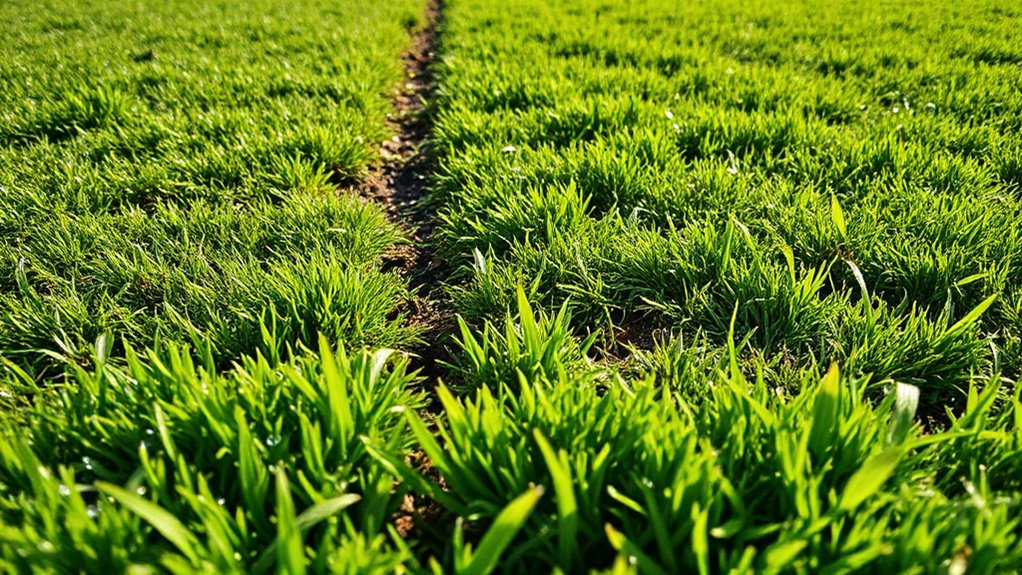
Common lawn problems include weed invasion, patchy brown spots, thinning turf, and moss growth. You can tackle them by identifying causes, then applying targeted fixes. For weeds, pull or spot-treat early, deploy a pre-emergent if timing allows, and maintain healthy competition with dense turf. Patchy brown areas often indicate compact soil, drought stress, or improper drainage; aerate, overseed, and adjust watering schedules to restore vigor. Thinning turf signals traffic stress or nutrient deficiency; adjust mowing height, fertilize appropriately, and improve soil structure. Moss indicates shade, moisture, or acidity issues; reduce shade where possible, improve drainage, and test soil pH to correct conditions. Focus on lawn aesthetics and Landscaping design to create resilient, visually appealing regions that require less ongoing maintenance. Avoid fluff and stay precise.
Proactive Weed, Pest, and Disease Prevention
Proactive weed, pest, and disease prevention starts with prevention-first habits you can implement now. You’ll build resilience by mowing correctly, keeping blade height appropriate for your lawn type, and never scalping turf. Water deeply but infrequently, favoring early morning irrigation to reduce disease risk. Choose native grasses where suitable, as they tolerate local conditions and resist pests better than exotic alternatives. Maintain soil health with proper aeration and balanced fertility, avoiding excessive nitrogen that invites weeds and weak growth. Apply organic treatments when problems appear, using proven, low-toxicity products and cultural practices to minimize disruption. Monitor consistently, promptly addressing any unusual growth or symptom. Finally, mulch or compost clippings responsibly, reducing waste while supporting soil biology and ongoing prevention.
Smart Tools and Materials: Gear That Pays for Itself
Smart tools and materials pay for themselves by saving time, reducing waste, and boosting lawn health. You’ll see faster results with precise, targeted inputs, from soil probes to smart sprinklers that map moisture zones. Invest in durable, calibrated tools, and you’ll avoid repeated applications and patchy growth. Materials matter too: high-quality grass varieties suited to your climate improve establishment speed and resilience, supporting lawn aesthetics from day one. Choose compatible fertilizers and slow-release formulations to minimize leaching and waste. Keep records of inputs and outcomes to refine the approach, not guesswork. The right gear lowers long-term costs and maintenance demands, letting you enjoy a vibrant, uniform lawn. Focus on efficiency, consistency, and measurable improvements in grass varieties and overall appearance.
Maintenance Routine: A Simple, Repeatable Lawn-Care Schedule

A simple, repeatable lawn-care schedule keeps your turf thriving with minimal guesswork. You’ll establish a baseline: tasks on fixed days, seasonal adjustments, and concise records. Weekly checks monitor mowing height, clippings, and soil moisture, preventing stress and promoting uniform growth. Monthly, assess thatch buildup, aeration needs, and weed pressure, applying targeted interventions only when thresholds are met. For color, you balance lawn aesthetics with practical care, avoiding overwatering and excessive fertilization. Use Organic fertilizers where possible to feed soil biology and reduce runoff, while avoiding nutrient surges that invite disease. Document outcomes—photos, measurements, and dates—to refine the cycle. With discipline, you develop a repeatable rhythm that sustains health, appearance, and resilience year after year.
Frequently Asked Questions
How Often Should I Mow for Optimal Health?
Mow about every 1 week to 10 days during peak growing season, adjusting to your grass height. Keep mower types and blade sharpness in mind, ensuring lawn mower types suit your yard, and never cut more than one-third per pass.
What Is the Best Watering Frequency by Season?
Water deeply, seasonally: spring and fall ≈ 1 inch weekly; summer, 1.5 inches, twice weekly; winter, minimal as rainfall dictates. Use drip irrigation with rain sensors to prevent overwatering; trust precise scheduling, not guesswork; stay efficient. (35 words)
When Should I Dethatch or Aerate My Lawn?
Dethatch or aerate when your lawn shows compacted soil and thick lawn thatch, typically in early spring or fall. Use core aeration techniques, and remove excess thatch to improve air, water, and nutrient penetration.
Which Fertilizer Type Suits My Soil Test Results?
Based on your soil test, choose fertilizer types that adjust nutrients at the right time, considering soil pH. If pH is acidic, use lime adjustments; if alkaline, select ammonium-based options. Monitor release rates and adjust annually.
How Can I Prevent Common Lawn Pests Naturally?
To prevent common lawn pests naturally, you should start with robust cultural practices and natural pest control methods. Use Organic lawn treatments and monitor regularly; introduce beneficial insects, apply barriers, and avoid broad-spectrum products unless pest pressure demands.
Conclusion
In short, proper lawn care isn’t optional; it’s your ticket to a pristine, sturdy landscape that stands up to seasons and scrutiny. Stick to mowing, watering, feeding, and timely soil checks, then tune your plan with aeration, overseeding, and smart pest prevention. Follow a simple, repeatable routine, and your yard will pay you back with color, density, and curb appeal that far outshines the competition. Your best lawn starts with disciplined, informed care.
About the Author


