

EPC C is a practical midrange target for UK rentals, easing heating losses and boosting property value, with upfront costs recouped through lower bills, steadier occupancy, and clearer signals to lenders and tenants. Core upgrades focus on insulation, air sealing, efficient glazing, and controls, while heating and hot-water systems should be assessed for Retrofit, Retrofit-Plus, or replacement. Budget, midrange, and premium paths guide the plan, with phased upgrades and ROI tracking to justify expenditure as incentives and compliance evolve; more details await.
Key Takeaways
- EPC C requires a mid-range energy performance; cost depends on insulation, airtightness, and efficient heating/ hot-water systems.
- Key costs: attic/wall/floor insulation, draught-proofing, and upgrading heating controls for quick payback.
- Windows/doors with low U-values and proper weather sealing can influence both price and EPC rating.
- Heating system changes (retrofit, retrofit-plus, or new boiler/heat pump) drive major upfront costs but offer long-term savings.
- Phased upgrades (budget, midrange, premium) help align improvements with rental income and incentives while achieving EPC C.
What EPC C Means for UK Rentals: Compliance, Costs, and Demand

What does EPC C mean for UK rentals in practice? You’ll see it drive a tighter standard for property valuation and legal compliance, shaping how you price and manage leases. An EPC C signals a mid-range energy performance that typically aligns with modern fittings and insulation improvements, influencing appraisal methods and marketability. You’ll need to guarantee accurate energy data during valuation to reflect current efficiency and any compliant features you’ve implemented. Compliance becomes ongoing, not a one-off task, with documentation duties tied to tenancy renewals and notifications. Costs are weighed against rental demand shifts, since properties with EPC C often attract steadier occupancy. On balance, you face clearer expectations from lenders and tenants, with measurable impact on value and risk management.
Core Upgrades That Move Properties to EPC C
You’ll start by prioritizing efficient insulation upgrades, which reduce heat loss and stabilize indoor temperatures with minimal ongoing energy use. Next, implement smart heating controls to optimize boiler and system performance, lowering consumption without sacrificing comfort. Finally, consider low-carbon boiler options to cut emissions while meeting EPC C criteria, creating a roadmap that ties insulation, controls, and boilers into a cohesive upgrade plan.
Efficient Insulation Upgrades
Efficient insulation upgrades are essential core steps to move a property toward EPC C, reducing heat loss and improving overall airtightness. You should assess existing boundary conditions and target the most impactful improvements first, prioritising continuous insulation and minimal thermal bridges. Choose insulation materials with high thermal resistance, low moisture vulnerability, and suitable fire performance for the building fabric. Common options include mineral wool, dense polyurethane, and rigid fibre boards, applied to walls, roofs, and floors as appropriate. Address thermal bridging at junctions where structural elements penetrate insulation, using vector detailing like continuous insulation layers, compliant robust detailing, and compression-free fittings. Guarantee workmanship minimizes gaps, misalignments, and imperfect joints to sustain performance and reliability within the EPC C threshold.
Smart Heating Controls
Smart heating controls are a core upgrade that helps move a property toward EPC C by optimizing energy use and comfort. You implement precise temperature scheduling, occupancy detection, and setback strategies to reduce wasteful heating. Modern systems integrate smart thermostats with your boiler or heat pump, enabling remote adjustments and real-time performance insights. These controls tailor heating to occupancy patterns, preventing over- or under-heating without sacrificing comfort. Energy monitoring dashboards provide granular data on hourly consumption, heat loss, and equipment efficiency, facilitating targeted improvements and ongoing optimization. Selection should prioritize compatibility, secure connectivity, and user-friendly interfaces to guarantee consistent usage. By enabling automated, demand-responsive operation, you achieve measurable reductions in energy use while maintaining occupant comfort and compliance with EPC C criteria.
Low-Carbon Boiler Options
Are low-carbon boiler options the most effective lever to elevate a property to EPC C? You’ll assess options by heat source, efficiency, and emissions profile. Moving from standard gas to high‑efficiency condensing boilers reduces fuel use, but true impact comes from aligning boiler output with demand and integrating renewables. Consider renewable integration strategies, such as heat pumps or solar thermal alongside intelligent controls, to slash carbon footprint without sacrificing comfort. For existing systems, retrofit with low‑loss headers, modulating burners, and weather compensation to minimize waste heat. Fuel-switch respectably lowers emissions, yet cost, reliability, and maintenance matter. Evaluate lifecycle costs, serviceability, and compatibility with future upgrades. In sum, select boiler options that deliver consistent performance, reduced emissions, and scalable integration for EPC C compliance.
Budget, Midrange, and Premium Upgrade Paths: How to Decide
You’ll weigh Budget Considerations Guide against the cost-to-benefit of each option, aligning scope with targets for EPC C. Next, compare the Midrange Improvement Route to achievable energy gains within budget constraints, prioritizing high-impact upgrades. Finally, assess Premium Upgrades Path for maximum performance gains and longer-term value, ensuring the plan remains practical and auditable.
Budget Considerations Guide
What budget path makes sense for EPC C deployments—budget, midrange, or premium upgrade? You should align choices with project scope, expected energy savings, and compliance deadlines. A budget path prioritizes essential upgrades that yield reliable performance without overcapitalization, while a midrange approach balances cost with incremental efficiency gains. Reserve a premium path for high-impact measures where payback is acceptable and property value benefits justify upfront risk. Always forecast long-term maintenance, occupancy patterns, and rental demand to select a sustainable mix. Monitor Renewable incentives and adjust plans as policy signals shift, since subsidies can alter economics mid-project. Track Market trends to anticipate pricing and availability of materials, ensuring your plan remains cost-effective and timely within EPC C requirements.
Midrange Improvement Route
A midrange improvement route balances cost and measurable gains by selecting upgrades that deliver noticeable energy savings without the higher risk or longer payback of premium measures. You focus on practical, verified improvements with clear payback timelines, prioritizing upgrades that reduce energy use across heating, cooling, and appliance loads. Implement efficient lighting, better insulation, and controllable thermostats to capture steady reductions. Consider modest heat-recovery or demand-control ventilation where feasible, ensuring compatibility with existing systems. Sustainable landscaping can lower outdoor cooling loads and water use, complementing indoor efficiency without major capital risk. You should assess Renewable energy options only where they align with site conditions and payback expectations. Track performance with simple metering and adjust strategies as measurements verify savings, maintaining a steady, cost-conscious improvement trajectory.
Premium Upgrades Path
Premium Upgrades Path: this option targets high-impact measures with the strongest performance guarantees and the shortest, most reliable payback, while acknowledging higher upfront costs and implementation complexity. You pursue premium measures that deliver tangible performance gains, prioritizing technologies with proven efficacy and strong EPC uplift. Expect rigorous pre-installation modeling to quantify outcomes and a clear dependency on sustained operation and maintenance. Key actions include high-efficiency heat pumps, solar PV with storage, advanced building envelope improvements, and smart controls that optimize energy use in real time. You’ll need robust project management, supplier alignment, and commissioning to guarantee expected results. Consider how renewable energy adoption alters property valuation, and document compliant scope, costs, and long-term savings for accurate EPC reporting and investor readiness.
Heating System Choices: Replace, Retrofit, or Retrofit-Plus
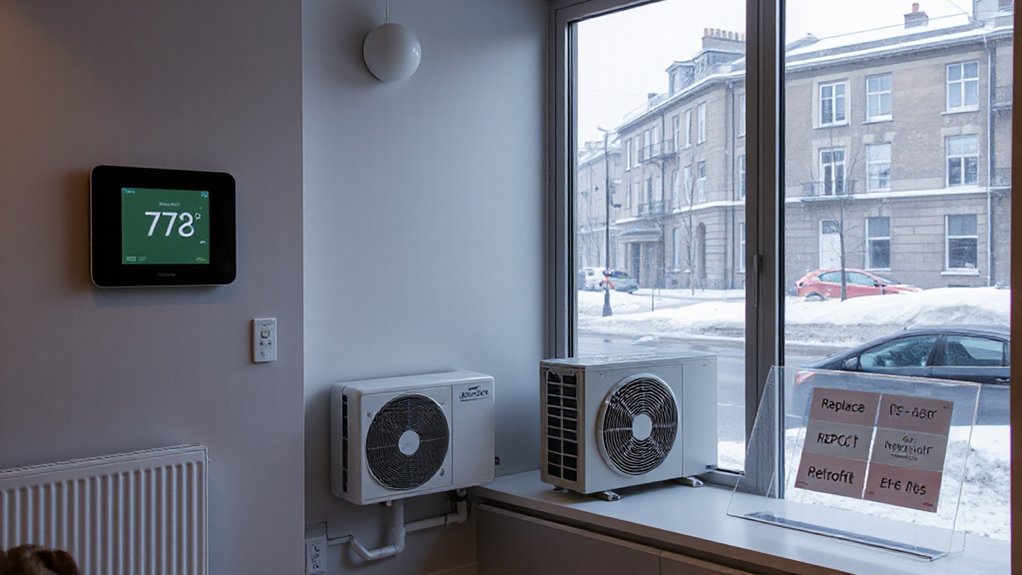
When evaluating heating system choices—Replace, Retrofit, or Retrofit-Plus—you should weigh efficiency, upfront costs, and long-term energy performance. Your decision hinges on system condition, occupancy, and maintenance needs, balancing disruption against payoff. Retrofit may minimize waste while preserving layout, whereas Retrofit-Plus accelerates decarbonisation with integrated controls and storage. Replace only if existing equipment hampers reliability or efficiency targets.
- Assess current boiler or heat pump condition, expected lifespan, and maintenance history.
- Compare installed cost, payback period, and long-term energy savings under alternative energy scenarios.
- Align with Sustainable design goals and local incentives, evaluating grid impact and comfort consistency.
This choice informs compliance, lifecycle costs, and overall EPC C alignment, guiding sustainable design without sacrificing indoor climate.
Insulation Wins: Quick Fixes to Big Heat Savings
Insulation wins start with simple, high-impact fixes that cut heat loss without overhauling your system. You’ll target thermal bridging, air leaks, and surface conduction first, because these deliver rapid payback. Seal gaps around junctions, outlets, and pipe penetrations, then add appropriate measures to attic, wall, and floor cavities. Dense yet breathable insulation improves steady-state performance and reduces temperature swings, enhancing comfort without expensive retrofit programs. Consider reflective barriers where appropriate, but prioritize continuous, well-placed insulation to minimize condensation risk. In climate adaptation terms, you’re strengthening building resilience by maintaining stable indoor conditions during cold snaps and heat waves. This approach preserves energy efficiency gains from other upgrades and supports EPC C goals through disciplined, early wins. Stay measurement-minded: track drafts, heat flux, and occupancy-driven load changes for ongoing optimization.
Windows and Doors: Balancing Cost, Comfort, and Air Leakage
You’ll evaluate cost-efficient window performance, balancing upfront price with long-term energy savings. Air leakage and sealing are critical, as small gaps can undermine comfort and efficiency. Comfort through insulation should guide selections and sealing strategies to optimize overall EPC C metrics.
Cost-Efficient Windows Performance
Cost-efficient windows strike a balance between initial cost, long-term energy savings, and acceptable air leakage. You’ll achieve this by selecting frames and glazing that minimize heat transfer without inflating upfront expenses. Performance hinges on material choice, glazing type, and installation quality, ensuring durability and comfort. Prioritise designs that preserve window aesthetics while enabling proper operation and maintenance. Focus areas include thermal performance, glazing U-values, and frame insulation, all aligned with EPC C targets. For decisionmaking, consider:
1) Ideal frame material balance: cost, durability, and thermal resistance
2) Glazing options: double or triple, low-emissivity coatings, and solar gain control
3) Installation precision: airtight seals, correct sizing, and secure fittings
This approach supports efficient window installation and durable, aesthetically suitable results.
Air Leakage and Sealing
How much air leaks through doors and windows, and why it matters for comfort and energy use? In this section, you assess air leakage paths and sealing strategies to optimize energy performance without compromising usability. Leaks around frames, sashes, and hardware create uncontrolled infiltration, undermining thermal comfort and increasing heating or cooling demand. Door sweeps, weatherstripping, and gasket compression must be selected to balance initial cost with long-term savings. Effective sealing reduces draft hotspots and supports consistent indoor temperatures, improving ventilation efficiency when used with controlled extraction and supply strategies. Maintain attention to material compatibility, movement gaps, and UV or chemical exposure that can degrade seals. Remember, air quality and targeted sealing work together to support EPC C compliance and occupant comfort.
Comfort Through Insulation
In this section, we focus on how insulation choices for windows and doors influence comfort, cost, and air leakage performance. You’ll balance energy efficiency with upfront expense, selecting products that meet insulation standards while minimizing draft paths. Performance hinges on frame material, glazing type, and sealing strategies, all contributing to indoor comfort and operating costs. For practical guidance, consider:
- Prioritizing low U‑value assemblies and compliant glazing to improve energy efficiency.
- Verifying door thresholds and window seals for air leakage reductions, aligned with insulation standards.
- Coordinating installation quality to prevent thermal bridges and performance losses over time. Maintaining proper weatherstripping and airtight seals sustains comfort, reduces HVAC load, and supports compliant EPC C outcomes.
Hot Water Efficiency: Solar, Heat Pumps, or Efficient Boilers
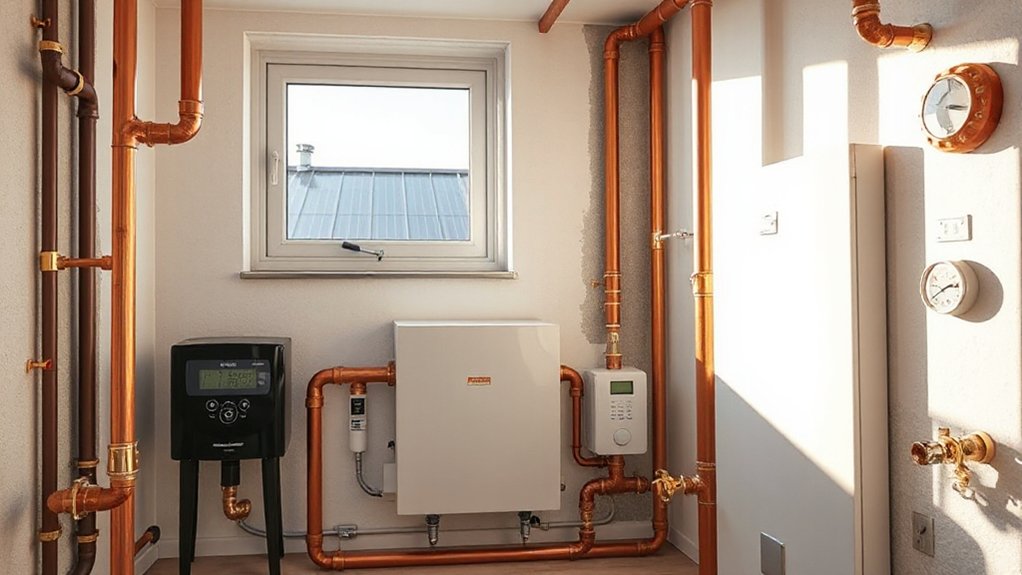
The most effective hot water efficiency strategy combines solar, heat pumps, or efficient boilers to minimize energy use while meeting demand. You assess demand profiles, select low-loss storage, and optimize diel operating patterns to reduce standby losses. Solar thermal provides daytime priming, while heat pumps extract ambient heat, increasing coefficient of performance in cool seasons. Efficient boilers with modulating burners limit output to actual needs, lowering fuel use and emissions. Combine thermal storage with zoning and smart controls to prevent overheating and unnecessary circulation. Maintain insulation on pipes and tanks to cut heat leakage. Integrate energy efficient lighting and water conservation practices to support overall demand reduction, ensuring the system remains responsive without oversizing. Regular commissioning confirms performance targets and long-term cost savings.
Ventilation Upgrades: Costs, Benefits, and Best Practices
Ventilation upgrades deliver measurable indoor air quality and energy efficiency gains by upgrading fans, ducts, and controls, while balancing fresh-air delivery with pressure management and heat recovery. You improve air quality and ventilation efficiency through targeted improvements and proper commissioning, reducing drafts and moisture issues while meeting EPC C benchmarks.
- Upgrade options: selectively replace fans, seal ducts, and install balanced ventilation or heat-recovery systems to optimize performance.
- Cost considerations: materials, installation, and testing; expect payback through energy savings and enhanced habitability.
- Best practices: quantify baseline, model airflow, and verify post-installation performance with commissioning checks.
Key benefits include consistent air quality, reduced condensation, and compliant ventilation standards for rental properties.
Smart Controls for Comfort and Savings
Could smart controls meaningfully cut energy use without compromising comfort? Yes—when properly implemented, they optimize heating, cooling, and airflow based on occupancy, weather, and internal loads. Smart thermostats enable scheduling, learning, and remote adjustments, reducing standby and cyclic losses while maintaining setpoint accuracy. In EPC C contexts, you gain granular control over zones, enabling you to avoid overheating or overcooling unoccupied spaces. Energy monitoring complements this by delivering real-time consumption data, fault alerts, and usage trends, so you can verify savings and identify inefficiencies. The combined approach supports demand-response programs and fine-tunes efficiency without manual intervention. Deploy with clear commissioning data, compatible devices, and robust Wi‑Fi or gateway connectivity to guarantee reliable operation and measurable energy reductions.
Grants, Tax Relief, and Financing Options for EPC C
Grants, tax relief, and financing options for EPC C programs streamline upfront capital and ongoing costs, enabling faster adoption without sacrificing project scope. You gain access to funding that reduces installation barriers while preserving performance targets. Be mindful of eligibility and compliance timelines amid shifting policy landscapes.
- Grants and subsidies: unlock partial project costs, often tied to renewable sources deployment and energy audits.
- Tax relief and incentives: capital allowance and VAT reductions can improve net returns when upgrading insulation, heat pumps, or controls.
- Financing structures: low-interest loans or green mortgages spread expenses without delaying essential work.
Legislative changes may alter eligibility criteria or repayment terms, so monitor updates. This funding matrix supports scalable EPC C upgrades while aligning with sustainability goals.
How to Calculate ROI for Each Upgrade
To start, you’ll align ROI calculation methods with the upgrade cost breakdown to guarantee clarity on value. You’ll apply a concise framework that links each upgrade’s cost to its likely payback period and efficiency gains. This sets a precise basis for comparing options and prioritizing investments.
ROI Calculation Methods
ROI calculation for each upgrade quantifies financial impact by linking upfront costs to measurable benefits over time. You’ll apply methods that align with project timelines and data granularity, ensuring comparability across measures like energy savings, rent uplift, and maintenance reductions. Use simple payback, net present value, and internal rate of return as core frameworks to gauge profitability and risk. To maintain rigor, standardize input assumptions and document sensitivity analyses. Incorporate external drivers such as Renewable incentives and Market trends to contextualize results.
- Simple payback period
- Net present value and internal rate of return
- Sensitivity and scenario testing to capture uncertainty
Upgrade Cost Breakdown
What’s the true cost of each upgrade, and how does it translate into value over time? You’ll quantify upfront expenses, installation, and any required subsystems, then map them to ongoing operating costs. For energy efficient lighting, compute fixture costs, dimming or smart controls, and anticipated energy savings against baseline usage. Assess maintenance, lamp life, and disposal. For renewable energy integration, include inverter costs, potential roof structural upgrades, permits, and grid interconnection fees, then compare with expected solar or wind output and tariff benefits. Apply a conservative load factor to estimate annual energy reductions, and use a discount rate to determine net present value. Present ROI per upgrade as a single metric, highlighting payback windows and sensitivity to energy price changes.
Payback Period Insight
Determining payback period hinges on a clear, disciplined approach to ROI for each upgrade. You quantify upfront costs, annual savings, and any incentives, then compute simple payback and, where possible, net present value. For EPC C upgrades, prioritize investments with verifiable energy performance improvements and durable returns, not just marketing claims. Focus on reliable data sources, standardize assumptions, and document expected lifetimes.
- Compare annual energy savings against upfront costs, including installation and permit fees.
- Include operating costs and maintenance, plus any available Renewable energy incentives or tax relief.
- Assess durability and compatibility with existing systems, emphasizing Sustainable materials and long-term performance.
This framework yields transparent, defendable ROI, guiding prudent choices toward sustainable, cost-effective improvements.
Create a Phased Upgrade Plan That Fits Your Budget
A phased upgrade plan aligns with your budget by prioritizing essential EPC C upgrades first, then sequencing lower-cost improvements as funds allow. You’ll map a timeline that targets energy efficiency fundamentals—insulation upgrades, draughtproofing, and efficient heating controls—as baseline steps. Next, you sequence mid-tier actions, such as installing programmable thermostats, low-flow fixtures, and responsive boiler components, to reduce running costs while preserving habitability. Incorporate Renewable energy options only after core savings are secured, ensuring payback remains practical. Align your plan with Building regulations to avoid compliance gaps and leverage available incentives. Document cost estimates, expected energy gains, and verification milestones to track progress. Regularly review progress against quarterly budgets, adjusting scope for fluctuations in funding while maintaining EPC C trajectory.
Tenant Impact: What Upgrades Do for Demand and Retention
Upgrading to EPC C-compliant components directly affects tenant demand and retention by lowering occupancy costs and improving comfort, which tenants value in marketability and reliability. Upgrades influence perceived value, driving tenant satisfaction and higher likelihood of lease renewal.
- Reduced energy bills through improved insulation, efficient heating, and low-flow fixtures.
- Enhanced comfort and reliability via steady indoor temperatures and fewer outages.
- Stronger marketability and tenant loyalty through verifiable efficiency upgrades and certification.
These factors translate to steadier occupancy, longer tenancies, and improved renewal confidence. You’ll observe shorter vacancy periods and more predictable cash flow as tenants prioritize efficiency and long-term cost savings. Align upgrades with practical ROI, ensuring documentation supports lease renewal discussions and justifies rent expectations without compromising tenant experience. Tenant satisfaction becomes a competitive differentiator in a crowded rental market.
Staying EPC C Long-Term: Documentation, Compliance, and Monitoring
Maintaining EPC C status requires a disciplined approach to documentation, compliance, and ongoing monitoring so you can verify performance and address changes promptly. You’ll establish a formal log of rated components, inspections, and energy audits, updating records after any retrofit or tenant change. Maintain a calendar of annual checks for heat losses, glazing integrity, and ventilation adequacy to prevent score erosion. Compliance means aligning with current guidance on fabric improvements, boiler efficiency, and metering accuracy, plus prompt remedy of nonconformities. Monitoring centers on performance data, anomaly detection, and tenant usage patterns, enabling proactive adjustments rather than reactive fixes. Integrate Sustainable landscaping planning and Renewable energy installations into the plan, ensuring they’re documented, maintained, and reviewed for impacts on EPC status. Regularly verify data integrity and external guidance adherence.
Frequently Asked Questions
How Long Does EPC C Remain Valid for a Rental Property?
An EPC remains valid for 10 years. During that time, you should pursue renewable energy and insulation improvements to refresh its rating if you upgrade, ensuring continued energy efficiency and compliant tenancy, especially when renewing leases or marketing the property.
Do EPC Upgrades Affect Rental Yield Immediately?
Upgrades can lift rental yield quickly, but effects vary; you’ll see incremental gains as energy efficiency improves. You’ll benefit from energy efficient lighting and Solar panel incentives, potentially boosting demand and cash flow sooner.
Can Tenants Benefit Directly From EPC C Improvements?
Yes, you can benefit directly from EPC C improvements. You’ll notice lower energy bills, while energy efficient appliances and insulation improvements reduce heat loss, improve comfort, and safeguard long-term rental competitiveness. Keep monitoring performance for ongoing gains.
Are There Penalties for Non-Compliance With EPC C?
Yes, there are penalties for non-compliance with EPC C. You must meet EPC compliance to avoid enforcement actions, fines, or tenancy restrictions under current Rental regulations. Make certain documentation and upgrades align with regulatory timelines and standards.
Which Upgrades Have the Fastest Cost-To-Savings Payback?
Cold, hard truth: insulation upgrades offer the fastest payback, followed by renewable energy installations. You’ll cut heat loss, reduce bills, and improve EPC C potential. Prioritize cavity or solid-wall insulation and efficient solar or heat pumps.
Conclusion
You’re almost there, but you’ll need the right moves at the right times. As EPC C becomes the baseline, the cost curve steepens and incentives shift. Will your upgrades prove cost-effective, or stretch cash flow? Each decision tightens the net, swaps risk for reliability, and redraws tenant demand. Stay disciplined: track metrics, document progress, and pace improvements. The next milestone isn’t just compliance—it’s thermal comfort, energy resilience, and long-term profitability. The cliffhanger? your property’s evolving performance.
About the Author