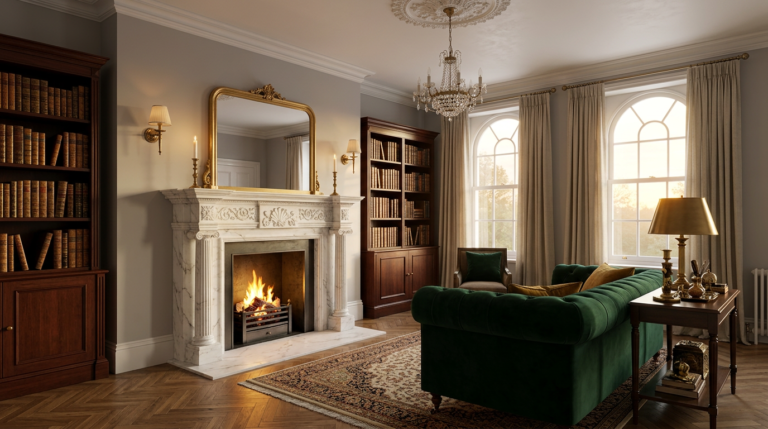
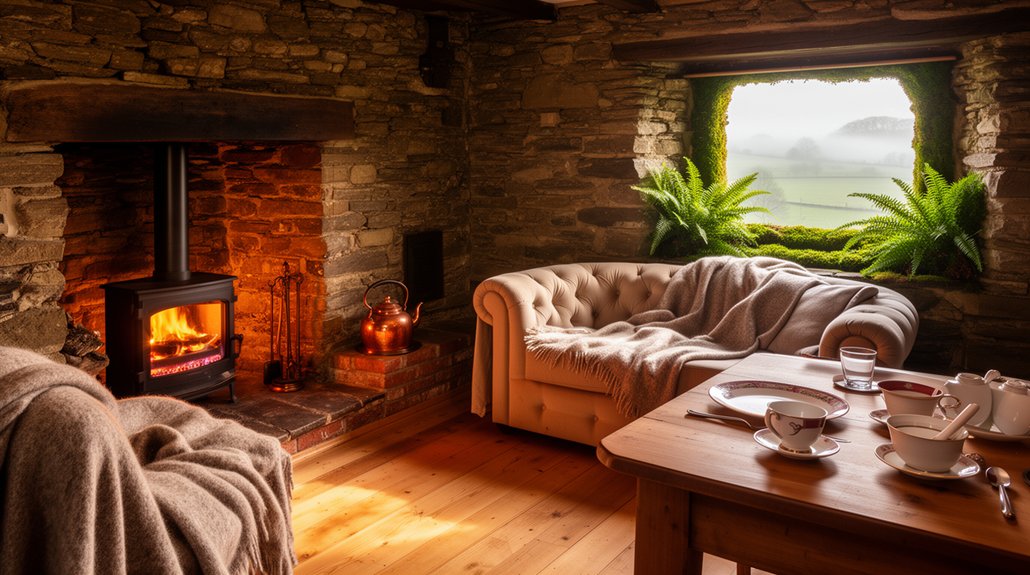
In a Romantic Peak District cottage renovation, you blend earthy stone, warm whites, and greiges to create timeless warmth, then layer textures with wool, linen, and soft suede for tactile depth. Source authentic antiques to fuse character with durability, and frame spaces with timber beams, patinated metals, and vintage ceramics. Maximize natural light through skylights and clerestory windows, while a central fireplace anchors social flow. Outdoor courtyards extend living with seasonal charm; more details await beyond this overview.
Key Takeaways
- Embrace Peak District romance with warm whites, greiges, mineral accents, and vintage ceramics for timeless cottage warmth.
- Use rustic materials: weathered timber, aged brass, textured plaster, and controlled patina across spaces.
- Create a cohesive layering of textiles and accessories, balancing scale, provenance, and texture at eye level.
- Maximize natural light with skylights, clerestory windows, light shelves, and framed views that respect heritage.
- Center around a focal fireplace with dimmable lighting, acoustic tuning, and warm, clutter-free sleep and bath zones.
Design a Peak District Romantic Palette

A Peak District romantic palette blends earthy stone, soft mineral tones, and restrained botanicals to create timeless warmth. You select a core scheme grounded in natural materials, then layer with calculated contrast. Use warm whites and greiges as a unifying base, and introduce mineral-sea accents to emphasize light without glare. For texture, pair matte plaster with oiled timber and subtly brushed metals, ensuring a coherent tactile rhythm. Integrate Vintage ceramics as focal points on shelves and mantels, aligning forms with the palette’s muted range. Rustic signage serves as a narrative accent, positioned at thresholds to cue shift without visual clutter. Maintain precision in color progression, documenting swatches and finish tests to guarantee faithful reproduction across spaces. Your palette remains balanced, refined, and unmistakably Peak District.
Source Authentic Antiques for a Cottage Feel
To cultivate an authentic cottage ambiance, curate genuine in-season pieces with provenance and patina, prioritizing craftsman-made forms over mass-produced recreations. You approach antique sourcing with a disciplined framework: verify provenance, assess construction, and gauge wear as evidence of authenticity. Start with functional items—hooks, stools, and lighting—whose maker marks reveal regional styles and period techniques. Seek authentic accents that harmonize with architectural details, avoiding replicas that mimic patina without provenance. Evaluate condition pragmatically, balancing repairability with preservation, ensuring finishes respond well to modern use. Document each acquisition, noting origin, era, and restoration history to maintain a coherent collection narrative. Cross-check measurements against room dimensions to prevent imbalance. Finally, integrate pieces into vignettes that celebrate scale, texture, and light, reinforcing a sincere, timeless cottage character.
Cozy Textiles: Layering Warmth and Texture
Layered textile warmth elevates both comfort and acoustics, so you’ll prioritize fiber blends and weave weights that balance insulation with breathability. Texture-rich comfort emerges from a deliberate mix of throws, cushions, and rugs that create tonal depth without bulk. You’ll implement a concise layering scheme that remains harmonized with the cottage’s architectural lines.
Layered Textile Warmth
Textile warmth in a cottage setting hinges on deliberate layering that balances insulation with tactile interest. You combine structural define with soft textures to create a coherent thermal mosaic, prioritizing both function and finesse. Textile layering now centers on controlled weights, fiber blends, and seam integrity, ensuring durable coziness. You select cozy fabrics that pair performance with elegance, using density, loft, and drape to modulate heat retention without bulk.
- Prioritize breathable inners and insulated outer layers for consistent warmth
- Mix textures (knit, wool, flannel) to avoid monotony while preserving cohesion
- Prefer natural fibers with high thermal mass for evening comfort
- Employ precise stitching and edge finishing to sustain durability
This approach delivers measured warmth, tactile richness, and a refined, usable atmosphere throughout the cottage.
Texture-Rich Comfort
Texture-rich comfort emerges from deliberate textile layering that prioritizes tactile variety without sacrificing warmth. You select textured fabrics that add subtle relief to cushions, throws, and upholstery, ensuring each layer contributes both color and contour. Begin with a base of durable, insulating fabrics and build with varying weaves to enhance shadow lines and depth. Mix rustic finishes—weathered wood, brushed metal, and linen—so textures converse across surfaces rather than compete. Emphasize seam precision, weight balance, and edge cleanups to preserve refined lines amid coziness. Consider the tactile sequence: tactile nap, crisp weave, soft pile, and smooth surface. The result is a cohesive, high-contrast palette that remains inviting, practical, and elegant, delivering warmth through deliberate, concise textile decisions. Textured fabrics, Rustic finishes.
Maximize Natural Light in a Stone Cottage
How can you maximize natural light in a stone cottage without compromising character or energy efficiency? You balance heritage with optics, shaping daylight paths while preserving mass and texture. Strategic glazing, beam-aligned openings, and reflective surfaces amplify sun without overheating.
- Sunlit alcoves integrate softly with existing stonework, using recessed glazing and seating that doubles as storage
- Skylight installation prefers low-contrast frames and insulated tiles to avoid thermal losses
- Clerestory windows lift upper-light without enlarging elevations, preserving roofline integrity
- Light shelves and interior mirrors direct daylight deeper into rooms while maintaining atmospheric softness
This approach yields bright, energy-smart interiors where stone textures read clearly, and every ray is choreographed for comfort and efficiency.
Fireplaces as the Heart of a Welcoming Living Room

A fireplace serves as the undeniable focal point, guiding furniture layout and traffic flow toward a singular, inviting center. You’ll balance heat distribution and flame sightlines to create a cozy ambiance that remains technically controlled and aesthetically refined. By prioritizing firelight as the core, you establish a practical yet elegant living space that feels instantly welcoming.
Firelight Focal Point
Within a living room, the fireplace serves as the central architectural and social anchor, guiding heat flow, acoustic balance, and focal sightlines. You’ll harness firelight ambiance to structure space, using proportional hearth scale and material contrast to define zones without crowding. Your design must balance form and function, ensuring safe radiance while maintaining airflow and moisture control. A refined mantle or inset focal emphasizes craft, allowing the fire’s choreography to dominate the room’s tempo.
- Precise clearance and venting considerations for ideal heat distribution
- Material selections that reflect the cottage’s period while modernizing efficiency
- Lighting strategy to amplify the cozy glow without glare
- Acoustic tuning to preserve conversation around the hearth
Cozy Ambiance Curation
In a cottage living room, the fireplace should anchor both mood and layout, guiding heat flow, sightlines, and social orchestration with deliberate scale and material contrast. You curate a cohesive atmosphere by pairing understated fireplace mantels with purposeful lighting layers, ensuring warmth feels intentional rather than incidental. Align the mantel height with seating geometry to optimize conversation and gaze, while the surround material reinforces the room’s character—stone for authenticity, timber for warmth, tiled inset for discipline. Implement cozy lighting through dimmable sconces, a recessed glow from the hearth, and task lamps at key corners to sculpt depth without glare. Consider weathered textures, muted palettes, and scent-neutral accessories to sustain a tranquil, inviting rhythm around the fire.
Quiet Reading Nooks for Intimate Downtime

Tucked away from the main living areas, quiet reading nooks distill downtime into focused, restorative moments by combining sound-dampening materials, soft lighting, and comfortable seating. You’ll optimize perch height, acoustics, and sightlines to reduce distraction while maintaining ease of access to essential books and light, with a disciplined palette that respects Seasonal decor and signals of garden pathways visible from a window.
- Sound-absorbing panels and plush textiles balance resonance without dampening warmth
- Low, contoured seating placed at eye level for comfortable browsing
- Dimmable LEDs and warm color temperatures to sustain focus and mood
- Discreet shelving aligned to wall angles, keeping floor space airy
This approach yields intimate zones that invite quiet study, reflection, and renewed concentration.
Kitchen That Invites Lingering Over Tea
A kitchen that invites lingering over tea combines deliberate warmth with practical efficiency, turning a routine pause into a mindful ritual. You select a layout that minimizes steps between the sink, stove, and storage, reducing fatigue as you move. Surfaces feature durable, easy-clean materials with a tactile finish that helps you gauge heat and humidity at a glance. Lighting—warm under-cabinet bars plus a central pendant—fosters relaxed conversation without glare. The design integrates thoughtful storage for teapots, strainers, and loose-leaf blends, supporting culinary traditions you cherish. A dedicated herb corner and a small window garden plan reinforce garden planning, yielding fresh aromatics for infusions. Ventilation remains quiet yet effective, preserving atmosphere. Details align to comfort, efficiency, and enduring appeal for tea rituals.
Dramatic Textures: Stone, Timber, and Soft Fabrics
Dramatic textures define the cottage’s resilient character, where rugged stone, exposed timber, and tactile fabrics converge to create visual tension and tactile warmth. You evaluate surfaces for cohesion: stone anchors, timber accents guide movement, and fabrics soften edges. Precision matters as you balance rough and refined textures to maintain calm intimacy without heaviness.
- Textured wall schemes: masonry reveal, plaster swathes, matte finishes
- Timber accents: splayed beams, trimmed studs, burnished railings
- Fabric textures: wool, linen, suede overlays for warmth
- Finishing touches: seam alignment, color modulation, light interaction
You document how each element interacts with light, air, and scale, ensuring durability and comfort. The result remains technically sound, elegantly restrained, and free of excess, with a coherent tactile narrative across living zones.
Window Styling to Frame Countryside Views

You can treat each window as a framing device that highlights the surrounding landscape. Consider proportion, glazing, and sill height to maximize light while preserving view lines. By selecting elevated mullions or subtle casing, you guide attention to the countryside without overpowering the room.
Framing Countryside Views
Framing countryside views begins with deliberate window selection and placement that maximize proportion, light, and sightlines. You align openings to draw eye toward countryside vistas and scenic outlooks, selecting profiles that minimize glare while enhancing depth. Critical decisions include sill height, glazing type, and mullion spacing to preserve crisp silhouettes of the landscape. You treat framing as architecture within the room—not merely decoration but a controlled panoramic, balancing symmetry with asymmetry to suit the cottage’s rhythm. Fine-tune with shading devices that respect light quality across seasons and maintain uninterrupted views when desired.
- Window proportions that harmonize with room scale
- Glazing choices preserving sharp horizon lines
- Mullion and welt details that respect rustic elegance
- Shading strategies that don’t obstruct key vistas
Window Style Enhancements
Window styling builds on those proportion and sightline choices to refine how a cottage presents its exterior to the landscape. You select frame depths, mullion spacing, and sash movement to optimize natural light without sacrificing privacy. Precision here means mapping axis alignment to exterior angles, ensuring views remain uninterrupted by obstructions. You integrate vintage lighting as a functional accent, positioning fixtures to illuminate preserved feature lines while avoiding glare on glass. Window treatments are chosen for thermal efficiency and controlled daylight, using layered fabrics and minimal hardware to maintain clean silhouettes. Elevations benefit from consistent glazing rhythm, while interior reveals emphasize countryside frames. Finishes endure weather, resist staining, and harmonize with stone, wood, and textile palettes for a cohesive, enduring cottage aesthetic.
The Bathroom Retreat: Spa-Like Hygge in a Cottage
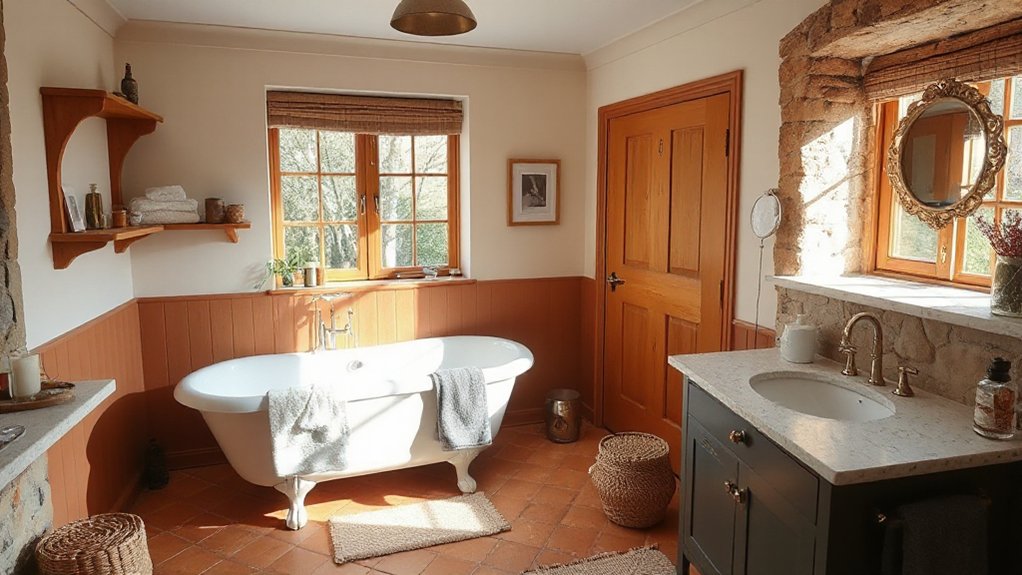
The bathroom retreat in a cottage thrives as a spa-like hygge haven where warm textures, calm lighting, and efficient layout converge to create a serene, functional space. You experience balancing hygge through tactile surfaces, moisture-resistant finishes, and controlled color saturation, while maintaining minimalist tranquility with clean lines and purposeful placement. Precise workflow guarantees rapid access to vanity, shower, and towel storage, reducing unnecessary motion. Subtle radiant heat, acoustic zoning, and dimmable LEDs heighten comfort without clutter. Air quality is safeguarded by a sealed enclosure and balanced ventilation, while natural light via skylight or frosted panes enhances perception of space.
- Material zoning for durability and aroma
- Quiet exhaust with timed boost
- Wall niches for toiletries and decor
- Sensor-activated lighting to minimize flicker
Sleep Spaces That Glow With Comfort
Sleep spaces in a Peak District cottage should feel like a gentle extension of the spa-like bathroom, where light, texture, and acoustics work in concert to sustain rest. You curate sleep spaces that minimize disturbance while maximizing restorative cues. Optimize lighting with dimmable layers, warm color temperature, and blackout control to sustain bedroom serenity across the night. Choose materials with low sound reflection and tactile warmth—woven textiles, brushed wood, and dense carpets—to absorb steps and noise. Bed orientation prioritizes posture support and viewlines toward soft exterior scenery, enhancing perceived calm. Prioritize climate stability with breathable fabrics and unobtrusive, quiet HVAC zoning. Storage remains discreet to maintain clutter-free surfaces, reinforcing a sleep sanctuary. Your设计 emphasizes functional elegance, measurable comfort, and enduring restfulness.
Accessorizing With Local Character and Antiques
You source local antiques with a precise eye, balancing provenance and condition to support your cottage’s narrative. Display and arrangement emphasize characterful accents—think measured groupings, curated vignettes, and accessible, functional antiques. This approach anchors timeless rustic elements while guiding guests to notice craftsmanship and regional detail.
Local Antiques Sourcing
Seeking local antiques for your cottage aims to calibrate character with authenticity—how do regional markets shape the vignette you’re building? You approach sourcing with method: assess provenance, condition, and cohesion with existing finishes. The aim is deliberate curation, not decoration; every piece must justify its presence within the layout and lighting scheme. You’ll engage with trusted vendors, attending a vintage market or antique fairs to test scale and texture in person. Record SKU, history, and potential refinishes before purchase, minimizing regret. Prioritize utility as much as charm, ensuring each item serves daily life while elevating atmosphere. Your process remains iterative: compare options, document decisions, and refine the collection through informed choices.
- Buyer’s notes and provenance checks
- Condition and wear assessment
- Scale, proportion, and grouping logic
- Post-purchase care and maintenance plans
Characterful Accessories Display
A thoughtful accessories display ties local character and antiques to everyday living, ensuring each item reinforces the cottage’s narrative without overpowering it. You curate with purpose, aligning scale, finish, and provenance to create a cohesive vignette. Start with a focal piece that embodies cottage charm, then layer complementary objects to echo its story. Prioritize characterful accessories that reflect Peak District craft, regional materials, and historical use, avoiding novelty overreach. Maintain visual rhythm through alternating textures—wood, ceramic, linen—and controlled color temperature to sustain a calm, timeless mood. Place items at eye level and within reach, so daily rituals become meaningful gestures rather than curated curios. Document placement rationale, then reassess periodically to preserve balance, ensuring the display remains integrated, legible, and true to the cottage’s voice.
Timeless Rustic Accents
Timeless Rustic Accents fuse local character with enduring antiques to elevate everyday spaces. You pair weathered timber, aged brass, and softly patinated surfaces to create focused, functional moments. In practice, curate a restrained collection that echoes Peak District heritage while ensuring durability and scale harmony. Vintage ceramics anchor shelves and mantels, offering tactile warmth without crowding sightlines. Rustically tuned lighting, with exposed filaments and warm radiance, enhances texture and form, guiding the eye to craftsman details. Prioritize provenance over quantity, and balance patina with modern resilience. Maintain rhythm across rooms by repeating a modest material palette, then punctuate with a single statement piece per zone. Align placement with natural light, avoiding clutter and preserving serene, usable space.
- Vintage ceramics
- Rustic lighting
- Provenance over quantity
- Rhythm and balance
The Art of Layering: Rugs, Throws, and Cushions
Layering rugs, throws, and cushions isn’t merely decorative—it’s a precise method for shaping texture, color, and acoustics across a cottage’s living spaces. You approach textile layering as an operational workflow: establish a base rug with a ground color that anchors the room, then introduce secondary textiles for contrast and depth. Align pile height, weave, and fiber to control sound absorption without sacrificing comfort. Select throws and cushions in a restrained palette to achieve color coordination, balancing warm neutrals with purposeful accent hues. Layered surfaces should read as a cohesive field, not a mosaic; vary scale and pattern deliberately to avoid visual clutter. Document the sequence, evaluate under natural and artificial light, and adjust density to preserve legibility and tactile richness.
Outdoor Living: Courtyards, Seating, and Seasonal Charm
Outdoor spaces extend the cottage’s living envelope, translating interior refinement to exterior shade, texture, and function. You design courtyards that read as rooms, with durable seating, weathered surfaces, and sightlines that frame seasonal charm. garden pathways weave between planting beds, guiding you to sheltered corners and sunlit alcoves. Outdoor lighting is layered: warm task glow near seating, ambient uplight for architectural features, and subtle path illumination for safety and mood. You optimize scale, proportion, and accessibility, ensuring weatherproof materials age gracefully. The result blends technical precision with romantic appeal, inviting lingering evenings and daytime retreats alike.
- Durable materials selected for rain, frost, and sun exposure
- Pathways that emphasize accessibility and visual rhythm
- Layered lighting for function and atmosphere
- Seasonal plantings that require minimal maintenance
Low-Maintenance, High-Warmth Design Tips
To minimize upkeep while maximizing warmth, choose materials and finishes that age gracefully and require minimal care. You’ll prioritize durable textures, such as lime-washed plaster, full-grain timber, and low-maintenance porcelain surfaces, to sustain a soft patina over time. Midtone palettes reduce glare and conceal wear, while integrated insulation keeps ambient steadiness without bulky detailing. For garden pathways, select permeable, self-binding aggregates and edge-free trims to deter weed proliferation and simplify cleaning. In rooms, adopt compact, high-efficiency lighting fixtures with warm color temperatures to sustain a cozy glow as natural light shifts. Prioritize hidden storage and multi-purpose furniture to minimize clutter. Guarantee seals, joints, and ventilation are robust to preserve warmth without frequent intervention.
Budget-Friendly Upgrades That Deliver Big Cozy Impact
If you want a big cozy upgrade without blowing the budget, start with targeted detailing that boosts warmth and texture while staying practical. You’ll concentrate on expressive yet affordable elements, ensuring durability and subtle elegance. Prioritize vintage lighting and tactile finishes that read as high-end without price inflation, pairing warm bulbs with brass or aged finishes. Integrate garden pathways as intimate focal cues that extend indoor softness outdoors, using permeable pavers and low‑growth edging for a seamless shift. Maintain cohesive color, texture, and proportion across rooms to avoid excess sourcing. Implement modular storage, soft fabrics, and efficient fixtures that reduce clutter while enhancing atmosphere. Budget-friendly upgrades deliver big impact when they’re purposeful, precise, and well‑placed.
- Vintage lighting
- garden pathways
- modular storage
- soft textiles
Keeping the Cottage Timeless: Maintenance and Care
Maintaining a timeless cottage demands deliberate, routine care that preserves both character and efficiency. You’ll establish a maintenance calendar that prioritizes essential systems, materials, and finishes. Start with clock repair, ensuring accurate timekeeping for any antique or inherited pace of life. Regular inspection of mechanical components informs predictable intervention windows, reducing surprises. For structure, roof maintenance is critical; schedule seasonal checks, clear drainage paths, and address loose shingles or flashing promptly to prevent moisture ingress. Exterior surfaces benefit from a disciplined approach: clean, reseal, and monitor lime-based renders or timber finishes for signs of decay. Interior upkeep should balance authenticity with practicality—preserve original moldings while addressing hidden wear. Document repairs, sources, and dates to sustain provenance and comfort without compromising timeless charm.
Frequently Asked Questions
How Can I Balance Modern Comfort With Rustic Peak District Charm?
You balance modern comfort with rustic Peak District charm by layering vintage textiles and cottage lighting, prioritizing warmth, durability, and airflow; select durable fabrics, dimmable LEDs, and well-sealed windows, ensuring cohesive textures and responsive, elegant performance throughout every space.
What Scents Evoke a Cozy Cottage Without Being Overpowering?
A cinnamon-scented candle in a small study proves cozy yet balanced; you’ll avoid overpowering aromas. Scent layering with aroma candles creates depth, clarity, and warmth, ensuring subtle, curated fragrance without overwhelming the room.
Which Budget-Friendly Upgrades Deliver the Warmest Impact?
You should select vintage textiles and DIY décor, prioritizing warm neutrals and texture for maximum impact on a budget. You’ll install layered throws, upholstered cushions, and timber accents, achieving cohesive warmth through precise, technical execution and tasteful detailing.
How Do I Protect Historic Features While Renovating?
You protect historic features by preserving original woodwork and safeguarding antique fixtures, then carefully plan reinforcements. You document conditions, use breathable materials, and consult specialists, ensuring compatibility, reversibility, and minimal impact on character while maintaining structural integrity.
What Are Simple Maintenance Tasks for Longevity and Charm?
You maintain longevity and charm by scheduling garden landscaping tasks seasonally, trimming perennials, and inspecting drainage. You also keep furniture polishing routine: wipe, wax, and protect surfaces after use, preventing moisture damage and preserving aged patina elegantly.
Conclusion
In your Peak District cottage, you’ve achieved a design that feels timeless and irresistibly welcoming. You’ll layer light and texture with measured precision, source authentic antiques, and let stone and fire define cozy warmth. You’ll maximize daylight, curate soft textiles, and craft courtyards that invite seasons in. Practical maintenance keeps the magic intact, while budget-friendly upgrades punch well above their weight. This elegant, technical harmony makes your romantic retreat feel like a warm, perfectly lit masterpiece—arguably brighter than the sun itself.
About the Author