
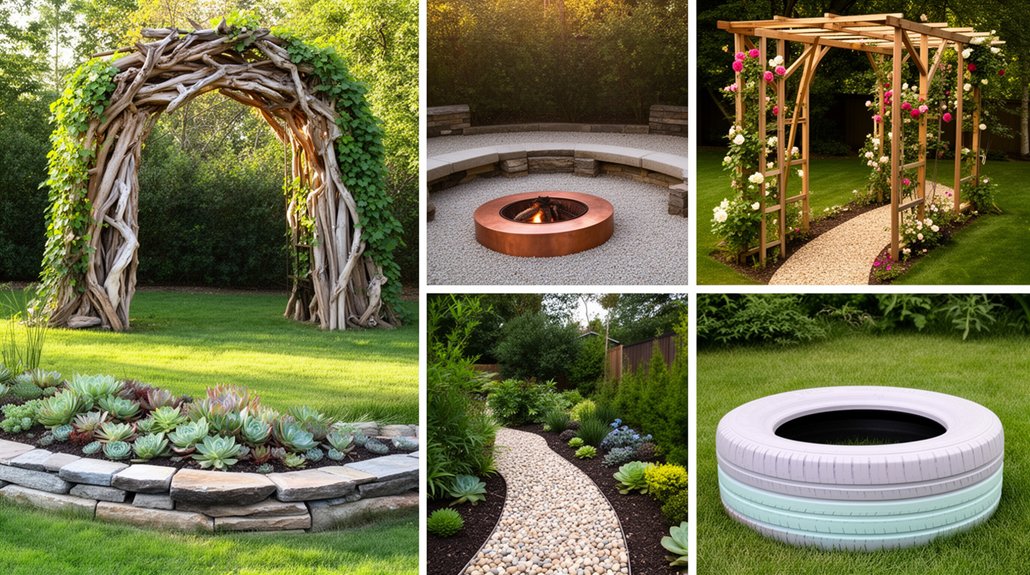
If you’re after five creative DIY landscaping ideas for your UK backyard, start with a clear theme and budget to keep things cohesive and low-maintenance. Turn everyday finds into focal points for curb appeal, and use ground covers and serpentine pathways to guide movement and cut upkeep. Create cosy outdoor rooms with weatherproof seating and layered lighting, then plan for longevity by choosing hardy, UK-tested plants and simple seasonal routines. Curious for practical steps to implement them?
Key Takeaways
- Define a cohesive theme and budget, outlining essential elements like soil, edging, irrigation, and tools to guide DIY projects.
- Repurpose everyday items (pots, ladles) as focal garden accents, focusing on form, texture, and color.
- Create flow with ground covers, stepping stones, and permeable pathways to connect zones.
- Build cozy outdoor rooms with weatherproof seating, layered lighting, and shade structures for ambiance.
- Plan for longevity with low-maintenance, UK-suited plants, soil health, and simple seasonal maintenance routines.
Pick Your DIY Landscaping Theme and Budget

Choosing your landscaping theme and setting a budget are the foundations of a successful DIY project. You’ll decide a cohesive look first, then align costs with practicality. Start by defining your priorities: low maintenance, colour accents, or a relaxing retreat. Your theme should guide plant choices, structures, and materials, so spend time visualising how spaces flow together. When estimating costs, itemise essentials: soil, edging, hardy plants, irrigation, and tools you’ll actually use. Assign a ceiling to prevent scope creep, and include a contingency for weather or delivery delays. Consider plant color and garden shapes to shape plans before you buy, ensuring contrasts and harmony that stay within budget. Finally, document measurements, expected growth, and replacement cycles to keep you on track.
Turn Everyday Finds Into Focal Points
Turn everyday finds into focal points by reclaiming inexpensive or overlooked items and giving them a new role in your garden. You’ll elevate curb appeal by repurposing items like a chipped terracotta pot into a plant pedestal or an old ladle into a quirky wall sculpture. Focus on form, texture, and colour to create visual interest from a distance. Integrate Garden art strategically near seating or paths to guide the eye and anchor spaces without overwhelming them. Consider lightweight, weatherproof pieces you can rotate seasonally for freshness. For hydration accents, repurpose a large basin as a water feature with a discreet pump, producing soft movement without loud noise. Keep maintenance minimal: seal materials, choose durable finishes, and plan simple seasonal updates to sustain impact.
Create Flow With Ground Covers and Pathways
Creating flow in your garden starts with deliberate ground covers and clear pathways that guide the eye and the foot. You’ll shape movement by low-growing ground covers, bold fern sheets, and careful curb lines, ensuring progression feel natural. Choose durable, weather-smart options for UK climates, and integrate practical edges to prevent encroachment. Wildflower patches add seasonal colour without sacrificing order, while pebble mosaics offer tactile anchors that steer foot traffic along desired routes.
- Plan pathways to connect key zones with a gentle serpentine or straight line, using compact gravel or permeable pavers.
- Pair ground covers with stepping stones for year-round coverage and visual rhythm.
- Incorporate pebble mosaics as focal points or edging to reinforce progression and add texture.
Craft Cozy Outdoor Rooms: Seating, Lighting, Shade

After establishing flow with ground covers and pathways, you can shape inviting outdoor rooms that invite lingering. To craft cosy seating, choose weatherproof collections suited to UK weather, with cushions in durable fabrics and removable covers for cleaning. Position seating around focal points—fire pits, water features, or garden art—to encourage conversation and observation of your borders. For lighting, layer sources: warm wall lights, solar uplights along paths, and shaded lanterns in trees. Shade is essential; install a pergola, parasols, or tall planting to temper sun without blocking views. Add practical details like side tables and storage benches to keep essentials at hand. Prioritise durable materials and proportionate scale for lasting appeal, while garden art and water features anchor the space’s character.
Plan for Longevity: Budget-Smart Planting and Maintenance
Plan for longevity starts with smart budgeting and practical planting choices that deliver year after year. You’ll prioritise low-maintenance shrubs, perennials, and proven performers that suit UK conditions, reducing ongoing costs and effort. Focus on seasonal planting windows to maximise establishment and minimise waste, while keeping soil health at the core of every bed. With thoughtful planning, you’ll enjoy consistent colour and structure without frequent replacements.
- Choose hardy, UK-tested varieties that align with your soil type and light conditions.
- Invest in soil health now: improve with compost, mulch, and greens waste to sustain nutrients for years.
- Schedule maintenance with a simple, seasonal routine to curb labour spikes and extend plant life.
Frequently Asked Questions
How Long Does a DIY Landscaping Project Typically Take to Complete?
Typically, a DIY landscaping project takes a few days to a couple of weeks, depending on scope. You’ll plan, source materials, and install garden lighting and outdoor furniture efficiently, ensuring weather windows and local permits are considered.
What Safety Gear Is Essential for Beginners?
Starting out is a tightrope walk; you’ll balance with safety equipment and protective gear. For beginners, wear sturdy gloves, eye protection, durable boots, a dust mask, hearing protection, and a helmet where needed. Stay vigilant, stay protected.
Which Plants Are Best for Busy or Inconsistent Schedules?
Choose low-maintenance, drought-tolerant perennials and native shrubs that fit erratic routines, and set practical watering schedules with mulch to conserve moisture; plant maintenance becomes easier, so you won’t overwater or neglect beds.
How Can I Estimate True Project Costs Upfront?
You estimate true costs upfront by treating budgeting like a ship’s log: track Budget planning and Material sourcing, listing every item, labor, and risk. You compare quotes, add contingency, and update as plans change, staying UK-focused and precise.
What Permits or Regulations Should I Check Before Starting?
You’ll need to check Permitting requirements and Local zoning restrictions before you start; contact your council early, as processes can vary. Make certain your plans comply with permitted uses, setbacks, and environmental rules to avoid costly delays.
Conclusion
If you follow these DIY landscaping ideas, you’ll open a backyard that feels purpose-built, not borrowed. Imagine the moment your first path line meets a sunlit seating nook, or a wind-flicked leaf finding its perfect planter. But the real secret isn’t just what you build—it’s how you watch it grow, adapt, and endure. Stay curious, refine your theme, and let maintenance become your daily craft. The future you nurture outdoors might just surprise you.
About the Author


