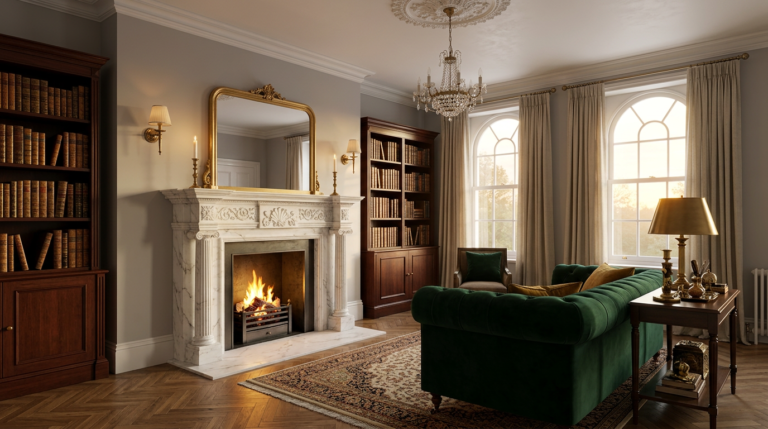

Cheshire luxury green design blends climate-specific envelopes, craftsman timber, and regional materials to create timeless resilience. You’ll see passive solar strategies, high-performance glazing, and airtight envelopes paired with thermal mass and disciplined shading for comfort and efficiency. Regenerative landscaping enhances soil health, biodiversity, and water management while supporting long‑term land value. Smart systems optimize waste, water, and energy, with on-site generation and data dashboards guiding performance. If you want more, you’ll uncover deeper strategies and case-tested approaches next.
Key Takeaways
- Integrate Cheshire climate, local materials, and regional character to guide envelope design, shading, and passive solar strategies.
- Emphasize regenerative landscaping with soil health, biodiversity, water management, and indoor-outdoor biophilic transitions.
- Use high-performance, low-impact materials (certified timber, recycled metals, natural stone alternatives) with durable, low-waste assemblies.
- Deploy smart systems for resource optimization: sensors, BMS, water-energy nexus, on-site generation, and waste-to-energy, for efficiency.
- Combine luxury aesthetics with measurable performance through baseline assessments, energy modeling, craftsmanship, and heritage-aware renovations.
Why Cheshire Luxury Green Design Feels Different

Cheshire’s luxury green design feels distinct because it integrates precision immersion in local climate, materials, and landscape into every architectural decision. You observe how climate data drive envelope detailing, HVAC zoning, and shading strategies, reducing energy load while preserving comfort. Cheshire craftsmanship informs detailing, from timber joints to stone integration, ensuring structural fidelity and long-term resilience. Local artistry appears in texture, color, and material palettes that resonate with the region’s character, avoiding generic finishes. You prioritize passive strategies: high-performance glazing, airtight envelopes, and thermal bridges addressed at the design stage. Coordinating with builders, you verify craftsmanship standards and material provenance, aligning cost efficiency with sustainability goals. This approach yields a cohesive home where performance, aesthetics, and place are inseparable, reflecting careful, disciplined execution.
Regenerative Landscaping for Frontage and Farmland
Frontage and farmland demand regenerative landscaping that enhances ecosystem services while supporting long-term land value. You implement strategies that integrate soil health, biodiversity, and water management to stabilize productivity and resilience across boundaries between residence and fields. Through precise design, you optimize nutrient cycling, reduce erosion, and sequester carbon, while maintaining aesthetic coherence with luxury Cheshire settings. Regenerative landscaping for frontage farmland relies on targeted plantings, pollinator corridors, and microtopography that slow runoff and improve infiltrations. You monitor performance with measurable indicators, ensuring ongoing adaptability to climate variation and market expectations. This approach preserves heritage landscapes while delivering sustainable, high-value outcomes.
- Soil health prioritization and composting
- Native species buffers and pollinator strips
- Contour planning and water retention features
- Continuous monitoring and adaptive management
How Passive Solar Elevates Elegant Cheshire Homes
Passive solar design elevates elegant Cheshire homes by aligning architectural form with sun paths to maximize heat gain in winter and minimize excess cooling in summer. You optimize solar orientation by placing glazing and shading where seasonal sun angles yield the greatest comfort and energy savings. In practice, thermal mass absorbs daytime heat and releases it slowly, stabilizing indoor temperatures with fewer mechanical loads. You’ll implement low- or no-emissivity glazing, high-performance insulation, and airtight envelopes to preserve gained warmth. The strategy centers on predictable sun exposure, retained heat, and disciplined shading to prevent overheating during peak summer. You measure performance with continuous monitoring and adjust axes, overhangs, and around-window details. This disciplined approach demonstrates how passive design reduces operational costs while preserving luxury, precision, and occupant comfort.
Eco-Friendly Materials That Elevate Luxury

You’ll explore eco-friendly materials that elevate luxury through performance, durability, and low environmental impact. Emphasize materials that balance aesthetics with lifecycle efficiency, from responsibly sourced timber to low-emission composites. This discussion sets the framework for luxury sustainable choices that sustain Cheshire homes without compromising refinement.
Eco-Friendly Material Elevation
Sustainable materials are the cornerstone of luxury-grade design, delivering both performance and prestige while reducing environmental impact. You elevate spaces by selecting materials that balance durability, aesthetics, and lifecycle value, ensuring premium outcomes without compromise. Eco-conscious decisions inform every surface, from structure to finish, reinforcing a sustainable interior ethos. In Eco-Friendly Material Elevation, you integrate high-performance, low-impact options that embody precision engineering and refined texture. You’ll optimize sourcing, processing, and installation to minimize waste and maximize longevity, delivering a coherent, luxury result.
- Recycled-metal framing with load-path optimization for reduced embodied energy
- Low-VOC finishes paired with durable, timeless textures
- Engineered timber with certified provenance and reduced milling waste
- Natural stone alternatives offering similar elegance with lighter extraction impact
Luxury Sustainable Choices
In Luxury Sustainable Choices, eco-friendly materials elevate the perception of quality while curbing environmental impact. You select sources with traceable provenance, ensuring lifecycle transparency and minimal embodied energy. Prioritize Luxury materials like reclaimed timber, recycled metal, and high-performance composites that mimic natural textures without ecological compromise. Sustainable aesthetics hinge on material coherence, where finishes, joints, and edge details express rigor and refinement rather than excess. Opt for low-emission adhesives, formaldehyde-free panel products, and naturally durable surfaces to reduce maintenance and waste. Integrate modular systems that enable disassembly and reuse, aligning with circular design principles. Documentation and certifications validate performance, longevity, and responsible sourcing, reinforcing a premium client experience. This approach sustains elegance, resilience, and ethical distinction throughout contemporary interiors.
High-Performance Envelopes: Insulation That Looks Stunning

High-performance envelopes blend insulation efficiency with aesthetic impact, delivering continuous thermal protection without compromising exterior elegance. You’ll experience precise control of heat flow, airtight detailing, and durable finishes that pair with the home’s material palette. In practice, these assemblies use breaker layers, low‑permeability barriers, and high‑R‑value substrates to reduce energy demand while maintaining slim profiles. Solar shading and recycled textiles can be integrated into the envelope’s skin to augment comfort and sustainability without adding bulk. Expect color‑stable coatings, minimal thermal bridging, and long‑term performance under Cheshire climates. You’ll achieve a cohesive look that doesn’t sacrifice performance or daylight access.
- Efficient layered assemblies with high thermal resistance
- Integrated solar shading for glare reduction
- Aesthetic-ready finishes using recycled textiles
- Long‑term durability with airtight detailing
Smart Systems for Waste, Water, and Energy Management
Smart waste routing and the water-energy nexus form the backbone of your home’s efficiency strategy, enabling closed-loop flows and reduced utility demand. You’ll evaluate waste streams for on-site recovery, reuse, and responsible disposal while integrating water and energy metrics to optimize performance. This section sets the framework for selecting systems that balance reliability, cost, and environmental impact with precise, data-driven control.
Smart Waste Routing
What makes waste routing smarter than traditional collection methods? You gain granular visibility into container fill levels, routing efficiency, and diversion performance, enabling proactive management across your property. Smart Waste Routing uses sensor data, scheduling algorithms, and demand-based pickups to minimize trips, reduce fuel use, and lower emissions, while maintaining service levels for residents and guests. You’ll optimize bin placement and curbside processes around key workflows, including Waste segregation and Recycling stations, to maximize diversion and convenience. The system interlocks with building management to trigger alerts, automate reporting, and support compliance.
- Sensor-driven fill-monitoring informs dynamic collection windows
- Route optimization minimizes vehicle mileage and idling
- Automated dispatch aligns pickups with real-time needs
- Occupant-facing dashboards track performance and goals
Water-Energy Nexus
Water and energy systems within a smart building framework are tightly coupled, enabling coordinated control and optimization across utilities. In this Water-Energy Nexus, you deploy integrated sensors, metering, and actuators to monitor usage patterns and respond in real time. Smart irrigation, greywater recycling, and low-flow fixtures reduce demand, while on-site generation and advanced heat recovery balance supply. You leverage data analytics to align demand with renewable capacity, prioritizing energy efficiency and minimizing peak load. Demand response enables shifting consumption to off-peak periods without compromising comfort. Waste-to-energy and anaerobic digestion can recover value from organic waste, closing loops within the building’s ecosystem. Emphasize Water conservation and energy efficiency as core design pillars, ensuring resilient, low-resource operation without compromising luxury.
Indoor-Outdoor Luxury: Courtyards, Gardens, and Biophilia
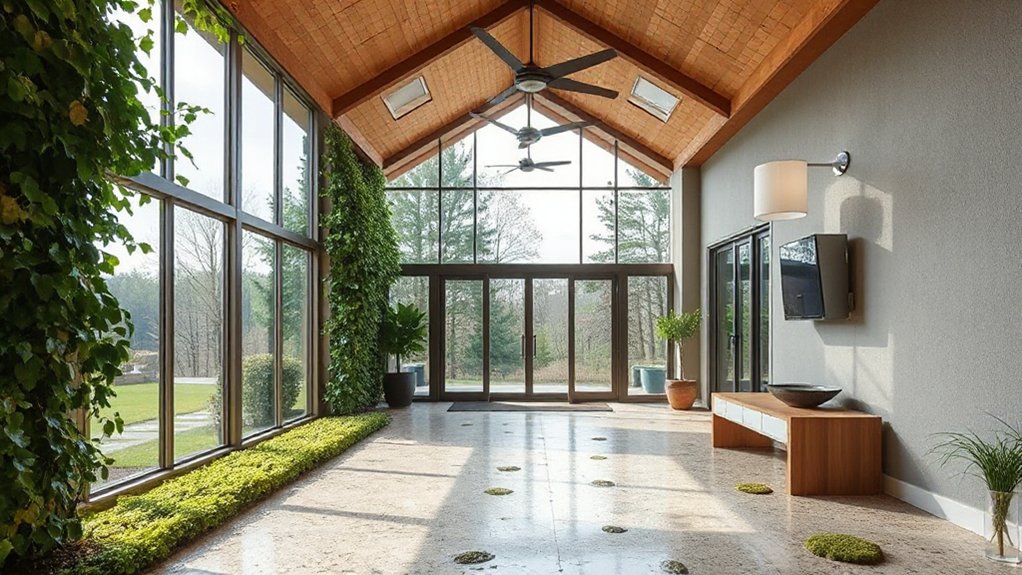
Imagine stepping from a sunlit living area into a seamless courtyard that blurs the line between indoors and out, delivering a curated experience of light, texture, and air. You engage with spaces that fuse shelter and greenery, supporting sustained biophilic design while maintaining precise climate control. Indoor gardens become functional focal points, enhancing air quality and acoustic comfort without compromising aesthetics. The approach prioritizes durable materials, modular planting strategies, and automated irrigation to guarantee year-round vitality.
1) Integrate sheltered courtyards with responsive shading
2) Deploy vertical and ground-level biophilic elements for depth
3) Use programmable irrigation and soil analytics for efficiency
4) Align plant palettes with microclimates and thermal performance
Cheshire Case Studies: Style Meets Sustainability
Cheshire’s luxury homes exemplify the intersection of refined style and verifiable sustainability, where architectural elegance aligns with measurable environmental performance. In this section, you’ll examine representative projects that fuse high-end aesthetics with quantified efficiency. Each case study highlights material selection, energy modeling, and building envelope decisions that reduce lifecycle impact without compromising refinement. You’ll observe how Cheshire craftsmanship informs detailing, from precision timber joinery to stonework that balances heat retention with passive cooling. Focus is placed on heritage preservation, ensuring new interventions respect historic context while upgrading performance. You’ll note scalable strategies, such as high-performance glazing, airtight constructions, and smart controls that optimize energy use. Together, these examples demonstrate how design intent translates into tangible, sustainable luxury that remains faithful to regional character.
Practical Steps to Begin a Luxury Green Renovation
To begin a luxury green renovation, start with a rigorous baseline assessment that captures existing performance, budget constraints, and program priorities; this establishes a clear, data-driven roadmap. You’ll identify energy baselines, material inventories, and systems integration potential, then map milestones to budget phases and performance targets. Focus on measurable outcomes, risk flags, and supplier capability to ensure long‑term reliability. Eco conscious decor and sustainable lighting should guide early decisions, aligning aesthetics with efficiency.
- Establish energy and envelope benchmarks, then prioritize interventions with quantified payback.
- Compile a materials and finishes matrix emphasizing low embodied energy and durability.
- Define a commissioning plan that verifies performance after each retrofit phase.
- Create a staged budget with contingencies and supplier risk assessments.
Frequently Asked Questions
What Budget Ranges Define Luxury Green Renovations in Cheshire?
You’ll typically allocate £200k–£700k for luxury green renovations in Cheshire, depending on scope. You prioritize sustainable materials and energy efficiency upgrades, ensuring premium systems and finishes. Higher budgets enable deeper retrofits, advanced HVAC, and certified low-impact materials.
How Long Do Cheshire Green Upgrades Typically Take?
Typically, Cheshire green upgrades take 2 to 6 months, depending on scope. You’ll specify eco friendly materials and renewable energy implementations, coordinate permits, and sequence trades to minimize disruption while maintaining high technical standards and market-ready finish.
Can Existing Homes Achieve Net-Zero in Cheshire?
Yes, you can reach net-zero in Cheshire with careful planning. You’ll use eco friendly materials, optimize energy systems, and enable smart home integration to monitor consumption, reduce demand, and maximize on-site generation for a balanced, low-impact home.
Which Local Incentives Support Green Luxury Upgrades Here?
Yes—you’ll find local incentives, grants, and credits supporting green upgrades here. You leverage Sustainable materials and Smart home technology investments, lowering costs while boosting efficiency. Align with council programs, energy performance certifications, and financing options for luxury renovations.
How Do Maintenance Costs Compare to Traditional Elevations?
Maintenance costs are lower long-term, thanks to energy efficiency; you’ll spend less on HVAC and utilities, while aesthetic appeal remains high. Initially higher upfronts can be offset, but ongoing savings improve total cost efficiency and value.
Conclusion
You’ll finish this renovation with a home that doesn’t just look luxe, it breathes efficiency. Every detail—regenerative landscaping, passive solar refinements, and high‑performance envelopes—becomes a signal beacon of responsible opulence. You’ll witness waste, water, and energy melt into harmony, while indoor‑outdoor courtyards whisper biophilic elegance. This Cheshire masterpiece proves sustainability isn’t a trend but a precise, technical standard of beauty. Embrace the future you’ve engineered: stunning, resilient, and unmistakably sophisticated.
About the Author