
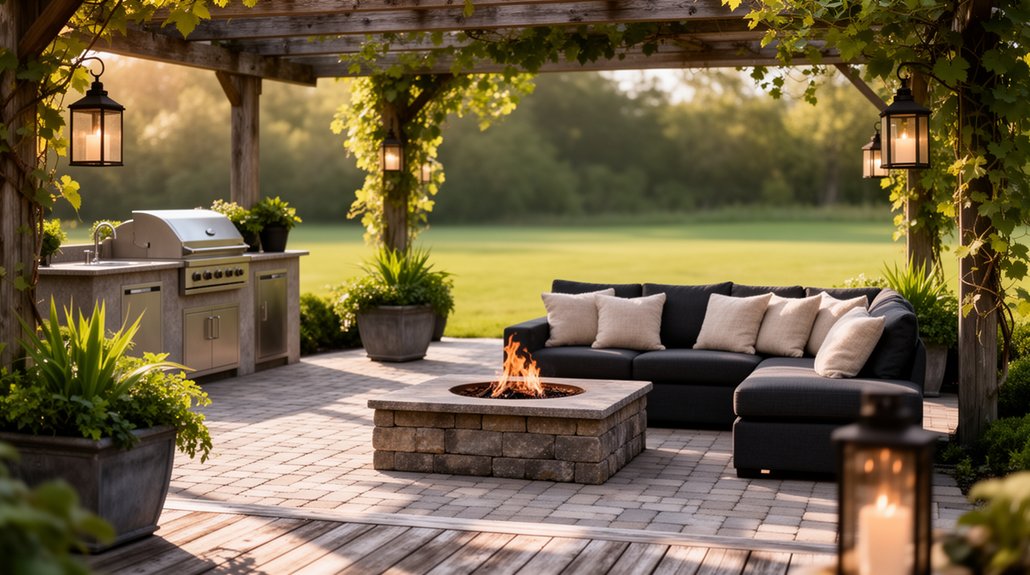
To create a functional outdoor living area, start by clarifying goals and zoning for cooking, dining, lounging, and work. Choose durable, weatherproof materials and plan for easy maintenance with low porosity surfaces and slip resistance. Optimize layout for sun, shade, and wind, and establish all-season seating with modular, weather-resistant furniture and integrated storage. Layer lighting for safety and ambiance, add climate-appropriate greenery, and implement tidy, centralized storage. With disciplined cleanup and cohesive design, you’ll maximize usability—plus you’ll uncover more practical steps as you continue.
Key Takeaways
- Define clear outdoor goals and zones (relaxation, entertaining, cooking, or work) to shape a practical, daily-use layout.
- Assess space type (balcony, patio, or yard) for sun, wind, drainage, weight limits, and maintenance capacity.
- Choose durable, weatherproof materials and hardy greenery suited to climate with low maintenance and appropriate porosity.
- Create comfortable all-season seating, dining, and lighting with modular furniture, windbreaks, layered lighting, and adaptable layouts.
- Plan storage and upkeep routines with weatherproof solutions, integrated storage, and cohesive personal touches.
Clarify Your Outdoor Living Goals in 3 Questions

Ask yourself three targeted questions to define your outdoor living goals. What activities will you prioritize—relaxation, entertaining, cooking, or work—so you can allocate zones effectively? How will weather, sun exposure, and wind influence comfort, durability, and materials in your plan? Finally, what budget, timeline, and maintenance level can you sustain without compromising quality? With these answers, you frame a concrete scope for landscape design, ensuring each choice supports daily use and long-term performance. Prioritize outdoor furniture layouts that promote flow between seating, dining, and prep areas, while maintaining sightlines and accessibility. Translate goals into specs for materials, lighting, and drainage. This disciplined approach yields a cohesive outdoor living space that meets functional aims and resists obsolescence, guiding informed decisions throughout the design process.
Assess Your Space: Balcony, Patio, or Yard-What Fits Your Climate and Budget
Balcony, patio, or yard—your choice should align climate realities, maintenance capacity, and budget constraints to maximize usability and durability. You assess space by sun exposure, wind patterns, and seasonal temperature swings, then match options to your upkeep tolerance and finances. For balconies, factor weight limits, railing access, and potential privacy concerns; for patios, plan for solid or permeable surfaces that ease cleanup and drainage, plus furniture footprint. Yards demand irrigation considerations, grading, and seasonal drainage confidence to avoid standing water. Consider multipurpose layouts that minimize ongoing costs while supporting year‑round use. Address balcony privacy early with screens or plantings, and ensure yard drainage via grading and sub‑surface routing where needed. Your final choice should enable reliable use with predictable maintenance and cost.
Pick Durable, Weatherproof Materials That Withstand Elements
Choose weatherproof materials that resist moisture, UV exposure, and temperature swings, so your outdoor space stays solid year-round. Focus on durable, all-weather surfaces like treated wood, composite decking, stone, and corrosion-resistant metals that handle frequent use and cleaning. Prioritize low-maintenance options with proven track records in your climate to minimize upkeep and maximize longevity.
Weatherproof Material Choices
When selecting weatherproof materials, prioritize durability, resistance to moisture, sun exposure, and temperature fluctuations. You’ll choose fast-drying cushions, corrosion-resistant fasteners, and coatings that resist cracking and fading. For structure, opt for treated timber, powder-coated aluminum, or weatherproof composites with low water absorption and proven UV stability. Select fabrics and finishes with proven outdoor performance, focusing on stain resistance and easy cleaning. For garden furniture, prioritize frame materials that maintain strength in humidity and temperature shifts, and guarantee joints are reinforced to resist loosening over time. For outdoor decor, apply weatherproof finishes to small accents and planters to prevent moisture damage. Ensure compatibility with maintenance routines, so you can regularly inspect and refresh exposed surfaces without disrupting use.
Durable, All‑Weather Surfaces
Durable, all-weather surfaces must withstand sun, rain, temperature swings, and daily use without compromising safety or aesthetics. You choose materials with proven weather resistance and low porosity to reduce staining and water intrusion. Prioritize surfaces that resist cracking, warping, and frost damage, and verify slip resistance under wet conditions. For decking, opt for sealed composite or stabilized wood with non-slip textures and UV inhibitors. For stone or pavers, ensure proper bed preparation and joint stabilization to prevent shifting. Install drainage slopes to prevent pooling and confirm there’s adequate air circulation under elevated systems. Plan seasonal maintenance, including cleaning, coating refreshes, and resealing as recommended. Use weather resistant finishes on exposed timber and metal to extend service life and maintain appearance.
Create Cozy Seating and Dining for All-Season Use
To create cozy seating and dining for all seasons, start with modular, weather-resistant furniture that can be reconfigured as needed. You’ll optimize space by selecting pieces with integrated storage, corrosion-resistant frames, and quick-dry cushions. Choose a mix of low-profile seating for conversation and taller pieces for dining, ensuring accessibility from multiple zones. Use modular sections to adapt layouts for sun, shade, or rain, and align tables with seating groups to minimize foot traffic disruption. Incorporate fire pits and water features to extend usability into cooler evenings and humid months, while maintaining safety clearances and wind protection. Install semi-enclosed screens or curtains for windbreaks without sacrificing airflow. Prioritize durable fabrics, simple maintenance, and repeatable configurations for year-round comfort.
Plan Lighting for Mood, Safety, and Entertaining
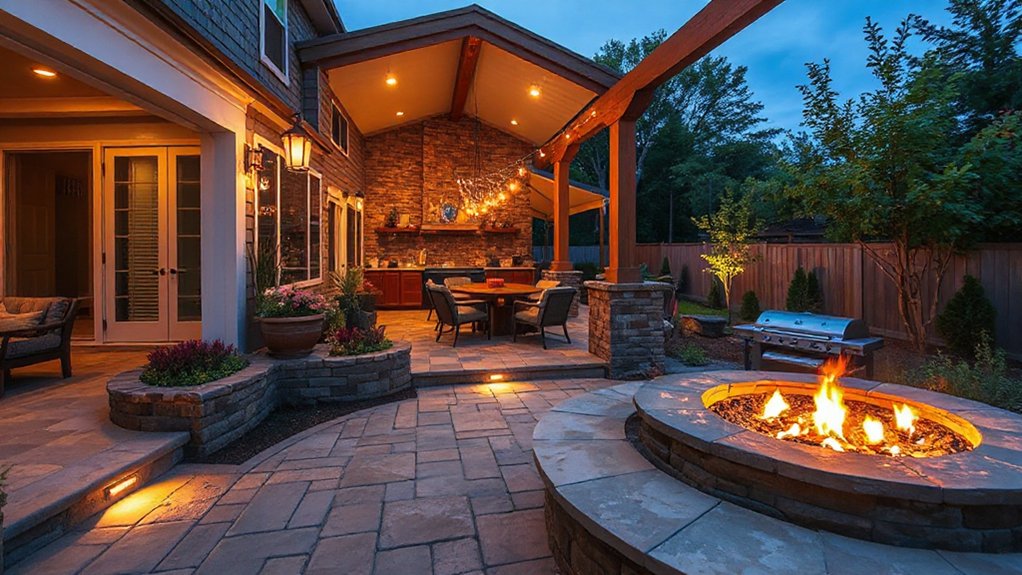
Plan lighting strategically to support mood, safety, and entertaining flow across the outdoor area. You’ll balance brightness with warmth, guaranteeing pathways are visible while living zones feel inviting. Use layered luminance: ambient, task, and accent to prevent glare and shadows during gatherings. Focus on placement efficiency, avoiding dark corners and overlit zones. Choose durable fixtures rated for outdoors and coordinate color temperature for a cohesive scene. Outdoor string lights provide soft overhead coverage, while lantern placement marks entry points and focal areas. Verify switches and outlets are accessible for quick adjustments. Maintain safety by eliminating tripping hazards and using gFCI outlets. Consistency across fixtures reduces visual clutter and enhances control.
- Plan zones with distinct lighting needs
- Aim for 2700–3000 K temperature
- Place string lights overhead and lanterns at key thresholds
- Test and adjust before entertaining
Add Shade, Shelter, and Weather Protection Then Breathe Easy
Shade and shelter are essential for extending outdoor living comfortably, protecting people and furniture from sun, rain, and wind. You’ll select shade solutions that balance coverage with airflow to prevent heat buildup. Evaluate site orientation, material durability, and maintenance needs to guarantee long-term performance. Consider fixed structures, retractable systems, and movable screens to adapt to changing conditions. Weather protection should extend beyond shade, including drip lines, windbreaks, and rain containment where needed. Use UV-rated fabrics and weather-resistant framing to minimize replacement cycles. Install properly sized eaves or overhangs to reduce glare and sun exposure on seating, dining, and cooking zones. Confirm that drainage, anchoring, and code compliance are addressed, then breathe easy knowing the space remains comfortable under varying skies.
Define Cooking, Lounging, and Dining Zones for Flow
Clearly delineate cooking, lounging, and dining zones to optimize workflow and safety; this separation minimizes cross-traffic, reduces heat transfer to seating, and concentrates moisture control around the prep and cleanup areas. You implement clear buffers and sightlines, so each function remains dedicated and efficient. Maintain logical proximities: prep near utilities, cooking nearer the heat source, and dining adjacent to serving. Consider outdoor decor elements to define edges without clutter, and use plant selection to reinforce zones subtly. Use durable materials for traffic paths and weather-resistant surfaces.
- Separate boundaries with low-profile screens or planters
- Align utilities and work zones for shortest paths
- Place seating away from heat and splash zones
- Install discreet storage for utensils and tools
Grow Easy-Care Plants and Greenery Without the Mess

Consider low-maintenance planting choices that stay neat with minimal care, so your space remains functional and tidy. Explore mess-free greenery options and practical plant selections that fit container or bed setups without frequent cleanup. Use easy-care landscaping ideas that simplify upkeep while delivering consistent texture, color, and structure.
Low-Mmaintenance Planting Choices
To keep maintenance to a minimum, choose hardy, low-profile plants that thrive with little intervention and fit your climate. In xeriscape gardening, select drought tolerant plants that require minimal irrigation and resist stress. Prioritize proven performers with compact habits, slow growth, and pest resilience. Implement efficient spacing and mulching to suppress weeds and conserve moisture.
- Choose native or well-adapted species with deep roots and low water needs.
- Group plants by similar water and sun requirements to simplify irrigation.
- Use mulch to reduce evaporation and deter weeds, boosting soil structure.
- Schedule occasional pruning and fertilization focused on health, not novelty.
This approach minimizes upkeep while maintaining landscape function, color, and structure, aligning with practical outdoor living goals.
Mess-Free Greenery Options
When you’re building a low-maintenance outdoor space, choose greenery that stays tidy with minimal effort and resists common mess factors like shedding, invasive growth, or manual cleanup. Mess-free options prioritize controllable visuals and predictable maintenance, enabling reliable site aesthetics. Artificial turf provides a durable, fiber-tip appearance without soil exposure, reducing debris and patchy growth concerns while delivering consistent color year-round. Container gardening concentrates plant material, keeping roots contained and cleanup simple, and allows precise selection for sun, wind, and moisture conditions. Select disease-resistant cultivars and low-spread species to minimize pruning. Irrigation should be centralized or drip-based to limit runoff and debris; pair with weed barriers where appropriate. Finally, implement routine inspections to catch maintenance needs early and preserve a clean, unobtrusive outdoor living area.
Easy-Care Landscaping Ideas
Starting with low-maintenance, easy-care plant choices helps you build a tidy outdoor space that stays fresh with minimal effort. You’ll select sturdy varieties that tolerate drought, heat, and routine wear, keeping upkeep minimal while preserving aesthetic cohesion. Focus on structural elements like evergreen shrubs, ornamental grasses, and compact perennials to maintain year-round form. Integrate Garden art and subtle water features to enhance ambiance without increasing maintenance. Use smart irrigation, mulching, and selective pruning to reduce work hours.
- Choose drought-tolerant species with uniform growth habits
- Group by sun exposure and irrigation needs for efficiency
- Incorporate low-maintenance Garden art as focal accents
- Add a small Water features element with prefiltered circulation for reliability
Smart Storage and Clean-Up Solutions for Outdoors
Smart storage and clean-up are essential for a functional outdoor living space. You’ll maximize usability by selecting weatherproof storage containers that resist moisture and UV damage, then organize them by category: tools, cushions, and grilling gear. Use stackable bins for small items and labeled totes for seasonal equipment to streamline access and reduce search time. Implement a centralized cleaning routine: sweep, wipe, and dry surfaces after use, then return items to their designated spots to prevent outdoor clutter. Consider multi-purpose furniture with integrated storage to reclaim deck space while maintaining seating comfort. Mount wall hooks and ceiling racks for frequently used items, keeping pathways clear and preventing trip hazards. Regular audits keep your setup efficient, durable, and ready for spontaneous gatherings.
Finishing Touches: Color, Textiles, and Personal Style
Color, textiles, and personal style finish the outdoor living area with function and character. You’ll reinforce cohesion by selecting colors compatible with underlying materials, lighting, and landscape. Color coordination guides mood, durability, and maintenance, so choose palettes that endure seasonal shifts and sun exposure. Textile selection matters for proofed performance: outdoor fabrics with UV resistance, mildew retardants, and quick-dry properties perform best in high-use spaces.
- Align upholstery tones with architectural accents for a unified look.
- Choose textiles with durable weaves, fade resistance, and easy cleaning.
- Layer patterns subtly to avoid visual clutter while adding depth.
- Tie accessories and greenery back to the main palette for cohesion.
Frequently Asked Questions
How to Balance Function and Aesthetics in Outdoor Spaces?
You balance function and aesthetics by planning landscape lighting to highlight focal elements and using privacy screens to define zones; guarantee durability and maintenance ease, adjust glare controls, and integrate materials that complement builds for cohesive, practical outdoor spaces.
What Budget-Friendly Upgrades Maximize Outdoor Usability?
You’ll maximize usability with budget-conscious tweaks: landscape lighting guides safety and ambiance, while outdoor rugs define zones and reduce dirt. You’ll install simple, durable options, measure power needs, and maintain regularly for consistent, practical outdoor comfort. Satire lightly bites.
How to Choose Weatherproof Materials for Durability?
You should prioritize weather resistant furniture and durable flooring options, selecting materials with low porosity, UV resistance, and salt spray tolerance. Compare warranties, maintainability, and installation methods to guarantee long-term performance in exposed outdoor environments.
What Are Best Practices for Year-Round Seating Comfort?
You’ll experience true year-round seating comfort by choosing adaptive cushions, thermal-reflective fabrics, and adjustable chairs; test your setup with a fire pit and cozy lighting to confirm warmth, airflow, and ergonomic alignment.
How Do I Integrate Smart Storage Without Clutter?
You’ll integrate smart storage by choosing hidden compartments and multifunctional furniture that conceal cords and devices, keep surfaces clear, and maximize seating. Plan accessible, labeled bays, soft-close lids, and modular components for scalable, clutter-free outdoor comfort.
Conclusion
You’ve mapped goals, chosen durable materials, and zoned for cooking, lounging, and dining, so your outdoor space becomes a seamless, weather-ready extension of your home. Maintain with smart storage and easy-clean habits, and you’ll minimize upkeep while maximizing use. Think of your design as a living system—adaptable, efficient, and resilient. Like a well-tuned instrument, your outdoor area should balance form and function, delivering comfort, safety, and lasting value with every season’s shift.
About the Author


