

To prepare your garden for summer, start with a soil test and amend for heat tolerance with compost and appropriate mineral additives. Plan beds for airflow and sun, placing tall crops on edges to prevent shading. Water deeply with drip irrigation, mulch 2–3 inches, and keep mulch away from stems. Choose heat- and drought-tolerant vegetables, plus gentle, non-toxic pest prevention. Establish a simple weekend routine to maintain beds and stay ahead—the next steps will reveal more practical tweaks.
Key Takeaways
- Assess current garden conditions (sun exposure, health, and airflow) and plan pruning, tidying, and soil adjustments for summer.
- Optimize layout for airflow and sun by spacing beds, orienting tall crops, and rotating crops annually.
- Prepare soil with testing, amendments, and compost to improve structure, nutrients, and moisture retention.
- Implement efficient watering and mulching strategies (drip irrigation, deep soaks, 2–3 inch mulch) to reduce evaporation.
- Choose heat- and drought-tolerant plants, monitor pests gently, and maintain routines for fertilization, pruning, and weekend garden upkeep.
What You Must Do Before Summer Starts: A 7-Step Prep Plan
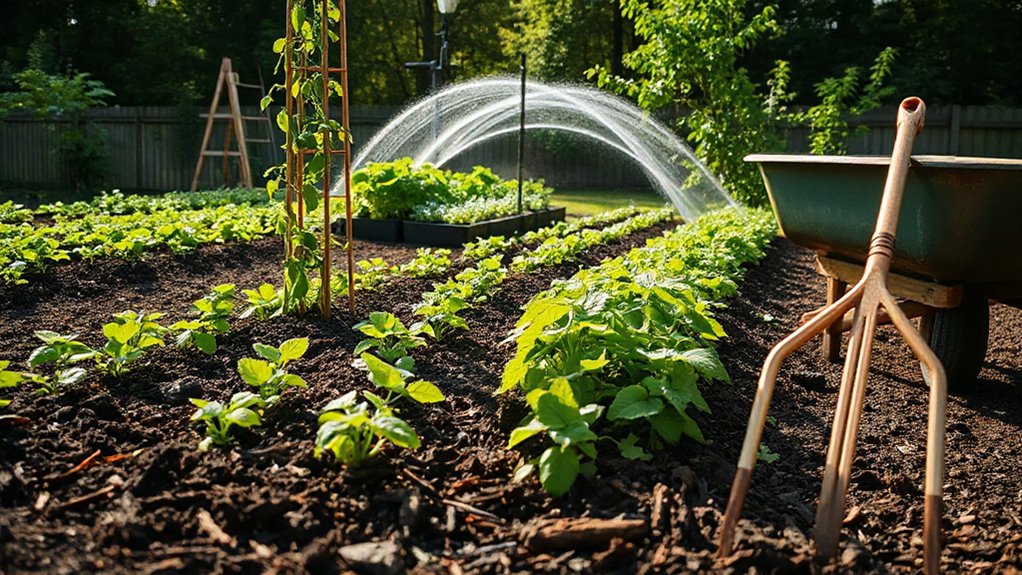
To prepare your garden for summer, start with a clear 7-step plan: assess current conditions, test soil, amend nutrients, prune and tidy, water wisely, mulch, and plan for pests. You’ll evaluate sun exposure, plant health, and existing growth, noting any disease signs. When you test soil, use a reliable kit and record pH, nutrient levels, and texture. Amend nutrients based on results, applying balanced, slow-release blends to boost soil structure. Prune damaged wood and tidy perennials to promote airflow and reduce overwintering pests. Water wisely by grouping plants with similar needs and using deep, infrequent irrigation. Mulch to conserve moisture and suppress weeds. Plan for pests with early monitoring, row covers, and timely interventions, centering soil nutrition and pest management in your strategy.
Test Your Soil and Amend for Heat-Tolerance
Testing your soil now sets the foundation for heat tolerance later: start with a reliable kit, collect samples from multiple spots, and read pH, fertility, and texture quickly. You’ll identify deficits that hinder heat response and tailor amendments precisely. Focus on practical steps, not guesswork, and document results for future comparisons. Use soil testing to guide your heat amendments so your plants endure hotter spells with minimal stress.
- Collect uniform samples from representative zones, then mix for a composite reading.
- Interpret pH, nutrient levels, and texture to decide corrective actions.
- Apply lime or sulfur only if tests justify adjustment, aiming stable pH.
- Choose compost, rock minerals, or specific fertilizers to balance nutrients and improve heat tolerance.
Water Smarter: Deep, Efficient Soaks That Last
Water your beds with deep, infrequent soaks to penetrate the root zone. Use mulch and soil amendments to hold moisture longer between watering, and schedule irrigations to match soil texture and plant needs. We’ll discuss concrete methods for deep soak, plus efficient tactics to minimize waste and maximize soil moisture.
Deep Soak Methods
If you want deeply effective irrigation, start with deep soak methods that deliver water where it matters: the root zone. You’ll maximize moisture retention and reduce evaporation by targeting soil layers below the surface. Use steady, low-flow delivery and monitor soil moisture to avoid runoff. Apply longer soak periods after rainfall or irrigation to guarantee deep infiltration and uniform distribution.
- Schedule slow, steady soaks that reach below a plant’s root zone.
- Use mulch to reduce surface evaporation and improve moisture retention.
- Calibrate emitters or soaker hoses for uniform coverage and minimal misting.
- Test soil moisture at multiple depths to confirm effectiveness of the soak.
Efficient Watering Tactics
Efficient watering isn’t about more water—it’s about smarter delivery that goes where it’s needed most. You’ll maximize soil moisture with targeted methods that minimize waste and run-off. Start with drip irrigation for roots, delivering water directly to the root zone at a slow, steady rate. Pair with mulch to slow evaporation and keep soil cooler between cycles. Schedule early morning or late evening to reduce evaporation and fungal risk. Use soil moisture measurements or a simple tensiometer to guide timing, not guesswork. Water conservation hinges on uniform coverage, avoiding wetting foliage. Test for uniformity by observing wetting patterns and adjusting emitter flow. Rotate zones to prevent overwatering one area. Monitor plant response and adjust as growth changes.
Mulch for Moisture: Lock It In and Keep Roots Cool
Mulch conserves soil moisture while insulating roots, helping your plants withstand heat. By reducing evaporation, it keeps the root zone cooler and more stable all day long. When you apply the right layer, you’ll see healthier moisture levels and stronger growth.
Mulch Conserves Soil Moisture
Mulching is a simple, effective way to conserve soil moisture and protect plant roots, especially during hot summer weeks. You’ll lock in moisture, reduce evaporation, and stabilize soil temperatures, helping roots stay cool and active. For best results, choose materials that decompose gradually and add soil health benefits, like wood chips or straw. When paired with organic compost, mulch supports nutrient cycling and microbial life, boosting long‑term fertility without water waste.
- Apply a 2–3 inch layer around plants, avoiding stems.
- Keep mulch a finger’s width from trunks to prevent rot.
- Replenish after heavy rain or sun exposure.
- Mix in organic compost beneath mulch for ongoing nourishment.
Roots Stay Cool With Mulch
As heat climbs, keeping roots cool becomes as important as conserving moisture. Mulch acts as a blanket, reducing soil temperature and protecting root systems from sudden swings. Choose a two- to four-inch layer and keep mulch a few inches away from stems to prevent rot. Organic options—shredded bark, leaves, straw, or compost—offer better long-term soil conditioning while providing root insulation. For planted beds, extend mulch beyond the drip line to maximize soil cooling and moisture retention. Replenish as it settles or decomposes, and monitor for compaction after heavy rain. Mulch not only slows evaporation; it stabilizes soil temperature, supporting steady nutrient uptake. This simple practice enhances plant vigor, promotes deeper roots, and reinforces overall garden resilience during summer heat.
Pick Heat-Tolerant Vegetables for Summer Success
To beat the heat, choose vegetables that thrive in hot, dry conditions and days above 85°F. You’ll select crops that finish quickly, resist bolting, and tolerate full sun. Apply crop rotation to reduce soil-borne pests, and plan companion planting to boost growth and reduce stress. Focus on proven heat-tolerant staples and efficient space use.
- Okra
- Sweet corn
- Southern highbush peppers
- Cowpeas (black-eyed peas)
These choices minimize watering bursts and maximize yield during peak summer. Prepare beds with well-draining soil and steady moisture, mulching lightly to retain humidity. Use crop rotation to prevent disease buildup, and pair compatible companions near each other to improve nutrient uptake and pest management. Stay vigilant for heat stress signs, adjust shading if needed, and harvest promptly to maintain continual production throughout the hottest weeks. This approach keeps your garden productive and resilient all summer.
Choose Drought-Resistant Flowers for Color All Season

Choosing drought-resistant flowers guarantees vibrant color with less water, so you can sustain interest in your garden even during dry spells. To achieve steady impact, select drought tolerant plants suited to your climate and soil. Prioritize varieties with long bloom periods and sturdy foliage that resist heat and drought stress. Pair evergreen foliage with seasonal color options to maintain structure when flowers fade. Design blocks of perennials for year-round color and interplant with annuals only where you can water reliably. Mulch deeply to reduce evaporation and improve moisture retention, then water deeply rather than often. Avoid high-maintenance species; opt for natives and well-adapted cultivars that require minimal care while delivering consistent beauty. Monitor soil moisture and adjust as heat peaks arrive.
Tame the Sun: Quick Light-Management Tips
Even when summer sun is blazing, you can control light levels in your garden with simple, effective steps. Quick light-management keeps plants healthy, reduces scorch, and preserves color.
- Use shade cloths to filter intense sun on high-heat beds, adjusting density for leaf tolerance and heat load.
- Install sun filters or light-diffusing netting over sensitive specimens to soften midday rays without restricting airflow.
- Position taller shrubs to cast strategic shade on sun-loving perennials during peak hours, then rotate seasonally.
- Create microclimates with mulches and reflective ground covers that reduce heat gain and improve moisture retention.
Fertilize for Sustained Growth Through Summer
After shaping light exposure, you’ll want steady nutrition to match summer’s demands. You’ll deliver that with targeted fertilization that supports sustained growth without burn. Start by applying a balanced, slow-release fertilizer at the base of established plants, following label directions for timing and rate. For vegetables and leafy crops, supplement with a nitrogen-rich boost every three to four weeks during peak growth, but scale back as flowers form. Use Organic composting mixes to enrich soil structure, improving moisture retention and microbial activity. Water deeply after fertilizing to activate nutrients and reduce salt buildup. Maintain plant pruning routines to remove spent growth and encourage air circulation, which helps roots access nutrients. Monitor for signs of deficiency and adjust program accordingly.
Gentle Pest Prevention: Safe, Non-Toxic Solutions

Gentle pest prevention starts with safe, non-toxic practices you can trust. Use targeted, non-chemical methods and natural barriers to reduce pests while protecting pollinators and beneficial insects. We’ll explore practical, effective options that keep your garden healthy without harsh toxins.
Safe, Non-Toxic Practices
Safe, non-toxic pest prevention uses practical, garden-tested methods that protect both plants and people. You’ll rely on observation, diversity, and simple barriers to deter pests without harming beneficial organisms. Emphasize culturally sound practices and build resilience through soil health and informed choices.
- Monitor daily, identifying pests early and swapping strategies as needed.
- Introduce beneficial insects and use row covers to block problem species.
- Apply natural pest control options, avoiding harsh chemicals and focusing on targeted solutions.
- Use organic fertilizers and compost to strengthen plants and reduce vulnerability.
Keep records of what works, rotate crops, and maintain clean beds. This approach aligns with natural pest control principles and supports long-term garden robustness, while minimizing risks to family and wildlife.
Gentle Pest Prevention Methods
Could you prevent pest problems without harsh chemicals? Yes, and you’ll do it by applying gentle, targeted methods. Start with companion planting to confuse pests and attract allies; interplant marigolds near tomatoes or herbs beside beans. Use row covers to block opportunistic feeders while preserving pollinators. Create a habitat for beneficial insects by leaving diverse plant clutter and a shallow water source. Avoid broad-spectrum sprays; choose labeled, low-toxicity options and apply them precisely to affected areas only. Maintain healthy plants through proper watering, spacing, and pruning to reduce stress that invites pests. Rotate crops annually to disrupt life cycles. Monitor regularly, scouting for early signs, and respond promptly to minimize damage.
Plan Your Garden Layout for Airflow and Sun Exposure

To maximize airflow and sun exposure, plan your garden layout with staggered rows and thoughtful spacing, placing taller plants to the north or east to avoid shading shorter ones. You guarantee airflow by avoiding dense blocks and leaving aisles for air movement. Align beds to sun paths, rotating crops yearly to maintain vigor. Garden aesthetics come from intentional spacing and color balance, not random placement. Companion planting boosts health by pairing compatible species for pest deterrence and soil support.
- Map sun angles and adjust bed orientation accordingly
- Place tall crops at edges or north/east to prevent shading
- Create 2–3 ft gaps for air circulation and access
- Group companions to maximize benefits and simplify maintenance
Weekend Routines That Save Time in the Garden
If you want to cut weekend chores without sacrificing garden health, establish a few focused routines that you can repeat every Saturday and Sunday. Start by a 30-minute quick tidy: remove spent blossoms, prune lightly, and clear debris to prevent pests. Schedule a 10-minute irrigation check, adjusting so soil stays evenly moist without runoff. Set a specific harvest window for harvesting tips, selecting only ripe produce and labeling baskets for speed. Mulch patches you touched to conserve moisture and suppress weeds, then note any mismatches in sun or water for next week. Use a simple decoupled rotation: move containers and adjust decor or garden decor elements to keep visuals fresh while staying functional. Routines minimize stress, maximize yield, and keep weekends efficient.
Troubleshooting Common Summer Garden Snags
Summer heat brings rapid changes that can derail even well-planned routines, so you’ll want a reliable troubleshoot-and-adjust mindset.
Troubleshooting common summer garden snags requires decisive steps. You’ll identify issues quickly, implement fixes, and prevent recurrences by staying proactive. Focus on two core areas: pest pressure and soil health. A Common pest influx signals targeted action, while soil testing reveals nutrient gaps and moisture problems that amplify stress on plants.
- Inspect leaves and stems daily; differentiate pests from abiotic damage, then treat precisely.
- Monitor soil moisture; adjust irrigation to keep roots evenly hydrated without sogging.
- Conduct soil testing; amend with appropriate nutrients and organic matter.
- Row-cropping or spacing adjustments; improve airflow and reduce disease risk.
Frequently Asked Questions
How Often Should I Prune Summer-Flowering Shrubs?
Pruning summer-flowering shrubs about every 4–6 weeks during active growth keeps shape and encourages blooms. Pruning timing targets right after flowering, avoiding heat stress. For shrub maintenance, remove dead wood first, then light touch-ups to maintain structure.)
Can I Reuse Container Soil From Last Year?
Yes, you can reuse container soil, but do soil rejuvenation first: thoroughly sanitize, sterilize with heat, and refresh with fresh amendments. Then reuse, ensuring container cleaning is complete to prevent pests, diseases, and nutrient imbalances.
What Signs Indicate Heat Stress in Plants?
Plant heat tolerance shows when leaves curl, scorch, or wilt, and flowering stalls. You’ll notice reduced vigor, leaf drop, and uneven fruiting. Monitor signs of stress and adjust watering, shade, and airflow to protect your plants.
Do I Need to Water on Cloudy Days?
Yes, you should water on cloudy days if the soil’s dry; cloud cover reduces evaporation but plants still transpire. Maintain a steady watering schedule, noting cloud cover effects on soil moisture, and adjust depth to 6–8 inches.
How Can I Attract Beneficial Insects Quickly?
You can attract beneficial insects quickly by planting diverse flowers and herbs and installing simple insect habitats. Embrace companion planting, keep habitats moist, and avoid broad-spectrum sprays; provide timed blooms to sustain pollinators and natural predators throughout the season.
Conclusion
You’ve laid the groundwork, fixed soil, watered smart, and mulched wisely. With heat-tolerant veggies, airflow, and gentle pest care, your garden stays resilient as summer heats up. Stick to a simple routine, monitor moisture, and adjust as you learn what thrives. Think of your plot as a loaf rising in a warm oven: steady, patient, and ready to yield. Stay proactive, stay precise, and savor the growing season you’ve prepared.
About the Author


