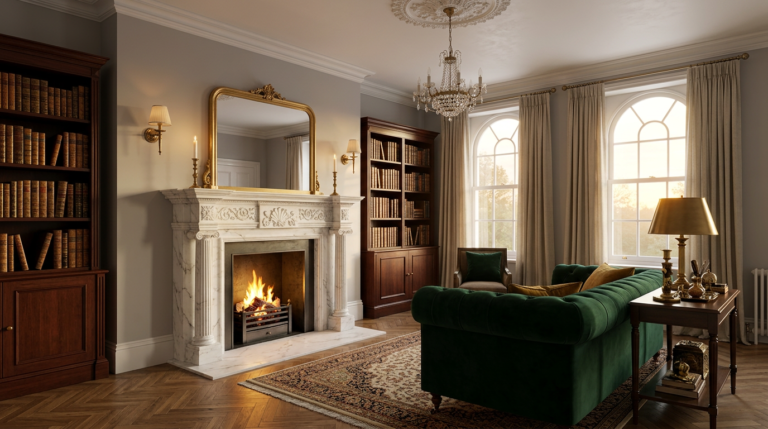
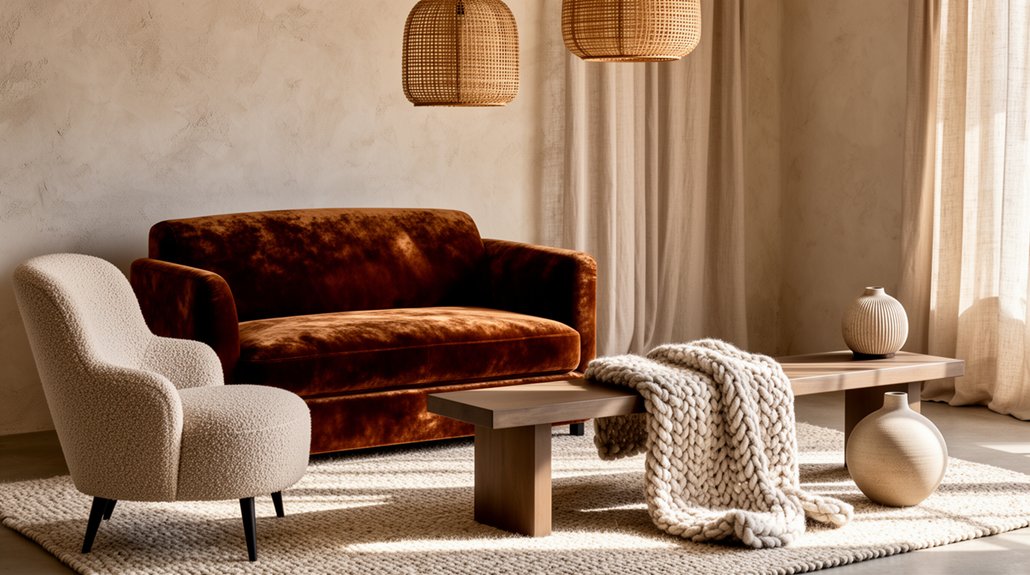
Texture transforms a flat room into a rich, cohesive space. Start by layering tactile fabrics and finishes—pair soft weaves with crisp surfaces, mix matte and gloss, and vary scale to maintain rhythm. Introduce sculptural materials for bold contrast and place them where light creates dynamic shadows. Use restrained color to let textures speak, and keep patterns simple near focal points. Plan purposely: choose a dominant finish, then add budget-friendly accents to refresh the look as you go. You’ll uncover more strategies as you continue.
Key Takeaways
- Use subtle wall textures and finishes (matte vs. satin) to add depth without overpowering the space.
- Layer tactile fabrics with contrasting surfaces (knits, stone, leather) to create a cohesive, grounded feel.
- Introduce sculptural accents with bold silhouettes positioned for dramatic light and shadow.
- Create depth through restrained color and textural contrasts (matte plaster with satin wood, wool with cool stone).
- Plan a dominant texture and build a budget-friendly mix of textiles, baskets, and accessories to refresh seasonally.
Make Texture Transform Your Flat Room

Texture isn’t just decoration—it can redefine a flat room. You’ll harness depth by selecting wall treatments that create subtle contrast, like matte vs. satin finishes, or a single panel with a tactile texture. Pair these with decorative trims to sharpen lines and elevate proportion, ensuring every edge reads intentional. Consider a restrained palette and let texture carry the emphasis, rather than loud color battles. You’ll balance scale by varying textures across surfaces: a plastered accent wall, a softly woven rug, and sleek, burnished metals. Keep lighting steady to spotlight surface details without glare. Finally, establish a coherent rhythm: repeat a material at key junctions, then vary its application to avoid monotony. Your room gains sophistication through deliberate texture strategy, not excess.
Layer Tactile Fabrics and Surfaces
Layering tactile fabrics and surfaces starts with a deliberate mix of textures that complement each other. You’ll balance soft, woven textiles with crisp surfaces to establish a grounded, cohesive feel. Aim for textural contrast: pair chunky knits with smooth stone, matte ceramics with glossed wood, and boucle with leather. Preserve rhythm by varying scale and density, so no single texture dominates. When you layer, consider how light interacts across surfaces; adjust sheen to control glare and warmth. Use tactile layering to define zones, not just decorate them—a throw over a lounge chair can cue coziness, while a textural rug anchors a seating group. Keep edges clean and seams intentional; the goal is refined tactility, not chaos.
Use Sculptural Materials for Impact
Sculptural materials command attention by their inherent form, weight, and weight of presence in a room. When you select sculptural accents, you curate focal moments that read as artful blocks within architecture. Choose pieces with bold silhouettes or twisted geometries that contrast with softer surroundings to create visual dialogue. Material contrasts matter: pair matte stone with gleaming metal, or timber with opaque ceramic for depth and texture variation. Position sculptures where light catches edges, casting dynamic shadows that change through the day. Maintain balance by limiting the number of sculptural accents to avoid overwhelmi ng the space. Curate pieces that feel inevitable, not ornamental, so their volume reinforces the room’s structure and elevates everyday textures into considered design.
Add Depth With Subtle Finishes and Color

Subtle finishes and restrained color can deepen a space without overpowering it. You achieve this by embracing textural contrasts that read as quiet, not loud: a matte plaster wall paired with a satin-finish wood floor, a soft wool rug against cool stone. Keep color accents restrained—think a single charcoal pillow, a muted velvet drape, or a terracotta accent vase—to anchor the room without shouting. Balance matters: align textures across zones, so seating, walls, and textiles tell a cohesive story. Lighting should reveal nuance, not glare, highlighting subtle shifts in tone. Avoid busy patterns near focal points; simplicity reinforces depth. When you combine refined textures with light, deliberate color accents, the perception of space expands gracefully.
Mix Textures on Any Budget
You don’t need an unlimited budget to add texture; smart choices let you mix materials so every inch reads rich and intentional. Start with a clear plan: select a dominant finish and layer complementary textures to create texture contrast without clutter. Use budget friendly accents like throw pillows, woven baskets, or a jute rug to introduce tactile variety without overspending. Combine hard surfaces—wood, metal, ceramic—with soft elements such as linen drapes or cotton upholstery to balance shine and warmth. Consider scale: mix large, subtle textures with small, crisp ones for depth. Keep finishes cohesive through a shared undertone (warm oak, cool gray, or earthy terra cotta). Prioritize quality where it matters most, and swap seasonal accessories to refresh the look without expanding costs.
Frequently Asked Questions
How Do I Choose Textures for Small Spaces?
Choose light, tactile textures and scale to fit small spaces; prioritize wall coverings with subtle sheen and matte finishes, and add decorative accents in monopole colors. Use mirrors to reflect light, keeping walls simple, uncluttered, and cohesive.
Which Textures Feel Warm Without Heavy Furniture?
Textures that feel warm without heavy furniture rely on tactile comfort and textural contrast: you’ll embrace soft velvets, brushed linens, and smooth boucle alongside warm wood accents, creating an allegory of whispering rooms where comfort guides you home.
Can Texture Affect Room Acoustics Effectively?
Yes, texture can influence room acoustics. You’ll notice improved sound absorption and acoustic enhancement when you thoughtfully select materials, shapes, and placement, reducing echoes and clarifying speech throughout the space.
What Order Should Textures Be Layered in a Room?
Start with a neutral base, then layer from large to small: walls, textiles, then accents. You’ll use layering techniques and texture contrasts to create depth, avoiding clashing scales; you’ll feel cohesive harmony as you go, confidently.
Are Natural Textures Better for Sustainability Goals?
Yes, natural textures are generally better for sustainability goals. Opt for eco friendly materials and biodegradable textures, since they reduce embodied energy, support circularity, and lessen waste while maintaining aesthetic integrity in your space.
Conclusion
Texture isn’t a distraction; it’s a dialogue. You crave warmth, you crave edge, you crave quiet luxury and bold statement in equal measure. By layering tactile fabrics with sculptural surfaces, you’ll craft depth where flat spaces once served only function. Juxtapose soft and hard, matte and glossy, subtle and dramatic, to guide the eye and the mood. You don’t just decorate—you elevate. Let texture transform your room into a living, breathing composition.
About the Author