Smart Bulbs vs Smart Switches: Which Is Right for You?
Smart lighting has two distinct upgrade paths, and choosing between them before you buy anything will save you from the frustration of discovering that your shiny new smart bulbs stop responding every time someone flips the wall switch. Smart bulbs and smart switches are not interchangeable solutions to the same problem — they address smart lighting from fundamentally different directions, with different strengths, different limitations, and different appropriate applications.
How Each System Works
Smart bulbs replace your existing bulbs. The intelligence is in the bulb itself: a Wi-Fi, Zigbee, Z-Wave, or Bluetooth radio lives inside each bulb alongside the LED element. You screw them in, connect them to an app, and control them wirelessly. The wall switch stays where it is but becomes a liability — if someone turns the switch off, the bulb loses power and drops off the network. A switched-off smart bulb is simply a dumb bulb.
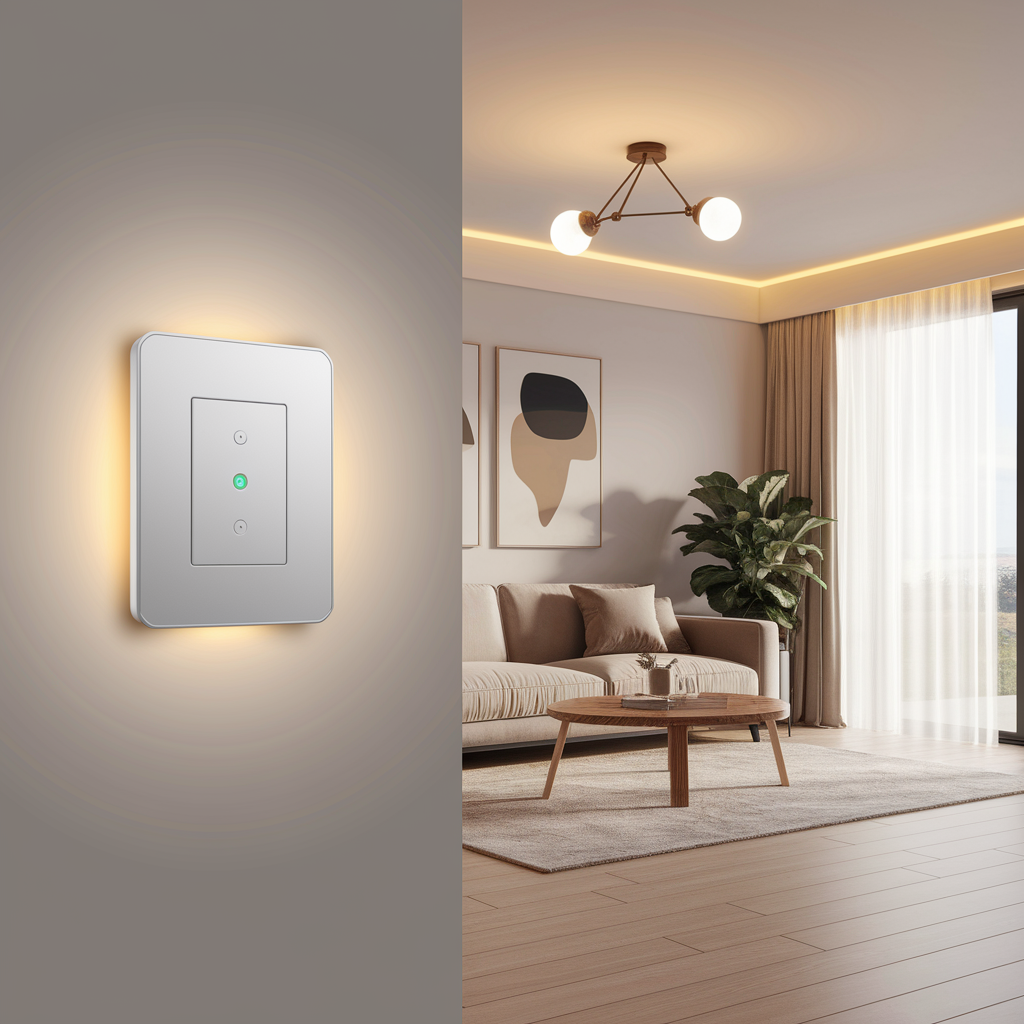
Smart switches replace your existing wall switch. The intelligence moves to the switch: it controls the standard bulbs above it via the wired circuit, manages the connection to your network, and handles all the smart functionality. The bulbs become irrelevant — they can be any standard LED. The switch is always powered (switches have a permanent live feed even when “off”), so network connection is never interrupted.
Smart Bulbs: The Pros
Colour and colour temperature control. This is where smart bulbs win decisively. High-quality smart bulbs (Philips Hue, LIFX, Nanoleaf) offer millions of colours and full colour temperature adjustment — from warm candlelight to cool daylight white — that a smart switch controlling standard bulbs simply cannot provide. If ambiance, colour scenes, and circadian lighting are priorities, smart bulbs are the only route.
No wiring required. Smart bulbs screw in where old bulbs came out. There is no electrical work, no neutral wire concern, and no configuration complexity at the switch. This makes them ideal for renters who cannot modify fixtures, for lights in difficult locations (high ceilings, fixed fittings), and for anyone who wants to start quickly without trades involvement.
Granular individual control. Each bulb is independently addressable. In a living room with four bulb positions, you can set each bulb to a different brightness or colour, create zones without rewiring, and control individual positions. A smart switch controls every bulb on the circuit simultaneously.
Easy to take with you. Renters and frequent movers can take smart bulbs when they leave. Smart switches stay with the property.
Smart Bulbs: The Cons
The wall switch problem. This is the fundamental flaw of smart bulb systems in homes shared with anyone who does not understand or care about smart home rules. One tap of the wall switch removes power from the bulb and breaks the network connection. The solution — leaving switches permanently on and using only app or voice control — is a friction point that causes significant frustration in households where this behaviour is not universally adopted. Various workarounds exist (adhesive switch blockers, smart switch covers, replacing the wall switch with a battery-powered remote) but none is as clean as a system where the wall switch simply works normally.
Per-bulb cost. A quality smart bulb costs £10–£40 per unit. A fitting with five bulbs needs five smart bulbs. A house with 30 light positions needs 30 smart bulbs. The cost scales with every bulb position — which makes smart bulbs expensive in heavily lit homes.
Network load and reliability. Each smart bulb is a network device. A home with 40 smart bulbs has 40 devices on the network or the Zigbee/Z-Wave mesh. Many cheaper Wi-Fi-based smart bulbs can destabilise home networks; proprietary hub-based systems (Philips Hue Zigbee) are more network-friendly but add the cost of a hub.
Compatibility with dimmer switches. Smart bulbs must not be connected to conventional dimmer switches. Dimmers reduce voltage in a way that interferes with the bulb’s internal electronics, causing flickering, buzzing, and reduced lifespan. Any dimmer switch must be replaced with a standard on/off switch before smart bulbs are installed — which partially removes the “no wiring required” advantage.
Smart Switches: The Pros
Normal wall switch behaviour. This is the decisive practical advantage in a shared household. A smart switch works exactly like a normal switch for everyone who uses it — tap to turn on, tap to turn off. Smart app and voice control is additive, not a replacement for physical operation. No one needs to be educated, no habits need to change.
Works with any bulb. Once a smart switch is installed, the bulbs above it are just bulbs. You can use standard LEDs, which are cheap, widely available in every colour temperature, and easily replaced. No dependency on a specific bulb ecosystem.
Cost scales with circuits, not bulbs. A switch controls every bulb on its circuit. Replace one switch and you control 6 bulbs, 10 bulbs, or however many are on that circuit. In a large home with multiple bulbs per circuit, the cost per controlled light point is dramatically lower than smart bulbs.
Permanent network connection. A smart switch has a permanent live feed and is always connected. There is no scenario in which a switch becomes unreachable because of physical state — unlike smart bulbs, which go offline when their power is cut.
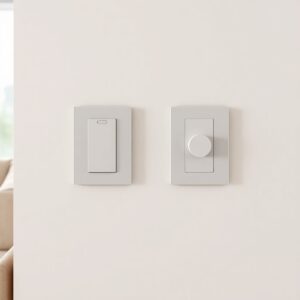
Dimming. Smart dimmer switches provide proper leading-edge or trailing-edge dimming that is compatible with quality LED bulbs specified for dimming use. The dimming is smooth, consistent, and hardware-controlled rather than software-approximated.
Smart Switches: The Cons
Electrical installation required. Replacing a switch requires basic electrical work — comfortable for a competent DIYer but not for everyone, and in the UK any work on fixed wiring technically requires competent person certification or a building control notification. More significantly, some switch locations do not have a neutral wire — a requirement of most smart switches. This is particularly common in older UK wiring where loop-at-fitting configurations were used. Without a neutral wire, only smart switches rated for no-neutral installations can be used, limiting the product options.
No colour control. A smart switch cannot give a standard bulb the ability to change colour or colour temperature. If the colour capability of smart bulbs is important to you, a smart switch is the wrong product.
Per-circuit rather than per-bulb control. Everything on a circuit is controlled together. If you want to control individual bulbs in a multi-bulb fitting independently, a smart switch cannot do it — each circuit is a single control unit.
Physical installation complexity. Smart switches with screens or larger form factors may not fit in standard back boxes, particularly in older properties with shallow boxes. Multiple gang (two or three switch positions in one plate) configurations require smart multi-gang switches that are less universally available.
The Hybrid Approach
The cleanest solution for most homes is a hybrid: smart switches for standard circuits where ambiance control is not required (hallways, utility rooms, kitchen overhead lighting), and smart bulbs in specific locations where colour temperature adjustment, colour scenes, or individual bulb control genuinely adds value (living room lamps, bedside lights, a home office).
In lamp positions — table lamps and floor lamps with their own plugged-in switch — smart bulbs make complete sense. The “leave the switch on” problem largely disappears because table lamp switches tend to be left in the on position anyway, and smart bulb control via app or voice is genuinely convenient in this context.
In ceiling fixtures that are switched from the wall, smart switches are almost always the better default for a shared household.
Quick Decision Guide
Choose smart bulbs if:
- You want colour or full colour temperature adjustment
- You rent and cannot modify the wiring
- You are adding smart control to table or floor lamps
- You want to start quickly without any electrical work
- You live alone and will reliably not use the physical switch
Choose smart switches if:
- You share the home and normal switch behaviour matters
- You want to control multiple bulbs on a circuit economically
- You want smart dimming for overhead lighting
- You are comfortable with basic electrical installation
- Colour changing is not a requirement
Consider both:
- Smart switches for overhead circuits; smart bulbs in lamp positions
- Smart switches in living areas; a Philips Hue system in the bedroom or home office where colour temperature matters
The technology exists to make both systems work well. The question is always which system is the right tool for the specific context — and the answer varies by room, by household composition, and by what you actually want the smart lighting to do.
About the Author