
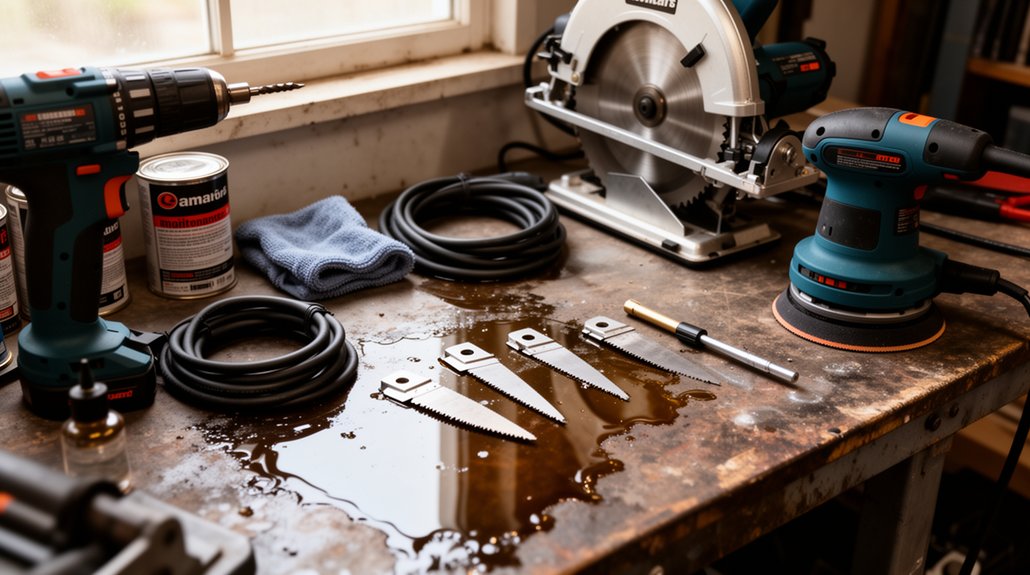
To maintain and extend the life of your power tools, assess each tool by type and tailor maintenance: drill bits, chuck wear, and battery health; blade alignment and shoe stability for saws; wheel guards and triggers for grinders. Do pre-project care with cleaning, light lubrication, and calibration. Store tools dry in labeled bins, with cords coiled and manuals handy. Rotate batteries, avoid overcharging, and replace worn parts promptly. Regular checks prevent failures and keep projects moving—you’ll uncover more practical steps soon.
Key Takeaways
- Perform type-specific checks: inspect bits, blades, guards, triggers, battery health, and wear before each use.
- Do thorough pre-project care: clean, lubricate moving parts, calibrate settings, and test ergonomics for accuracy and control.
- Store properly for longevity: dry, organized space with labeled bins, protective covers, and manuals; coil cords and keep environment stable.
- Optimize battery/charging habits: use compatible chargers, avoid excess fast-charging, store at partial charge, rotate tools, and monitor for swelling.
- Create inspections and replacement triggers: check for looseness, heat, cracks, unusual sounds; keep spare parts and document maintenance.
Assess Your Tools: Baseline Maintenance by Type
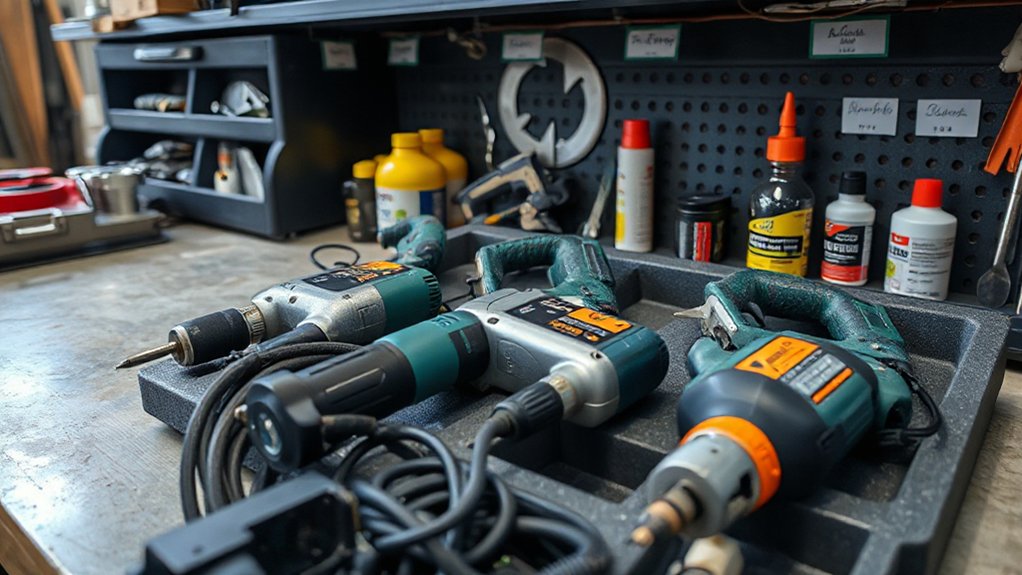
Assess your tools by type to set a solid baseline for maintenance. You’ll map each tool’s core needs, then tailor checks to its category. For power drills, assess bit heads, chuck wear, and battery health; for circular saws, inspect blade alignment and shoe stability; for grinders, confirm wheel guards and trigger safety. Track tool ergonomics by how naturally it sits in your hand, note any fatigue, and adjust grip or stance as needed. Compare brands on grip comfort, control, and vibration, then log findings to guide future purchases. Establish a simple maintenance cadence by type: monthly quick checks, quarterly detailed reviews, and annual component replacements when warranted. Use your notes to drive brand comparisons, ensuring you focus on reliability, availability of parts, and ergonomic performance.
Pre-Project Care: Clean, Lubricate, Calibrate
As you gear up for a project, start with a quick clean, a light lubrication, and a careful calibration to guarantee snags later. This pre-project care sets the tone for safe, efficient work and protects your investment.
- Clean surfaces and vents, removing dust, debris, and residue that can impede performance.
- Lubricate moving parts sparingly, focusing on pivots and gears to reduce friction without attracting grime.
- Calibrate settings and test cut or drill feedback to ensure accuracy, control, and ergonomic handling.
How to Store Tools for Longevity: Protection From Dust and Humidity
Store your tools in a dry, organized space to protect them from dust and humidity. A tidy rack or labeled bins keeps blades, bits, and accessories visible and accessible, reducing rust risk and misplacement. Prioritize tool organization: group similar items, store manuals nearby, and keep cords coiled and off the floor. Use protective covers on motors, batteries, and exposed metal surfaces to shield them from airborne moisture and dust buildup. Maintain a stable environment by guarding against rapid temperature shifts and damp basements. Check seals on drawer bottoms and cabinet doors; repair gaps promptly. Elevate tools off concrete, and periodically inspect for rust or corrosion. Keep a cleaning cloth handy, and document any maintenance notes for future reference.
Battery and Charging Habits for Long-Term Use
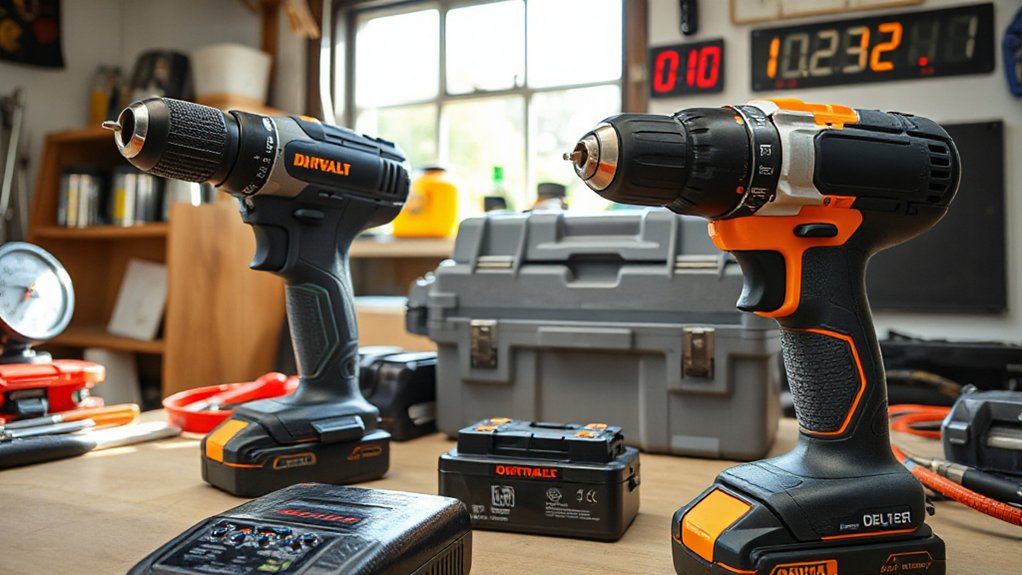
To get the most life from your power tools, prioritize smart battery and charging habits. You’ll maximize Battery performance and extend overall tool life by following disciplined charging routines and storage practices. Understand that every Charging cycle wears the pack, so manage usage to avoid unnecessary cycles and heat buildup.
- Use compatible chargers and avoid fast-charging every cycle; batch tasks to reduce wear and preserve capacity.
- Store batteries at partial charge in a cool, dry place; avoid extreme temperatures and full discharges.
- Rotate between tools and batteries to balance usage, and monitor for swelling or loss of run-time; replace compromised packs promptly.
Regular Inspections and Replacement Triggers for Common Parts
Regular inspections catch wear before failures disrupt projects. You should check grips, blades, brushes, and triggers before each session, looking for looseness, cracks, or excessive play. Listen for unusual sounds and feel for overheating or loosened housings. When components show wear beyond manufacturer recommendations, replace them promptly to avoid sudden downtime. Keep spare parts on hand for common items, and follow the tool’s user manual for replacement intervals and torque specs. Prioritize safety during checks: unplug cords, remove batteries, and wear eye protection. Regular inspections support tool safety and help sustain warranty coverage by documenting maintenance. If you’re unsure about part condition, consult a technician or the warranty guide; proactive replacements save time, prevent damage, and extend overall tool life.
Frequently Asked Questions
How Often Should Tools Be Temperature Cycled for Storage Longevity?
You should temperature cycle your tools monthly for storage longevity. Lubricate gears during cycles and guarantee a clean, dry storage environment. Use proper Tool lubrication with light oil, and maintain stable Storage environments to prevent corrosion and degradation.
What Signs Indicate a Need to Re-Face or Replace Bearings?
You’ll know you must re-face or replace bearings when you notice grinding, wobble, or unusual heat. Perform bearing inspection, check play, and listen for roughness. Maintain lubrication maintenance, replace seals, and address any misalignment before failure.
Can Rust Inhibitors Damage Certain Tool Finishes or Plastics?
Yes, rust inhibitors can damage certain finishes or plastics; some formulations may etch coatings or degrade polymers. Use rust prevention products compatible with your tool finishes, and prioritize finish protection by testing on inconspicuous areas first.
Are Rechargeable Batteries Safe to Store Fully Charged Long-Term?
Battery calibration matters, and you shouldn’t store rechargeable batteries fully charged long-term. You should avoid it; instead, manage charging safety by periodic top-ups and conditioning, ensuring matches with manufacturer guidelines and avoiding extreme temperatures for peak performance.
How Do Environmental Contaminants Affect Motor Windings and Seals?
Environmental contaminants accelerate corrosion and degrade motor windings and seals; they increase wear and risk leaks. Practice corrosion prevention by sealing housings, filtering air intake, and cleaning residues, then inspect seals regularly for contamination effects and performance issues.
Conclusion
Here’s your short, practical conclusion:
You’ll get more years from your tools by treating them like partners, not gadgets. Juxtapose routine care with the risks of neglect: clean, lubricate, calibrate now versus costly repairs later; store protected, humidity-free versus corroded internals; charge responsibly versus sudden power loss in mid-project. Stay vigilant with inspections, and swap worn parts before they fail. In short, proactive maintenance today equals dependable performance tomorrow.
About the Author