
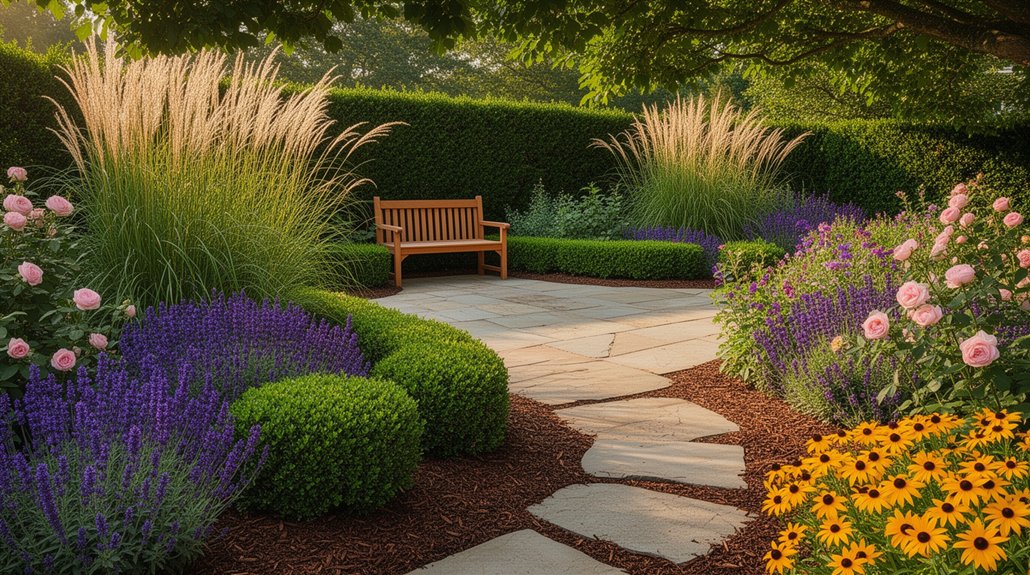
Design your patio-centered garden by starting with a clear vision and living plan. Map sun, shade, wind, and microclimates to position seating, planting, and hardscape for comfort and efficiency. Choose a cohesive style that unites yard and patio, and plan zones that match how you live and move through the space. Select durable materials, add texture and color with layered plantings, and guarantee year‑round appeal with low‑maintenance choices. Focal points guide the eye and flow; you’ll gain more guidance as you continue.
Key Takeaways
- Define the garden’s purpose around the patio (entertaining, relaxation, dining) and align plantings, colors, and textures to support that use.
- Plan zones and circulation from the patio outward, with sheltered seating, durable surfaces, and clear sightlines to focal points.
- Choose a cohesive design style and implement consistent materials, lighting, and plant palettes for visual flow.
- Integrate hardscape, planting pockets, and water features to guide movement and create intimate spaces along the patio.
- Embed irrigation and drainage early, using smart controls and rainwater harvesting to protect the patio area and conserve water.
Define Your Patio-Centered Garden Vision and Goals
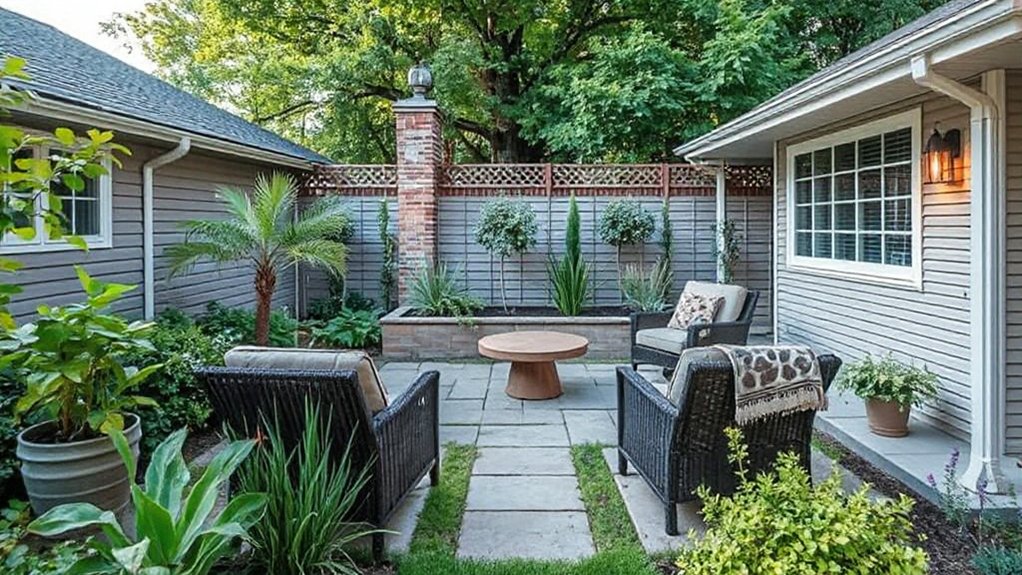
Define what your patio-centered garden should do for you. You’ll set a clear vision and measurable goals to guide every choice. Start with function: do you want morning coffee moments, evening entertaining, or a quiet retreat? Define scale, budget, and maintenance expectations to keep plans realistic. Translate purpose into concrete requirements: preferred plant styles, seasonal color, and year-round interest. Consider garden aesthetics as a criterion for layout, materials, and focal points, ensuring cohesion with existing architecture. Establish success metrics beyond looks, such as drought tolerance, bloom density, and soil improvement. For Plant health, specify soil conditions, irrigation reliability, and pest-management boundaries. Document timelines, responsibilities, and decision checkpoints. This clarity prevents scope creep and aligns your decisions with achieving a balanced, resilient outdoor space.
Map Sun, Shade, Wind, and Microclimates Around the Space
To shape a garden that works with your patio, you must map how sun, shade, wind, and microclimates behave around the space. Begin with sun mapping: note daily sun angles, peak periods, and seasonal shifts to locate hot spots and cool niches. Record shade patterns from nearby structures, trees, and fences, then identify lasting wind corridors and calm pockets. Conduct a simple microclimate assessment by tracking soil moisture, heat buildup, and airflow at different times of day. Use this data to position seating, planting, and hardscape to maximize comfort and energy efficiency. Document findings in a concise plan, highlighting persistent conditions and transitional zones for future interventions. This approach guarantees informed, durable design choices.
Choose a Cohesive Design Style That Unites Yard and Patio
Choose a cohesive design style that unifies yard and patio by selecting a unifying concept—whether a minimalist modern, rustic vernacular, or lush coastal—and applying it consistently across textures, colors, and materials. You’ll knit spaces together with shared materials, scale, and rhythm, so the eye flows from house to garden without interruption.
- Garden art that echoes your motif, from sculptures to planters
- Color palette carried through cushions, foliage, and fencing
- Material continuity in stone, timber, and metal accents
Adopt a unified lighting plan and predictable textures to reinforce cohesion at night. This approach creates a calm, intentional space, supports a wildlife habitat, and highlights plantings and garden art as a single composition.
Plan Zones That Fit How You Live and Move Through the Space

Plan zones that align with how you live and move through the space by mapping activities to paths, seating, and access points. You should designate distinct circulation routes that minimize crossing conflict between entertaining, dining, and quiet retreat areas. Position high-traffic paths along dry, firm surfaces and buffer them with grass or stepping stones to reduce dust and noise. Group related tasks—grilling, prep, service—near the kitchen door, yet keep views to the garden art and focal points. Allocate a sheltered seating nook for social moments and a separate sun-warmed zone for solitary minutes. Create a wildlife habitat adjacent to watered borders to attract birds and beneficial insects. Guarantee sightlines maintain safety, and accessibility remains unobstructed across the patio and garden passages.
Select Materials That Harmonize Patio and Garden
Careful material selection ties the patio and garden together, so pick surfaces and finishes that echo the landscape’s color, texture, and scale. You’ll prioritize material durability and aesthetic compatibility to guarantee long-term harmony. Choose neutral tones that blend with plantings, and prefer textures that invite foot traffic without glare. Coordinate joints, edging, and coping to reduce visual noise, and test samples in natural light before committing. Favor sustainable options with proven performance under climate conditions. Maintain proportion between hardscape and planting areas, so transitions feel seamless. Use durable, low-maintenance materials for high-use zones.
- Subtle, cohesive color palettes that mirror garden hues
- Textures that balance softness of plants with structure of paths
- Edging and joints that read as one continuous plane
Pick Plants by Sun, Moisture, and Seasonal Interest
To design a garden that thrives with your patio, start by selecting plants that match sun exposure, available moisture, and the garden’s seasonal rhythms. Assess each site: full sun, partial shade, or filtered light; note soil moisture and drainage; plan for spring bloom, midsummer interest, and fall color. Choose drought-tolerant specimens for hot spots and moisture-loving varieties for damp edges. Pair foliage textures and colors to maintain year-round appeal in both container plantings and in-ground beds. Use a Plant container to test combos before committing to beds, and place heat-loving plants where sun is strongest. Create clear Garden pathways that connect seating areas to focal plantings, guiding eye and foot traffic while keeping borders accessible for maintenance. Prioritize low-maintenance, disease-resistant selections to sustain long-term significance.
Create Structure With Trees, Shrubs, and Vertical Elements

Trees establish the backbone of your patio garden, shaping views and defining scale with intentional frameworks. Use layered shrubs to create a readable hierarchy and year-round structure, from hedged screens to seasonal foliage highlights. Integrate vertical elements like trellises or columns to extend the canopy upward, guiding eye movement and maximizing space.
Tree Frameworks In Gardens
A solid tree framework gives your garden instant structure, guiding sightlines and defining spaces between dining, lounging, and flowering zones. You build this with sturdy trunks, well-placed canopies, and vertical accents that frame views and create micro-seasons. Use tree frameworks to anchor pathways, gateways, and focal points, weaving in garden archways as connecting elements so you move naturally from one area to another. Select species for color, texture, and scale, ensuring year-round interest and manageable maintenance.
- A pair of tall, columnar trees flank the patio, guiding pedestrians toward a hidden seating nook
- An archway of flowering vines marks the connection to the herb terrace
- A lacy deciduous canopy above a dining zone offers dappled shade and seasonal shade lines
Shrub Layering Techniques
Shrub layering adds volume, texture, and year-round structure that trees alone can’t provide. You’ll create a cohesive backbone by selecting compact, layered shrubs that tolerate sun or shade around the patio. Favor evergreens for winter presence and deciduous types for seasonal change, placing taller forms toward the back and shorter ones up front to maintain visibility and access. Use a natural, three-tier scale: canopy shrubs, mid-height fillers, then ground-hugging spacers. Companion planting guides you to pair flowering shrubs with herbs or perennials that share similar soil and moisture needs, boosting health and pollinator visits. Mulch layering around bases suppresses weeds, moderates moisture, and enriches soil as it decomposes. Maintain clean lines, audit spacing annually, and reallocate plants as growth demands.
Vertical Element Integration
To create a strong vertical framework, start by selecting a mix of trees, shrubs, and vertical elements that complement the patio’s scale and sun exposure; these choices establish year-round structure and define sight lines. You’ll lock in shade patterns, wind breaks, and focal points by layering plant heights and textures, then pair them with durable vertical supports. Use vertical gardening techniques to create green walls or layered screens that don’t overpower the space, while keeping maintenance in view. Trellis design should emphasize sturdy fasteners, climbers with complementary growth rates, and spacing that avoids crowding. Align the vertical elements with pathways and seating sightlines for coherence and ease of access.
- Compact evergreen screen
- Tall, flowering accent climber
- Structural trellis with integrated seating
Use Hardscape to Support Planting, Seating, and Flow
Hardscape isn’t just background; it defines planting pockets, seating zones, and how people flow through the space. You shape the garden by choosing paving types, edging, and level changes that guide movement and protect plant beds. Use clear connections between hardscape and planting to prevent crowding and to reduce maintenance. Place seating where sightlines and shade align with activity, and guarantee paths lead logically to focal points. Use garden art as a visual punctuation that anchors planting pockets without crowding them. Integrate water features modestly to add movement and cooling, but position them to avoid splashing onto seating or paths. Keep drainage deliberate, grading toward defined swales or drains. Prioritize durable materials and precise installation for long-term resilience.
Build Smart Irrigation and Drainage Into the Design
Smart irrigation and drainage should be embedded in the design from day one, so you minimize water waste and protect planting beds. You’ll plan a layout that integrates subsurface drip lines, smart controllers, and graded drainage to move excess water away from patios. Use rainwater harvesting and storage to supply non-potable irrigation, reducing mains dependence. Align soil amendment practices with drainage needs and root health, ensuring soil stays friable yet stable after installation. Locate cleanouts and filters at convenient points to simplify maintenance and prevent clogs. Then, test system response to rainfall events and adjust the controller programming for seasonal shifts.
- Subsurface drip networks run beneath paths and plant beds
- Rainwater harvesting feeds irrigation without overloading drains
- Regular soil amendments optimize moisture retention and structure
Add Texture and Color Through Planting Combinations

Pair textures like glossy broad leaves with soft grasses to create tactile contrast along the patio edge. Mix colorful foliage in complementary tones to keep the view lively from different angles. Layer plants from front to back to add depth, guiding the eye with height, color, and texture.
Pairing Plant Textures
Pairing plant textures adds depth and interest to a garden surrounding a patio, so you should mix foliage with varying leaf shapes, sizes, and surface qualities. You’ll achieve Texture contrast by combining glossy, matte, and fuzzy surfaces, then place coarse against fine textures for visual punch. Select structural, upright forms near seating and fill with soft, cascading textures to soften edges. Use foliage on the ground plane to reinforce layering and movement, ensuring airflow and seasonal interest. Plan for year-round texture shifts with evergreen backbone and deciduous accents.
- Glossy yucca beside velvety lamb’s ear for tactile contrast
- Slim, upright grasses paired with broad, crinkled hosta leaves
- Silver-blue, matte-feeling perovskia contrasted with dark, glossy bergenia
Plant pairing guides practical texture control for consistent appeal.
Colorful Foliage Combinations
Colorful foliage can transform a patio garden, adding drama and cohesion when you choose plant combinations that reinforce color and texture in tandem. You’ll create focal points with bold leaves next to muted greens, ensuring foliage contrast remains clear year-round. Pair compact shrubs with perennials that share or contrast hue values, coordinating leaf shapes and sizes for a crisp silhouette. Emphasize seasonal vibrancy by rotating foliage with use of evergreens for structure and deciduous varieties for color shifts, so texture stays dynamic through heat, rain, and frost. Use containers to group plants by undertone—cool blues and greens against warm bronzes and burgundies—then repeat accents to guide the eye. Maintain healthy soil and consistent moisture to sustain vivid foliage throughout the season.
Layering For Depth
Texture and depth come from layering plants at different heights and densities, so you create a stepped visual flow that guides the eye from foreground to back. You’ll mix textures and tones to reinforce garden aesthetics while keeping maintenance minimal. Choose a backbone of mid-height shrubs, flank with low grasses, and punctuate with bold foliage accents for color. Use contrasting leaf shapes and bloom times to maintain interest across seasons. Plan for easy plant maintenance by grouping species with similar water and sun needs, and by placing dense shrubs where pruning is quick. Focus on repetition for cohesion, not overwhelm.
- Pair tall, architectural plants with mid-height clumpers and groundcovers for a coherent rhythm
- Rotate color blocks seasonally to sustain interest
- Labelings simplify upkeep and future tweaks
Ensure Year-Round Appeal With Maintenance-Smart Choices
Creating a garden that looks good in every season hinges on smart, low-maintenance choices that you can rely on year-round. You select durable perennials, clean-lined shrubs, and native grasses that tolerate local weather with minimal input. Prioritize seasonal planting—grouping plants by bloom time to ensure continuous color without constant replacement. Choose varieties with low water needs and pest resistance to reduce maintenance and chemical use. Mulch generously to conserve moisture and suppress weeds, then set irrigation to deep, infrequent cycles that favor roots over surface growth. Install a simple pruning routine and minimal, accessible drainage to prevent problems after heavy rains. Encourage wildlife attraction by providing native nectar sources and shelter, while keeping paths clear and inviting for year-round use.
Guide the Eye With Focal Points and Sightlines
You’ll set clear focus points to draw the eye along the patio and into the garden. Use precise sightlines to guide movement and create purposeful views. Start with deliberate placement of a single anchor and define edges that keep attention on what matters.
Focus Point Placement
Focus points act as anchors that guide the eye through your garden and toward the patio. You’ll place deliberate focal points to punctuate views and create a logical sequence from entrance to seating. Choose elements with scale, texture, and color contrast that stand out at eye level and align with your path. Use garden art sparingly but purposefully, so each piece earns attention without crowding the scene. Pair focal points with sightlines that remain uncluttered, ensuring movement stays intentional rather than wandering. Balance is essential: one strong centerpiece plus supporting accents keeps rhythm steady.
- A single sculptural element or piece of garden art anchored near the patio
- A vertical accent that draws the gaze from entry to seating
- Subtle lighting that highlights but doesn’t glare
Outdoor lighting enhances subtlety and safety.
Sightline Delineation Techniques
Sightlines are the spine of a garden design that leads the eye to the patio without forcing attention. You guide sightlines by selecting a clear order of views, then place focal points to anchor anticipation. Use a subtle progression: gate, path curve, then a focal plant or sculpture that signals the next stage. Keep lines clean and unbroken; avoid abrupt changes that interrupt the rhythm. Balance is key—alternate tall and low elements so you’re never blocked from proceeding toward the patio. Garden art positioned at eye level becomes a destination, not a distraction. Integrate lighting effects to extend the gaze after dusk, emphasizing textures and shadows rather than glare. Test views from multiple angles and refine until each segment nudges you forward.
Budget, Phasing, and Troubleshooting Common Pitfalls
Starting a garden around a patio demands realistic budgeting, a clear phasing plan, and a readiness to troubleshoot as issues arise; doing so keeps the project on track and prevents scope creep. You must map costs, source durable elements, and set aside a contingency fund for weather or delivery delays. Practice budget planning by prioritizing essential features first, then add upgrades as funds allow. When challenges hit, apply troubleshooting strategies: reassess timelines, adjust materials, and consult suppliers early. Stay disciplined about scope—avoid impulse buys and misaligned systems. Communicate milestones with stakeholders to maintain momentum.
- Clear milestones guide purchases and timing, reducing surprises
- Contingency funds absorb delays and price shifts
- Documentation supports quick fixes and future renovations
Frequently Asked Questions
How Long Does It Take to Complete a Patio-Centered Garden?
A patio-centered garden typically takes several weeks to a few months, depending on scope. You’ll finalize a garden layout, select plants, and complete hardscape tweaks; plan for staggered planting, seasonal color, and ongoing adjustments as you work.
What Budget Range Is Typical for This Project?
Budget planning for this project typically ranges from $3,000 to $15,000, depending on scale and materials. You’ll assess site needs, then prioritize. Material selection guides choices; budget buffers accommodate changes, upgrades, and seasonal costs, keeping you precise and practical. Allusion starts your vision.
Which Plants Thrive in Small, Shaded Patio Spaces?
Shade-tolerant plants thrive in your small, shaded patio spaces; try hostas, ferns, astilbes, and heucheras. Embrace container gardening, water consistently, and place where dappled light reaches. Use drip irrigation, guarantee drainage, and rotate plantings seasonally for color.
How Often Should I Prune and Mulch the Garden?
You should prune every 4–6 weeks during active growth and mulch twice yearly. For plant maintenance, prune promptly to shape and remove dead wood; for soil preparation, renew mulch and refresh nutrients after winter dormancy.
Can I Retrofit Irrigation Into an Existing Garden?
Honestly, yes—you can retrofit irrigation; you’ll save water, time, and effort. You’ll use native species, pursue pest control, then wonder why you hesitated, because it’s practical, precise, and authoritative, and you’ll do it confidently, right now.
Conclusion
Design a garden around your patio by keeping flow, function, and sightlines in sync. Start with a clear vision, map sun and wind, and choose a cohesive style that unites yard and patio. Plan zones for how you live, pick materials that harmonize, and layer texture and color with smart plant choices. Include year-round appeal through maintenance-smart options. Use focal points to guide the eye. One stat: well-planned patios can boost property value by up to 4–12%—invest wisely.
About the Author


