

To create a modern courtyard garden, start by defining a calm, purposeful vibe that blends sleek lines with lush greenery. Map sun and shade to place seating in comfort zones and tighten circulation. Choose durable surfaces and low-porosity materials, then build an evergreen backbone with columnar and mounded evergreens for year‑round structure. Add vertical interest with trellises, water features, and restrained sculpture. Keep clutter minimal with modular seating and slim planters, and plan seasonal touchpoints for ongoing cohesion—your next steps await.
Key Takeaways
- Define a calm, inviting vibe with clean lines, lush greenery, and purposeful, clutter-free placement to balance steel, timber, and water accents.
- Establish an evergreen backbone using columnar and layered evergreens for year-round structure and architectural pauses.
- Zone the courtyard by sun/shade and circulation, placing dining near pathways and quiet seating in shaded niches.
- Choose durable, low-porosity materials for surfaces and edging to withstand weather and maintain clean sightlines.
- Use vertical elements and layered planting with shade-tolerant species, plus thoughtful lighting and discreet water features to guide and calm.
Define the Vibe: How a Modern Courtyard Should Feel

A modern courtyard should feel calm, purposeful, and inviting, with a subtle tension between sleek structure and organic textures. You define the vibe through contrasts: clean lines against soft greenery, cool materials paired with warm light, minimal clutter, and purposeful placements. You’ll choose garden accessories that enhance function without crowding sightlines, such as slim pots, modular seating, and discreet water features. Consider how outdoor entertainment fits into daily use—a compact dining nook, a weatherproof bar cart, and flex seating that shifts for guests. Aim for balance: texture over loud color, scale that respects space, and lighting that guides the eye without glare. Your tone is restrained, confident, and usable, ensuring the courtyard remains inviting from morning coffee to evening conversations.
Assess the Space: Sun, Shade, Size, and Circulation
Start by mapping sun exposure, noting where it lingers and where shade shifts through the day, so you can plan sun-loving versus shaded elements. Sketch a shade availability map to guide plant choice and seating placement, ensuring comfort across seasons. Then draft a circulation flow that keeps paths clear and zones connected, using the layout as a framework for scale, size, and practical progressions.
Sun Exposure Layout
How does sun exposure shape your courtyard layout? You map light across the day, noting peak brightness, length of shade, and seasonal shifts. Consider how a sunny alcove supports a dining nook or a potted herb wall, while a shaded corner hosts a seating zone with cooling textures. Size and circulation guide placement: place high-contrast focal points where sun hits strongest, and tuck intimate seating where shade lands late afternoon. Orient paths to minimize glare and maximize comfortable microclimates, avoiding cramped, competing zones. Use garden sculptures as visual anchors in sunlit spots, and layer outdoor textiles to soften heat and wind. Balance, repetition, and thoughtful *passage* keep the space cohesive without clutter.
Shade Availability Map
Where does shade fall across your courtyard, and how does that pattern shift with the sun’s arc? A shade availability map guides placement of features, seating, and plants by revealing light bands and gaps throughout the day. Use it to define lighting zones, balancing sun for warmth and shade for comfort. Measure sun angles at peak and off-peak hours, then sketch shaded corridors and pockets. Translate data into practical zones for tasks: dining, lounging, and planting. Keep the map up to date as trees grow or structures change. Consider paths and circulation implicitly, but avoid detailing flow. Shade map informs material choices, color contrasts, and moisture needs. Lighting zones become the backbone for selecting durable, seasonal decor that thrives in varying light.
- Sunlit edge
- Partial shade pockets
- Deep shade strips
- Transition areas
Circulation Flow Planning
Circulation flow starts with a clear sense of how people will move through the courtyard, balancing efficiency with comfort. You map primary paths from entry to focal points, considering sun paths, shade pockets, and shifts between zones. Prioritize direct routes for daily use while allowing softer detours to pause. Size the spaces to prevent bottlenecks, leaving room for garden furniture to coexist with walkways without crowding. Zone transitions should feel intentional, not incidental, with sightlines that guide the eye toward outdoor art and architectural features. Keep surfaces smooth and slip-resistant, and choose textures that read at a human scale. Plan for versatility, so seating and pathways adapt to entertaining, daily routines, or quiet reflection. Finally, guarantee maintenance access remains unobtrusive.
Choose Durable Materials for Long-Lasting Surfaces
When you’re choosing materials for a courtyard garden, durability should guide every decision—from pavers to edging. You’ll want surfaces that resist weather, wear, and staining, while still feeling cohesive with your style. Choose dense, low-porosity options for traffic zones, and plan joints that shed water and grime. Consider the long view: maintenance, replacement intervals, and curb appeal over time. Outdoor sculptures can become focal points without demanding fragile bases, and pest control strategies should be built into the material choice—avoid crevices that harbor pests and select sealed finishes. Balance texture and color to reduce heat gain and glare.
- Dense concrete pavers with slip-resistant, dark-hued finishes
- Porcelain or terrazzo that mimics stone without high maintenance
- Integral metal edging to simplify upkeep and protect borders
- Low-porosity decking that tolerates spills and weather
Plant for Limited Light: Species That Thrive in Filtered Sun

Filtered sun doesn’t mean limited choices—you’ll find plants that tolerate shade while still delivering color and texture. Start with low-light favorites and note how they handle dappled light, then pair them with a simple partial-shade planting plan that suits a courtyard’s pattern of sun. We’ll explore Filtered Sun Tolerant Picks, Low Light Favorable Plants, and a practical Partial Shade Planting Guide to keep your project cohesive.
Filtered Sun Tolerant Picks
What plants thrive when dappled light is all you’ve got, and how can you choose them for a courtyard that never sees full sun?
Filtered sun-tolerant picks thrive with careful plant selection. You’ll choose varieties that tolerate shade yet offer texture, color, and seasonal interest. Think compact forms, gentle leaf patterns, and subtle blooms that don’t require intense sun to perform.
- Ferns with glossy fronds that brighten shaded corners
- Heuchera cultivars providing color with modest light
- Solomon’s seal for arching stems and soft structure
- Astilbe for airy plumes and competition-free blooms
Keep rotation simple, group by light level, and use reflective surfaces to maximize available light. Pair textures to avoid flat spaces, and monitor moisture—filtered sun loves evenly moist soil.
Low Light Favorable Plants
Low light doesn’t mean low impact. When your courtyard barely meets full sun, choose plants that still look intentional in filtered light. Look to leafy perennials and compact annuals that tolerate dappled rays without stretching for brightness. Indoor plants can inspire your approach—think structured forms and varied textures to add depth in a shade-friendly palette. For containers, select lightweight, shade-tolerant selections that maintain color and structure through seasons, then rotate as light shifts. Container gardening thrives here: start with a dark-soil mix for moisture buffering, and group compatible species to reduce maintenance. Water consistently, not aggressively, and mulch to conserve moisture. Emphasize verticals: tall grasses or trailing vines to soften walls while maximizing the look of a curated, low-light focal point.
Partial Shade Planting Guide
Partial shade doesn’t mean you’re limited to a dull palette; it just requires choosing species that thrive in dappled light and bring structure to your garden. In this guide, you’ll select plants that tolerate filtered sun, creating texture without crowding your space. Consider how indoor plants translate outdoors, strengthening swoops of color and form around seating and garden furniture.
- Variegated hostas on low mounds, catching light between chairs
- Ferns and skimmia with glossy leaves for year-round interest
- Heuchera with metallic foliage accents for contrast
- Astilbe and liriope to lift shadows with subtle blooms
Use these choices to anchor plantings near paths and furniture, ensuring a cohesive, low-maintenance scene. Indoor plants and garden furniture synchronize, making your courtyard feel curated and tranquil.
Create an Evergreen Backbone for Year-Round Structure
To create year-round structure, start by establishing an evergreen backbone that anchors your garden through all seasons. You’ll choose high‑density evergreens and adaptable semi-evergreen understory that offer consistent form. Think columnar, mounding, or layered silhouettes to guarantee year‑round presence without crowding seasonal blooms. Prune strategically to maintain clean lines and improve health, forcing architectural pauses between evergreen accents and your seasonal color finds. Ground your choices in practical spacing and soil reality, not trend alone. Consider how Historical influences inform evergreen selections—species with long cultural pedigree can evoke memory and place. Weave in Cultural symbolism by pairing evergreens with plants that echo your site’s story, reinforcing continuity. Keep paths and seating aligned with sightlines so the backbone remains visible and functional all year.
Add Architectural Accents: Steel, Timber, and Water
Architectural accents in steel, timber, and water are the details that sharpen your garden’s curb appeal and guide the eye through the space. You’ll layer these materials to create focal points, balance, and rhythm, without crowding paths. Use steel for clean lines and structural honesty; timber brings warmth and tactile contrast; water adds movement and soothing sound. Keep proportions deliberate so each element reinforces the others. Artful garden ornaments and tasteful artistic sculptures become conversation starters, not clutter. Aim for a cohesive palette, minimal ornament, and durable finishes. The result is a courtyard that feels deliberate, yet effortless, with recurring cues guiding circulation and mood.
- Steely sculpture accents beside a wooden bench
- Timber slats framing a water feature
- Subtle garden ornaments near entry sightlines
- Artful sculptures accentuating focal points
Zone the Space: Seating, Dining, and Quiet Corners
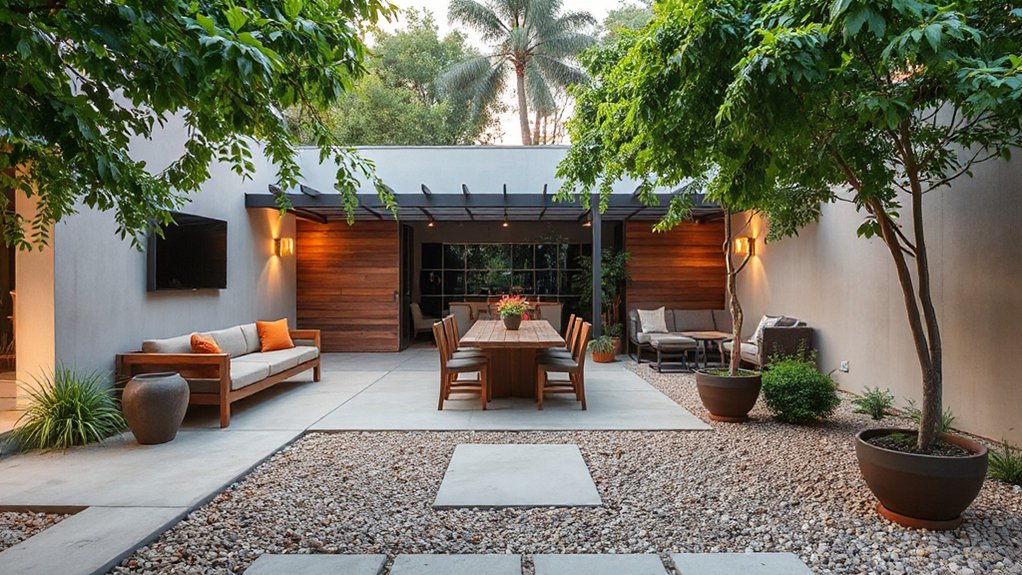
Where should you place seating, dining, and quiet corners to balance flow and function? Start by anchoring each zone to a dominant visual or physical cue, like a framed view, a shaded niche, or a sunlit patch. Position seating near the house access for quick after-dinner shifts, then place the dining area along a pathway that invites conversation without blocking circulation. Create a quiet corner behind a screen or tall plantings to muffle city sounds and foster contemplation. Use hard-edged paving for dining, softer textures for lounging, and a low, permeable divider to define zones without isolating them. Integrate Artistic sculptures and garden art as focal markers, guiding the eye and enriching every zone’s character. Keep sightlines clear and changes gradual to sustain cohesion.
Plan a Low-Maintenance Planting Scheme
Start with a handful of dependable, low-maintenance selections that suit your sun exposure and soil quality, then build a layered scheme around them. Choose sturdy, waterwise perennials and evergreen structure to reduce ongoing care, and fill gaps with grab-and-go, seasonal interest. Think in terms of texture, height, and bloom time to minimize weeding and pruning. Incorporate Wildflower meadows as a naturalized accent for drama without effort, and carve space for Vertical vegetable gardens to maximize harvests without expanding footprint. Keep color cohesive and doorside views uncluttered. Use mulch to suppress weeds, and group plants by water needs to simplify irrigation.
- Drought-tolerant shrubs for year-round shape
- Low-maintenance perennials for continuous flowering
- Groundcovers to suppress weeds and soften edges
- Edible accents integrated into vertical arrangements
Boost Vertical Interest With Trellises and Walls
Smart vertical growth turns limited space into generous harvests and focal points; trellises and walls let you layer plants for texture, color, and season-long interest. You’ll maximize small courtyards by selecting sturdy trellis systems and wall-mounted planters that suit your sun exposure. Choose vertical gardens with modular frames for easy reconfiguration, and mix climbing plants like clematis, jasmine, or flowering vines with evergreen foliage for year-round structure. Tie-in variegated leaves and seasonal blooms to create contrast and rhythm as the garden evolves. Install lattice screens or green walls to partition zones without crowding them. Maintain visibility and airflow by spacing plants thoughtfully, and rotate climbers to prevent disease. This approach delivers height, privacy, and dynamic focal points.
Layered Lighting for Atmosphere at Night

Layered lighting at night transforms a courtyard from functional to inviting, stitching together safety, mood, and texture with purpose. You’ll layer brightness, contrast, and color to sculpt atmosphere, guiding movement while highlighting architectural lines and plant silhouettes. Use warm, dimmed sources for twilight ambiance and brighter accents to define focal points without glare. Shadows become texture, not mystery, when thoughtfully placed. You’ll map pathways with moonlit pathways, ensuring even illumination and subtle sheen on stone surfaces. Dim seasonal accents keep the scene adaptable, while low-voltage options reduce energy and glare. Balance scale, color temperature, and installation height to avoid flat illumination.
- Layer by layer: pathways, seating, edges, focal accents
- Subtle color temperatures for mood and safety
- Shield glare with fixtures and shielding
- Gradual changes that mirror dusk and dawn
Integrate a Water Feature With Appropriate Scale
A water feature should harmonize with the courtyard’s scale and surrounding planting, so it enhances rather than overwhelms the space. Start by evaluating available footprint, ceiling height, and path lines, then choose a form that echoes those proportions. A compact wall fountain can provide gentle sound without dominating, while a shallow basin on a pedestal suits a narrow courtyard. Prioritize Scale integration by matching the feature’s height and width to nearby bushes, furniture, and hardscape rhythms. Use materials that reflect your garden’s palette—stone, metal, or ceramic—to maintain cohesion. Consider water movement: a slow stream or ripple creates quiet drama without shouting. Ensure access for maintenance and seasonal care, so the feature remains reliable and visually balanced across the seasons.
Select Compact, Suit-Everywhere Outdoor Furniture
Choose compact outdoor furniture that fits the courtyard’s scale and invites use from every spot. You’ll maximize space without sacrificing comfort by selecting pieces with clean lines and versatile forms. Think modular seating, stackable chairs, and foldable tables that tuck away when not needed. Opt for durable, weather-ready finishes and lightweight frames for easy rearrangement. Keep sightlines clear by choosing low-profile silhouettes and choosing multi-purpose items that double as plan stands or side surfaces. Consider neutral tones paired with subtle textures to maintain cohesion and calm.
- Compact lounge set that nests around a focal feature
- Slimline dining table with foldable leaves
- Stackable chairs for flexible seating
- Lightweight, weather-resistant coffee table or ottoman
Outdoor furniture, compact designs.
Use Bold Color Accents Without Clutter

A bold color palette can energize your courtyard without overwhelming it—start small with a single, striking accent and build from there. Choose two or three cohesive hues and repeat them in plant containers, artwork, and textiles to maintain harmony while making a statement. Keep clutter at bay by choosing compact accents that serve a purpose, and rotate them seasonally to refresh the space with minimal effort.
Bold Color Palette Tips
Bold color posts can transform a courtyard in minutes, but the key is using bright accents without turning every surface into noise. You’ll harness color psychology to pick moods, then choose paint selection that supports clarity over chaos. Start with a dominant neutral backdrop and reserve bolds for focal points that feel intentional.
- Use a 2–3 color max plan to keep cohesion
- Pair warm tones with cool greens for balance
- Test swatches on small areas before committing
- Highlight architectural details with precise, limited pops
Apply color thoughtfully: thesaurus-like contrasts, not chaos. Consider spray or matte finishes to avoid glare, and rotate accents seasonally to maintain freshness without clutter. Your courtyard stays modern, inviting, and visually calm through disciplined palette choices and confident application.
Clutter-Free Accent Strategies
To keep bold color accents feeling intentional rather than chaotic, pair them with strategic placement and restrained backdrops. You’ll achieve this by choosing a single focal point for each color group and repeating it in small doses across the space. Limit clutter by selecting a few high-impact pieces, such as a statement garden décor item or a pared-down sculpture, rather than an array of scattered accents. Opt for durable materials and clean lines that whisper rather than shout. Use outdoor art strategically—position it at eye level to anchor paths or seating zones, and rotate pieces seasonally to keep the look fresh without adding bulk. Maintain balance with negative space, so the garden feels curated, calm, and enduring.
Achieve Privacy Without Blocking Light
Looking for privacy without sacrificing light? You can blend screening with openness by choosing smart, lightweight options that filter rather than block. Start with vertical planting that grows thick at the base but stays airy above eye level, creating a breathable screen. Use lattices with light-filtering climbers to break sightlines without dulling sun. Consider freestanding privacy panels that tilt toward the sun, letting daylight pass through the gaps. Install reflective surfaces sparingly to bounce light deeper into the courtyard, not trap it. Choose materials with soft edges and muted tones to keep the space feeling open.
- Light-filtering screens that respond to sun angles
- Tall, narrow evergreen accents with gaps
- Climbing vines on translucent lattice
- Reflective planters that brighten corners
privacy solutions, light filtering
Plan Irrigation for Hassle-Free Upkeep
A smart irrigation timer keeps you from overwatering and guessing, so you save water and effort. Pair it with a drip system that’s zoned by plant water needs, and you’ll tailor delivery without waste. Start by mapping zones for drought-tolerant beds, seasonal containers, and turf edges, then adjust coverage as plants mature.
Smart Irrigation Timers
Smart irrigation timers simplify garden care by automating watering schedules based on your plants’ needs and local weather. You’ll save water and time, while ensuring steady moisture for thriving foliage. Start with a dependable timer, then fine‑tune settings to suit each plant group. Focus on practical tasks like regular timer calibration and weather-based adjustments so cycles align with seasonal shifts.
- Visualize a neat, compact box mounted near your controller, with clear labels and quick‑set dials
- Picture a garden that drinks just enough, avoiding soggy beds and dry patches
- Imagine seasonal tweaks that mirror rain patterns without manual effort
- Envision easy overrides if a forecast suddenly changes
Smart irrigation thrives on precision; timer calibration keeps your system honest, efficient, and reliable.
Drip System Zoning
Drip System Zoning helps you tailor irrigation to different plant groups, so water goes where it’s needed most without waste. You’ll group beds by sun exposure, plant type, and root depth, then assign separate lines or emitters to each zone. This keeps moisture levels consistent and reduces runoff. Start with a simple map: mark shaded natives, sun-loving annuals, and moisture-hungry perennials. Use adjustable emitters or micro-sprinklers to match plant needs, avoiding over- or under-watering. Install a pressure regulator and filter to protect emitters and maintain efficient flow. Schedule smarter with irrigation timers set to variable durations, not a single full-cycle. Monitor soil moisture and tweak zones as plants mature. Drip system zoning boosts irrigation efficiency and makes maintenance predictable, saving water and effort over time.
Establish Seasonal Care Routines
Seasonal care routines keep your courtyard thriving year-round: set a simple calendar for watering, pruning, and soil checks so small tweaks don’t slip through the cracks. You’ll build consistency, reduce stress on plants, and spot issues before they escalate. Align tasks with light, heat, and rainfall patterns to optimize growth, color, and structure. Include seasonal plant rotations to refresh beds without overhauling foundations, and note outdoor decor trends to keep accents lively. Keep notes simple, actionable, and visible near the main entry.
- Create a weekly watering snapshot and adjust for rainfall
- Schedule pruning windows aligned with growth spurts
- Test soil moisture and adjust amendments seasonally
- Mark rotation plans and decor refreshes alongside plant calendars
Budget Smartly With Phased Upgrades
Managing costs upfront lets you spread upgrades over time without compromising your courtyard’s flow. You’ll map a phased upgrade plan that aligns with your priorities, not impulse purchases. Start with durable fundamentals, like a solid base for seating or a low-maintenance planting scheme, then layer on enhancements as funds permit. When you buy garden furniture, choose modular pieces that flex with seasons and scale to your space. For outdoor decor, pick a few standout items that set a cohesive mood and can pair with future additions. Use seasonal sales and warranties to maximize value, and document costs for each phase. Reassess annually, trimming or re-sequencing plans as your garden matures, ensuring you maintain style, function, and budget discipline.
Troubleshooting Common Courtyard Challenges
Unexpected problems crop up in any courtyard, but you can tackle them quickly by spotting the root cause and acting before small issues snowball into bigger headaches. When plants wilt, check soil moisture, drainage, and sun exposure before treating symptoms. If pests appear, identify species and apply targeted, gentle solutions to protect pollinators. Fading color or rust on metals signals weathering; seal, repaint, or switch to rust-resistant options. Compact spaces lose airflow; prune choky growth and rearrange containers for breathability. For ongoing aesthetics, balance plant height with ground cover and add garden art or outdoor decor to draw the eye and disguise flaws.
- Diagnose first, then treat
- Improve drainage and airflow
- Schedule seasonal maintenance
- Refresh focal points with decor
Frequently Asked Questions
How to Measure and Optimize Courtyard Circulation Flow?
You measure circulation by filming daily paths and noting bottlenecks, then adjust with clear sightlines and doorways. Optimize flow with smooth shifts, water features, and lighting design guiding movement, preventing crossings, and highlighting will-be-used zones for better usability.
What Plants Perform Best in Filtered-Sun Conditions?
You’ll want plant combinations that thrive in filtered sun, focusing on shade tolerant varieties. Choose textures like ferns and hostas, plus variegated dramas. Pair with energetic perennials for year-round interest, and guarantee layered light and color contrasts.
Which Durable Materials Resist Both Climate and Wear?
Durable materials that resist climate and wear include concrete, stone, powder-coated metal, teak, and composite decking. Prioritize material durability and wear resistance, select UV-stable finishes, and seal joints to minimize moisture damage while maintaining a polished, practical courtyard.
How to Balance Privacy With Natural Light Access?
You balance privacy with light by layering screens and translucent plants, letting sunshine filter through. You place outdoor furniture where shade meets glare, and water features reflect softly, creating depth while preserving views. You’ll enjoy privacy, daylight, and serenity.
What Is a Practical Phased Upgrade Budget Plan?
Start with a practical phased upgrade budget plan: set priorities, allocate funds monthly, and cap changes per phase. Choose garden furniture and outdoor lighting wisely, prioritizing durability, multi-use pieces, energy-efficient LEDs, and scalable accessories to optimize your courtyard budget.
Conclusion
So you built a courtyard that looks like a grown-up, grown-in-sculpted-living-room. Congrats—you’ve achieved outdoor luxury with splashy plants and low-maintenance grit. If something’s wilting, blame the weather, not your clever irrigation plan. If weeds gatecrash, remember: you paid for borders, not bohemian chaos. When the sun slants just right, you’ll sip smugly, watching your evergreen backbone do the heavy lifting. And if a drone of compliments comes, humor them with a quick, well-timed irrigation pun.
About the Author


