
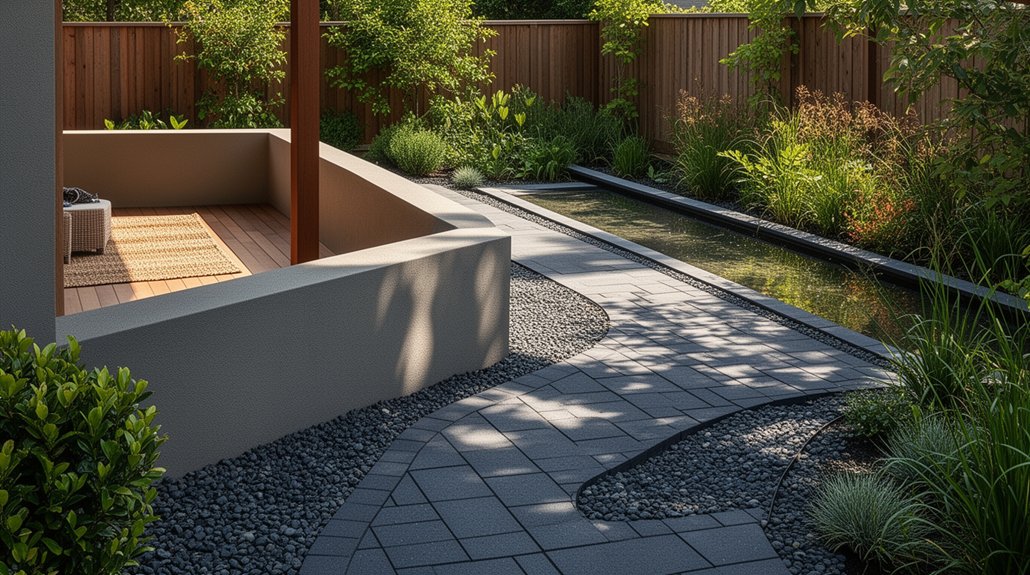
Design a functional, beautiful backyard by integrating durable hardscapes with thoughtful circulation and resilient materials that blend with your landscape. Choose surfaces that resist weather and heavy use, and position seating and fire features to anchor zones. Plan grading and drainage to prevent pooling, add privacy screens, and use consistent edging for clarity. Balance aesthetics with maintenance and budget, and design for future flexibility with modular elements. Ready to explore how to implement these ideas in detail?
Key Takeaways
- Align hardscape surfaces (patios, paths) with house and landscape for cohesive, functional outdoor living spaces.
- Plan grading, drainage, and durable materials to prevent water issues and ensure year-round use.
- Create clear circulation with consistent edging and privacy screening to balance openness and seclusion.
- Integrate lighting, seating, and focal elements (fire pits, art) to enhance safety, ambiance, and visual interest.
- Budget, maintenance, and modular design should prioritize resilience and future upgrades.
Key Hardscaping Elements for a Beautiful, Functional Backyard
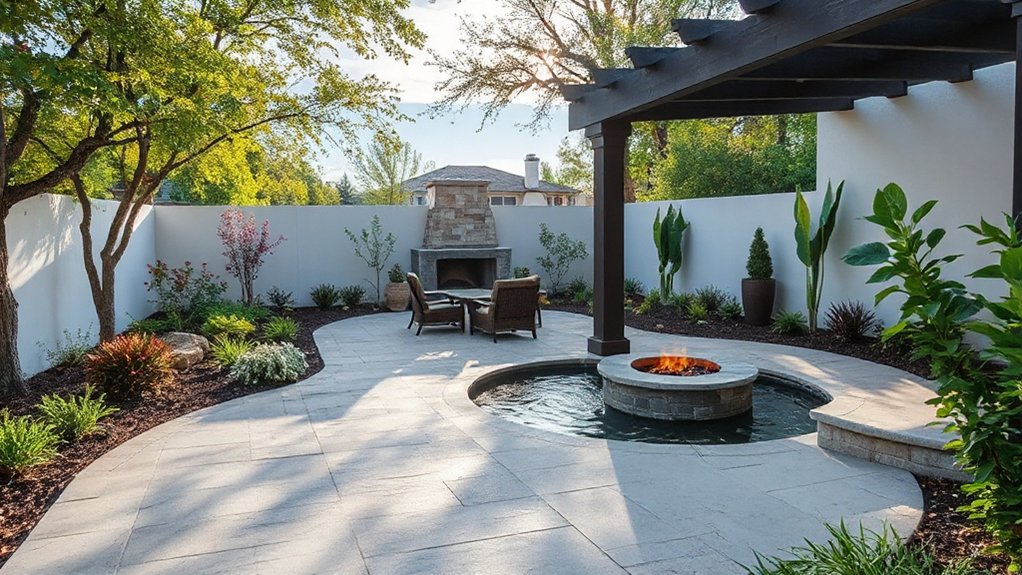
Hardscaping elements form the backbone of a functional backyard, defining flow, structure, and usability. You’ll prioritize durable surfaces and well-placed features that guide circulation without interrupting sightlines. Begin with a solid foundation: patios, pathways, and retaining walls that tolerate weather shifts and heavy use. Choose materials that complement your house and landscape, guaranteeing seamless landscape integration. Consider grading and drainage to prevent pooling while preserving access. Thoughtful seating zones and outdoor entertaining pads should align with shade and sun patterns for comfort throughout the day. Include a focal point, like a fire pit or sculpture, to anchor the space. Assure plant compatibility around hard surfaces so soil, irrigation, and maintenance remain manageable, reducing future replacement needs and maintaining cohesive aesthetics.
Plan Circulation and Access for Everyday Use
A well-planned circulation scheme keeps daily use smooth and intuitive, guiding foot traffic from entry points to gathering spaces without creating bottlenecks. You design clear, accessible routes that minimize conflicts between activities, preserve sightlines, and respect zones for seating, cooking, and play. Prioritize landscape symmetry where it reinforces order, while curved or stepped paths can soften transitions without sacrificing clarity. Integrate privacy screening to shield intimate zones without isolating the yard. Elevate accessibility with firm, non-slip surfaces and gradual changes in grade. Guarantee storage and service areas are discreet yet convenient, so chores don’t interrupt leisure. Finally, align paths with views, lighting, and seasonal color to sustain interest after dark.
- Define primary axes and secondary paths for flow
- Use consistent materials and edging
- Place privacy screening to frame views
- Schedule lighting for safe navigation
- Reserve logical detours for maintenance access
Hardscape vs. Softscape: Choosing Durable Materials
Choosing durable materials means weighing durability, weather resistance, and maintenance against aesthetics. You’ll compare hardscape options for longevity and upkeep, against softscape materials that offer flexibility and growth potential. This assessment frames how each choice affects long-term performance and your routine care.
Durable Materials Compare
Durable materials matter most when you balance hardscape reliability with softscape flexibility. In this comparison, you evaluate longevity, maintenance, and performance under typical use, focusing on how each type serves long-term goals. Hardscape elements deliver structural integrity and weather resistance, while softscape components offer adaptability and seasonal renewal. Your aim is to harmonize both, leveraging material sustainability and aesthetic versatility. Pair durable stone or concrete with resilient plantings to minimize upkeep, yet retain visual interest. Consider cost over time, ease of replacement, and compatibility with irrigation and drainage. The right mix reduces future repairs and supports steady curb appeal. Prioritize materials that age gracefully, require minimal intervention, and reflect your landscape’s evolving character.
- Long-term cost efficiency and ease of maintenance
- Compatibility with drainage, irrigation, and microclimates
- Material sustainability and lifecycle impact
- Aesthetic versatility across seasons and styles
- Replacement and upgrade timelines for evolving needs
Weather Resistance Factors
Weather resilience distinguishes hardscape from softscape strengths: hardscape endures wind, heat, freeze–thaw, and wet conditions with stable structure, while softscape bends and regenerates but can suffer from drought, saturation, and temperature swings. In this context, you evaluate material weathering under real climate loads, not ideal lab tests. Choose substrates and units that resist cracking, spalling, and fading, yet remain compatible with installation details and drainage goals. Consider climate adaptation when selecting joints, sealants, and surface textures that direct water away and reduce thermal expansion stress. You’ll balance longevity with performance, prioritizing durable finishes, corrosion resistance, and UV stability. Document maintenance windows indirectly through material performance expectations, ensuring your choices tolerate evolving weather patterns without frequent replacement or costly remediation.
Maintenance and Longevity
When planning hardscape versus softscape, prioritize maintenance and longevity from the outset by pairing materials with your climate, load, and drainage needs. Durable options align with soil conditions, vibration, and seasonal moisture, reducing ongoing upkeep. Hardscape choices should resist settlement, cracking, and erosion, while softscape selections support drainage and root health. Consider long-term maintenance cycles, resealing schedules, and pest management integrated with site context. By balancing materials, you minimize soil erosion and faciliate efficient water management, while keeping aesthetics intact. Anticipate possible scale, shade, and wind patterns to preserve performance. A deliberate mix of low-maintenance stone, concrete, and native plantings elevates longevity without constant intervention.
- Assess climate-specific wear and required resealing intervals
- Match load-bearing needs to substrate and foundation
- Plan drainage to control runoff and soil erosion
- Integrate pest control with plant selection and barriers
- Schedule periodic inspections to prevent minor issues from escalating
Terraces, Paths, and Patios That Perform in All Seasons

Terraces, paths, and patios that perform in all seasons rely on thoughtful materials, solid foundations, and smart drainage, so you gain usable outdoor spaces year-round. You choose durable surfaces with slip resistance and low maintenance, balancing aesthetics with function. Precise grading prevents water pooling and ice buildup, while integrated drainage directs moisture away from structures. Subsurface stabilization, compacted base, and proper edge detailing resist shifting under freeze-thaw cycles. Material selection considers color, texture, and garden aesthetics, ensuring the hardscape enhances landscape elements rather than competing with them. Weave plant integration through elevated planters and edging to soften hard lines without compromising accessibility. Plan for seasonal changeovers by sizing paths for off-season use and incorporating adaptable seating. Finally, document maintenance routines to sustain performance and curb wear.
Retaining Walls and Water Features to Elevate Form and Function
You’ll explore how retaining wall aesthetics set the tone for the landscape, balancing texture, color, and proportion with surrounding plantings. Water feature harmony should reinforce form without overpowering it, using flow, sound, and scale to enhance the overall design. This discussion grounds your choices in how walls and water work together to elevate both function and visual rhythm.
Retaining Wall Aesthetics
Consider how a well-crafted retaining wall can do more than hold soil—it can frame a view, define zones, and support complementary water features. You’ll prioritize clean lines, material texture, and subtle color shifts that read as cohesive with surrounding hardscape, so the wall becomes a visual anchor rather than a distraction. Apply color contrast intentionally, choosing stone or masonry that pops against greenery yet remains restrained. Integrate plantings at varying heights to soften edges without compromising structural clarity. The wall should guide circulation, shade seating, and cue focal points, while concealing utility areas. When designed with purpose, it elevates your landscape’s rhythm and durability.
- Material cadence and texture
- Color contrast choices
- Plant integration strategies
- Seamless progression to paving
- Hidden utilities and drainage considerations
Water Feature Harmony
Water feature harmony ties the rhythm of your hardscape to the flow of water, using retaining walls as sculptural backdrops and functional supports for moisture management, seating, and accents. You design with deliberate contrasts: the solidity of stone or concrete against the softness of moving water. Guarantee seamless water circulation by routing return lines behind walls to conceal fixtures and minimize visible plumbing. Place the main basin where sightlines reward entry and offer easy maintenance access. Select aquatic plants that soften edges, filter water, and provide seasonal interest without obstructing flow. Integrate lighting at wall joints to highlight textures and create depth after dusk. Maintain balance between material mass and water motion to preserve serenity, scale, and practical performance.
Lighting and Seating to Extend Outdoor Living
Lighting and seating are the backbone of extending outdoor living, turning a practical space into a welcoming retreat. You tailor illumination and furniture to the flow, ensuring comfort without overpowering views. Focus on layered lighting, select seating that invites lingering, and avoid clash between hardscape and greenery. Thoughtful lighting design highlights focal points, enhances safety, and creates atmosphere for any time.
- Install low-profile LED strip lighting along edges to define zones without glare
- Use dimmable fixtures and warm color temperature for inviting evenings
- Choose weatherized seating with durable fabrics and ergonomic forms
- Integrate garden art as scene anchors that guide the eye
- Balance shadows with uplights to reveal textures and plant silhouettes
Plan for Maintenance, Budget, and Future Flexibility
A well-planned backyard design balances ongoing maintenance, upfront budget, and room to grow, so your hardscape remains as dependable as it is beautiful. You should prioritize durable materials with proven maintenance cycles and predictable costs, then map a phased implementation that aligns with seasonal cash flow. Consider garden aesthetics as a guidepost for color, texture, and proportion, but quantify upkeep hours to prevent surprises. Build in future flexibility through modular features, scalable drainage, and adaptable lighting plans that ease upgrades. Evaluate environmental impact by selecting locally sourced or recycled components and low-maintenance planting zones that reduce irrigation needs. Document maintenance tasks, service intervals, and warranty terms to streamline ownership, and preserve resale value by avoiding overcustomization. Regular reviews ensure balance among aesthetics, function, and long-term resilience.
Frequently Asked Questions
How Do I Select Low-Maintenance Hardscape Materials?
Choose eco friendly options like composite decking and permeable pavers, prioritizing low maintenance. Opt for durable, cost effective materials such as natural stone or concrete with sealant; avoid high-traffic limestone. Consider warranties and local climate to minimize upkeep.
What Is the Ideal Sequence for Hardscape Installation?
Begin with site prep, then subgrade, base, and drainage, followed by paving, edging, and hardscape features. Install garden lighting and plant integration as you proceed, ensuring proper grading and sequence for long-term stability and visual coherence.
How Can I Integrate Drainage With Hardscapes Seamlessly?
Integrate drainage with your hardscapes by prioritizing rainwater management and erosion control in sloped areas, using graded pours, permeable pavers, and French drains. You’ll redirect runoff, prevent pooling, and preserve landscape integrity efficiently.
Which Weather Considerations Influence Material Longevity?
Rainy winters tighten a deck’s joints; droughts fade fades. Climate resilience guides material durability. You’ll want moisture, freeze-thaw, UV resistance data, then choose composites, stone, or concrete. You observe a bridge creak, trusting tested, proven performance.
How Do I Recycle or Repurpose Old Hardscape Elements?
You can upcycle garden borders by trimming and repositioning them, and repurpose patio stones into a rustic pathway or stepping stones. You’ll cut waste, save money, and showcase deliberate, expert-aligned craftsmanship throughout your outdoor space.
Conclusion
As you lay down hardscape, you’re building more than shelter—you’re composing space with weight and breath. Let each terrace, path, and seat be a stanza that invites easy circulation and quiet purpose. Choose durable materials that endure the weather’s whispers and footsteps, yet keep soft-sky vibes alive with thoughtful plants. Plan for upkeep, but design for delight and adaptation, so your yard grows with you. In this craft, function meets beauty, and daily life finds its rhythm.
About the Author


