

To refurbish a coastal flat in Cornwall, start with a clear coastal vision and practical goals, then map damp and dry zones to guide changes. Choose moisture-resistant materials suited for salt air, and use coastal colors that brighten yet calm. Design neat, sea-inspired storage and a layout that flows indoors to outdoors, with weatherproof finishes and high-performance windows. Budget realistically, factor contingencies, and work with local trades who know the coast—you’ll gain access to durable, coastal-ready charm as you go. Continue for more.
Key Takeaways
- Start with clear coastal vision and practical goals, aligning materials, textures, and layouts to durability, maintenance, and Cornwall’s character.
- Assess structure and moisture early; plan wind-resistant envelopes, proper ventilation, and corrosion-resistant materials for salt exposure.
- Prioritize high-performance windows with shading, energy efficiency, and views to maximize daylight while preventing heat gain.
- Design versatile storage and zones (entry, reading nook, workspace) with clutter-free, coast-inspired finishes and local craftsmanship.
- Coordinate permits, weather windows, and phased timelines to minimize disruption and preserve coastal identity throughout refurbishment.
Define Your Cornwall Coastal Vision and Practical Goals

To define your Cornwall coastal vision and practical goals, start with a clear picture of how you want the space to feel and function. You’ll map daily use, storage needs, and flow, then align them with your budget and timeline. Picture the feel of sea breeze and coastal charm guiding material choices, color palettes, and textures that reinforce calm, durability, and ease of maintenance. Prioritize zones for cooking, lounging, and views, while ensuring windows invite natural light without compromising energy efficiency. Set measurable goals: complete core renovations, secure inventory, minimize disruption, and preserve character. Create a simple decision framework—what stays, what renews, what’s replaceable. Revisit your vision as you proceed to stay cohesive, practical, and truly reflective of your Cornwall coastal identity.
Assess the Flat: Map Damp, Dry Areas, and Feasible Changes
You’ve got a clear coastal vision in mind, so now you map how the space actually behaves. You walk each room, noting damp zones, cracks, and drafts, then sketch a simple plan that marks wet patches versus dry pockets. Identify root causes—poor ventilation, bulkhead leaks, or condensation—and prioritize fixes that stop moisture at the source. In parallel, assess structural integrity: look for deflections, timber rot, or masonry movement that could affect later changes, and plan targeted structural reinforcement where needed. Consider acoustic realities too: architectural acoustics matter in small flats, so map noise transfer between rooms and plan layout tweaks accordingly. Record feasible changes with cost estimates, timelines, and impact, so your refurbishment stays practical, durable, and aligned with coastal living realities.
Choose Moisture-Resistant Materials for Salt Air
Salt air is harsh on materials, so pick moisture-resistant options that stand up to coastal conditions. You want surfaces and components that resist corrosion, mold, and peeling, while still looking smart.
- Use marine-grade aluminum or stainless steel for hardware to boost material durability without bulk.
- Choose PVC or composite trim that shrugs off humidity and salt spray.
- Opt for ceramic or porcelain tiles for wet zones; they’re easy to seal and clean.
- Apply breathable, water-repellent paints on exterior timber; this balances moisture control with aesthetic appeal.
Focus on sealing joints, avoiding particleboard, and prioritizing seamless drainage. Your choices reduce maintenance, improve longevity, and keep spaces looking crisp and solid against salt air. Material durability matters from day one. Salt air.
Pick Coastal Colours That Brighten and Calm
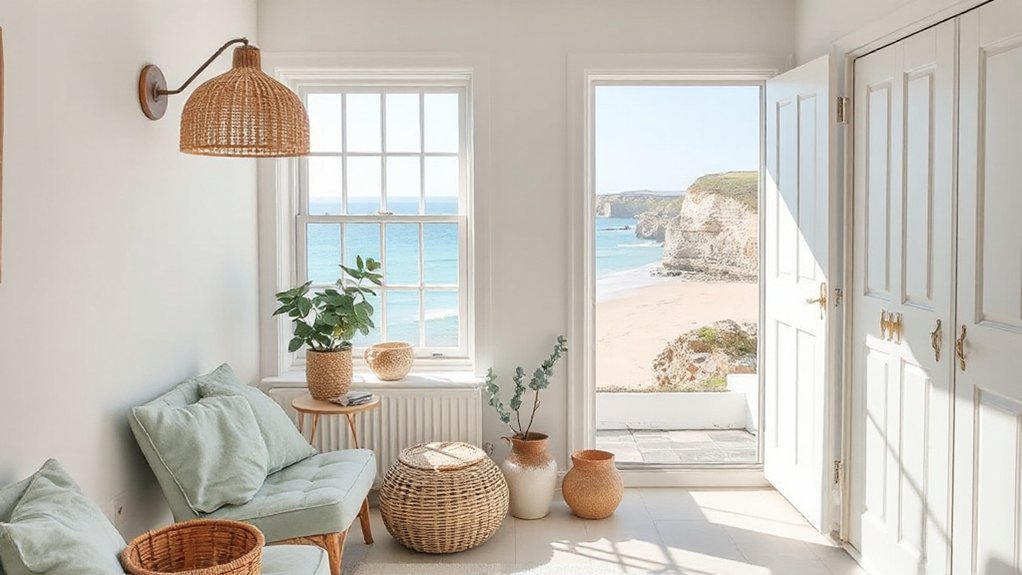
Coastal colours can energize and steady a space at once, so choose palettes that reflect sea light while keeping interiors calm. Start with a base of soft neutrals—warm ivory, dune, or light greige—and layer in marine accents to evoke Seaside charm without overwhelming. Choose a crisp white for trim to brighten corners and reflect natural daylight. Introduce blues and greens in muted tones—slate, powder blue, sage—to create depth without shouting. Add a pop of sunny yellow or coral sparingly to lift mood and mimic sunlit surf. Consider finishes with low reflectivity to reduce glare and maintain a calm atmosphere. Select salt resistant fabrics for upholstery and cushions to preserve colour and texture after humid coastal days. Balance contrast and cohesion for a polished, durable scheme.
Plan Sea-Inspired, Neat Storage and Layout
A sea-inspired palette guides the room’s focal points, letting calm blues and sandy neutrals anchor storage zones without visual clutter. Pair clever storage strategies with a clean layout to keep essentials within reach while preserving an open, coastal feel. Start by mapping traffic flow and selecting multifunctional pieces that hide clutter behind doors or within built-ins.
Sea-Inspired Palette
To craft a sea-inspired palette, start with a restrained base of soft whites and warm sands, then layer in coastal blues and greens in deliberate, complementary accents. You’ll achieve Seaside serenity by pairing crisp neutrals with gentle, water-inspired tones, ensuring depth without overwhelm. Use Oceanic accents to highlight architectural features and textures, not to shout.
- Soft white walls with warm-sand accents on trim or textiles
- Dusky sea-glass greens for cabinetry or upholstery
- Aqua or slate-blue accents in décor steals and cushions
- Subtle charcoal or navy for contrast in furniture and fixtures
Keep finishes matte or satin for refined, polished sightlines. Balance light with texture—linen, raffia, or woven jute. This approach delivers calm cohesion, practical practicality, and a refined coastal mood you’ll live in daily.
Neat Storage Strategy
A sea-inspired flat benefits from storage that’s as serene as the palette you chose. To keep rooms calm, plan hidden storage where you least expect it—under beds, behind cabinets, inside ottomans. Look for vertical shelving to maximize wall real estate without crowding floors. Install adjustable units so you can swap height and depth as your needs shift. Use uniform boxes or baskets to maintain a tidy, cohesive look. In kitchens and bathrooms, opt for recessed niches and pull-out organizers to minimize clutter. Label containers subtly to speed tidying without visual noise. Create zones: a compact entry nook, a quiet reading corner with stacked storage, and a compact workspace. A thoughtful mix of hidden storage and vertical shelving delivers a clean, coastally polished feel.
Prioritize Energy Efficiency for Atlantic Winds
Prioritizing energy efficiency for Atlantic winds means focusing on airtight envelopes, efficient windows, and heat recovery where possible. You’ll feel the difference when drafts drop and comfort rises, even on stormy days.
- Seal gaps around doors and shells to minimize heat loss.
- Choose windproof windows with shut-tight frames and weatherstripping.
- Install a compact heat-recovery ventilator to reclaim warmth without sacrificing fresh air.
- Layer insulation in walls, roof, and floors to stabilize interior temperature.
Energy conservation becomes a daily habit as you tune doors, trim, and seals. When you test your home, you’ll notice steadier warmth and lower bills. Windproof windows plus smart ventilation give you resilient comfort, rain or gale, without compromising style or accessibility.
Maximise Natural Light While Keeping Warmth
Maximise natural light without sacrificing warmth by choosing window designs that invite daylight while minimizing heat loss, and by placing reflective surfaces to bounce light into cozy corners. You’ll want to balance letting in light with strategic shade and insulation, so warmth stays comfortable on Cornwall’s cooler days. Consider layout tweaks, like positioning seating and work zones to catch sun angles and create bright, inviting spaces.
Letting In Light, Keeping Heat
How can you light a coastal flat without letting the warmth slip away? You optimise glazing and shading, pairing bright interiors with snug performance. Use reflective surfaces to bounce daylight deeper, and choose warm-toned bulbs to mimic sun. Prioritise seals and insulation so heat stays put when the sky dims.
- Maximise daylight with glass doors that open to outdoor seating, framed by Seaside architecture.
- Layer lighting from ceiling, task, and ambient sources to avoid glare while retaining warmth.
- Install skylights or roof windows where appropriate, but pair with thermal breaks.
- Integrate evergreen coastal landscaping outside to time shade and light shifts naturally.
Keep the palette soft and durable, celebrating Coastal landscaping without compromising energy.
Window Design For Warmth
Good window design can balance light with warmth by choosing insulating glazing and smart shading that keep rooms bright without letting heat slip away. You’ll prioritise high-performance double or triple glazing with low-emissivity coatings and argon fills for efficiency, especially in coastal winds. Combine this with internal or external shading that adapts to sun angles, so you can brighten spaces on cloudy days without overheating in peak sun. Frame choices matter too: slim, thermally broken profiles reduce heat loss while maximizing view. For style, blend vintage charm with modern minimalism: keep airy, uncluttered lines, and let natural light highlight character features (timber sills, paneled doors) without crowding. Plan window layouts that exploit coastal views while maintaining consistent warmth throughout living zones.
Reflective Surfaces, Cozy Corners
When you sum up a coastal flat’s light strategy, reflective surfaces become a practical tool for brightening spaces without increasing heat loss. You’ll notice how these surfaces bounce daylight toward cozy corners, while preserving warmth. To implement effectively:
1) Place a large mirror opposite a window to double the view and light
2) Choose glossy or satin finishes for cabinets and tabletops to reflect more glow
3) Use pale, cool-toned walls as a light amplifier around seating
4) Add soft, textured textiles in warm hues to keep cozy corners inviting
Reflective surfaces, cozy corners—these elements work together to maximise daylight without sacrificing comfort, guiding you toward a brighter, warmer Cornwall flat.
Source Local Cornwall Touches: Hardware, Textiles, and Art

Source Local Cornwall touches can dramatically elevate a coastal flat, blending hardware, textiles, and art from nearby makers for a cohesive, authentic feel. You’ll select durable fixtures with seaside patina—brass, bronze, or brushed steel that ages gracefully with salt air. Choose textiles in muted blues and sand tones that echo the shoreline, focusing on natural fibers like linen and wool for longevity. Handcrafted wall art and pottery from local studios add character without shouting seaside kitsch. When sourcing hardware, look for simple, functional designs that suit coastal humidity. Integrate coastal flora motifs in fabrics and ceramics, paired with understated marine wildlife-derived accents for depth. Keep the palette cohesive, allowing textures and craftsmanship to tell the story of your Cornwall home.
Create a Realistic Budget With Clear Trade-Offs
To build a realistic budget with clear trade-offs, start by naming your priorities and setting non-negotiables—then map them to cost ranges, maintenance needs, and timing. Budget planning hinges on transparent choices and visible consequences, so track where you’ll compromise without regretting it later. Consider value over vanity, and remember upkeep compounds.
1) Priorities first: essential updates, then comfort improvements, then décor accents, then optional extras.
2) Time windows: phase major work, align with weather, and avoid peak rates.
3) Contingency: reserve 10–15% for surprises, not after you’ve spent.
4) Trade-offs: accept cheaper finishes to free funds for critical systems.
Clear trade-offs prevent overreach while preserving charm, so you stay on track without sacrificing coastal character. Budget planning, cost trade offs.
Work With Local Tradespeople: Questions to Ask
Locals bring essential insight, so start by vetting tradespeople who know Cornwall’s coastal quirks and permitting quirks alike; ask about experience with seaside homes, salt exposure, and weather windows. You’ll want to confirm licenses, insurance, and a clear scope of work with milestones. Build a concise question checklist that covers materials suited to salt air, corrosion-resistant fittings, and ventilation specifics for damp spaces. Ask for recent project photos, references, and a site visit to assess workmanship and communication style. Discuss provisional sums, change orders, and warranty terms upfront to avoid surprises. Prioritize local tradespeople who understand permit processes and coastal codes. End with a written estimate and a reliable timeline. This approach keeps your project transparent, efficient, and aligned with Cornwall’s climate.
Weatherproof Transitions: Indoor–Outdoor Harmony

You’ll start by selecting weatherproof materials that hold up to salty coastal air and sudden showers, ensuring surfaces flush together for a true indoor–outdoor flow. Consider durable coastal finishes that resist fading and wear, so passages stay seamless year after year. With practicality in mind, align the design and performance of indoor and outdoor spaces for a cohesive, low-maintenance rhythm.
Weatherproof Materials Choices
Weatherproofing the shift between indoors and outdoors starts with selecting materials that resist moisture, temperature swings, and salt air. You’ll prioritize products that endure Cornwall’s coastal climate while keeping interiors calm and cohesive. Seaside serenity and Coastal durability guide every choice, from floors to trims, so you feel connected to the view rather than battling the weather.
- Moisture-resistant boards for floors and decking
- UV-stable finishes that don’t fade in salt spray
- Aluminum or composite frames for doors and windows
- Grouts and sealants rated for damp, windy environments
Choose textures that read as warm but stay resilient; pair light colors with durable surfaces. Your space remains welcoming, practical, and elegantly robust, blending indoor comfort with outdoor living.
Seamless Indoor Outdoor Flow
Seamless indoor–outdoor flow hinges on choosing passages that feel instant and unobtrusive, so you can move between spaces without thinking about weather or barriers. You’ll prioritize products that blur lines—sliding glass doors, pocket doors, and floor-level passages that read as one deck. Consider continuity in materials and color, with weatherproof finishes that resist coastal glare and salt uplift. Your climate plan should include shaded zones, sheltered thresholds, and low-friction passages to keep movement smooth. Think about sightlines from living areas to terraces, enhancing marine wildlife glimpses without inviting dust or damp indoors. Account for coastal erosion pressures by anchoring paths and joints securely, ensuring ventilation protects timber and textiles. The payoff: calmer, brighter days that invite frequent, confident outdoor living.
Durable Coastal Finishes
Durable coastal finishes are your frontline against salt spray, sun, and wind. You’ll select materials that perform across thresholds, resisting moisture without swelling, fading, or delaminating. Prioritize seamless progressions that keep indoors calm and outdoors usable, even after storms. Consider finishes that flex with temperature changes, protecting framing, flooring, and decks.
- Choose UV-stable paints and sealants for fascia, soffits, and boards to prevent chalking and cracking.
- Use water-repellent, breathable membranes at joints to curb damp without trapping moisture.
- Opt for rot-resistant woods or composites for trims and decking to sustain wear from Marine flora and Coastal fauna.
- Apply color palettes that disguise weathering while enhancing light and contrast around windows and doors.
Your setup will endure salt-air exposure, supporting durable coastal living.
Coastal Flat Refurbishment Timeline: A 14-Week Plan
Kicking off a 14-week plan for refurbishing a coastal flat means budgeting time for weather, materials, and finishes that stand up to salt air and humidity, while keeping your project on track. Week 1 focuses on assessment and permits, then you pause for a coastal window to order durable components. Weeks 2–4 address structural checks, moisture management, and sea-wind resistant seals. Weeks 5–7 cover demolition, framing, and priming with breathable finishes that resist corrosion. Weeks 8–10 install cabinets, fixtures, and seaside architecture-inspired details, ensuring alignment with ventilation and humidity controls. Weeks 11–13 finish touches, mood lighting, and coastal gardening elements that blend indoor and outdoor spaces. Week 14 final walkthrough, polishing every seam, and documenting learnings for future refurbishments.
Frequently Asked Questions
How Long Will a Coastal Refurbishment Typically Take in Cornwall?
Typically, it takes several weeks to months, depending on scope. You’ll schedule Seaside insulation upgrades first, then finish with Coastal decor touches, allowing for permits and weather. You’ll streamline planning, coordinate trades, and stay adaptable throughout the process.
What Grants or Funding Support Exist for Seaside Flats?
Ever wondered what grants or funding support exist for seaside flats? You can tap grants for marine architecture and coastal landscaping, plus community schemes. You’ll compare eligibility, apply confidently, and leverage local authorities and charities to fund upgrades.
Which Local Suppliers Best Handle Salt-Air Corrosion?
You should choose local suppliers known for marine grade materials and corrosion resistant coatings, ensuring quick service and compatible warranties. Look for products designed to resist salt spray, and confirm installation guidance suits coastal conditions for lasting results.
How Can I Budget for Unpredictable Coastal Weather Delays?
Estimate contingencies for unpredictable coastal weather by using weatherproofing strategies and maintaining seasonal planning. You’ll build a flexible budget, track forecasts, and invest in durable materials, adjusting timelines as conditions shift to protect your project and wallet.
What Permits or Approvals Are Needed for Renovations?
Build permits and Environmental regulations govern renovations; you’ll need approvals before starting. You’ll submit plans, await reviews, and comply with setbacks, noise, and coastal protections. You’d better budget for permits, fees, and possible enforcement delays, friend.
Conclusion
If you follow these steps, your Cornwall coastal flat will feel like a calm harbor in a storm, not just a shelter. You’ll finish with moisture-smart choices, light that travels deeper, and storage that breathes order. Picture doors that open to sea breezes, colors that soothe, and surfaces that shrug off salt spray. The best reward isn’t the finish line, but the steady, practical rhythm of living here—resilient, beautiful, yours. A lighthouse in interior form.
About the Author