

Yes, you can grow tomatoes indoors with simple tricks. Start with compact varieties, use 5–15 gallon pots with quality potting mix, and set up bright, full-spectrum LEDs for steady veg and bloom lighting. Keep a consistent daily light schedule, rotate plants weekly, and support with a trellis. Maintain even moisture, proper drainage, and soil temp around 70–75°F days. Wipe leaves for pests, test soil pH, and fertilize at quarter strength every two weeks. A straightforward plan awaits your next steps.
Key Takeaways
- Yes, you can grow compact tomato varieties indoors with bright, full-spectrum LED lighting and a consistent light schedule.
- Use well-draining containers (2–15 gallons) with quality potting mix and regular moisture checks.
- Support plants with trellises, prune for airflow, and rotate plants to maintain healthy growth.
- Fertilize at quarter-strength every two weeks and apply compost tea to boost soil biology.
- Monitor for pests, isolate issues early, and maintain stable temperatures, humidity, and daily records for best yields.
How to Grow Tomatoes Indoors: A Starter Plan

If you’re growing tomatoes indoors, start with a compact variety and a bright, stable light source to set yourself up for success. Establish a simple starter plan: pick a container with drainage, fill with quality potting mix, and position under 14–18 hours of steady light. Water consistently—keep soil just evenly moist, not saturated. Monitor temperature and guarantee daytime highs stay around 70–75°F, dipping slightly at night. Implement soil testing early to verify pH and nutrient levels, adjusting where needed for steady growth. Maintain airflow to reduce fungal pressure and inspect leaves for signs of trouble. For pests, establish a routine pest control approach with regular checks and targeted, nontoxic treatments when necessary. Keep records of germination, transplanting, and feeding to refine your indoor setup.
Best Tomato Varieties for Small Indoor Spaces
You’ll want compact tomato varieties that stay manageable in small indoor spaces. We’ll cover dwarf planting techniques and what to expect for indoor yields so you can plan harvests with confidence. This starts with choosing varieties bred for compact growth and reliable fruiting under indoor light and container setups.
Compact Tomato Varieties
Compact tomato varieties are your best bet for small indoor spaces, delivering productive yields without sprawling vines. Choose determinate or bush types, like ‘Tiny Tim’ or compact cherry varieties, which stay compact and easier to manage in containers. Look for plants bred for indoor growing, with shorter stems and sturdy growth habits. Make certain you provide strong light, steady heat, and consistent moisture; this supports steady fruit set without leggy growth. Use well-draining potting mix and a container large enough to encourage root development. For plant nutrition, feed with a balanced, water-soluble fertilizer at key growth stages, following label directions. For pest control, maintain clean growing conditions, inspect regularly, and employ preventive measures like rotating pots and using insect-netting if needed. Prune sparingly to maintain airflow and reduce disease pressure.
Dwarf Planting Techniques
Dwarf planting techniques for small indoor spaces emphasize choosing the right varieties and maximizing container efficiency. You’ll want compact, determinite or semi-determinate types that stay under about 3 feet tall and fruit early. Look for bush or dwarf cultivars labeled for container growing, fruiting in 60–75 days. Use lightweight, well-draining pots with 2–5 gallon capacity and a steady irrigation plan to prevent root rot. Practice vertical gardening by training vines along trellises or stakes to save space and improve air circulation. Keep soil evenly moist but not soggy and apply balanced fertilizer every 2–3 weeks during active growth. For pest management, inspect leaves weekly, remove affected foliage promptly, and use integrated controls to minimize sprays while protecting yields.
Yield Expectation For Indoors
For indoor growers, expect steady, manageable yields from compact varieties that are bred for container growing. Choose determinate or dwarf types that stay compact in limited spaces and mature quickly. Expect 4 to 8 ounces per fruit and several clusters per plant, depending on light, temperature, and pot size. To optimize yield, use a nutrient-rich, well-draining soil mix and steady feeding, adjusting fertilizer based on leaf color and growth stage. Implement simple soil amendments to improve structure and fertility, and monitor for signs of nutrient deficiency early. Practice consistent Pest management by inspecting leaves, removing affected fruit, and using organic controls when needed. Harvest regularly to encourage continued production and prevent overripening.
Lighting Your Indoor Tomatoes: The Core Requirements
You need to cover the basics of light for indoor tomatoes: understand light requirements, choose the right intensity and spectrum, and set a practical duration with a solid schedule. Aim for bright, evenly distributed light and a spectrum that supports leaf and fruit development, adjusting as plants grow. Use a simple routine: steady daily hours, consistent minutes per day, and a timer to keep the cadence precise.
Light Requirements Overview
Lighting is the backbone of indoor tomato success, so you’ll want bright, consistent light from the moment you set up. You’ll prioritize a combination of natural daylight and supplemental lighting to meet daily hours and intensity needs. Aim for roughly 14–18 hours of light during the vegetative stage, then taper toward fruiting with 12–16 hours. Use a high-quality, full-spectrum source that closely resembles midday sun, and place lamps within the recommended distance so leaves stay evenly lit without scorching. Consistency matters more than perfection; a reliable timer helps. Track light exposure and adjust seasonally as plants grow. Also, consider Soil amendments to optimize health and Pest control to prevent stress-related light demand spikes. Avoid relying on a single light source or fluctuating schedules.
Intensity and Spectrum Tips
After establishing a solid light foundation, fine-tuning intensity and spectrum becomes the next move. You’ll monitor daily PAR levels and adjust to keep tomato leaf tips just shy of light burn. Use a timer to maintain 12–18 hours of light, with a peak intensity around 400–600 μmol/m²/s for vigorous growth, stepping down slightly during fruit set. Prefer full-spectrum LEDs labeled as 6500K for veg and 2700–3000K for bloom; if you mix, aim for a balanced, broad spectrum. Position fixtures to deliver equal coverage to all plants, rotating weekly. For soil health and pest prevention, employ Soil sterilization practices before transplant and maintain cleanliness to support pest control. Maintain consistent airflow and avoid overcrowding to prevent stress and disease.
Duration and Scheduling Rules
When planning your indoor tomato setup, the right duration and schedule guarantee steady growth and reliable fruiting. Maintain a consistent 14–16 hours of light daily during vegetative growth, then ease into 12–14 hours for flowering. Use a timer to avoid light fluctuations, and rotate plants weekly to prevent microclimates. Recognize that shorter days slow growth and can stall fruit set, while overly long sessions waste energy and heat the environment. Pair lighting with temperature and airflow to optimize photosynthesis. Monitor soil moisture closely; avoid overwatering during high-light periods. Track plant responses and adjust schedules as needed. Include soil amendments as growth demands shift, and employ pest control preemptively to protect yields without harsh interventions. Regular checks keep indoor tomato rewards steady and predictable.
Keeping a Steady Indoor Climate: Temperature and Humidity

Maintaining a steady indoor climate is essential for tomato health: keep daytime temperatures around 70–80°F and nights closer to 60–65°F to prevent stress and blossom drop. You’ll fine-tune humidity to roughly 50–70% during fruit set, avoiding excessive damp that invites disease. Use a small thermostat on a heater or AC and monitor with a hygrometer. Air circulation is critical; position a fan to create gentle airflow without blasting leaves. This prevents condensation and mold, while strengthening stems. Regular venting helps stabilize temperatures, especially in rooms with uneven heat sources. Practicing pest management and cleanliness minimizes issues early, reducing the need for sprays. Keep leaves dry when watering, and rotate plants to equalize conditions for consistent fruit development.
Pots, Mediums, and Stands That Work Indoors
Choosing the right pot and growing medium sets the foundation for healthy tomato plants indoors. You’ll want containers with drainage and a lightweight, nutrient-rich mix that roots can expand in. Start with a standard 5- to 7-gallon pot or two smaller ones and a balanced medium like potting mix with perlite for air and drainage.
Indoor Pot Choices
Indoor pots come in a few solid options, but the best choice depends on your space, plant size, and drainage needs. Choose containers with drainage holes, and use saucers to protect surfaces. For compact setups, 5–7 gallon fabric or plastic pots work well; larger cherry or determinate varieties may tolerate 10–15 gallons if you have room. Self-watering pots can stabilize moisture, but you’ll monitor soil moisture more often. Use a light, well-draining medium and avoid mixes that stay soggy. Place pots on a sturdy stand or shelf with good airflow and access to consistent light. Regular soil testing helps you catch nutrient gaps early. Keep pests at bay with routine Pest control checks, and quarantine new soil or pots before introducing them to your tomato setup.
Mediums For Growth
As you gear up for growing tomatoes indoors, choosing the right pots, mediums, and stands sets the foundation for healthy roots and steady moisture. For containers, go with 5-gallon or larger pots, or sturdy fabric grow bags, with drainage holes. Use a light, well-draining medium—coconut coir with perlite or potting mix amended with compost—to prevent soil compaction and overwatering. Elevate plants on stands to improve air circulation and reduce heat stress from radiators or lamps. Match stands to pot size, keeping roots unfettered. Incorporate mulch or top-dressing to conserve moisture and suppress weeds. If you’re adapting from Outdoor gardening, reuse clean, inert containers when possible. For nutrients, add composting methods-derived amendments in moderation to maintain balanced feeding without salt buildup. Keep roots cool and steady for steady fruiting.
Watering Smart: Prevent Root Woes and Blossom Drop
Watering smart starts with consistent moisture: overwatering causes root rot, while letting the medium dry out stresses roots and opens the door to blossom drop. You’ll protect Root health by aiming steady moisture and good drainage, avoiding soggy pots.
- Check moisture daily and water when the top inch feels dry.
- Water evenly to keep root zones moist, not pools.
- Use pots with drainage to prevent standing water.
- Mulch lightly to conserve moisture and reduce fluctuations.
Monitor for quick drying after irrigation and adjust più as needed. Consistency supports blossom retention and prevents uneven growth. Don’t rely on guesswork—teach your plant to expect regular, moderate hydration. Your indoor tomato will reward your discipline with healthier roots and steadier yields.
Feeding Indoor Tomatoes Without Burn: Simple Fertilizing
Feeding indoor tomatoes without burn is all about steady, light applications and choosing the right fertilizer. You should feed sparingly, using a balanced, water-soluble formula labeled for tomatoes or vegetables. Apply at quarter-strength and increase as plants grow, never dumping large doses at once. Feed every two weeks during rapid growth, and ease off during flowering to prevent salt buildup. Avoid high-nitrogen mixes that promote foliage at the expense of fruit. Combine routine feeding with organic practices: incorporate Organic composting into your soil to improve texture and nutrient availability. Monitor for signs of overfeeding—crisp leaf tips, yellowing, or slowed growth. Practice Pest control by keeping pests away from newly fed growth. Consistency beats intensity; consistency wins.
Training, Staking, and Pruning for Dense Indoor Growth

Dense indoor growth relies on steady structure. You’ll train plants early, stake tall stems, and prune selectively to keep air circulation high and fruiting sites accessible. Use sturdy supports, tying main canes to stakes as they grow. Remove unnecessary suckers and low, crowded growth to prevent disease and improve light. Apply Companion planting concepts by pairing herbs like basil near tomatoes to deter pests and encourage vigor, while keeping space clear for airflow. For Pest control, monitor for aphids and whiteflies; wipe leaves or trap with yellow cards as needed, avoiding chemical overuse indoors. 1) Establish a trellis or stake system 2) Tie main shoots as they reach height 3) Pinch suckers above flowering clusters 4) Prune for airflow and light penetration.
Getting Fruit: Pollination Techniques Indoors
Pollination indoors can be reliable with simple techniques that mimic nature. You’ll promote fruit set by exposing flowers to gentle movement, mimicking breeze and pollinator visits. Use a small brush or cotton swab to gently tickle anthers and transfer pollen between blossoms on the same plant or from flowering branches to others. Maintain steady, warm temperatures and adequate light to encourage pollen viability. Provide consistent watering and avoid stressing plants during bloom. Track fertilizer schedules so nutrient availability supports flowering without promoting excessive vegetative growth. Lightly misting foliage helps overall plant vigor, but don’t overwater during bloom to prevent rot. Monitor for signs of pest pressure; pest prevention measures protect blossoms from damage that reduces fruit set. After flowering, support fruit development with stable conditions and patience.
Solving Common Indoor Tomato Problems
Indoor tomato care isn’t just about growing them; it’s about spotting and fixing issues before they derail fruiting. You’ll tackle common indoor problems with practical fixes that work.
- Plant disease? Isolate affected plants, prune damaged leaves, and improve airflow to slow spread. Use sterile tools and avoid overhead watering.
- Pest control? Inspect weekly, trap or wash off pests, and consider safe organic sprays if needed. Maintain clean growing spaces.
- Yellowing foliage? Check watering: consistent moisture, not soggy; ensure containers drain well and roots stay healthy.
- Blossom drop? Increase light intensity and stabilize temperatures; avoid drafts and overfertilization to protect fruit set.
Seasonal Schedules for Year-Round Harvests
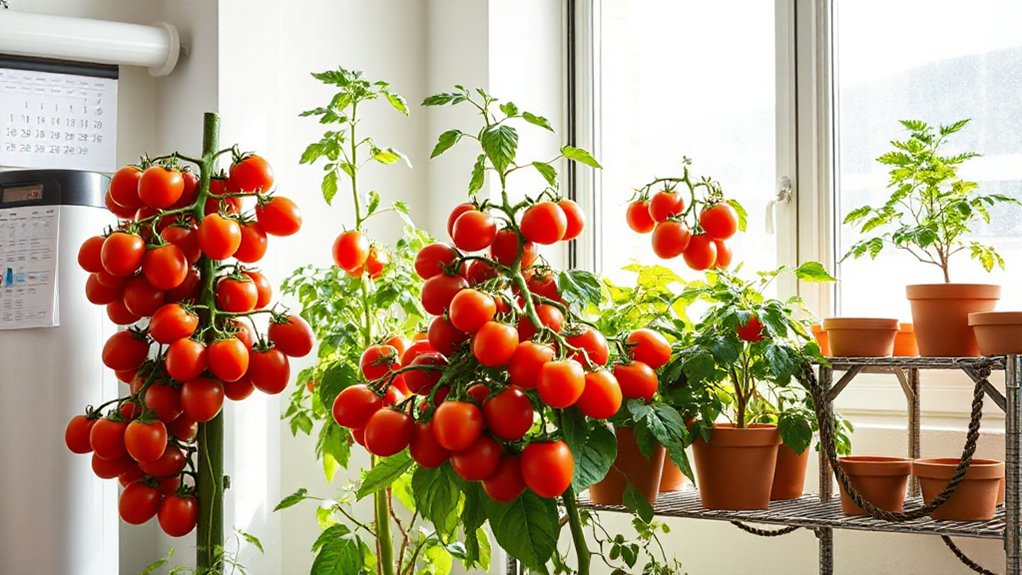
Growing tomatoes indoors isn’t a flavorless hobby—it’s a calendar-driven setup. To maintain year-round harvests, map light, temperature, and feeding to seasons rather than months alone. In spring, stagger seed starts to align with early fruiting, ensuring a steady flow as days lengthen. Use 12–14 hours of supplemental light to preserve Seasonal flavor, and keep daytime temps around 70–75°F with cooler nights to encourage fruit set. Summer follows a similar rhythm: sustain strong light, steady moisture, and regular feeding every 1–2 weeks. Fall should trigger a second wave of flushes by invigorating nutrients and slightly increasing humidity to support fruit ripening. Winter cycles rely on consistent lighting and pruning to extend harvest timing, avoiding stalls. Monitor plant health, adjust schedules promptly, and prioritize airflow for continuous productivity.
Budget-Friendly Tools and Quick Wins for Indoors
If you’re growing tomatoes indoors on a budget, start with essentials that deliver real results without breaking the bank. You don’t need fancy gear to see fast wins; leverage simple, proven tools and smart practices. Focus on quick, effective gains first, then scale as needed.
- Use a small, adjustable LED grow light and placement that maximizes intensity while minimizing energy use.
- Recycle containers and lightweight drip trays; keep a tidy, accessible workspace for quick tasks.
- Apply compost tea on a routine schedule to boost soil biology and reduce fertilizer waste.
- Implement affordable pest control methods like proper airflow, older tomato varieties less prone to issues, and targeted organic remedies.
These steps keep costs low while delivering reliable indoor yields.
Indoor Tomato Success Blueprint: Your Step-by-Step Plan
With a solid budget-friendly base in place, you’re ready to map a practical, step-by-step plan for indoor tomato success. Start with a defined schedule: a consistent light cycle, daily monitoring, and weekly water checks. Choose compact, determinate varieties to maximize small-space output. Set up a simple trellis or stake system to keep stems upright and airflow steady. Pinch new growth sparingly to focus fruit development. Maintain even soil moisture, avoiding both soggy roots and drought stress. Regularly inspect for Tomato pests and act quickly with targeted, non-toxic controls if needed. Conduct Indoor soil testing at least once per season to tailor amendments to your mix. Record results and adjust nutrients before each planting cycle for continual improvement. With disciplined routines, you’ll reap steady indoor tomato harvests.
Frequently Asked Questions
Do Indoor Tomatoes Taste as Good as Outdoors?
Yes, indoor tomatoes can taste as good with proper care. Use garden soil quality, monitor pest control, guarantee consistent light, and regulate humidity; your plants will produce flavorful fruit similar to outdoors if you optimize conditions.
Can Tomatoes Self-Pollinate Without Insects Indoors?
Yes, tomatoes self-pollinate indoors with little help, though you’ll boost fruit set using gentle shaking or a small brush. Pollination techniques matter; combine with reliable Indoor pest control to keep plants healthy and productive.
How Long Do Indoor Tomato Plants Stay Productive?
Indoor tomato plants stay productive about 4–6 months with steady care. Make sure proper soil preparation and lighting requirements; keep temps stable, water evenly, and prune regularly to maintain ongoing fruiting through the season.
Is Hydroponic Growing Necessary Indoors?
Hydroponics isn’t strictly necessary indoors; you can grow tomatoes in soil indoors. But consider soil vs. hydroponics, and indoor vs. outdoor lighting. With strong light, airflow, and steady nutrients, you’ll succeed without hydroponics.
What’s the Quickest Fix for Indoor Blossom Drop?
The quickest fix for indoor blossom drop is to stabilize environmental stresses. Improve pest control, guarantee adequate lighting requirements, and boost airflow; maintain consistent temperatures. Check pollination, water consistently, and avoid sudden changes that trigger stress in your tomato plant.
Conclusion
You’ve got the basics to pull off indoor tomato success: right varieties, solid lighting, steady warmth and humidity, smart pots, and simple care routines. Keep a consistent schedule, prune and stake as needed, and watch for pests before they take hold. With a little tweaking, you’ll enjoy a fresh harvest year-round. Ready to turn your balcony, kitchen, or spare room into a productive tomato hub? The more you test, the better your indoor yield becomes.
About the Author


