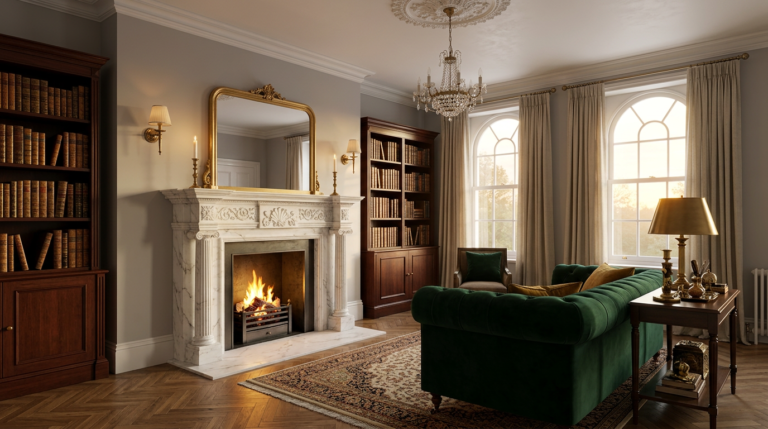

To modernise a seaside Dorset apartment, start by pairing durable coastal materials with a light, airy palette to resist salt air while feeling breathable. Prioritize salt- and UV-resistant finishes, moisture-resistant substrates, and low-VOC products. Design open-plan zones that maximize natural light, using mirrors, glass, and cohesive coastal textures. Create seamless outdoor connections with floor-to-ceiling glazing and weathered finishes. Plan smart storage and layered lighting for long evenings; maintain Dorset charm with regular maintenance cues—and you’ll uncover more strategies ahead.
Key Takeaways
- Embrace a coastal palette and materials: light, neutral tones with driftwood textures, UV-stable finishes, and salt-resistant paints for durability near the shore.
- Prioritise indoor-outdoor flow: wide floor-to-ceiling glazing, seamless transitions, and coastal flora planters to frame sea views.
- Use moisture-aware finishes and durable textiles: moisture-resistant substrates, low-VOC coatings, and quick-dry, stain-resistant fabrics for upholstery and cushions.
- Optimize layout for light and views: open-plan zones with clear sightlines, strategic mirrors, and flexible storage to maintain a bright, breathable feel.
- Plan low-maintenance upkeep: seasonal checks on windows, sealants, and paintwork; sustainable, easy-clean finishes and practical, hidden storage solutions.
Set Your Coastal Brief: Timeless Dorset Style With Practical Goals
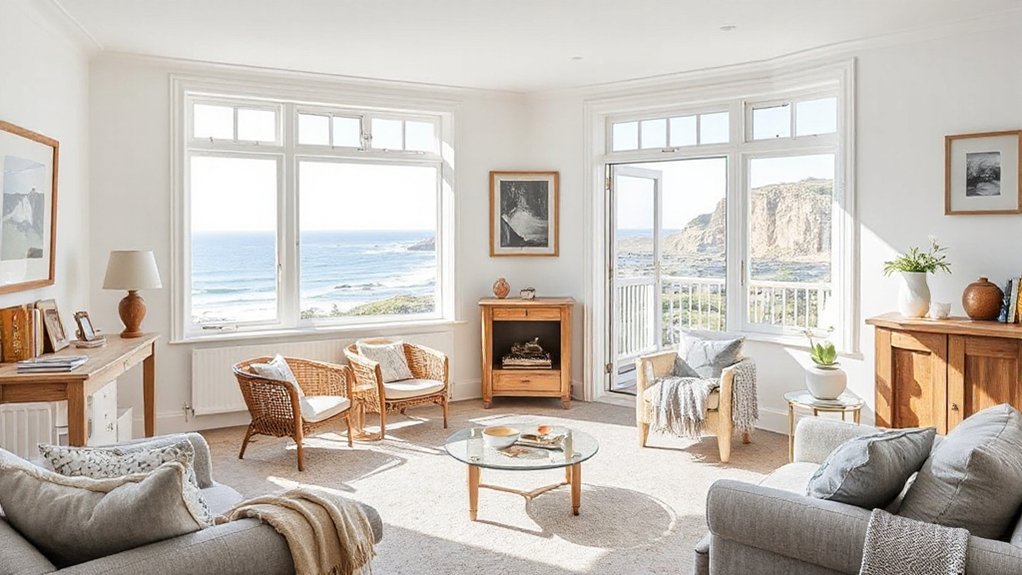
Set a coastal brief that anchors your Dorset project in timeless, sensory clarity: define the look, feel, and performance you expect, then translate that into measurable goals. You focus on Seaside aesthetics to guide material selection, color palette, and texture—without compromising durability. Your targets prioritize Coastal sustainability, prioritizing low-emission finishes, reclaimed timber, and water-efficient systems. Establish clear metrics for light quality, acoustic comfort, and air exchange, aligned with a seaside baseline of durability under saltair exposure. Specify how spaces will perform under seasonal occupancy, with modular furniture and robust storage that preserve order. Clarify documentation processes, revision gates, and approval checkpoints to keep momentum. Your brief becomes a design blueprint—scalable, testable, and resolutely aligned with timeless Dorset style.
Identify The Coastal Challenges And Timeless Style Goals
Coastal Dorset presents a unique blend of saltair exposure, high UV, and humidity, requiring materials and detailing that resist corrosion while preserving warmth and tactility. You identify coastal challenges and align them with timeless style goals, balancing form and function. Coastal erosion informs thresholds for glazing, balcony edges, and landscape buffers, ensuring long-term stability without compromising atmosphere. Marine pollution shapes material selection, finishes, and cleaning regimes, prioritising low-maintenance surfaces and responsibly sourced components. Your design goals emphasize bright, breathable interiors, nautical accents, and light diffusion that works with variable weather. You aim for a durable, refined palette that stays legible over seasons, while installations allow effortless maintenance. By forecasting threats and defining enduring aesthetics, you set a roadmap that preserves Dorset charm amid coastal realities.
Choose Durable, Water-Resistant Finishes For Seaside Life
Sea salt and humidity demand finishes that resist moisture without sacrificing tactility. You’ll want coatings and materials that perform under coastal conditions while keeping luxuriously tactile experiences. Opt for salt resistant paints in high-occupancy zones to deter corrosion and maintain color fidelity, pairing with UV-stable topcoats to resist sun exposure. Select weatherproof textiles for upholstery and webbing, engineered to resist wipeable stains and salt spray, ensuring longevity without visual compromise. Prioritize moisture-management substrates—sealed plywood or moisture-resistant gypsum—to prevent ghosting and warping. In kitchens and baths, choose laminated surfaces with anti-macterial, water-repellent layers. Use breathable, sealed timber for warmth, treated to resist salt air. Maintain a restrained palette to preserve modern clarity while your finishes endure the seasonal seaside cycle.
Optimize Open-Plan Layouts For Life By The Sea

You’ll shape an open-plan flow that feels effortless from sea to living space, prioritizing sightlines and adaptable zones. Aim for seamless, sea-led living by aligning dining, lounge, and kitchen with natural light and cross-ventilation. Use restrained detailing and flexible partitions to maintain openness while guiding movement.
Optimise Open-Plan Flow
To optimise open-plan flow, start by defining clearly connected zones that support both shared living and private moments, without sacrificing sightlines or natural light. You’ll align furniture to create intuitive pathways, preserving generous circulation while delineating functions with subtle cues like rugs, lighting layers, and architectural features. Prioritise a cohesive palette that echoes coastal landscaping, balancing cool neutrals with warm textures to unify living, dining, and kitchen zones. Select compact, multi-functional pieces that won’t crowd sightlines or hamper flow, and use vertical storage to keep surfaces clear. Integrate seaside decor through tactile materials—driftwood finishes, linen upholstery, woven textures—without overembellishment. Guarantee transitions between zones feel seamless by orchestrating lighting scenes and acoustic zoning, fostering intimate moments within an expansive, breezy, sea-facing environment.
Seamless Sea-Led Living
Seamless Sea-Led Living builds on optimized zones by leveraging the coast’s natural rhythm to create a fluid, life-first layout. You align principal zones to daylight and sea views, ensuring circulation supports easy progressions from kitchen to living to balcony. Use large, uninterrupted sightlines to stitch interiors with exterior textures, favoring translucent partitions or no barriers where privacy isn’t required. Furniture should float against walls, leaving central pathways clear for breezes and movement, while fixed elements echo nautical minimalism. Integrate ambient lighting that mimics tides, and select textiles in muted blues and sands for Seaside serenity. Embrace built-in storage to minimize clutter, preserving vistas and order. The result exudes Coastal charm without sacrificing function or intention.
Maximize Natural Light With Mirrors, Glass, And Smart Layout Tweaks
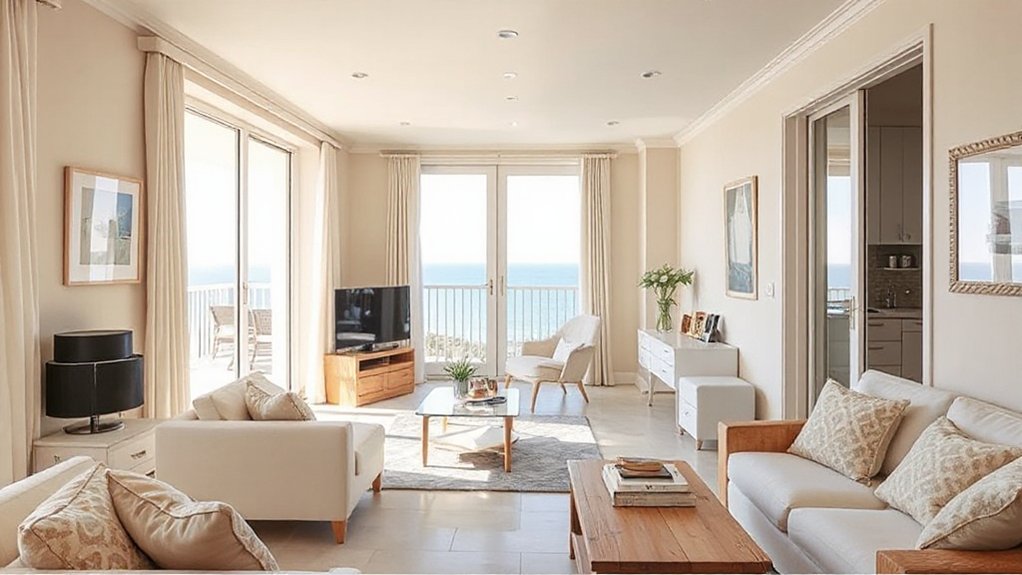
You’ll amplify daylight by using light-enhancing mirrors strategically placed to bounce natural light further into rooms. Opt for clear glass and minimal frames to maintain an airy, uninterrupted glow, while glass-influenced layouts promote reflective openness. Small, purposeful layout tweaks—like relocating seating and swapping heavy drapes for sheer panels—maximize brightness without sacrificing function.
Light-Boosting Mirrors
Mirrors do more than reflect light—they amplify it. In a Dorset seaside home, you’ll choose strategic placements that multiply daylight without crowding space. Opt for tall, slim frames to draw the eye upward, widening perceived ceilings and improving airflow through the room. Pair wall-mounted mirrors opposite windows with minimal framing to avoid distraction; this creates a continuous glow that travels from dawn till dusk. Consider mirrored背 panels on cabinetry to bounce light within compact kitchens and bathrooms, reducing need for artificial brightness. Integrate mirrors with art decor to anchor focal points, ensuring coherence rather than reflection chaos. Balance functions with garden landscaping cues—soft greenery near reflective surfaces softens glare and adds depth. Keep layouts predictable, precise, and uncluttered for a true, modern seaside ambience.
Glass Layout Tweaks
Glass layouts can dramatically amplify daylight by pairing strategic partitions with transparent materials and smart placement. You’ll leverage glass partitions to segment zones without visually closing spaces, preserving openness while defining distinct living, dining, and sleeping areas. Opt for low-iron glass or framed options that minimize tint and maximize luminance, and position partitions to reflect morning and late-afternoon light across the room. Use real-time feedback from the daylight cycle to adjust furniture placement and sightlines, ensuring glare is controlled. Pair these elements with selective window treatments—roller orroman shades that disappear when not needed and sheer panels to soften brightness. Align hardware and seams with architectural lines for a cohesive, modern seaside aesthetic that enhances both function and mood.
Create A Coastal Palette That Stays Chic All Year

To create a coastal palette that remains chic year-round, start with a disciplined core of neutral tones—soft plaster, dove gray, and warm sand—that anchor the scheme and prevent seasonal drift. Build complexity with strategic textures: matte plaster, linen, and weathered wood. Introduce coastal color palettes through restrained accents—soft blues, seafoam, and charcoal—applied in lighting, textiles, and art, never overpowering the base. This avoids quick trend swings, ensuring longevity. Tie rooms together with unified undertones and consistent finish levels, so progression feel intentional rather than disparate. Embrace Seaside decor trends by layering natural materials and waxed metals for understated sheen. Keep color variations subtle and purposeful, allowing architectural details to shine. You’ll achieve a sophisticated, timeless coastal look that remains relevant beyond each season.
Upgrade The Kitchen To Handle Sand, Salt, And Spills
Transforming a seaside kitchen into a rugged, low-maintenance hub starts with material choices that shrug off sand, salt, and spills. You select surfaces with Sand protection and Salt resistance, prioritizing durable composites, quartz, and solid surface alternatives that resist gouges and staining. Seal joins with continuous, wipe-clean profiles to prevent grain infiltration, and specify flush, driftwood-toned displays that hide grit. You’ll favor stainless steel, powder-coated metals, and glass that endure coastal humidity without warping or corrosion. Consider sink and faucet pairings with marine-grade finishes and integrated drainage to mitigate splash zones. Efficient storage for spill kits and compact, water-resistant appliances consolidate maintenance routines. Finally, document care regimes that sustain longevity, emphasizing routine re-sealing intervals and quick-clean protocols to preserve the kitchen’s pristine, design-forward edge.
Bathrooms And Laundry Rooms Built For Damp Coastal Air
Bathrooms and laundry rooms in a damp coastal climate demand layouts and finishes that resist humidity without sacrificing style; start with moisture-tolerant materials, then integrate efficient ventilation, smart drainage, and low-maintenance surfaces. You select waterproofing membranes behind tile, sealed cabinetry, and corrosion-resistant fittings to endure salt air. Prioritize low-porosity surfaces that scrub clean, paired with concealed drainage channels to prevent puddling. Ventilation should be robust yet quiet, with humidity-sensing fans and windowless options for reliability. Use neutral palettes accented by Coastal flora and sea-inspired art to reinforce a breezy, maritime mood. Incorporate built-in niches, tactile textures, and smart lighting that enhances safety and visibility. This approach delivers durable, elegant spaces that thrive in damp coastal air without compromising design integrity.
Flooring That Balances Durability And Style For Sea Damp

For sea damp, you’ll want flooring that pairs durability with refined style, choosing moisture-resistant options that handle coastal fluctuations. Consider timber finishes engineered for moisture tolerance and low maintenance, delivering a natural warmth without warping. Pair these with style-efficient beach house planks or tiles that read cohesive yet resilient, so your floors perform as well as they look.
Durable Seaside Flooring Options
Durable seaside flooring should pair resilience with refined aesthetics, resisting salt air, humidity, and foot traffic without sacrificing style. You’ll prioritise materials that endure beachfront conditions while delivering a quiet, sophisticated texture underfoot. Consider porcelain or ceramic tiles with coastal-inspired finishes for easy maintenance and moisture resistance, paired with anti-slip surfaces for safety. Luxury vinyl planks offer water resistance, design versatility, and quick installation, translating Seaside elegance into practical living spaces. Stone options, treated for salt resilience, provide timeless gravitas and durable performance, though heft and cost rise. Layer with moisture-buffering underlay and precise trims to maintain continuity between rooms. Choose colors echoing sand, seafoam, and driftwood to reinforce Coastal durability without sacrificing modernity, ensuring cohesive, durable, and refined interiors.
Moisture-Resistant Timber Finishes
Moisture-resistant timber finishes strike a balance between warmth and practicality, delivering the look of real wood with built-in resilience against sea damp. You’ll choose finishes that deter moisture ingress while preserving wood’s natural character, essential for coastal environments. Emphasize low-VOC formulas and UV stability to reduce yellowing and edge wear from salty air. For flooring you’ll favor finishes with high wear resistance and easy recoatability, enabling timely maintenance without disruption. When planning timber maintenance, document exposure zones, which aids in selecting appropriate coatings and cycles. Finish selection should consider humidity fluctuations, coastal dust resistance, and slip resistance, prioritizing lifecycle performance over cosmetic quick fixes. Pair finishes with precise installation tolerances and seamless gradations to maintain a cohesive, design-forward coastal aesthetic.
Style-Efficient Beach House Floors
Coastal floors must marry resilience with refined aesthetics, so you can enjoy beachside living without sacrificing style. You choose flooring that withstands salt-laden air, humidity swings, and casual popping-in of wet feet, without dulling design intent. Opt for engineered wide-plank options with UV-coated finishes to resist fading, while keeping a tactile warmth underfoot. Low-slip textures matter in damp zones, yet you maintain a clean line across rooms with uniform, seamless progressions. Consider charcoal or ash tones to echo coastal art, and pair with moisture-rated underlays for stability. Integrate hidden fasteners and precise installation to minimize expansion gaps during damp spells. Seaside gardening access and coastal art accents become deliberate complements, not afterthought details, reinforcing a cohesive, durable aesthetic for a modern Dorset shoreline home.
Coastal-Friendly Soft Furnishings That Resist Sun And Humidity
Sun and humidity demand fabrics that stay calm under pressure, so choose coastal-friendly soft furnishings engineered for moisture resistance without sacrificing texture or color. You’ll prioritize materials with tight weaves, microfiber blends, or solution-dyed fibers that resist fade and staining in salt air. Opt for Sun resistant fabrics that balance durability with tactile appeal, ensuring soft touch remains after sun exposure. Humidity proof cushions should feature quick-dry foams, breathable cores, and covers with high-performance treatments to deter mold growth. Choose dye-lot-stable hues that read as coastal—sand, dune, and sea-glass tones—without showing wear. Prioritize removable, washable covers for practical upkeep and consistent freshness. Pair with weatherized, complementing textures to maintain a refined, modernist coastal interior.
Outdoor Connections: Balconies, Decks, And Sea-View Integration
You’ll optimize outdoor connections by ensuring seamless flow between indoors and the sea-view exterior, prioritising clear sightlines and accessible shifts. Consider how balcony and deck alignments frame panoramic vistas, guiding furniture layouts to maximise both livability and vistas. We’ll explore design-forward choices that integrate sea views with durable, coastal-ready materials and restrained palettes.
Outdoor Connection Flow
The Outdoor Connection Flow links indoor living with exterior spaces—balconies, decks, and sea-view terraces—so the seaside apartment feels expansive rather than compartmentalized. You design passages that read as one continuous plane: floor-to-ceiling glazing, mullioned frames, and consistent materials. Select coastal flora-inspired planters to extend greenery without crowding sightlines, reinforcing a seamless visual link to the coast. Materials should echo seaside architecture: low-sheen timber, weathered metals, and stone tones that weather gracefully. Lighting is functional yet precise, with profiles that illuminate thresholds and accent textures rather than overwhelm views. Avoid clutter; define purposeful zones—reading, dining, and lounging—while maintaining unobstructed sightlines. This flow enhances spatial perception, strengthens indoor-outdoor reciprocity, and elevates the dwelling into a cohesive coastal retreat.
Sea-View Balconies Integration
What makes sea-view balconies feel like an extension of the interior is a deliberate integration strategy that foregrounds unobstructed sightlines and tactile cohesion. You should align railing geometry with interior profiles, selecting materials that mirror indoor finishes for a seamless flow. Prioritize weather-resistant surfaces, low-reflective glazing, and compact fixed furniture to maintain restraint and legibility. The balcony becomes a controlled extension, not a separate room; framing views while preserving scale is essential. Implement durable textiles and subtle color harmonies that echo indoor palettes, avoiding visual clutter. Incorporate planters with coastal flora to soften edges without obstructing access. Integrate a simple lighting plan that respects daylight and sea breeze, enhancing usability after sundown. This approach preserves the integrity of the view while maximizing seasonal comfort.
Smart Storage Ideas To Keep A Seaside Home Clutter-Free
Smart storage is the backbone of a seaside home that stays calm and clutter-free. You’ll harness space with built-in solutions that disappear into architecture, not into furniture. Prioritize Hidden storage to keep daily items out of sight yet instantly reachable, preserving sightlines toward the sea. You’ll apply clutter control by zoning spaces for gear, coats, and linens, using modular components that adapt as needs shift.
- Built-in benches with lift-top storage for coastal gear
- Wall-mounted cabinets and slim niches for tall, fragile items
- Under-bed drawers and peg systems for linens and accessories
Design-forward choices mean matte finishes, rounded edges, and moisture-resistant materials. The result is an organized, serene environment that performs as well as it looks.
Lighting Plan To Extend Summer Evenings Indoors (Layered Lighting By Zone)
A layered lighting plan extends summer evenings indoors by balancing ambient, task, and accent illumination within each zone. You’ll define zones for living, dining, and media areas, then assign lighting roles that synchronize with activity and daylight shifts. Ambient glow comes from dimmable ceiling fixtures and wall washes that wash walls without glare, creating depth and softness. Layered illumination adds task light at seating edges, writing nooks, and kitchen counters, ensuring clarity where you read or prepare drinks. Accent lighting highlights artwork, architecture, and coastal textures, guiding the eye and enriching mood after sunset. Use zones to control circuits independently, so you never overlight one room or underlight another. This approach delivers a cohesive, design-forward atmosphere with efficiency and precise atmosphere control.
Maintenance Routines To Preserve Dorset Charm
Likewise, establish a disciplined upkeep routine that protects Dorset charm without dulling its character or contrast. You’ll preserve seaside architecture’s silhouette and tactile honesty by scheduled checks, material-specific care, and timely fixes that respect patina. Focus on coastal flora integration, ensuring plant choices complement masonry and timber without overgrowth. Regularly inspect windows, shutters, and paintwork for salt exposure and peeling, touching up with breathable finishes to sustain texture. Clean joints, sealants, and drainage to avert damp, while matching profiles to original detailing. Document seasonal tasks to maintain consistency and efficiency.
- Schedule seasonal cleaning, coating, and inspection aligned with coastal climate
- Use breathable, low-VOC finishes that respect material honesty
- Trim coastal flora to protect masonry, allow airflow, and preserve seaside architecture integrity
Frequently Asked Questions
How Can I Protect Furniture From Sea Salt Corrosion Effectively?
Protect furniture from sea salt corrosion by applying a marine-grade sealant, reapplying annually, and using corrosion protection coatings on metal. Regularly wipe down surfaces, store outdoor furniture indoors during salt spray, and choose resistant materials for furniture preservation. Sea salt.
What Budget-Friendly Materials Resist Damp and Humidity Best?
Coincidence strikes: you’ll choose marine grade paint and moisture resistant flooring, proving budget-friendly materials resist damp best. You maximize durability, apply with precision, and enjoy a design-forward, expert approach that keeps seaside flats stylish and protected.
Which Lighting Layers Extend Summer Evenings Indoors Most Efficiently?
You extend summer evenings indoors most efficiently with layered ambient lighting, task accents, and soft-dalliance dimming, using warm tones. Prioritize ambient lighting and outdoor illumination to blur indoor-outdoor boundaries and maintain precise, design-forward ambiance.
How Do I Maintain Charm Without Sacrificing Modern Practicality Long-Term?
You maintain charm by balancing Vintage charm with practical upgrades, prioritizing durable materials and smart storage, while preserving coastal aesthetics through light, coastal palettes and timeless textures you’ll love long-term.
What Quick Coastal Upgrades Optimize Resale Value in Dorset?
Start with quick coastal upgrades: update lighting, seal grout, and refresh hardware; these boost resale value without overhauling charm. I’ve seen a condo jump 8% after practical tweaks. Embrace seaside decor and coastal color schemes, expertly.
Conclusion
You’ll finish with a seaside sanctuary that’s both timeless and practical. By balancing durable finishes, smart layouts, and abundant light, your Dorset home stays fresh year after year. Keep the view front and center, layer lighting by zone, and stash clutter with clever storage. Treat every balcony and deck like an extension of the living space. In short, you’ll shape a coastal interior that shines—like a lighthouse guiding you home to refined, effortless living.
About the Author