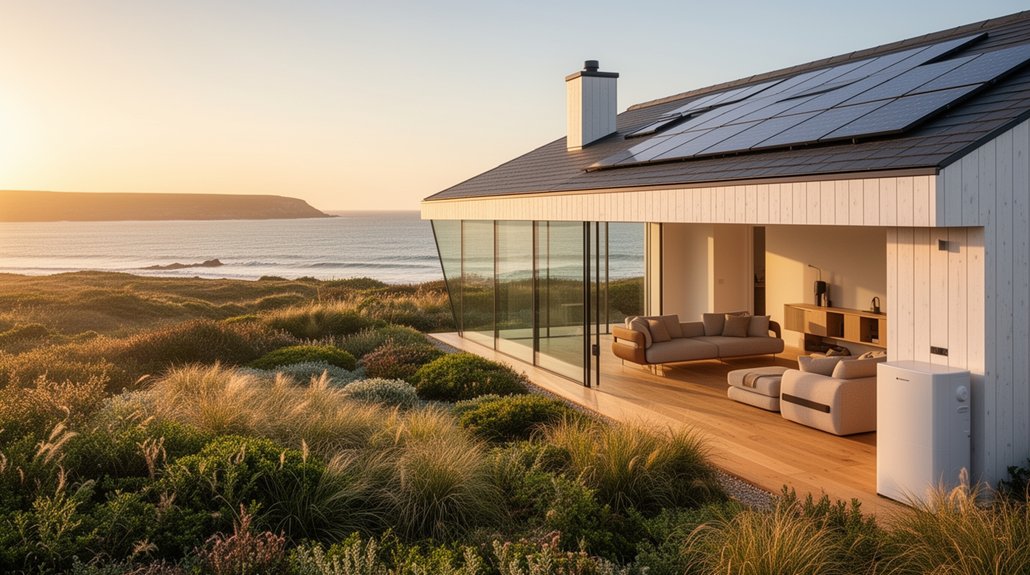
To upgrade your Devon coastal home with sustainable luxury, define clear goals that preserve sea views and historic character while boosting energy efficiency and resilience. Map scope around the three pillars of goals, budget, and trade-offs, prioritizing high-impact, low-risk interventions and local materials that resist salt and wind. Combine passive design, intelligent shading, and coastal-appropriate glazing with water-smart systems and native vegetation. Align timelines with tides and permits, monitor costs, and maintain coastal integrity—more details await with your next step.
Key Takeaways
- Prioritize locally sourced, salt‑resistant materials (reclaimed timber, weathering steel, lime plasters) to maintain coastal character and longevity in Devon’s climate.
- Enhance energy performance with high‑performance glazing, dynamic shading, continuous insulation, and smart controls tuned for coastal winds and humidity.
- Implement rainwater harvesting, drought‑tolerant native planting, and irrigation sensors to reduce water use while buffering against sea breeze erosion.
- Integrate passive design strategies: airtight envelope, thermal breaks, radiant floors, and natural ventilation when climate permits.
- Use coastal‑reflective aesthetics and subtle nautical detailing (through-bolt joints, rope textures, weatherproof finishes) for luxury appeal that ages gracefully.
Assessing a Devon Coast Home: Goals, Budget, and Trade-Offs

When evaluating a Devon coast home, start by defining clear goals: preserving sea views and historic character while improving energy efficiency and resilience to coastal weather. You map the scope with three pillars: goals, budget, trade-offs. You assess condition, fabric, and adaptability, noting where structure supports or hinders upgrades. You estimate costs against expected gains, prioritizing high-impact, low-risk interventions first. You consult coastal property taxation implications and potential grants, framing the financials within a practical ceiling. You review local planning regulations early, identifying permissions, restrictions, and required consultations to avoid delays. You document risk exposure—salt, wind, damp—and assign measurable targets for energy performance, moisture management, and durability. You finalize a phased plan, milestone checks, and contingency buffers for a resilient, respectful Devon coast home.
Maximize Efficiency Without Obscuring Sea Views
You’ll balance efficiency with clear sea views by selecting Efficient Glass Treatments, pairing high performance with low reflectivity and UV control. Combine Strategic Shading Solutions that minimize heat gain without blocking panoramas, using operable, discreet devices tuned to seasonal sun angles. Add Quiet, High-Performance Venting to maintain comfort and airflow while preserving the open, unobstructed coastal vista.
Efficient Glass Treatments
Efficient glass treatments can dramatically cut energy use without sacrificing views; by selecting low-emissivity (low-E) coatings, solar control films, and insulated glazing units, you keep heat out in summer and retain interior warmth in winter. You’ll optimize performance through triadic design: science-backed material choices, precise installation, and measurable comfort gains. Focus on solar shading and glass coatings to balance daylight with temperature, preserving coastal vistas while reducing HVAC load.
- Crystal-clear panes with low-E layers reflecting infrared while transmitting daylight
- Reflective or tinted coatings that modulate glare without darkening rooms
- Insulated glazing units with multiple seals for airtight efficiency
- Spectrally selective films tuned to season, minimizing heat gain
- Edge-dams and frames optimized for thermal breaks and durability
Strategic Shading Solutions
Strategic shading that preserves sea views hinges on three tightly integrated elements: dynamic exterior screens, high-performance glazing with solar control, and intelligent operability. You implement shade structures that adapt to sun angle, enabling constant glare reduction without obstructing horizons. Pair solar screens with frame-titted devices that retract automatically, aligning with occupancy and weather data for ideal performance. Each component is chosen for durability, low maintenance, and coastal salt resistance, ensuring longevity in Devon’s maritime climate. The triadic design prioritizes load paths, thermal comfort, and view fidelity, so daylight remains abundant while heat gain stays bounded. Precision calibration of actuator response, sensor feedback, and manual override guarantees resilience during storms. Your strategy blends aesthetics, efficiency, and function, delivering consistent luxury while safeguarding expansive sea vistas.
Quiet, High-Performance Venting
Quiet, high-performance venting builds on the shading framework by integrating acoustically tuned airflow paths that minimize noise while maximizing air exchange. You’ll harness marine airflow through strategically placed intakes and outlets, balancing pressure and draft without visual intrusion. Sound insulation is integral, incorporating baffled channels and selective perforations that dampen outdoor bustle while preserving quick relief from indoor heat. Your system uses triadic design: performance, aesthetics, and privacy converge to sustain comfort with minimal footprint.
- Silenced grilles near sea walls that still admit fresh air
- Quiet duct routing avoiding courtyard echoes and road noise
- Perforated screens blending with coastal textures
- Insulated sleeves guarding against thermal losses
- Zonal controls syncing airflow with occupancy and wind shifts
Water-Smart Systems for a Drought-Resilient Devon Home
When drought risks loom, you’ll safeguard your Devon home by integrating water-smart systems that optimize supply, reduce demand, and protect outdoor and indoor spaces. You configure a triad of approaches: capture, store, and reuse. Rainwater harvesting feeds gardens and toilet flushes, easing mains pressure while preserving aquifer integrity. A precision irrigation controller links weather data to soil moisture, minimizing wastage and ensuring healthy plantings. Low-flow fittings and dual-flush toilets cut daily usage without compromising comfort. On-site storage tanks and pump automation safeguard supply during dry spells, while smart leak detection flags anomalies before they become losses. Eco friendly landscaping reduces evaporation and mowing needs, supporting resilience. You document performance, calibrate seasonal targets, and review maintenance to sustain efficiency year after year.
Coastal Materials With Low Impact and Classic Appeal

You’ll evaluate coastal materials that balance low environmental impact with enduring charm, prioritizing durability, recyclability, and source transparency. Consider how timeless maritime aesthetics—textured timber, weathered stone, and pale, salt-resistant finishes—align with Devon’s coastal light and sea-salt cycles. This triadic framework guides material choices that perform well, age gracefully, and preserve the property’s classic appeal.
Sustainable Coastal Materials
Sustainable coastal materials balance low environmental impact with enduring charm, delivering a tactile palette that ages gracefully and preserves the coastline’s character. You prioritize materials that wear naturally, resist salt and moisture, and reduce embodied energy.
- Reclaimed timber with tight grain and salt‑resistant finishes
- Recycled steel and aluminum for framing and detailing
- Low‑VOC, breathable lime plasters in coastal tones
- Stone and ceramic tiles sourced locally or regionally
- Marine inspired textures in textiles and surfaces for tactile depth
Choose finishes that patina thoughtfully, not flashy, to maintain timeless coastal appeal. Prioritize eco friendly insulation to minimize thermal bridges without heavy synthetics. Integrate weather‑tested, corrosion‑resistant hardware. Maintain consistency with triadic design: form, function, and material honesty guide every choice.
Timeless Maritime Aesthetics
Timeless maritime aesthetics fuse coastal character with enduring restraint, prioritizing materials that age gracefully while resisting salt, moisture, and wear. You select timber that’s rated for salt spray, low maintenance, and sourced from certified, responsible mills, pairing it with stone quarried for weathering in granite hues. You balance texture and durability, favoring wicker and rope accents to nod to nautical heritage without clutter, and you treat metalwork with corrosion-resistant finishes. You emphasize clean lines, restrained color palettes, and proven construction methods that endure season after season. You weave nautical symbolism through subtle details: through-bolt joints, rope-tinished rails, and compass-inspired hardware. You validate choices by lifecycle impacts, longevity, and repairability, ensuring the coastal home remains timeless, resilient, and aligned with sustainable luxury principles.
Passive Design Tweaks for Year-Round Comfort

Passive design tweaks for year-round comfort hinge on precise envelope improvements, climate-responsive strategies, and intelligent shading that work in concert to reduce heating and cooling loads. You’ll align airtight assemblies with high-performance glazing, install continuous insulation, and deploy thermal breaks to minimize heat flux. Seasonal strategies adapt to coastal winds, using diagonal louver shading and operable vents to modulate humidity and drafts. You’ll integrate radiant floors and ceiling mass to stabilize temperatures, while reflective surfaces curb heat gain. Pair these with natural ventilation when conditions permit, and plantings that buffer coastal exposure. In concert, they protect marine biodiversity and mitigate coastal erosion, creating steady comfort across seasons without excess energy.
- Tight envelope with continuous insulation
- Operable shading and ventilation
- Radiant floors and ceiling mass
- Seasonal airflow optimization
- Native vegetation buffers against erosion
Smart Tech That Supports Sustainable Living
Integrating smart technology lets you quantify and optimize the coastal home’s performance without compromising comfort. You’ll monitor energy use, occupancy patterns, and appliance loads to target efficiency gains with precision. Triadic design guides the approach: sensing, action, verification. In practice, real-time data from solar generation, storage, and load controllers informs automatic adjustments to thermostats, blinds, and ventilation, reducing waste without sacrificing indoor climate. You’ll pair renewables management with demand response, shifting nonessential loads to periods of peak sun or wind. Insulation quality remains critical; eco friendly insulation minimizes heat transfer while smart controls prevent overconditioning. Finally, you’ll audit performance monthly, refining setpoints and alerts to sustain savings as conditions change. The result is informed resilience, lower bills, and diminished environmental impact.
Finishing Touches: Resilience, Style, and Local Character
Finishing touches weave resilience, style, and local character into the coastal home without sacrificing performance. You align materials, textures, and forms to withstand salt spray, humidity, and winds while preserving beauty and function. Your choices balance durability, aesthetics, and provenance, reinforcing coastal living with deliberate restraint. You foreground Coastal flora in fabrics and finishes, echoing dune grasses and sea-winds without visual clutter. Local craftsmanship anchors the design, translating regional traditions into precise detailing that ages gracefully. The result is a cohesive, triadic composition: performance, beauty, and sense of place working in concert.
- Hand-stitched seams that resist salt and abrasion
- Reclaimed timber tones paired with weatherproof textiles
- Limestone-inspired textures meeting slip-resistant surfaces
- Sailcloth-inspired upholstery with low-maintenance care
- Local motifs subtly woven into hardware and trim
Budgeting, Sourcing, and Timelines for a Devon Project

How can you practically map budgets, source responsibly, and pace the Devon project to align with coastal realities? You’ll apply three pillars: Budget planning, sourcing strategies, and timeline discipline. First, budget planning: set a robust baseline, add contingency, and cap escalation based on regional cost trends. Second, sourcing strategies: prioritize local, sustainable materials, verify certifications, and vet craftsmen for coastal performance. Third, timeline discipline: align milestones with seasonal tides, permit windows, and supplier lead times; build buffers for weather delays. Monitor variances weekly, adjust scope incrementally, and document changes for transparency. Cross-check assumptions with coastal risk considerations—flood, wind, corrosion—and preserve design intent through value engineering. This triad keeps capital, craft, and cadence coherent, delivering sustainable luxury within Devon’s constraints. Continuous refinement sustains clarity, not complexity.
Frequently Asked Questions
How Can Coastal Erosion Affect Long-Term Renovations on a Devon Site?
Coastal erosion shapes your site’s envelope, You must anticipate setbacks, protect foundations, and adjust timelines; Coastal erosion demands adaptive planning so long term renovations remain viable, resilient, and compliant, ensuring continued enjoyment despite shifting shoreline, variable tides, and retreating cliffs.
What Grants or Incentives Exist for Sustainable Coastal Upgrades in Devon?
You can access grants for sustainable coastal upgrades in Devon, including Marine conservation and Renewable energy incentives; you’ll pursue local authority funding, national schemes, and private partnerships, evaluating eligibility, match funding, and reporting requirements for rigorous, triadic-design project outcomes.
Which Local Suppliers Best Balance Cost, Traceability, and Sustainability?
Gently you’ll seek three local suppliers—Local craftsmanship, Eco friendly materials—balancing cost, traceability, and sustainability; like Hermes’ footsteps, you’ll compare, verify, and choose, ensuring durable value, transparent sourcing, and responsible, coastal stewardship.
How Do Microclimates Along the Devon Coast Influence HVAC Choices?
You consider microclimate variations along the Devon coast to optimize HVAC efficiency, adjusting insulation, humidity control, and orientation; you adapt equipment loads to narrow temperature ranges, ensuring Microclimate variations guide you toward greater HVAC efficiency and comfort.
What Maintenance Challenges Are Unique to Coastal Wood Finishes in Devon?
Coastal wood finishes in Devon demand vigilant maintenance: you’ll combat salt damage, moisture fluctuations, and UV exposure. Regular sealing, inspections, and prompt repairs preserve integrity, while you prioritize wood preservation through breathable coatings and proactive, triadic-design upkeep.
Conclusion
You’ve laid a solid compass: efficiency, resilience, and local character, balanced within a clear budget and timeline. Consider a single anecdote: a Devon lighthouse keeper once traded ornate beacons for a steady, smart glow powered by tidal energy—less flashy, more reliable. Like that shift, your project should favor durable materials, passive design, and water-smart systems that endure. The triad—eco performance, coastal charm, and practical sourcing—will keep your coastal home thriving through seasons and generations.
About the Author