
To decorate a bedroom for comfort and style, start with a cohesive color palette of neutrals plus warm accents, then layer tactile textures—knits, velvets, cottons—for depth. Make the bed the room’s anchor with proportional bedding and supportive support. Plan furniture for smooth traffic, using low-profile pieces to keep the space open. Optimize lighting with ambient, task, and dimmable options, and add 3–5 personal accents without clutter. If you stay curious, you’ll learn more practical steps to refine your calm retreat.
Key Takeaways
- Define a calming comfort palette with neutrals, warm accents, and cohesive textiles to create a unified mood.
- Layer textures (knits, velvets, cottons) and materials (wood, ceramic) for depth and tactile richness.
- Make the bed the focal point with proportional headboard, balanced layering, and easy access around it.
- Plan lighting in layers (ambient, task, mood) with dimmable options and color-temperature suited to zones.
- Optimize storage and soundproofing with multi-functional pieces, closed cabinets, and door/seal improvements for a quiet, organized space.
Define Your Cozy Bedroom Comfort Palette
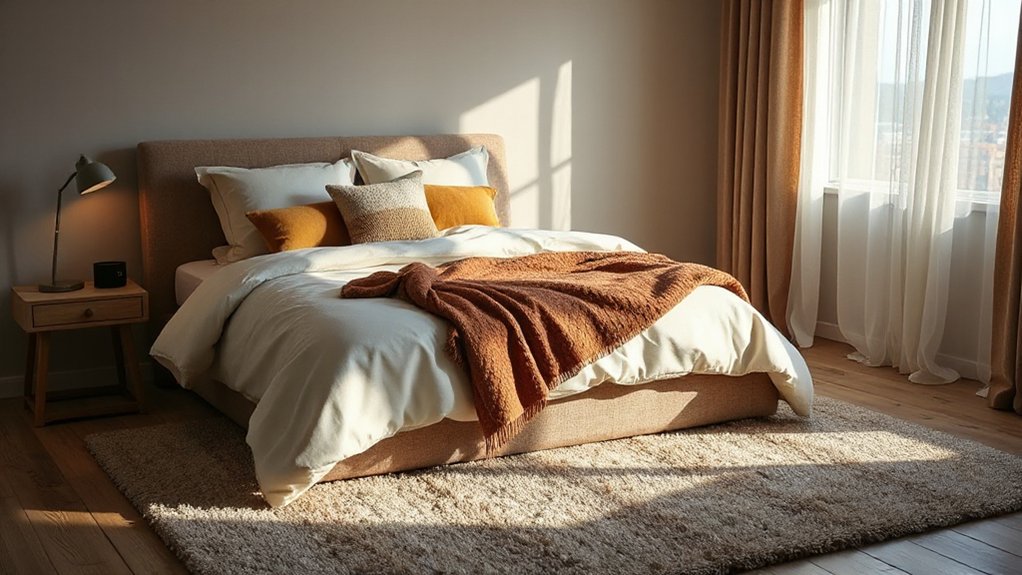
To create a cozy bedroom comfort palette, start by picking a unifying base of neutrals and layering in warm accents. You’ll establish balance with a restrained color program: ivory, taupe, and graphite, then introduce amber, clay, or muted moss for depth. Define your core mood—calm, tailored, inviting—so you can navigate choices without drift. Consider how fabrics meet light: matte finishes for walls, subtle sheen on bedding, and tactile textures that feel refined yet approachable. Plan practical anchors first—bed, storage, seating—then tailor around them. Integrate bedroom scenting with purposeful factors like cadence of scents and duration. Don’t ignore sleep posture; shape the space to support alignment, from mattress height to pillow firmness. Keep surfaces uncluttered, reflections minimal, and accents intentional for lasting cohesion.
Layer Textures for Warmth and Softness
Layer textures create immediate warmth, pairing plush fabrics with smooth surfaces to balance coziness and structure. Start with Layered Texture Harmony by mixing tactile materials—knits, velvets, and cottons—in complementary colors for depth. Then apply Cozy Material Pairings to guarantee every touchpoint, from bedding to curtains, reinforces a calm, inviting mood.
Layered Texture Harmony
Layered texture harmony starts with a thoughtful mix of materials that balance warmth and softness. You align fabrics and surfaces to create a coherent tactile story, where textural contrast sharpens focus and sensory layering adds depth without visual overload.
- Combine a tactile trio: linen, wool, and suede accents to build unexpected warmth with clean lines.
- Layer fabrics at the bed and seating with varying nap and sheen to guide touch and sight.
- Introduce a sculptural surface—wood or ceramic—to ground the room while preserving a soft, inviting aura.
This approach keeps your space refined and practical, delivering comfort through deliberate variation. The result feels cohesive, polished, and richly inviting while staying uncluttered and purposeful.
Cozy Material Pairings
Cozy material pairings fuse warmth and softness into a tactile, inviting bedroom. You blend textures like brushed cotton, velvet, and a chunky knit to build layers that feel substantial yet calm. Start with a breathable base sheet, then add a velvet throw for depth and a knit blanket for approachable comfort. Pair a wool rug with linen curtains to balance sheen and matte surfaces, shaping light and sound. Choose decorative accents that echo the textiles—stitched pillows, woven baskets, and metal accents—that reinforce cohesion without clutter. As seasons change, swap lighter throws for heavier options to maintain thermal balance. Be deliberate: density, weight, and tapering textures guide the eye and the mood, yielding a space that remains refined through seasonal changes.
Make the Bed the Room’s Anchor
Make the bed the room’s anchor by centering it as the focal point, with a coherent layering plan that adds depth and comfort. Use a balanced color palette to tie bedding, headboard, and throws together, creating harmony from the first glance. When the bed reads as intentional and well-proportioned, the rest of the space feels cohesive and stylish.
Bed as Focal Point
When you treat the bed as the room’s anchor, you set a clear rhythm for the entire space: the headboard and linens establish the tone, while nightstands, lighting, and art harmonize around them. The bed becomes the focal point by volume and scale, so choose a proportionate frame and a mattress that supports your posture without sagging brightness across the room.
- Align the headboard with the bed’s width, and pick a bedding palette that reinforces the room’s bedroom color scheme.
- Select a mattress with appropriate firmness for you, prioritizing support and durability to maintain the anchor’s balance.
- Coordinate lighting and artwork to echo the bed’s silhouette, avoiding clutter that distracts from the central composition.
Layering for Comfort
Layering for Comfort begins with anchoring the bed as the room’s core, then layering textiles and lighting to build warmth without visual clutter. You choose a solid foundation: crisp sheets, a balanced duvet, and a mattress that reads as grounded. Build the texture story with a mix of weighty and light textiles—a velvet throw, a cotton coverlet, a knit throw—so you can adjust perceived warmth without adding bulk. Lighting should be layered: a durable overhead, a pair of ambient lamps, and a soft night-light. Elevate mood with intentional scenting strategies; bedroom scenting can boost calm without overpowering the senses. Consider sleep inducing aromas from natural sources or subtly scented textiles. The result is a calm, cohesive space that supports restorative habits and refined taste.
Color Palette Harmony
A cohesive color palette starts with the bed as the anchor, grounding the room and guiding every other choice. When you align hues around the bed, you create a cohesive flow that feels intentional and calm. Color psychology matters: choose tones that reflect mood goals, from tranquil neutrals to energizing accents, and let them radiate outward without shouting. Aim for palette contrast that adds depth—light walls with darker textiles, or a bold accent against a soft field. Balance prevents chaos and supports rest, so test swatches under natural light and in your evening lamp’s glow.
- Establish a neutral bed base and layer with complementary accents
- Use one bold color sparingly to create contrast
- Verify lighting reveals true hues at different times
Plan Furniture for Smooth Traffic and Function
Where should you start when planning furniture to guarantee smooth traffic and strong function? Begin with a clear traffic plan: map walk paths from door to bed and storage, avoiding pinch points. Position the bed for easy access from both sides, prioritizing bed placement that leaves at least two feet of circulation space. Anchor larger pieces first, then scale smaller items to maintain balanced furniture proportions. Choose low-profile silhouettes in tight rooms to preserve openness and sightlines, and ensure doors and drawers fully clear each other when opened. Consider symmetry for calm, but allow asymmetry to suit daily routines. Keep surfaces free of clutter and maintain logical zones for dressing, relaxing, and sleeping. This disciplined approach yields comfort, efficiency, and refined style.
Optimize Lighting for Mood and Practicality

Lighting transforms mood and usability, so start by defining zones: a warm, dimmable ambience for winding down, crisp task light for dressing, and safe, well-lit paths for night visits. You control atmosphere by layering light sources and selecting color temperatures that suit each zone. Aim for a natural glow that feels effortless and not sterile, while keeping task lighting bright enough for precise activities.
1) Use dimmable fixtures in the bedside and lounge areas to modulate mood without changing fixtures.
2) Place a dedicated task light near mirrors and desks for accurate color rendering and clarity.
3) Make certain pathways have low-glare, shadow-free illumination to prevent trips and support night-time navigation.
Soften Acoustics With Sound-Friendly Choices
Softening the room starts with sound-friendly choices that complement the lighting you’ve thoughtfully layered. You’ll optimize acoustics by choosing textiles, surfaces, and layouts that absorb, diffuse, and control reverberation without cluttering style. Begin with soundproofing options that matter most for a bedroom: underfoot rugs, heavy drapes, and upholstered headboards that reduce drift between spaces. Prioritize balanced wall treatments and door seals to minimize leakage while preserving ambiance. For placement, consider acoustic panel placement that guards quiet zones without dominating sightlines; position panels at listening height and along reflective walls to break hard echoes. Use a cohesive palette so materials feel intentional, not disparate. Finally, test in quiet and softly adjust elements as needed to sustain calm, clear soundscapes.
Add Storage That Stays Tidy and Stylish
To keep a bedroom uncluttered, choose storage that blends seamlessly with your design and stays tidy with minimal effort. You’ll gain calm when every piece has a defined purpose, and doors or lids conceal daily clutter. Focus on practical, stylish storage solutions that prioritize accessibility and order.
1) Opt for multi-functional furniture, like a bed with drawers or a bench with interior storage, to reduce surface piles while preserving line and symmetry.
2) Use closed-cabinet options and labeled bins for quick clutter control, ensuring items return to their places without visual chaos.
3) Select modular organizers that adapt as needs change, preserving clean sightlines and allowing your room to breathe.
These Storage solutions minimize mess, elevate aesthetics, and support lasting serenity.
Zone by Color: Soothing Schemes for Every Area

Color sets the mood of every zone in your bedroom, so group walls, textiles, and accents by tone to cultivate calm and cohesion. Zone by color means designating distinct areas—sleep, work, dressing—with cohesive palettes that support function. Begin with a dominant hue for each zone, then layer with lighter or darker variations to create depth without clutter. Use color psychology to align mood with purpose: soft blues and greens for serenity, warm neutrals for warmth, muted terracotta for grounding. Limit contrasting accents to a single complementary hue to preserve flow and reduce visual noise. Guarantee textiles echo the primary tones and reinforce mood enhancement, while furniture finishes stay within a tight spectrum for a unified look. This discipline yields serene, purposeful spaces.
Introduce Personal Accents Without Clutter
Personalize your space without clutter by curating a few meaningful accents that echo the room’s palette. You’ll elevate style with intention, not excess, by selecting items that carry meaning and visual weight. Think cohesion over quantity, and let every piece reinforce the color story and mood you’ve created. Personal touches should feel intentional and familiar, not simply placed. Practice disciplined clutter management by rotating pieces seasonally and storing surplus elsewhere.
- Curate 3-5 anchors (art, a vase, a keepsake) that reflect your palette and feel timeless.
- Display with purpose, layering height and texture for visual interest without overcrowding.
- Maintain balance by pairing bold accents with quiet, negative space to preserve calm.
Bring in Cozy Textiles and Tactile Details
Texture transforms a bedroom in an instant. You elevate comfort by layering textile textures and selecting tactile accessories that invite you to touch. Start with a neutral base and add a chunky throw, a satin pillow, and a wool rug to create varying surfaces underfoot and at hand. Choose bedding with a subtle sheen or a matte knit to balance light and shadow, keeping color restrained for cohesion. Integrate tactile details like woven baskets, velvet poufs, and linen curtains that offer visual depth without clutter. Prioritize quality over quantity; each piece should justify its texture and weight. Maintain clean lines and purposeful placement so textiles enhance, never overwhelm, the room’s serene, stylish mood.
Align Window Treatments With Comfort and Style

To align window treatments with comfort and style, choose fabrics that balance light control with tactile appeal. You’ll pair textures that feel inviting with finishes that soften glare, creating a serene backdrop. Focus on proportion, letting curtain styles complement bed lines and lamps without overpowering the room.
- Select neutral base fabrics for longevity, then layer with accent textures to add depth.
- Test light filtration in different hours to guarantee mood consistency and practical privacy.
- Coordinate hardware and trims with the room’s metal or wood accents for a cohesive look.
Window treatments should read as an integrated part of the design, not an afterthought. Opt for clean lines, precise stitching, and deliberate color alignment to elevate comfort and style. curtain styles reinforce the theme without clutter.
End the Day With a Simple Night-Before Room Setup
Set up your night before bed by laying out essentials, so you wake ready. Dim the lights calmly to cue relaxation and keep the mood cohesive. Prep your morning outfit now, so shifts from evening to day are seamless.
Lay Out Essentials
Even a simple night-before setup can transform tomorrow’s mood: tuck in pillows, lay out essential items, and dim the lights to cue your body for rest. You keep the bed inviting and the room orderly, so you wake ready. Plan the layout with purpose—clear pathways, breathable surfaces, and accessible essentials that support calm.
- Place a bedside tray with essentials (water, sleep mask, medications) within easy reach.
- Align the nightstand, alarm, and reading light to form a quiet, habitual zone.
- Store clutter behind closed doors and choose eco friendly decor that promotes a serene, balanced vibe.
This approach respects bedroom feng shui principles, ensuring flow and restfulness while maintaining a stylish, precise aesthetic.
Dim Lights Calmly
Dim the lights gradually to cue your brain for rest and signal the end of the day. You set a deliberate progression: bright task lamps disappear first, then overheads soften to a warm, even hue. Choose bulbs with a lower Kelvin rating for that amber, ambient glow that soothes rather than distracts. Keep to fixtures you’ll use nightly—one dimmable main light and a bedside lamp—so you preserve consistency and reduce cognitive load. As the room settles, test the scene: curtains drawn, surfaces uncluttered, a low-profile clock in view. This creates a tranquil ambiance that tells your mind it’s time to unwind. No bright screens, no rushing—just calm, deliberate lighting that supports restorative sleep.
Prep Morning Outfit
Prepping your morning look starts the night before, and it follows the calm routine you’ve already established. You’ll streamline your space, so you wake to clarity and purpose. This is about purposeful outfit coordination that reduces decision fatigue and preserves sleep.
- Set out a cohesive ensemble with complementary tones and textures to simplify pre-dawn choices.
- Arrange accessories and shoes in a single, visible spot to speed morning shifts.
- Prep a quick, tidy outfit checklist for your morning routine to keep you focused and efficient.
Frequently Asked Questions
How to Choose Wall Colors for a Sleep-Friendly Vibe?
Choose calming wall paint hues in cool neutrals or muted blues, and lean toward simple color schemes with soft contrast. You’ll create a sleep-friendly vibe by avoiding loud shades, embracing low-saturation tones, and balancing warmth with daylight.
Which Fabrics Feel Warm but Are Easy to Care For?
You’ll love fabrics that feel warm yet care-for-easy: choose luxury textures like brushed cotton and microfiber, plus cozy fabrics such as fleece blends. They balance durability with softness, giving your space a refined, durable, instantly inviting vibe.
What Are the Best Rug Options for Bedroom Comfort?
Area rugs offer plush, peaceful padding; pursue practical placement for peak comfort with plush carpets. You’ll prefer thick pile, under-bed coverage, and easy-care fibers, ensuring warmth, sound dampening, and stylish cohesion throughout your bedroom.
How Can You Reduce Clutter Without Sacrificing Style?
You can reduce clutter without sacrificing style by adopting smart storage solutions and curated decorative accessories. Choose multifunctional furniture, optimize vertical spaces, and regularly edit items so storage solutions remain elegant and functional, preserving a refined, lived-in look.
What Low-Maintenance Plants Suit a Calm Room Feel?
Succulents aren’t just stylish; they’re proven low-maintenance. You’ll enjoy succulent arrangements that thrive with minimal care, while air purifying greenery quietly improves your calm room feel. You’ll love how they elevate decor, stabilize humidity, and purify subtly.
Conclusion
Ready to transform your bedroom into a sanctuary of comfort and style? Start with a cohesive palette, layer inviting textures, and anchor the space with a bed you love. Plan traffic paths, weigh lighting for mood and practicality, and add personal accents without clutter. Bring in cozy textiles and tactile details, then align window treatments for seamless calm. End your day with a simple night-before setup. Ready to sleep better tonight, or will you settle for dreaming without the design?
About the Author