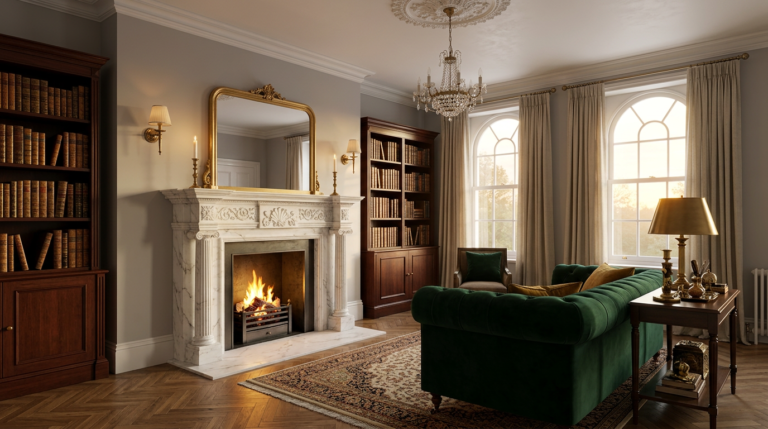

Quiet luxury in 2025 centers on enduring craftsmanship, restrained palettes, and provenance-driven materials, delivering spaces that perform beautifully without branding noise. You’ll prioritize longevity, precise joinery, and durable finishes that age gracefully. Materials like wood, stone, metal, and textiles anchor a calm, tactile environment, while layered lighting and thoughtful acoustics heighten quietude. Curate with subtle contrast and repairability, and design modular, low-maintenance inventories for easy upgrades. If you keep exploring, you’ll uncover deeper strategies for timeless interiors.
Key Takeaways
- Prioritize timeless materials, craft, and provenance over logos to ensure lasting value and understated luxury in 2025 interiors.
- Invest in repairable, modular furniture and durable finishes that age gracefully, reducing future replacement costs.
- Emphasize layered lighting (CRI 90+, 2700–3000K) and architectural cohesion to create warm, inviting spaces with perceptible quality.
- Use neutral, layered palettes with controlled contrasts, texture variety, and durable textures to maintain relevance beyond trends.
- Integrate vintage elements with verifiable provenance and careful restoration to sustain character without compromising quiet luxury.
Define Quiet Luxury: What It Is in 2025

Quiet luxury refers to high-quality goods and experiences that prioritize craftsmanship, longevity, and understated design over conspicuous branding. You analyze value through materials, fabrication, and provenance, not logos. In 2025, quiet luxury centers on function that transcends trend cycles, delivering consistent performance with refined aesthetics. You’ll find that luxury branding shifts from shouting identifiers to perceptible quality signals—habits, touch, and durability—that signal prestige without overt display. Minimalist aesthetics emerge as a framework, emphasizing restraint, proportional balance, and texture variety to elevate spaces and products alike. You’ll evaluate surfaces, joinery, and hardware for precision, coherence, and longevity. The objective is a coherent experience where every component reinforces subtle sophistication, enabling enduring appeal rather than temporary allure. This discipline integrates material science, craftsmanship, and sustainable sourcing to sustain value over time.
The Core Criteria: Longevity, Craft, and Subtlety
You recognize that longevity and craft anchor quiet luxury, not flashy repetition or fast trends. You evaluate pieces by durable materials and time-tested techniques, prioritizing workmanship over spectacle. You needle the balance between subtlety and presence, ensuring the result endures while retaining refined, restrained character.
Longevity Foundations
Longevity foundations center on three core criteria: longevity, craft, and subtlety. You assess materials, methods, and timelines with rigorous discipline, ensuring enduring performance beyond trends. You’ll prioritize artisan techniques and cultural influences that translate into durable forms, honest finishes, and timeless silhouettes. Precision, restraint, and thoughtful aging become design languages, not accidents.
- Select surfaces engineered for long life, prioritizing repairability and minimal environmental impact.
- Favor hand-finished details that express craft without shouting, ensuring authenticity over ornament.
- Align hardware and joinery with proven techniques that age gracefully and resist wear.
- Integrate cultural influences as measured, contextual references that enrich perception rather than dominate space.
Result: a curated palette that ages with dignity, regardless of phase or fad.
Craft Over Flash
Craft over flash demands that every element prove its value through longevity, craft, and subtlety, not spectacle. You assess projects by enduring performance, precise joinery, and restrained detailing that ages gracefully. Artistic craftsmanship emerges when technique informs form, yielding tactile quality you can trust over time. Material honesty matters: you favor solid woods, natural finishes, and metals patinated by use rather than coated for permanent gloss. Cultural influences shape proportion, rhythm, and material selection, guiding a timeless vocabulary rather than passing trends. Subtlety translates to quiet presence: restraint in color, texture, and ornament ensures spaces remain legible as they evolve. Your standards prioritize maintenance, repairability, and reconfigurability, enabling lasting utility. This approach safeguards value, aligns with durable aesthetics, and supports purposeful, enduring interiors.
Timeless Materials That Endure: Wood, Stone, Metal, and Textiles
You recognize how timeless wood grains and enduring stone textures anchor a room, guiding light, shadows, and scale with quiet authority. You evaluate how each material ages—grain patterns, mineral veins, and metal patinas—without flashy rhetoric, focusing on texture, durability, and tactility. You compare these substrates across wood, stone, metal, and textiles to forecast longevity, craft, and the evolving story of a curated space.
Timeless Wood Grains
Timeless wood grains endure as a core element of refined interiors, offering warmth, character, and architectural clarity that resists trends. You leverage this material to convey authentic craft, supporting a narrative of material authenticity through every surface and detail.
1) Select species with consistent grain patterns to guarantee visual coherence across spaces.
2) Favor finishes that enhance grain depth while protecting against wear, enabling long-term durability.
3) Pair with complementary textures—soft fabrics, muted metals, and stone accents—to maintain balanced contrast.
4) Confirm provenance documentation supports artisan storytelling, reinforcing value and provenance.
This approach aligns technique with taste, elevating spaces without shouting. By prioritizing stable tones, controlled contrasts, and durable finishes, you create a timeless program that remains legible under changing aesthetics.
Enduring Stone Textures
Stone textures endure by combining natural variation with controlled finish, delivering enduring tactility and visual gravitas across spaces. You prioritize enduring material authenticity in every surface, ensuring that the geometry of veining and mineral hardness informs your design language. In contemporary interiors, you’ll select stone finishes that balance quiet refinement with functional resilience, favoring low-reaction substrates and proven sealants to minimize maintenance. Natural textures read as evidence of provenance, reinforcing perceived value without ostentation. Curated spaces benefit from stone’s tonal scale, from warm, honeyed limestone to cool, slate-like basalt, each contributing calibrated contrast and depth. Through precise fabrication, you achieve durable, time-tested elegance that remains legible across seasons, elevating spaces with restrained, durable luxury.
Craftsmanship Over Fads: How Skill Elevates Spaces
Craftsmanship transcends trend by grounding spaces in measurable skill rather than fleeting aesthetics; when a craftsman’s hand shapes every detail, the result lasts beyond fashion cycles. You’ll notice how precision, durability, and harmony emerge from deliberate technique, not mere ornament. This approach foregrounds artisan techniques and material authenticity, ensuring each element speaks to permanence rather than novelty.
- Prioritize joint integrity and material grain alignment to reduce wear over time.
- Document provenance of components to verify authenticity and facilitate future maintenance.
- Calibrate finishes to reveal texture without sacrificing durability.
- Integrate hand-worked details that celebrate identity without shouting trendiness.
Curated Palettes: Neutrals With Subtle Depth and Contrast
You’ll explore how subtle depth emerges when neutrals pair with contrasting textures and light, creating quiet, dimensional spaces. This approach leverages a timeless palette to deliver clarity and refinement, while varying tactile and material cues add nuance without shouting. By balancing restrained hues with deliberate contrast, you establish a curated, enduring atmosphere that supports understated luxury.
Subtle Depth With Neutrals
Subtle depth in neutrals emerges when understated shades are paired with carefully calibrated contrasts, creating a serene yet dynamic palette. You’ll achieve dimension without abandoning restraint, using subtle color palettes that anchor spaces while inviting nuanced perception. In this approach, Minimalist aesthetics dominate, yet depth arises from varied tonal weight, not ornament. Avoid loud accents; instead, introduce quiet distinctions through texture, warmth, and light. You’ll calibrate grayscale and earthy tones to craft rooms that feel refined, cohesive, and adaptable over time.
- Balance warm and cool neutrals to shape depth without distraction.
- Layer finishes—from matte to satin—to reveal subtle contrast.
- Use controlled luminance shifts to guide attention.
- Integrate natural materials for tactile richness and longevity.
Contrasting Textures And Light
In neutrals with subtle depth, contrasting textures and light become the levers that sharpen perception without shouting. You design surfaces to read differently under varied illumination, pairing matte woods with glossy ceramics to create controlled reflectance and visual rhythm. Texture contrast anchors spaces: a tactile rug against a smooth stone floor, or linen drapery with silk upholstery, guiding the eye and shaping acoustic intimacy. Light quality matters as a formal element, not a backdrop—directional lamps, ambient glow, and daylight sculpt forms, depth, and mood. Consider artistic expression through material choice and surface treatment, while acknowledging cultural influences that inform pattern, craft, and finish. The result is refined, purposeful contrast that maintains restraint, clarity, and timeless sophistication.
Timeless Palette Pairings
Timeless palette pairings center on neutrals layered with subtle depth and contrast to sustain refined, enduring interiors. You curate spaces by balancing warm and cool neutrals, letting architectural lines guide the eye. Subtle depth emerges through controlled contrast, texture, and light reflection, while avoiding saturation creep. You prioritize materials and finishes that embody Artistic craftsmanship and Sustainable innovation, ensuring longevity beyond trends. Precision in color temperature and undertone selection anchors cohesive rooms, even as you layer accent hues sparingly for impact. Your palette supports adaptable spaces, from quiet living rooms to focused work zones, without compulsion toward maximalism.
- Neutral foundation with restrained contrast via undertones
- Textural variance to amplify depth without color overload
- Material choices emphasizing durability and provenance
- Accent integration through light, not saturation
Lighting for Quiet Luxury: Warmth, Layers, and Quality

When designing lighting for quiet luxury, prioritize warmth that feels inviting rather than stark, using color temperatures in the 2700–3000K range to create a cohesive glow across spaces. You’ll achieve this with a layered approach that balances ambient, task, and accent illumination without glare. Emphasize ambient glow through fixtures with diffusers or frosted lenses to soften gradual shifts between zones. Light layering remains essential: couple low-intensity ceiling radiance with targeted wall washes and under-cabinet accents that define architecture and texture. Select high-quality dimmable luminaires to modulate mood on demand, preserving tonal harmony. Opt for CRI 90+ sources to render fabrics and materials faithfully. Prioritize hidden or discreet hardware to maintain a seamless, sophisticated aesthetic.
Spatial Flow: Calm, Functional Layouts That Feel Effortless
To achieve calm, functional layouts that feel effortless, prioritize spatial flow that guides movement intuitively and minimizes friction. You design routes that connect key zones—entry, living, dining, work—without abrupt shifts, sustaining spatial harmony and easy circulation. Think in measurable modules, aligning furniture to sightlines and threshold moments to reduce decision fatigue. The result is effortless organization that reads as a single, cohesive system, not a collection of isolated rooms.
- Establish dominant sightlines that choreograph activity without crowding
- Zone with soft furniture groups to encourage natural pathways
- Use thresholds and clearances that support seamless progressions
- Integrate built-ins to reduce surface clutter and maintain balance
Texture as Your Design Signature
Texture isn’t a decorative afterthought; it’s the signature that defines quiet luxury and curates spaces with tact. You engineer depth by selecting materials that reveal subtle contrasts in weight, pattern, and sheen, ensuring each surface contributes to the room’s rhythm. Textural contrast guides hierarchy: plush textiles against hard, high-polish finishes, matte woods alongside satin metals, and tactile layering between rough-hewn stone and refined plaster. You optimize tactile cues to heighten perception of quality without shouting. Consider scale, fiber content, and finish direction to create coherent micro-contrasts that read as purposeful, not accidental. In practice, aim for consistent provenance and development of a restrained palette where texture, rather than color, drives sophistication. The result is a durable, timeless ambiance that ages gracefully with restraint.
Color Play: Subtle Contrasts That Age Gracefully
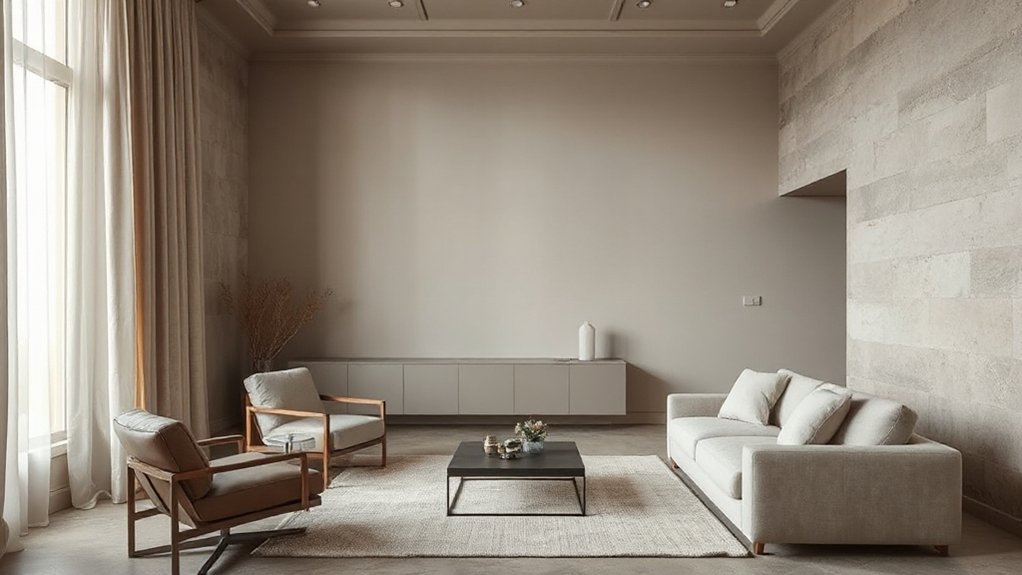
Color play in quiet luxury hinges on how subtle contrasts in tone, saturation, and hue ages with grace. You explore restrained palettes, letting color theory govern relationships rather than dominate rooms, ensuring longevity and coherence. Mood enhancement arises from deliberate pairings that bias perception toward calm, not drama, while textures and lighting reveal subtle shifts over time. You balance warmth and coolness, using tonal increments that mature gracefully as furnishings age. This approach favors timeless schemes over fleeting trends, preserving value and atmosphere.
- Establish a base with neutral anchors and minimal chroma shifts.
- Layer adjacent hues to create depth without saturation spikes.
- Use controlled contrast to guide attention and balance.
- Integrate lighting that emphasizes evolving color interactions.
Budgeting Quiet Luxury: Practical Steps to Allocate Smartly
Smart budgeting for quiet luxury starts with a clear spending framework that prioritizes durable value over fast fashion. You establish a baseline annual allocation, distinguishing essential investments from discretionary upgrades. Begin with a needs audit: identify core pieces that anchor rooms, then map optional enhancements aligned to long-term use. Use a tiered approach: essential items at 60–70 percent of the budget, statement pieces at 20–25 percent, and contingency for unseen opportunities at 5–10 percent. Track lifecycle costs, considering maintenance, warranties, and resale value. Employ budgeting tips like opportunity cost analysis and zero-based planning to prevent redundant purchases. Implement savings strategies such as automatic transfers, seasonal rebates, and durable-material discounts. Revisit allocations quarterly, rebalancing toward proven performers and abandoning underperformers promptly. Maintain documentation to justify every spend.
Sourcing for Quiet Luxury: Ethical, Local, and Honest Materials
Sourcing for quiet luxury hinges on selecting materials that are ethical, local, and honest about their origins, performance, and lifecycle. You evaluate supply chains for minimal environmental impact, durable construction, and verifiable claims, prioritizing long-term value over trend. Material transparency guides every decision, from raw inputs to finished goods, ensuring you understand provenance, processing, and end-of-life options. You foster artisan collaborations to verify craftsmanship, support local economies, and maintain distinctive texture and patina. This approach reduces risk, elevates quality, and aligns with responsible design goals.
- Verify certifications and traceability across supplier relationships
- Prioritize regional materials to cut transport and support local makers
- Demand open documentation on sourcing, processing, and lifecycle
- Partner with artisans to co-create unique, durable surfaces
Pieces With Provenance: Vintage Finds and Modern Hybrids
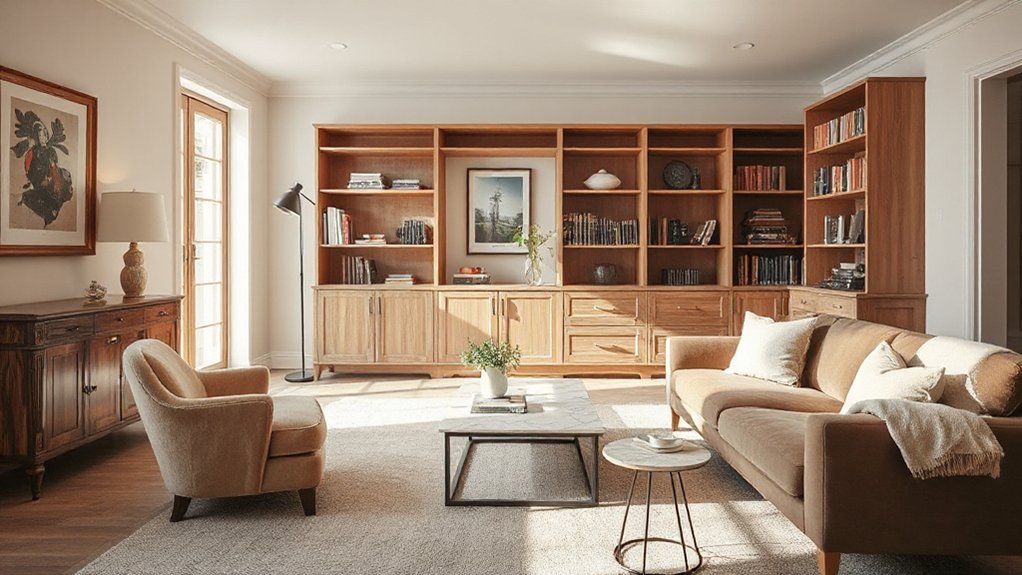
Integrated provenance matters even when sourcing pieces that blend vintage character with contemporary technique. You assess Vintage Revival items for traceable origins, material integrity, and documented restoration history, ensuring each piece aligns with your space’s quiet luxury language. Modern Hybrids demand clear curation: verify joinery, retrofits, and conversion authenticity, so the juxtaposition remains intentional rather than decorative. You prioritize condition reports and provenance chains, prioritizing items whose histories enhance tonality, patina, and tactility without compromising structural soundness. When integrating mixed-era works, you map era-specific cues to your palette, balancing scale, rhythm, and fiber, so the ensemble reads as cohesive rather than collage. This disciplined approach preserves value, avoids a dated feel, and reinforces a refined, timeless interior defined by thoughtful provenance and purposeful selection.
Assessing Longevity: Finishes, Fixtures, and Hardware That Last
You prioritize longevity by selecting finishes, fixtures, and hardware that endure under daily use. Start with a Durable Finishes Guide to evaluate wear resistance, maintenance needs, and compatibility with your environment. Weigh Timeless Hardware Choices for timeless aesthetics, ease of replacement, and proven performance over time.
Durable Finishes Guide
Durable finishes, fixtures, and hardware are the backbone of long-lasting interiors, so evaluating longevity starts with material composition, core construction, and resistance to wear. You’ll assess finishing processes, substrate stability, and protective coatings to predict performance over time, ensuring alignment with luxury branding and minimalist aesthetics.
- Evaluate wear resistance ratings and coat integrity for surfaces in high-use zones.
- Compare substrate compatibility and joinery quality to minimize movement and delamination.
- Verify corrosion and tarnish resistance for metal components in varying environments.
- Prioritize low-maintenance, durable finishes that preserve color, texture, and gloss with minimal upkeep.
Timeless Hardware Choices
Timeless hardware choices hinge on proven longevity, combining corrosion resistance, stable finishes, and precise fit. You approach hardware as an integrated element of design, not an afterthought. Prioritize hardware finishes that resist patina while preserving color and sheen under daily use, humidity, and cleaning. Assess compatibility with fixtures, cabinetry, and doors to minimize mismatch across spaces. In knob styles, favor classical silhouettes with smooth operation, reliable threads, and predictable tolerances to reduce wear over time. Consider stainless steel or brass alloys with protective coatings for high-traffic interiors. Document maintenance expectations to sustain finish integrity through decades of use. Choose hardware that harmonizes with cabinetry profiles and hardware routing, ensuring seamless functionality and a timeless, cohesive aesthetic.
Sustainable Practices That Look Luxurious
Sustainable practices that look luxurious blend elegance with efficiency, proving that responsible choices can elevate design without compromising refinement. You’ll discover that true luxury sustainability hinges on materials, lifecycle thinking, and precise execution, not gimmicks. When you prioritize durability, you reduce waste and maintain a timeless appeal, delivering eco-conscious elegance across spaces.
- Choose high-density, Lo-Moisture hardwoods with certified sourcing and long lifespans to minimize environmental impact.
- Opt for low-VOC finishes and natural fibers that preserve air quality without sacrificing texture or depth.
- Integrate energy-efficient lighting and smart controls that enhance ambiance while cutting consumption.
- Commission repairable, modular furniture designed for easy updates and extended serviceable life.
This approach delivers luxury sustainability through thoughtful selection, performance, and enduring style.
Renovation Mindset: Timeless Layouts vs. Quick Fixes
A renovation mindset hinges on choosing layouts that endure, prioritizing timeless planning over impulsive fixes. You assess circulation, load paths, and functional zones before cosmetic choices, ensuring spaces remain cohesive as needs evolve. Favor fixed core components—permanent walls, service cores, and scalable storage—that tolerate redecoration without rewiring the fundamentals. Quick fixes tempt with immediate gratification, but they propagate inconsistencies and higher long‑term costs. A disciplined approach aligns room proportions, sightlines, and furniture footprints, enabling flexible use without compromising balance. When you introduce bold accents or statement art, you do so as deliberate anchors rather than afterthought accents, preserving a durable palette and spatial clarity. Prioritize material durability, timeless finishes, and modularity, reserving trend-driven elements for reversible updates rather than structural redesigns.
Displaying Personal Narratives Without Clutter

You balance Personal Narratives with restraint, letting Minimal elements carry meaning and memory within curated spaces. By selecting a few intentional objects, you quietly express identity without clutter, keeping composition clean and purposeful. This approach grounds the room in meaning while preserving a calm, luxurious atmosphere.
Personal Narratives, Minimal
Designing personal narratives with minimalism means presenting authentic stories without visual noise. You curate spaces that speak through restrained objects, each chosen for meaning, not volume. Your method blends artisan techniques with precise color symbolism, creating a restrained palette that anchors memory without crowding the mind. You prioritize quality over quantity, ensuring every piece earns its place through craft, provenance, and utility.
- Select objects with clear provenance and tactile resonance.
- Align materials to a singular color story, avoiding discordance.
- Employ negative space to let narratives breathe and recalibrate focus.
- document context succinctly, linking item to memory without visual clutter.
Curated Spaces, Quietly Expressed
Curated spaces quietly express personal narratives by prioritizing restraint over excess, allowing each piece to speak with clarity and purpose. You implement a disciplined arrangement that foregrounds function, scale, and texture, ensuring every item communicates intent. You balance line, material, and finish to create a cohesive tempo that supports observation over distraction. Artistic expressions emerge through selective placement, where objects perform as visual punctuation rather than decoration. Cultural influences inform the dialogue, subtly threaded through provenance, technique, and contrast, guiding interpretation without presumption. You leverage negative space to frame identity, avoiding clutter while preserving atmosphere. This approach yields rooms that feel timeless, legible, and intentional, inviting reflection on personal taste as it intersects with craft, history, and aesthetics. In practice, restraint becomes the conduit for meaningful storytelling.
Perimeter Accessories: Restraint That Makes an Impact
Perimeter accessories anchor a space by balancing restraint with impact, guiding the eye along architectural lines while avoiding visual clutter. You curate edges with deliberate scale, material tension, and genteel restraint, so every frame, console, and planter reads as an intentional punctuation mark. Your choices reflect artisan techniques, translating craft detail into quiet, durable statements, while cultural influences inform form without shouting. The result is a perimeter that amplifies architecture rather than competing with it, creating a cohesive vignette.
- Select slim profiles that echo architectural rhythm
- Favor matte finishes and natural textures for timeless tactility
- Integrate culturally informed motifs as subtle accents
- Use calibrated grouping to maintain balance and focus
Soundscapes: Acoustics for Serene Spaces
Sound matters more than soundproofing alone; in serene spaces, acoustics should be felt as a subtle, pervasive texture. You shape environments where sound quality reinforces calm, not distractions. Focus on deliberate acoustic design: surface materials, geometry, and absorption patterns tuned to human voice ranges and ambient frequencies. Use restrained palettes—soft fibrous panels, tuned plaster, and wood with density gradients—to control reflections without creating dead zones. Implement targeted diffusion to scatter early reflections, preserving intelligibility while reducing harshness. Integrate sound therapy-inspired cues—gentle, low-frequency grounding and melodic timbres—through calibrated ventilation and equipment placement. Prioritize measurement with reverberation time, clarity, and speech intelligibility metrics to validate serenity. This discipline yields spaces that feel effortless, refined, and purposefully quieter.
Quiet Luxury Outdoors: Exterior Living That Feels Refined
Quiet luxury outdoors hinges on spaces that feel effortless yet intentional, where exterior living areas extend interior calm without shouting branding. You’ll design with restrained materials, subtle textures, and concealed lighting that blends into the landscape, delivering Outdoor serenity without distraction. Focus on proportion, sightlines, and durable finishes that age gracefully, creating garden retreats you can inhabit year-round.
- Use monochromatic palettes and natural textures to unify indoors and outdoors.
- Integrate weathered metals and low-profile furnishings for unobtrusive elegance.
- Position seating to encourage lingering, with shade and shelter aligned to sun paths.
- Hide utilities and keep landscaping simple, allowing for adaptable, timeless appeal.
Building a Personalizable, Low-Maintenance Inventory
A practical, personalized inventory is foundational to low-maintenance luxury, enabling you to predefine scalable, durable selections that align with your site conditions and usage patterns. You systematize materials, finishes, and components to reduce upkeep while preserving aesthetic integrity. Prioritize modular elements and standardized interfaces so replacements and upgrades occur with minimal disruption. Leverage durable, low-porosity surfaces, sealed joints, and proven hardware to sustain performance with routine care. Curate options that tolerate humidity, temperature swings, and wear without compromising look or feel. Tie choices to artistic expression while respecting cultural influences, ensuring cohesion across spaces. Maintain clear documentation: supplier specs, maintenance cycles, and warranty coverage. Regularly audit the inventory to retire underperformers, optimize inventory turnover, and reinforce a timeless, adaptable luxury.
Frequently Asked Questions
How Does Quiet Luxury Translate Across Different Interiors?
You’ll translate quiet luxury by embracing minimalist elegance and natural textures across spaces, harmonizing materials, tones, and light. You perceive restraint as sophistication, prioritize craftsmanship, and let subtle details—texture, grain, and warmth—steer durable, timeless interiors.
What Are the Signs of True Craftsmanship vs. Fads?
True craftsmanship shows artisan techniques that reveal restraint, precision, and material authenticity; it ages gracefully, avoids trend-driven gimmicks, and communicates durability. You recognize it by consistent finishes, honest joinery, and evidence of meticulous handwork supporting lasting value.
Which Finishes Age Most Gracefully Over Decades?
You’ll find that metal and stone finishes age most gracefully, revealing vintage patinas, while natural textures endure with subtle wear. You’ll avoid hype by choosing enduring materials, trading faddish gloss for authentic depth and timeless patina.
How Can You Maintain Restraint Without Sacrificing Personality?
You maintain restraint by prioritizing bold accents sparingly and leveraging space personalization, crafting a measured palette. Use selective textures and purposeful contrasts to preserve personality while staying technically precise, polished, and authoritative in your design language.
What Constitutes a Low-Maintenance, Personalizable Collection?
A low-maintenance, personalizable collection combines durable, timeless basics with adaptable pieces. For example, you rotate art and textiles seasonally, preserving artistic versatility and material durability, letting you personalize without excess effort or upkeep.
Conclusion
Quiet luxury isn’t flashy; it’s deliberate, enduring design you inhabit daily. You’ll invest in materials and craft that outlast trends, cultivating spaces that feel refined yet approachable. By balancing timeless woods, stones, and metals with skilled execution and restrained palettes, your interiors become calm, tactile, and adaptable. Prioritize quiet acoustics, low-maintenance inventories, and personalized touches that don’t shout. In short, durability and discretion pair to create spaces that age gracefully—like a well-composed symphony, never overtly loud, always complete.
About the Author