

Landscaping trends for 2025 lean toward climate-smart, native-rich palettes that prioritize drought resilience, low maintenance, and layered textures over rigid symmetry. You’ll see less manicured lawn, more drought-tolerant ground covers, and a move to native pollinator-friendly plantings with continuous bloom. Expect durable, permeable hardscapes, smart outdoor tech, and salvaged materials for character. Quick yard tidy wins and ROI-focused upgrades dominate. If you keep exploring, you’ll discover how these shifts shape practical, beautiful outdoor spaces.
Key Takeaways
- Naturalistic planting with native, pollinator-friendly species and layered textures replaces rigid symmetry and manicured lawns.
- Drought-tolerant groundcovers, permeable hardscapes, and rainwater harvesting prioritize water efficiency and resilience.
- Urban agriculture, vertical gardens, and modular zones boost year-round productivity and adaptable outdoor living.
- Low-maintenance design emphasis: quick tidy strategies, durable lighting, and minimal-till, mulch-rich soil management.
- Reclaimed materials and eco-friendly finishes, paired with cohesive, repeatable materials, drive sustainable curb appeal and long-term value.
Design Goals for 2025 Landscapes: What You Need to Decide
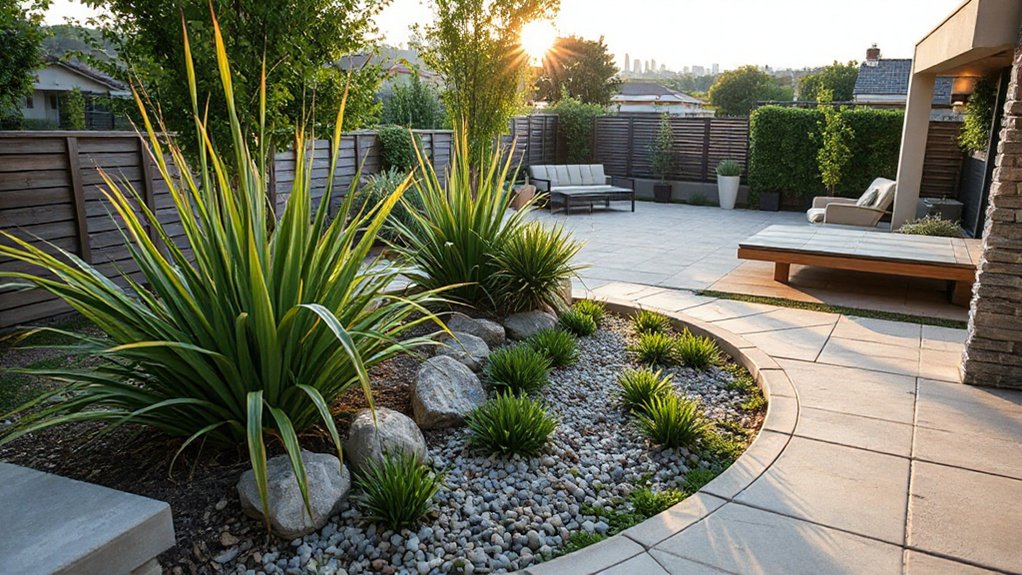
Design goals for 2025 landscapes center on purposeful simplicity, resilient materials, and ecological balance. You’ll decide on a restrained palette, prioritizing enduring forms, low maintenance routines, and adaptable spaces that shift with seasons. You seek tangible impact without clutter, so every element earns its place. Garden art becomes a quiet punctuation, not a distraction, guiding movement and echoing the landscape’s rhythm. Lighting design sharpens function and mood, extending usability after dusk while conserving energy. You’ll favor modular, locally sourced materials that resist weather and wear, reducing lifecycle costs and waste. Emphasis rests on durable craftsmanship, smart irrigation, and native plant palettes that support pollinators. You maintain flexibility for evolving needs, ensuring beauty aligns with resilience and ecological stewardship.
Climate-Smart Foundations: Site, Microclimates, and Budget
Even as you sketch your landscape, the foundation must be climate-smart: assess the site, map microclimates, and set a budget that keeps resilience affordable. You’ll design with precision, prioritizing shade, wind breaks, and thermal mass to reduce energy loads. Map sun paths, slope, soil depth, and drainage to guide planting zones and hardscape placement, limiting maintenance later. Geothermal heating becomes an actionable option for year-round comfort, paired with insulated foundations and drip irrigation to conserve resources. Vertical gardens amplify vertical space, stabilize microclimates, and deliver cooling via evapotranspiration. Budget-smart decisions drive returns: prioritize low-water species near water features, choose modular systems, and phase installations without sacrificing performance. This foundation-first approach aligns aesthetics with efficiency, setting a trend toward resilient, scalable landscapes for 2025.
Native and Drought-Tolerant Plants for Low Maintenance
Native and drought-tolerant plants are the backbone of low-maintenance landscapes, delivering reliable performance with minimal inputs. You’ll maximize curb appeal by selecting native plants that thrive in your region’s soils and climate, reducing irrigation and fertilizer needs. Focus on drought resilience features—deep roots, waxy leaves, and adaptive growth forms—that endure heat waves and dry spells without sacrificing structure. Choose a mix of structural starters (shrubs, grasses) and focal perennials that bloom across seasons, ensuring year-round interest with minimal maintenance. Group plants by water needs to simplify irrigation planning and conserve resources. Prioritize local pollinator value and soil health, integrating mulch and minimal-till strategies. This approach delivers sustainable beauty, cost savings, and resilience against changing climate patterns.
Color and Texture: Palette and Plant Pairings That Pop

Color and texture drive the drama in modern landscapes, turning simple plantings into focal statements with deliberate palette choices and smart pairings. You’ll balance vivid foliage with quiet greens, using color contrast to create depth and highlight architectural accents. Prioritize plant pairing that leverages seasonal interest: long-blooming companions, textural foliage, and contrasting forms. A bold focal plant can anchor the scene, while supportive neighbors provide cadence, repeatability, and balance. Favor combinations that echo the site’s light patterns—sunny spots pair with heat-tolerant textures, shade areas with luminous greens and soft silvers. In practice, curate a limited color wheel, then test contrast at various angles. Done well, your palette reads as intentional design rather than accidental greenery, elevating curb appeal and garden storytelling.
Groundcovers and Fillers: Beauty That Performs
Groundcovers and fillers do more than just bridge gaps; they shape the landscape’s rhythm, density, and year-round performance. You’ll prioritize low-maintenance options that deliver steady cover, suppress weeds, and reduce lawn dependence without sacrificing visual impact. Emphasize groundcover versatility by selecting species that tolerate shade, sun, and varying moisture, ensuring reliable performance across seasons. Pair dense mats with sparser textures to create gradations, texture, and color without tasks piling up. Filler planting should concentrate where space is tight or sightlines need softening, filling niches between stepping stones, borders, and focal features. Favor compact, the way you layer textures and colors matters as much as height. Use smart planting densities to minimize mowing, maximize contrast, and sustain curb appeal year-round.
Water-Wise Strategies: Rain Gardens, Mulch, Irrigation
Rain gardens capture runoff at the source, balancing soil, plants, and water to reduce irrigation needs. Mulch protects soil, conserves moisture, and guides nutrient flow, while also shaping planting design for seasonal resilience. Efficient irrigation techniques volume and timing to your landscape’s needs, cutting waste without compromising curb appeal.
Rain Garden Principles
Rain gardens, mulching, and smart irrigation together form the core of water-wise landscaping, turning runoff into a resource rather than a problem. You’ll design with native, deep-rooted plants to encourage infiltration and resilience, selecting species by soil type and sun exposure. Principle one is proper siting: orient rain gardens to capture concentrated flows from roofs and driveways, avoiding downstream erosion. Principle two is soil prep: amend with compost and guarantee a well-draining mix that supports water absorption without pooling. Maintenance is proactive, not reactive—regular inspections, clog-free outlets, and seasonal pruning keep performance high. Embrace simple irrigation controls and rain barrels to optimize efficiency. Weather-aware scheduling reduces waste, supporting robust stormwater management while maintaining landscape health and curb appeal.
Mulch Benefits and Uses
Mulch is a frontline asset in water-wise landscapes, delivering drought resilience, weed suppression, and slower soil moisture loss. You’ll see immediate gains when you layer organic or inorganic mulch over root zones, especially around trees and perennial beds. Mulch benefits include soil temperature moderation, reduced erosion, and enhanced microbial activity, which supports healthy root systems without extra effort from you. For best results, choose materials suited to your climate and goals, and apply a uniform 2–4 inch cover, refreshed annually. Mulch uses extend beyond decoration; they create a moisture buffer that lowers irrigation needs and stabilizes plant performance in heat waves. Use mulch strategically to guide water to roots, minimize runoff, and foster long-term landscape resilience.
Efficient Irrigation Techniques
Efficient irrigation is about delivering exactly what plants need, when they need it, while cutting water waste. You’ll optimize this with water-smart layouts and real-time feedback from Smart sensors that monitor moisture, temperature, and evapotranspiration. Prioritize drip irrigation for precise, deep watering at the root zone, minimizing runoff and evaporation. Pair it with zone-based controllers that adapt to sun exposure, soil type, and plant demands. Rain gardens act as intentional buffers, capturing overspray and recharging the landscape’s moisture reservoir, while mulch slows evaporation and stabilizes soil temperature. Choose weather-based or soil-moisture-based irrigation scheduling to align with seasonal shifts. Consistency beats intensity; short, frequent cycles build healthy root systems and drought resilience. The result is a landscape that thrives with minimal water input.
Edible and Aesthetic: Edible Landscaping That Feels Luxurious
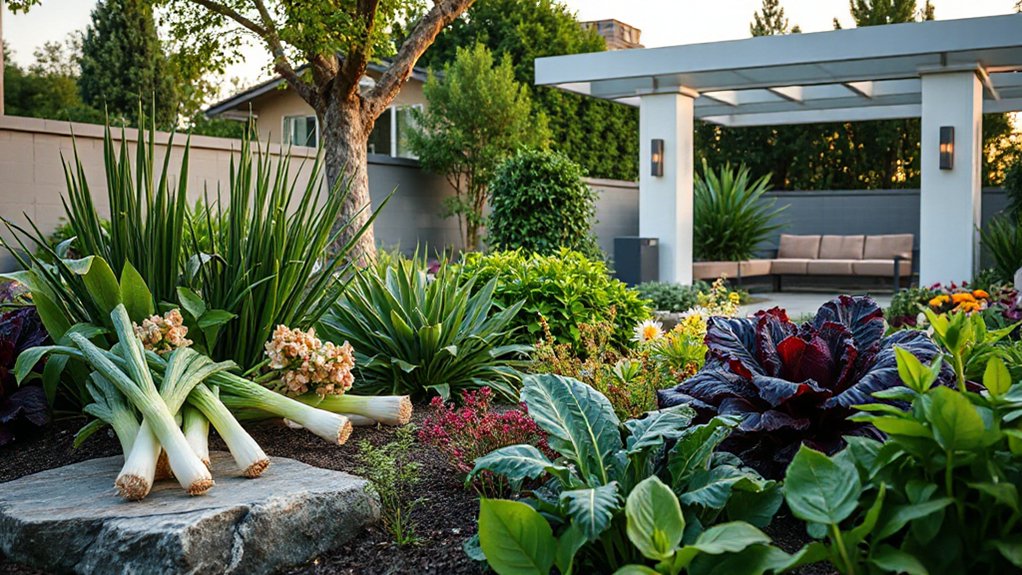
You can curate Edible Luxury Gardens that pair striking foliage with high-end edibles, proving luxury isn’t sacrificed for flavor. Think Aesthetic Kitchen Edibles—herbs, berries, and microgreens woven into sculptural plantings that elevate curb appeal and dining experiences alike. This Sustainable Gourmet Planting approach balances beauty with harvest, inviting you to redefine edible landscaping as an integrated, aspirational landscape aesthetic.
Edible Luxury Gardens
Edible luxury gardens fuse indulgence with practicality, turning edible landscaping into spaces that look as refined as they taste. You’ll blend ornamental forms with productive varieties, crafting plantings that reward both eye and palate. Seasonal planting guides your rhythm, ensuring you stagger harvests and maintain year-round interest without sacrificing flavor. Use structured beds, elegant borders, and high-quality containers to elevate herbs, fruiting shrubs, and gourmet greens into focal points. Implement Pest management proactively, favoring resilient selections, beneficial insects, and responsive monitoring to minimize sprays while preserving garden health. Choose upscale finishes—stone paths, metal edging, and drought-smart irrigation—that frame edible crops like decorative specimens. Keep pathways clear, maintenance minimal, and harvests frequent, so luxury remains tangible, not theoretical.
Aesthetic Kitchen Edibles
Aesthetic Kitchen Edibles blends beauty with practicality, turning edible landscaping into spaces that feel luxurious and livable. You’ll prioritize form alongside flavor, pairing compact varieties with sculptural foliage to create edible aesthetics that read as design rather than maintenance. Think raised beds, embedded herbs, and fruiting perennials that soften edges with color and texture while delivering consistent harvests. You’ll curate kitchen gardens that function as outdoor counters—easy access, tidy pathways, and integrated seating for social moments around harvest time. Edible aesthetics thrive on contrast: glossy herbs against matte greens, dark berries against light blooms, vertical trellises that frame borders. Choose resilient, low-fuss cultivars and companion plantings to minimize inputs while maximizing visual payoff and season-long interest.
Sustainable Gourmet Planting
Sustainable Gourmet Planting fuses luxury with responsibility, delivering edible landscapes that perform as well as they look. You’ll blend high-design palettes with functional edibles, creating spaces that feel indulgent yet practical. Focus on drought-tolerant herbs, compact fruiting shrubs, and perennial vegetables that echo ornamental textures, so every square foot earns its keep. Emphasize layered design: architectural focal plants, edible groundcovers, and vertical culinary elements to maximize interest without clutter. Prioritize soil health, drip irrigation, and season-long harvests to reduce maintenance while boosting yield. When choosing varieties, favor culinary landscapes that mature at staggered times, ensuring continuous harvests and visual appeal. Gourmet planting integrates sensory cues—fragrance, texture, color—into a cohesive, luxurious landscape that’s also sustainable and productive.
Wildlife-Friendly Yards: Attract Beneficials With Purpose
Creating a wildlife-friendly yard isn’t about a single feature—it’s about a deliberate blend of habitat, food, and shelter that strengthens local ecosystems and reduces pests naturally. You’ll design with purpose: diverse plant layers, native species, and continuous bloom to support pollinators and predators alike. Focus on connectivity— Wildlife corridors that link patches of habitat so beneficials move freely and sustain natural pest control. Include bird friendly plants that offer seeds, berries, and shelter, drawing avian helpers year-round. Minimize chemical use; permit leaf litter and native grasses to mature, creating safer overwintering sites. Water features should be functional and low maintenance, encouraging steady visits from insects and birds. Maintain seasonal structure, monitor results, and refine plantings to deepen resilience and ecological balance.
Hardscaping for Function and Style: Materials and Layouts
You’ll start with durable material choices that stand up to weather and heavy use, shaping a foundation you can trust year after year. Pair these with hot-layout tips that optimize flow, accessibility, and maintenance, so paths and patios invite to linger without clutter. Let the design be style-driven, with cohesive hardscape themes that elevate your landscape while staying practical and timeless.
Durable Material Choices
Durable material choices in hardscaping blend function with style, ensuring every path, patio, and edging withstands the elements while looking purposeful. You’ll favor low-maintenance, resilient options that perform across seasons, not just aesthetics. Recycled composites, natural stone, and engineered pavers offer longevity without compromising texture or grip. Permeable surfaces reduce runoff, supporting water management while maintaining clean lines. In layouts, avoid over-automation; let the material palette guide focal points and progressions. Consider subtle color tonality to hide wear and dirt. You’ll weave soil health and plant propagation awareness into adjacent beds, ensuring roots won’t disrupt edges. Pest management integration matters too: choose materials that resist mold and insect intrusion. The trend favors timeless, adaptable textures that age gracefully, aligning durability with evergreen design language.
Functional Layout Tips
If you want a hardscape that both guides movement and elevates style, start with a clear axis and then layer materials to reinforce function. In 2025, functional layouts prioritize flow and accessibility, so plan pathways that minimize wasteful detours while linking key zones—entry, dining, and planting—into a single, legible sequence. Choose durable pavers with varying textures to cue speed and purpose, then offset with softer groundcovers to slow feet and reduce heat. Garden art accents can act as milestones, drawing eye and guiding reach without clutter. Integrate vertical elements to elevate sightlines and support seasonal changes. For pest control, seal gaps and setbacks to deter pests, while deploying raised beds and mulches that discourage intrusion. Aim for layouts that perform, then delight.
Style-Driven Hardscape Themes
Style-driven hardscape themes fuse form with function, guiding movement while elevating garden ethos through material choice and layout logic. You’ll prioritize coherence between surfaces, edges, and focal points, ensuring each element serves a purpose beyond aesthetics. Opt for durable materials that echo your plant palette and climate, then layer textures and tones to create rhythm rather than repetition. Keep circulation clear: align paths with sightlines toward garden art or water features, and use grading, edging, and seating to invite lingering moments. Emphasize restraint—select a handful of materials and repeat them intentionally for unity. Integrate water features as visual anchors and calming sounds, not mere ornament. The trend favors curated contrasts, where sculptural hardscape pieces enhance, rather than overpower, natural greens.
Smart Outdoor Living: Tech That Gets Used
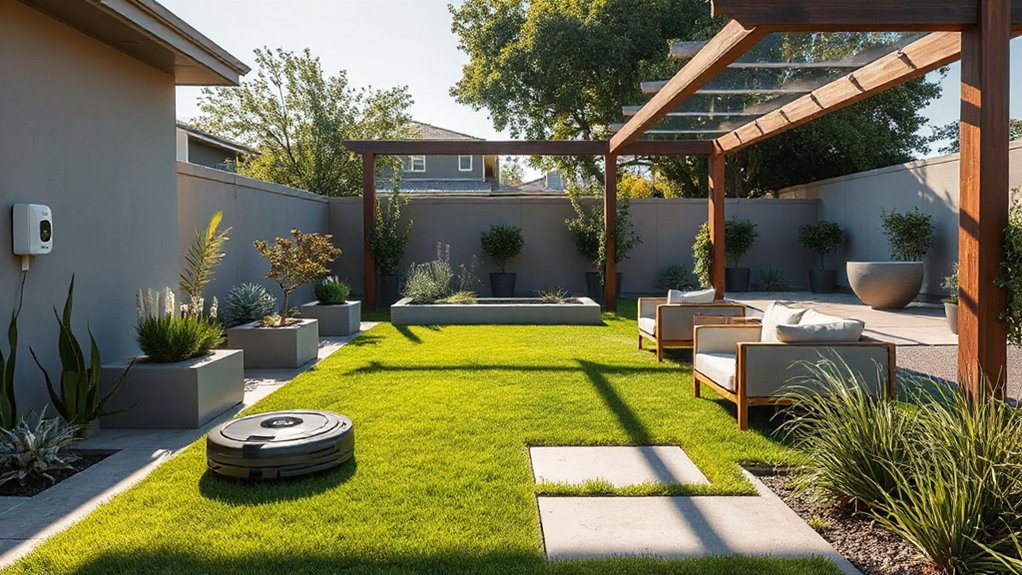
Smart outdoor living isn’t about gadgets for gadgetry’s sake; it’s about seamless, reliable tech that actually enhances use. You design spaces that respond to you, not the other way around, with automation that feels natural and unobtrusive. The strongest trend is practical integration: smart lighting that adapts to time, weather, and activity, so you’re never fumbling for switches or remotes. You’ll value robust connectivity, battery backups, and clear app control that doesn’t require a patience test. Outdoor entertainment becomes less about showy devices and more about synchronized experiences—speakers, screens, and lighting choreographed for porch gatherings or quiet evenings. Focus on durability, weather-rated hardware, and scalable systems. This approach keeps your outdoor living uncomplicated, inviting, and consistently usable across seasons.
Sustainable Materials for Curb Appeal
You’re steering curb appeal toward smarter choices with reclaimed materials that tell a story and reduce waste. Eco-friendly paving options are gaining traction, pairing durability with lower environmental impact and cleaner aesthetics. As these trends converge, you’ll see designers favor textures and tones that harmonize with native landscapes while keeping maintenance minimal.
Reclaimed Material Trends
Reclaimed materials are redefining curb appeal as homeowners seek both sustainability and character. You’ll notice salvaged timber, reused bricks, and repurposed metal making bold statements without sacrificing function. The trend favors stories told through texture, patina, and provenance, turning old into intentional design.
- Embrace vintage furniture as focal accents, pairing weathered chairs or benches with lush plantings for instant charm.
- Integrate vertical gardens on reclaimed panels, using upcycled planters to maximize greens in tight spaces.
- Source local remnants—pavers, shutters, or lattice—from nearby projects to reduce transport and support circular economies.
These choices reduce waste, boost curb appeal, and deliver a sophisticated, low-maintenance aesthetic. Expect more homeowners to weave history into modern landscapes, creating character with purpose.
Eco-Friendly Paving Choices
Eco-friendly paving is shaping the curb appeal of 2025 by prioritizing durable, low-impact materials that perform as well as they look. You’ll notice permeable pavers, composite aggregates, and recycled glass surfaces reducing runoff while delivering refined textures. Prioritize long-term resilience over low upfront costs, and you’ll minimize maintenance and replacement cycles. Look for modular systems that ease installation and adapt with changing layouts, expanding curb appeal without waste. Materials that support urban farming initiatives, like soil-ready permeable units for planters, become a practical design choice rather than an afterthought. Sustainable color palettes and textures help outdoor art coexist with functional pathways, creating cohesive storytelling. Pair these paving choices with local sourcing to lessen transport emissions and enhance neighborhood resilience.
Climate-Adaptive Design: Planning for Uncertain Weather
Climate-adaptive design is no longer optional; it’s a practical response to increasingly volatile weather patterns. You’ll plan resilient layouts that tolerate heat, drought, heavy rain, and cold snaps without surrendering aesthetics or function. Embrace flexible planting zones, water-smart strategies, and modular hardscapes that shift with seasons. You’ll also leverage microclimates to extend growing windows for food production, including urban agriculture and vertical gardening, which maximize yield in compact spaces.
- Prioritize drought-tolerant species and rainwater harvesting to reduce irrigation needs.
- Design adaptable zones with modular beds, permeable surfaces, and storm-ready drainage.
- Integrate vertical farming elements and compact urban agriculture into existing footprints for year-round harvests.
This approach secures beauty, resilience, and productivity across shifting conditions.
Quick Wins to Tidy Your Yard This Season
So you can start today, here are quick wins to tidily elevate your yard this season: focus on a rapid clean-up that yields immediate visual impact and long-term health. Begin with a brisk debris sweep, prune deadwood, and remove tangled undergrowth to reveal structure. Edge borders for crisp definition, and mulch selectively to reduce weeds while conserving moisture. Introduce Garden art as focal points—a sculptural element or a weatherproof vessel—positioned to guide the eye through the landscape. Schedule seasonal maintenance tasks, such as fertilization timing and irrigation checks, to prevent stress during heat spells. Opt for low-water plantings in high-visibility zones to maximize curb appeal. This approach delivers quick results, supports plant vigor, and aligns with current trends in tidy, intentional outdoor spaces.
ROI-Driven Upgrades: What Pays Back
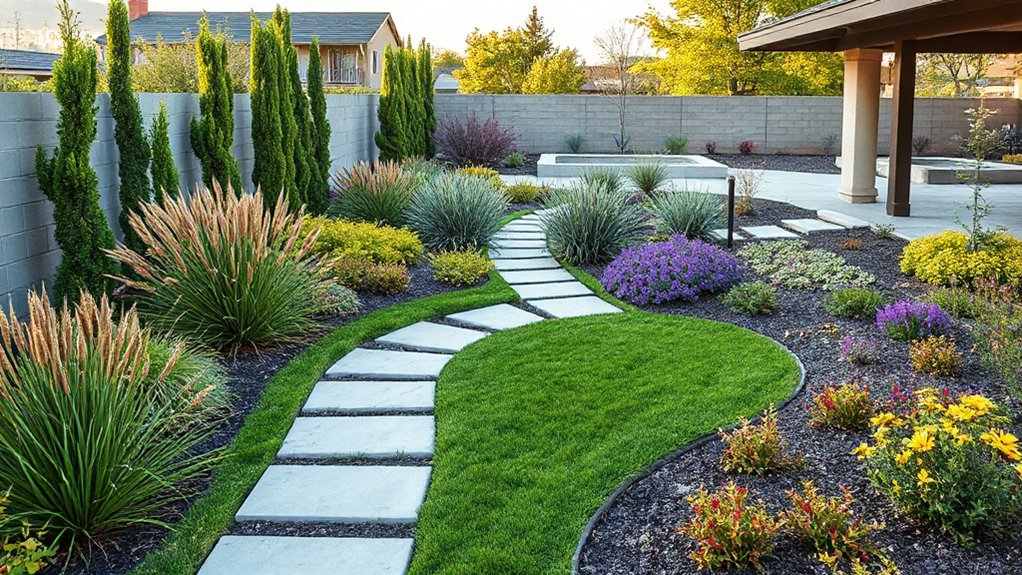
Upgrading with ROI in mind means prioritizing improvements that boost property value while enhancing year-round enjoyment. In this year’s landscape, you’ll maximize returns by focusing on features that endure and reduce maintenance, all while elevating curb appeal. Prioritize elements that enhance atmosphere after dark and personalize spaces with tasteful garden art and smart outdoor lighting.
- Invest in durable outdoor lighting systems that highlight focal points and improve safety, delivering instant value.
- Introduce sculptural garden art as a subtle signature piece, chosen for longevity and low upkeep.
- Create defined outdoor rooms with permeable pathways and year-round plantings that reduce replacement costs and boost perceived value.
This approach blends aesthetics with practicality, aligning style with resale potential and daily enjoyment.
What’s Fading in 2025 and Why It Matters
Even as smart design and sustainability drive optimism, 2025 reveals trends and techniques that are fading from prominence. You’ll notice a retreat from rigid symmetry, as naturalistic planting and irregular outlines reclaim space. Traditional, overly manicured lawns give way to climate-smart ground covers and drought-tolerant perennials, reducing maintenance while boosting resilience. Fading trends include heavy ornamentation, dated color palettes, and excess hardscaping that isolates outdoor rooms from the yard’s ecological context. Outdated styles persist in some pockets, but their relevance wanes when paired with native networks and pollinator-friendly plantings. You should rethink spaces that prioritize showy specimens over function, aiming for layered textures, seasonal interest, and low-water performance. The shift matters for long-term upkeep, biodiversity, and real-world climate adaptability.
Case Study Snapshot: A 2025 Yard in Action
A 2025 yard brings the fading trends into sharp relief by showing how naturalistic planting and climate-smart choices perform in a real setting. In this case study, you’ll see drought-tolerant perennials, pollinator-friendly cusps, and layered textures that require minimal irrigation. You also observe how garden art punctuates focal points without overpowering the landscape, and how outdoor lighting extends usability after dusk.
- Naturalistic borders unify beds with meadow-like flow.
- Native species reduce maintenance while boosting resilience.
- Low-wodium irrigation zones balance efficiency with display.
The result is a cohesive, memorable space that demonstrates practicality, beauty, and adaptability. This snapshot reinforces trend momentum toward sustainability, while proving that striking design can coexist with responsibility and function.
Frequently Asked Questions
How Will 2025 Trends Affect Low-Maintenance Garden Designs?
In 2025, you’ll use native plants and drought resistant options to slash maintenance, conserve water, and simplify care. You’ll create resilient, stylish landscapes that thrive with less effort and still look intentionally curated for enduring impact.
What Clashing Color Schemes Should I Avoid This Year?
Avoid clashing color schemes; prioritize color coordination and design harmony this year. You should pair analogous or complementary palettes, avoid jarring contrasts, and lean into cohesive plantings and hardscape tones that reinforce a unified, modern garden signature.
Which Budget Shortcuts Still Deliver Durable Results?
You can stretch dollars with budget friendly materials, you can DIY with simple steps, you can rely on durable, low-maintenance choices. You’ll cut costs, you’ll boost curb appeal, you’ll trust DIY landscaping techniques for lasting results.
Can Climate Shifts Impact Plant Warranties in 2025?
Climate shifts can affect plant warranties in 2025, so you should expect stricter climate adaptation requirements and updated warranty policies. You’ll need to document site conditions, choose resilient species, and verify coverage terms for weather-driven failures.
Are There Any Surprising Tech Tools for Outdoor Spaces?
Yes—you’ll love surprising tech tools like smart irrigation controllers and adaptive outdoor lighting, which optimize water use and ambiance, while integrating with sensors and apps to give you precise control and stylish, energy-efficient outdoor spaces.
Conclusion
In 2025, you’ll design with purpose, syncing climate-smart choices to your site’s quirks and budget. You’ll favor native, drought-tolerant plants that perform with less, then layer color and texture for impact. Groundcovers and quick-returns keep spaces polished, while ROI-forward upgrades pay off. What fades isn’t just style—it’s waste. You’re steering toward resilient, low-maintenance beauty, proving that smart landscaping truly grows value. It’s a wind of change you can ride.
About the Author


