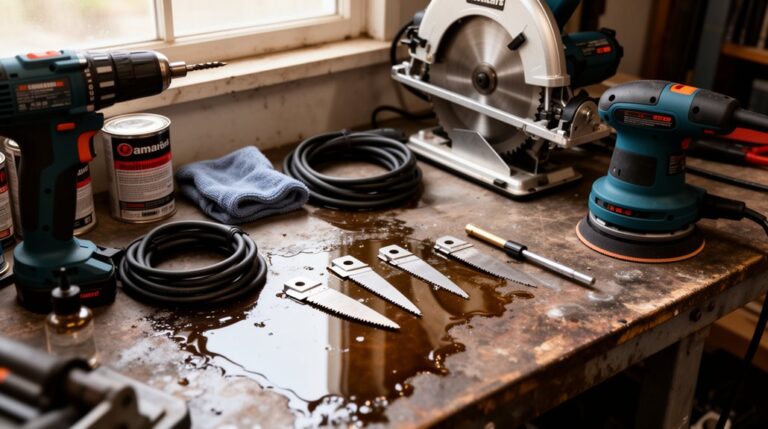

For outdoor maintenance, start with essential tools that fit your spaces: pruners for live wood, shovels that minimize back strain, and a few extras to keep you moving. Prioritize ergonomic grips, balanced feel, and rust resistance. Choose bypass pruners for freshness, anvil for dead wood, and shovels with offset handles or curved blades. Add a magnetic tray, kneeling pad, and a compact belt for efficiency. Maintain blades, oil moving parts, and store safely—you’ll uncover more setup tips ahead.
Key Takeaways
- Prioritize core versatile tools (pruners, shovels, knives) with ergonomic grips, balance, and durability for reliable outdoor maintenance.
- Choose pruners by blade type and comfort: bypass for live wood, anvil for dead wood; include a locking mechanism.
- Select shovels with ergonomic handles, offset designs, balanced weight, and durable, corrosion-resistant materials.
- Add efficiency aids: magnetic tray, kneeling pad, compact tool belt, and a fast-cut utility knife.
- Maintain tools by cleaning, oiling moving parts, storing off the ground, and inspecting for damage regularly.
Start Here: Identify Your Garden Tool Needs

To identify your garden tool needs, start by outlining the tasks you perform most often and the spaces you maintain. You’ll map functions to tools, prioritizing reliability, grip, and balance. Catalog tasks such as soil prep, planting, trimming, debris removal, and seasonal cleanup, then note the environments you work in—beds, borders, containers, lawns, and pathways. Consider how much time you spend each week and the frequency of use. Choose versatile core tools first, then add specialty items as gaps appear. Keep storage and organization in mind to reduce tool fatigue. For this phase, remember garden decor can guide where you work and pest control considerations may influence tool choice, ensuring practicality without unnecessary purchases. This approach prevents redundancy and supports precise, efficient planning.
Pruners and Shears: How to Pick the Right Ones
As you narrow down your tool lineup from the previous focus on core gear, pruners and shears become the top priority for maintaining plant health and shape. You’ll choose by blade type, cutting capacity, and comfort, then verify grip safety and balance. Use proper pruning techniques to avoid damage, and always prioritize shear safety to prevent injuries.
- Blade type and cutting capacity
- Ergonomic grip and trigger action
- Locking mechanism and rust resistance
- Maintenance steps for longevity
Select bypass pruners for live wood and anvil pruners for dead wood, matching tasks to strengths. Keep blades sharp, oil regularly, and make clean, angled cuts just above buds. Train yourself to avoid crushing tissue, and store tools safely after use to preserve performance and safety. Pruning techniques matter; shear safety matters more.
Shovels That Prevent Back Strain: Features to Look For
Shovels that prevent back strain focus on design choices that reduce bending and torque, allowing you to dig deeper with less force. To start, look for an ergonomic handle that fits your grip and reduces wrist twist during pruning-and-placing motions. A power-transfer design from handle to blade matters; seek scissor-like or offset shaft options that keep your shoulders aligned. Weight distribution should center near the grip, so the shovel feels balanced in use and doesn’t tug downward. Consider a slightly curved blade or multi-angle shaft to optimize leverage when loosening soil or moving debris. Durable materials, corrosion resistance, and a comfortable grip complete the picture. Remember, the best shovel minimizes exertion while maximizing efficiency, letting you work longer without strain.
Must-Have Extra Tools for Efficiency

Wrap up time-saving tasks with a concise set of extra tools that boost efficiency. You’ll gain speed and control by adding selective gear that complements core tools and protects you from fatigue. Focus on practicality, not novelty.
- Magnetic parts tray for quick cleanup and organization
- Lightweight kneeling pad or pad with a handle for comfort
- Compact tool belt or pouch to keep essentials within reach
- Fast-cut utility knife with replaceable blades for clean, precise cuts
Remember garden tool ergonomics when choosing grips and balance, and plan tool storage solutions so you can grab what you need without bending or searching. These extras reduce trips, prevent clutter, and sustain momentum across tasks. Use them to maintain sharp edges, tidy benches, and smooth progressions between jobs.
Core Tool Features That Make Any Tool Better
Core tool features dominating any job site start with grip, balance, and durability—because you’ll reach for them first, every time. When a tool fits your hand, you work faster with less fatigue, so prioritize an ergonomic handle designed for natural grip and reduced strain. Balance matters too; a well‑balanced instrument stays responsive through cuts, digs, and prying, helping you maintain control under pressure. Durability isn’t optional—look for robust construction that resists daily wear, impact, and edge fatigue. A rust resistant coating protects metal components, extending life and keeping performance consistent across seasons. Favor features proven to enhance precision, torque, and control, and you’ll reduce replacements and downtime. In short, smart design choices translate to safer, more efficient work on every project.
Care and Maintenance to Last a Season (and Beyond)
To keep outdoor tools performing season after season, establish a simple, repeatable maintenance routine that covers cleaning, lubrication, and storage. You’ll extend life by cleaning soil and sap after use, oiling moving parts, and storing dry, off-season. Use eco friendly cleaning methods—minimal chemical cleaners, warm water, and a soft brush—to protect blades and handles. Lubricate pivots and gears to prevent rust and stiffness. Store tools off the ground in a dry, ventilated area, with blades sheathed and handles padded to avoid damage. Prioritize Garden tool storage planning to prevent theft and weather exposure. Inspect for nicks and cracks, address promptly, and replace worn parts. Regular checks save time and money, keeping your yard gear ready for next season.
- Garden tool storage
- eco friendly cleaning
- inspect and address
- organize and protect
Set Up a Simple Seasonal Tool Maintenance Routine
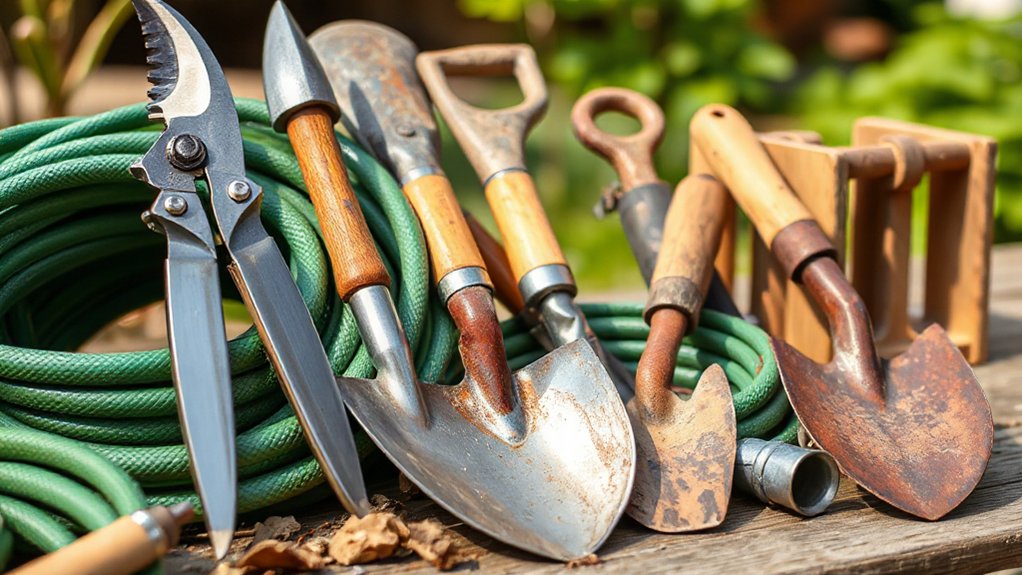
To keep tools ready year-round, start with a seasonal rinse and dry to remove moisture and prevent rust. Then sharpen, lubricate, and inspect each tool to guarantee safe, reliable performance. Establish a simple routine now so you can detect wear before it causes bigger problems.
Seasonal Rinse and Dry
Seasonal rinse and dry keeps tools ready for the next project and prevents rust, corrosion, and buildup. You’ll establish a quick routine that minimizes downtime and maximizes longevity. After use, rinse off soil and debris, then dry thoroughly to stop moisture from lingering. Store tools in a clean, ventilated area to support Seasonal cleaning tips and avoid moisture traps. Consistency matters: perform this rinse and dry in each season to maintain sharp edges and reliable performance.
- Rinse, then dry all touched surfaces
- Wipe handles with a clean cloth and inspect for cracks
- Apply a light coat of protective wax or oil to metal parts
- Return tools to designated Garden tool storage to reduce clutter
Sharpen, Lubricate, Inspect
Sharpen, lubricate, and inspect tools on a simple seasonal routine to keep performance consistent and extend life. You should hone blades with a proper file, remove burrs, and wipe away residue before applying a light coating of rust-preventive oil. Lubricate pivot points, gears, and hinges as you test movement, then wipe excess to prevent dust buildup. Inspect handles for cracks, corrosion, and loose rivets; tighten or replace as needed. Establish a repeatable cadence—before planting season and after harsh weather—so gaps don’t form. Store tools in a dry, ventilated area to reduce moisture exposure. Practice tool safety at all times, using proper grips and eye protection. Follow storage tips to avoid damage and guarantee ready performance season to season.
Frequently Asked Questions
How Often Should Garden Tools Be Sharpened for Best Performance?
Sharpening frequency depends on use; for regular pruning, sharpen every 2–4 weeks during heavy season and monthly otherwise. Follow a tool maintenance schedule, inspect blades after each use, and maintain edges to guarantee precise, effortless cuts.
What Safety Gear Complements Pruning and Digging Tasks?
You should wear protective gloves and eye safety gear when pruning and digging. Use sturdy gloves, wraparound eye protection, and keep hands free of debris; verify fit, adjust as needed, and replace gear if damaged or worn.
How Do I Organize Tools for a Small Storage Shed?
Organize tools in your small shed by grouping like items and labeling each area. Use clear storage container options, wall racks, and pegboards; hang pruners safely. Label Tool labeling sections for quick access and maintain tidy, efficient storage.
Which Materials Resist Rust in Humid Climates Best?
Rust resistant alloys and coating protection resist humidity best; choose stainless steel and tempered carbon steel with enamel or ceramic coatings, wipe dry after use, and store elevated. You’ll reduce corrosion by applying protective coatings and regular maintenance.
Can Tools Be Safely Stored Between Seasons Without Full Cleaning?
Seasonal storage safeguards: yes, you can store tools between seasons with minimal effort. Follow precise prevention steps: wipe, dry, oil, and crate. Use seasonal storage tips and tool cleaning techniques to protect metals and prolong life.
Conclusion
You’ve got the basic toolkit set, and that’s half the battle. A recent study shows that using ergonomically designed pruners reduces wrist strain by up to 40%—a real game changer for long sessions. Stick to sharp blades, clean after use, and store tools dry. Prioritize quality over quantity, and schedule a simple seasonal routine to keep everything performing. With these steps, you’ll prune, plant, and dig efficiently all season long.
About the Author