
Create a modern kitchen that feels cohesive and luxurious by starting with a focused color palette—one primary hue plus two supporting tones, using neutrals for sophistication. Layer tactile textures from wood, stone, and textiles, and pair high-end cabinets with durable quartz or granite countertops. Optimize space with smart storage, pull-outs, and integrated appliances, while layering lighting—ambient, task, and accent—for depth. Add vintage or industrial accents sparingly to build character. Fine details will reveal more as you proceed.
Key Takeaways
- Embrace a cohesive color palette with a primary hue, two supporting tones, and neutral accents for a sophisticated modern look.
- Combine textures like wood, stone, and matte finishes with sleek cabinetry and high-quality quartz or granite countertops.
- Use bold statement lighting and layered illumination (ambient, task, accent) to create depth and focal points.
- Optimize space with efficient storage, accessible pullouts, integrated hardware, and a practical work triangle layout.
- Add subtle vintage or industrial touches through fixtures and accents to establish character while maintaining a clean, contemporary aesthetic.
What Modern Kitchen Decorating Really Means

Modern kitchen decorating isn’t about chasing trends; it’s about crafting a functional space that supports daily tasks while reflecting your taste. You design around workflow, durability, and clean lines, prioritizing efficiency over spectacle. You define zones: prep, cook, clean, and storage, aligning appliance placement with natural movement. Materials regulate performance; you choose surfaces that resist wear, stains, and heat. Lighting, too, is task-focused, with layered fixtures to minimize shadows and glare. Vintage accents offer character without compromising modern ergonomics, while Industrial elements introduce texture and structural clarity. You balance these cues with consistent hardware, seam alignment, and color restraint to maintain cohesion. Your goal isn’t novelty but longevity, ease, and clarity, ensuring form follows function while subtly signaling your personal interpretation of modern kitchen decorating.
Start With a Cohesive Color Palette
A cohesive color palette anchors a kitchen by unifying finishes, cabinetry, and accents. You establish this foundation by selecting a primary hue and two supporting tones that contrast enough to define zones without shouting. Prioritize color coordination across cabinetry, countertops, backsplashes, and hardware to create visual continuity. Choose paint palettes that reflect your lighting, space size, and intended mood, then test swatches under real conditions to confirm saturation, warmth, and sheen. Implement a restrained approach: limit accent colors to two or three elements to avoid clutter. Consider undertones and material textures to ensure compatibility, not competition. Document your decisions in a simple palette chart, and maintain it when updating fixtures or appliances. A disciplined palette reduces future redesigns and strengthens stylistic coherence.
Embrace Texture: Materials That Bring Warmth
Texture brings warmth to your kitchen by layering natural materials you can feel and see. Start with tactile surfaces and plan for concurrent warmth through wood, stone, and textiles, aligning with your overall palette. You’ll unify form and function as you combine warmth-through-texture, natural material layers, and tactile surfaces into a cohesive, durable scheme.
Warmth Through Texture
Textures are the quickest way to add warmth to a kitchen, because tactile surfaces invite comfort and ease. You harness warmth by pairing durable materials with controlled texture, ensuring performance without overpowering sightlines. Start with wall decisions that balance protection and ambiance: textured wall treatments create subtle depth, reduce glare, and anchor color schemes. Next, prioritize tactile variety at key interfaces—counter edges, islands, and seating—so you experience warmth through layers rather than loud statement pieces. Introduce Cozy fabric accents in limited, high-use zones to soften echoes and invite lingering meals, using performance fabrics that resist spills. Maintain a cohesive palette to prevent texture from appearing cluttered; rotate textiles seasonally to preserve relevance. Finally, test sightlines for consistency, ensuring texture enhances, not competes with, overall sleekness.
Natural Material Layers
Natural materials layer warmth into a kitchen by pairing durable surfaces with tactile nuance. You design with deliberate contrast: stone countertops meet timber cabinets, ceramic tile backsplashes complement woven textiles, and metal accents provide mechanical clarity. Natural material layers emphasize depth, texture, and longevity, elevating the space without excessive ornament. Prioritize grain direction, finish, and patina to maintain cohesion as the room evolves. Organic textures emerge through roped jute rugs, linen curtains, and clay pottery, reinforcing warmth while staying practical. Use a restrained palette to let texture speak, then punctuate with controlled sheen in hardware and fixtures. Remember: authenticity matters. Organic textures and natural material layers deliver a timeless, low-maintenance aesthetic that remains adaptable across evolving decorating trends.
Tactile Kitchen Surfaces
While warmth defines the kitchen’s tactile appeal, prioritize surfaces you can feel as you work: stone, wood, ceramic, and metal textures that invite use. You evaluate material tactility by grip, texture grade, and wear resistance, selecting finishes that endure daily tasks. A textured backsplash adds dimensional interest while masking minor splashes and fingerprints; choose dense, skid-resistant textures for practical cleanup. Pair with tactile cabinet finishes that resist heat and oils, yet remain smooth enough for quick touch-ups. Guarantee seam quality and edge treatment minimize irritation during long prep sessions. Document slippage, thermal expansion, and maintenance needs to preserve feel and color. Integrate contrasting yet complementary textures to balance visuals, then test in situ with lighting to confirm perceived warmth and ergonomic comfort.
Smarter Storage Solutions and Sleeker Surfaces

Smart storage and streamlined surfaces transform small kitchens into efficient workspaces. You optimize layout with vertical storage, pull-out shelves, and sliding drawers to maximize footprint without sacrificing access. Choose shallow depth cabinets beside prep zones to reduce reach fatigue, and install toe-kick drawers for utensils and tools you grab daily. Embrace integrated appliances and countertop alignment to create a seamless plane, minimizing visual clutter. For surfaces, select durable, low-maintenance materials with antimicrobial properties and heat resistance that tolerate daily use. Incorporate vintage accents and industrial finishes to add character while preserving modern functionality. Use edges and chamfered profiles to reduce snag points, and pair matte finishes with reflective backsplashes to enhance light distribution. Maintain a disciplined, modular approach to keep workflows uninterrupted.
Lighting That Elevates Mood and Function
Good lighting is more than visibility; it shapes mood, safety, and workflow. You’ll optimize layers of light to guide tasks, reduce glare, and enhance color accuracy in everyday prep. Here’s how to implement precisely:
- Layered fixtures: combine ambient, task, and accent with dimmable controls for mood and focus.
- Color temperature: use cool for work areas and warm for social zones to balance energy and comfort.
- Task efficiency: under-cabinet LEDs reduce shadows on counters and improve gadget usability.
- Vintage accents: mix in retro pendants or brass accents to elevate character without sacrificing performance.
Notes: select reliable kitchen gadgets with integrated LEDs and guarantee color consistency across fixtures for a cohesive, functional kitchen.
Bold Finishes and Statement Elements
Bold color pairings create focal moments without overwhelming the space, so choose a dominant hue and one or two accents that repeat across hardware, backsplashes, and textiles. Statement lighting ideas should prioritize scale, contrast, and direction to draw attention to architectural features and work zones. Texture-rich finishes on cabinets, countertops, and walls add depth and tactile contrast, reinforcing a curated, high-contrast look.
Bold Color Pairings
When you pair bold colors with striking finishes, you create a kitchen that reads as intentional and high-impact. Bold color pairings emphasize contrast, depth, and focal points, guiding the eye to key features without clutter. Implement with purpose, aligning hues to materials and textures for cohesive energy.
- Use a saturated core color for cabinetry and balance with metallic or matte finishes to anchor the space.
- Introduce Vintage charm through retro-inspired palettes paired with modern hardware for timeless contrast.
- Integrate Industrial accents by overlaying raw metals and concrete-like textures against vivid tones.
- Limit color variety to preserve clarity; repeat a dominant color across accents to reinforce rhythm.
Statement Lighting Ideas
Statement lighting can define a kitchen’s mood and focus. You select statement lighting to establish hierarchy, clarity, and visual cohesion. Prioritize bold finishes that resist glare and complement cabinetry, countertops, and hardware. Use accent lighting to sculpt zones—under-cabinet strips for task precision, toe-kick uplights for ambiance, and shelf lighting to reveal textures. Choose pendant fixtures with strong profiles to anchor islands or dining nooks, balancing scale with room footprint. Materials matter: metal alloys, matte ceramic, or tempered glass create contrast without overpowering other elements. Install controls that adapt brightness by function and time of day, enabling instant mood shifts. Guarantee safe clearance above work surfaces and verify wattage compatibility with dimmers. Finally, align color temperature to contemporary tones—cool for modern, warm for inviting.
Textured Surface Finishes
Texture and finish choices define the tactile and visual punch of a kitchen. Textured Surface Finishes deliver bold character through deliberate material contrasts and controlled depth, enabling you to guide perception and acoustics without clutter. You’ll leverage textures to spotlight focal points and harmonize finishes across cabinetry, countertops, and hardware. Key applications include Textured wall finishes and tactile backsplash options that invite touch and elevate ambiance. Implement with precision to maintain clean lines and resale value.
- Install a lightly textured wall surface near the prep zone to mask fingerprints while contrasting smooth cabinetry.
- Choose a tactile backsplash option with brick or quarried stone for a durable, photogenic backdrop.
- Pair matte textures with high-gloss accents to balance glare and depth.
- Integrate varied textures within a single plane to create dynamic, cohesive interest.
Floor Plans That Improve Flow and Utility
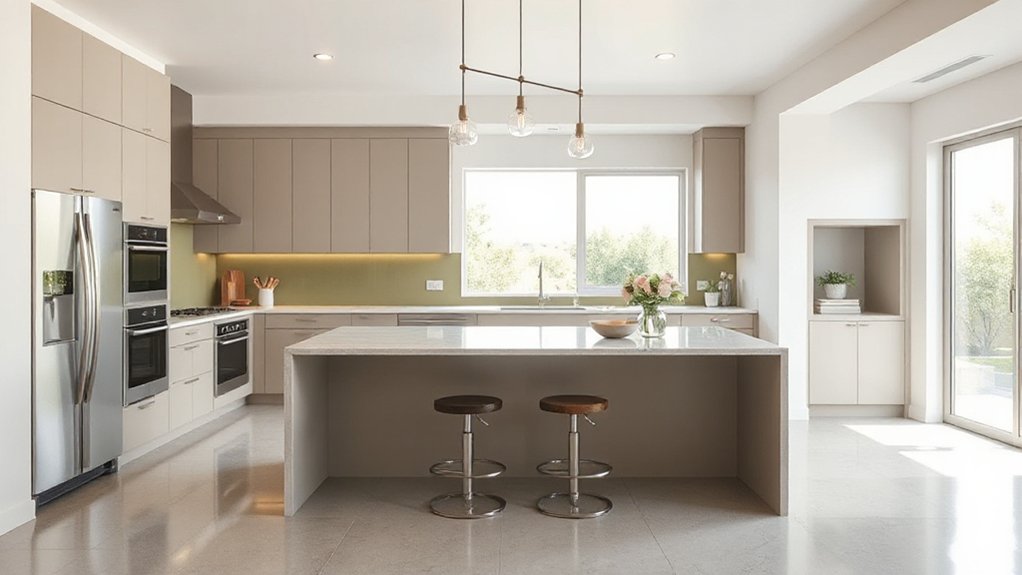
Effective floor plans optimize movement between kitchen zones, storage, and dining areas, reducing steps and bottlenecks. You design around zone adjacency: work triangle optimized, prep surfaces accessible, and workflow uninterrupted by doorways or vertical clutter. Configure clear sightlines for safety and supervision, and minimize corridor width to prevent wasted space. Prioritize storage near prep and cleanup, with tall cabinets and pullouts that keep tools within reach. Consider dining proximity for quick service without disrupting cooking rhythms. Incorporate vintage accents and industrial fixtures as visual anchors, ensuring they don’t impede traffic or storage access. Use consistent elevation changes to cue function, such as alternating island work zones and seating areas. Finally, plan for future flexibility with modular layouts that adapt to evolving routines.
Hardware and Fronts: Subtle Details, Big Impact
Hardware and fronts aren’t just cosmetic; they shape how you use the space. When you choose cabinet hardware and decorative fronts, you’re optimizing accessibility, durability, and visual rhythm. Precision matters: alignment, finish consistency, and transition between materials affect performance and perceived quality.
- Select cabinet hardware that balances grip comfort with operational smoothness, reducing wear over time.
- Match decorative fronts to the cabinet style, ensuring a cohesive, timeless aesthetic.
- Prioritize finish durability and corrosion resistance in high-use zones to prevent wear patterns.
- Plan hardware layouts for ergonomic reach, minimizing finger strain and improving workflow efficiency.
Small decisions here drive big outcomes: faster task completion, fewer scuffs, and a cleaner, more intentional kitchen language.
Eco-Friendly Design: Green Materials and Energy Savings
Eco-friendly design prioritizes green materials and energy savings without compromising performance. You optimize layout and systems to minimize waste, emissions, and utility use while maintaining durability and function. Choose recycled countertops to reduce virgin material demand, verify low-embodied-energy production, and guarantee easy maintenance. Bamboo cabinetry offers rapid renewability, strong structure, and stable dimensions; confirm formaldehyde-free finishes and sourced-from-verified plantations. Integrate energy-efficient appliances, LED lighting, and smart controls to cut consumption without sacrificing speed or comfort. Air sealing, insulation, and high-performance windows limit heat exchange, lowering HVAC loads. Material longevity matters: select finishes with repairability and recyclability. Document lifecycle impacts, including end-of-life recyclability. Align design decisions with local green building standards, suppliers’ transparency, and ongoing maintenance plans to sustain savings and performance.
Layering Soft Details: Rugs, Textiles, and Art

Layering soft details brings warmth and texture to a space without compromising structure or function. You refine the kitchen’s character by selecting rugs, textiles, and art that reinforce form and durability while adding tactility. Start with durable, easy-care rugs to define zones without clutter. Choose textiles for seating and window treatment that resist staining and fade. Curate art that supports function, not distraction, favoring scale and contrast to guide the eye. Vintage accents inject personality without overpowering modern lines, while Artistic wall decor provides focal points and cohesion. Maintain balance by repeating motifs, colors, and textures across elements. Use the following priorities to elevate texture and tone:
1) Texture consistency
2) Performance materials
3) Visual rhythm
4) Subtle contrast
Small-Space Solutions for Style Without Clutter
Small spaces demand smart, deliberate styling that minimizes clutter while maximizing function. You optimize every inch with compact storage that blends form and function. Start with wall-mounted shelves and magnetic rails to free counter space, keeping essentials within easy reach. Choose furniture with built-in storage and slim profiles to preserve room flow. Embrace concealed organizers in cabinets for utensils, cookware, and small appliances, reducing surface chaos. Implement tactile contrast through finishes and color to delineate zones without bulk. Use multi-purpose items—a collapsible countertop extends prep area, a lid organizer keeps pots tidy, and a rolling cart serves as temporary prep or serving station. Maintain minimal clutter by enforcing a strict routine: purge, group, and label. Your kitchen stays efficient, visually calm, and consistently cohesive.
Budget-Smart Upgrades That Look Designer
Budget-smart upgrades can transform your kitchen without a designer price tag, delivering a high-end look through smart choices and precise execution. You’ll apply durable fixtures, measured material costs, and clean lines to achieve designer-level elegance with confidence. Focus on proportion, finish matching, and tactile contrast to elevate space without excess.
- Choose vintage accents in hardware and lighting to inject personality while maintaining cohesion.
- Favor minimalist decor—uncluttered countertops, hidden storage, and monochrome palettes for timeless restraint.
- Upgrade key surfaces with affordable quartz or laminate that mimics luxe textures.
- Tighten lighting with layered sources and dimmers to sculpt atmosphere and highlight details.
Result: a refined, cohesive kitchen that reads expensive, yet remains practical and efficient.
Frequently Asked Questions
How Do I Choose a Timeless Color Palette for My Kitchen?
Choose a timeless color palette by prioritizing color harmony and contrast, then add Trendy accents for flair. You’ll balance neutrals with a cohesive accent, test in lighting, and keep it simple for enduring appeal and versatility.
What Kitchen Layout Best Suits Tall Appliances and Windows?
You should favor a galley or U-shaped layout when tall appliances and windows are present. Appliance placement aligns with workflow, and window treatments optimize light; you steer efficiency, doorways clear, and a balanced visual allegory of order.
Can Small Changes Make a Big Impact on Style Without Remodeling?
Yes, small changes can dramatically transform style. You can optimize Creative storage and Lighting enhancements to improve perceived space, functionality, and mood without a full remodel. Implement clever organizers, under-cabinet LEDs, and layered lighting for immediate impact.
Which Durable Materials Balance Cost and Longevity?
You should choose durable materials that balance cost and longevity—think quartz, porcelain, and solid surface—paired with luxury finishes and high end fixtures. These options resist wear, remain affordable long-term, and deliver a refined, maintenance-friendly look.
How Can I Integrate Eco-Friendly Upgrades on a Budget?
You’ll save by choosing sustainable lighting and recycled decor, upgrading on a budget with smart, efficient choices. Coincidental morning sun glare guides you toward LEDs, while thrifted bricks inspire a durable look; balance cost, longevity, and eco-friendly impact.
Conclusion
You’ve got a blueprint for a modern kitchen that’s cohesive, warm, and efficient. Align colors, textures, and surfaces to calm the eye while boosting function. Embrace smart storage and energy-saving choices, so clutter vanishes and workflow soars. Let lighting sculpt mood and highlight architectural details. Choose eco-friendly materials and soft textiles for depth. In the end, you’ll craft a stylish, practical hub where daily routines feel effortless and inspired. Picture: a calm, confident kitchen you’re proud to own.
About the Author