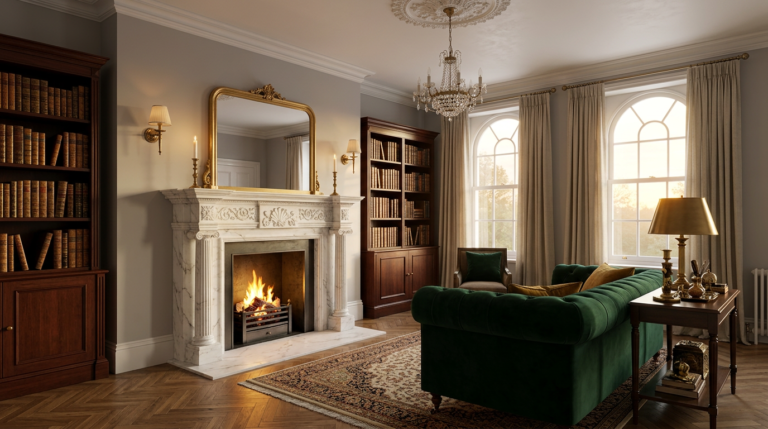

Create a flow-first layout for small spaces, focusing on clear primary pathways and open zones defined with furniture, rugs, and lighting cues. Choose modular, cohesive furniture with hidden storage and multi-functional pieces to maximize versatility. Layer lighting—ambient, task, and accent—with dimmers to set moods and improve usability. Use durable, low-maintenance finishes and sound-absorbing textiles to keep rooms calm. Add invisible storage and pull-out organizers for clutter-free surfaces. If you keep exploring, you’ll uncover even more practical tips.
Key Takeaways
- Adopt a flow-first layout: clear primary pathways, open-plan zones defined by furniture and lighting cues to keep spaces usable and airy.
- Use modular, cohesive furniture: neutral tones with varied textures, scalable pieces that reconfigure for gatherings and daily use.
- Implement pull-out storage: invisible compartments and labeled shallow drawers to keep surfaces clean and accessible.
- Layer lighting for mood and function: ambient, task, and accent lights with dimmers to adapt to activities and times of day.
- Apply a calm, Modern palette: neutral base with three complementary accents, layered textures, and cohesive repeats across decor.
How to Create a Flow-First Layout for Smaller Spaces

A flow-first layout starts with how you move through a space. In smaller spaces, plan around function first, then furniture. Picture a clear primary path that guides circulation, avoiding bottlenecks and dead zones.
Use open plan concepts to visually expand areas, but keep zones distinct with furniture placement, rugs, and lighting cues. Prioritize multi-functional pieces that reduce clutter and maximize storage without crowding.
Align seating and work surfaces to the main walkway, enabling seamless progression between tasks. Choose scale carefully: compact sofas, slim profiles, and modular units adapt to tight footprints.
Implement sightlines that maintain openness, and use color or texture to delineate zones without walls. This flow optimization enhances usability while preserving a cohesive, breathable feel.
Modern Palette Principles for Calm Interiors
Modern palette principles center on calm, cohesive color storytelling. You shape spaces by selecting restrained tones and intentional contrasts, ensuring each room breathes.
Start with a base of neutral foundations, then layer depth through muted accents. Color harmony emerges when you balance warm and cool values, avoiding jarring jumps between adjacent surfaces.
Use texture and subtle shifts rather than loud saturation to maintain serenity. Lighting placement matters: position fixtures to emphasize the palette’s natural rhythm, softening shadows and guiding visual flow.
Keep surfaces cohesive with repeat tones across furniture, textiles, and art. This consistency curates a calm mood that remains flexible as you add elements over time.
- Establish a neutral base with three complementary accent colors
- Align textiles, wall art, and rugs to repeat the same hues
- Use lighting to sculpt tone without overpowering contrast
Pick Multi-Functional Furniture to Save Space and Add Style
Choose multi-functional furniture to maximize every square inch without sacrificing style. Look for pieces with hidden storage, convertible seating, and modular groupings to adapt to different rooms and needs.
Start with a base you love, then layer in smart configurations that keep surfaces clear and spaces flexible.
Hidden Storage Solutions
Ever wonder how to hide clutter without sacrificing style? You’ll design smarter by choosing hidden storage that doubles as decor. Prioritize multi-functional pieces that blend form and function, so every inch serves a purpose.
1) Choose ottomans and benches with concealed compartments for blankets, magazines, and remotes, keeping surfaces clean.
2) Opt for bed frames, coffee tables, and consoles with drawers or lift-top panels to store essentials out of sight yet within reach.
3) Use built-in niches and wall shelves with integrated boxes or baskets, so decorative accents stay organized without echoing clutter.
This approach leverages color psychology to boost calm and cohesion, while decorative accents remain intentional rather than scattered. Your space feels spacious, purposeful, and stylish.
Convertible Seating Options
Convertible seating options offer a smart way to maximize space without sacrificing style. You’ll replace unused square footage with flexible furniture that serves multiple functions. Look for pieces that combine seating, storage, and surface space in one clean silhouette.
Think sofa beds, ottomans with hidden compartments, and benches that tuck under a console. Prioritize solid construction, durable upholstery, and easy-access mechanisms, so operation feels smooth, not stiff or awkward.
When selecting, assess your room’s flow: a compact orientation can elongate sightlines and keep traffic clear. Choose cushions with medium firmness for daily use, and opt for fabrics that resist stains and wear.
Keep the room cohesive by coordinating colors and textures, reinforcing the sense of deliberate, multi purpose furniture.
Modular Grouping Pieces
Modular grouping pieces let you tailor a layout that grows with your needs, combining seating, storage, and surface space into one cohesive system. You’ll unlock flexible configurations that adapt as rooms evolve, keeping clutter down while preserving function.
This approach centers on versatile furniture that serves multiple roles, so you gain more without multiplying pieces. Prioritize pieces that interlock, stack, or transpose between uses, enabling adaptable layouts that shift with your routines.
Choose neutral tones and clean lines to preserve cohesion while you mix textures for contrast and interest. Keep pathways clear and measurements precise to maximize flow and comfort.
1) Experience instant harmony as zones reconfigure to suit gatherings or daily life.
2) Feel empowered by compact, multifunctional design that expands storage without bulk.
3) Enjoy consistent style with scalable pieces that grow with you.
Layered Lighting for Mood, Task, and Accessibility
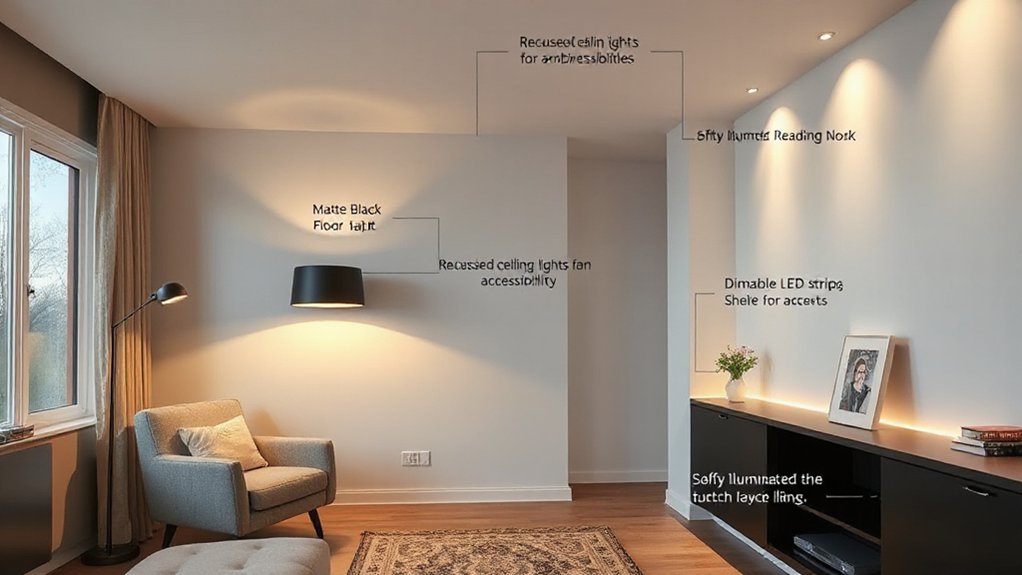
Layered lighting combines mood, task, and accessibility so you can see clearly, work comfortably, and feel at ease in any space. You’ll balance ambient glow with task lighting, then add accent accents for depth.
Start with a ceiling layer that provides even illumination without glare, then choose task fixtures for desks, counters, and work zones. Dimmer controls let you shift from bright, focused light to softer settings for relaxing moments, improving accessibility for different abilities.
Fixture selection should consider placement, color temperature, and energy efficiency, prioritizing adjustable heads and floor lamps that don’t clutter flow. Use zoning to tailor light by activity and time of day.
Keep wiring clean, bulbs consistent, and mount heights practical to minimize shadows and maximize comfort.
Texture Basics: Pairing Materials for Warmth and Calm
Texture sets the tone after lighting, balancing warmth and calm through material pairing. You’ll create tactile depth by mixing textures that complement rather than compete, using textural contrast to guide the eye and mood.
Favor a restrained palette and let fabric weight, wood grain, and stone finish dictate harmony. Keep scale in mind: large elements soften with softer textiles; hard surfaces ground with warm textiles.
Achieve cohesion through intentional pairing—avoid competing patterns, align sheen levels, and vary texture without overloading a single space.
- Combine a matte textile with a polished surface to emphasize contrast
- Layer natural materials (wood, stone, linen) for warmth and balance
- Use a unifying color beneath varied textures to tie the room together
Invisible Storage: Built-Ins, Hidden Compartments, and Pull-Out Organizers
Invisible storage frees up surface area without sacrificing style. You can weave hidden compartments, built-ins, and pull-out organizers into everyday routines to boost efficiency and calm.
Start with smart zoning—store frequently used items where you see them, and stash the rest out of sight for cleaner, more functional spaces.
Hidden Storage Ideas
Hidden storage can transform a room without sacrificing style: built-ins, hidden compartments, and pull-out organizers let you hide everyday clutter behind clean lines and smooth surfaces. You’ll reclaim surface area while maintaining a calm, organized vibe. Use discreet mechanisms and finishes that blend with your palette, so storage feels intentional, not invasive.
Hidden compartments and secret drawers add clever depth to dressers, beds, and cabinets, keeping essentials within reach yet out of sight. Embrace vertical stacking and modular components to adapt over time without bulk.
- Seamless pull-outs maximize every inch while remaining visually light
- Recessed niches with soft-close doors guard valuables and create calm corners
- Hidden trays and dividers keep daily essentials organized and accessible
Built-In Organization Tricks
Built-in organization tricks make every square inch count by keeping clutter out of sight while preserving clean lines. You’ll gain seamless storage through invisible compartments, built-in shelves, and discreet pull-outs that blend with your decor.
Design with purpose: place small items in labeled zones and use shallow drawers for daily essentials, so you reduce distractions and maintain a calm roomscape.
Opt for concealed hinges and flush panels to keep surfaces uncluttered, while interior dividers maximize usability without visual noise.
Incorporate artificial lighting to illuminate hidden storage, guaranteeing quick access without reaching into dark corners.
Use decorative accents sparingly to enhance style without compromising function.
Prioritize accessibility, durability, and precise measurements to guarantee every built-in earns its keep.
Pull-Out Space Savers
Ever wondered how to reclaim every inch without sacrificing style? Pull-out space savers master hidden storage without visible bulk. Use invisible built-ins, concealed compartments, and pull-out organizers to streamline closets, cabinets, and lounges. The result is cleaner surfaces, better traffic flow, and a calmer room vibe.
Integrate vintage accents as subtle details on finishes or handles to keep character without clutter. Add indoor greenery to soften edges and remind you of nature’s calm, even in tight spots.
Practical tips keep you efficient: sturdy mechanisms, soft-close options, and labeled sections for quick access.
- Install friction-free sliders for quiet, reliable performance.
- Choose shallow, labeled pull-outs for everyday items.
- Hide cords and power strips behind panels to maintain seamless lines.
Quiet, Comfortable Rooms: Smart Acoustics and Sound-Control Tricks
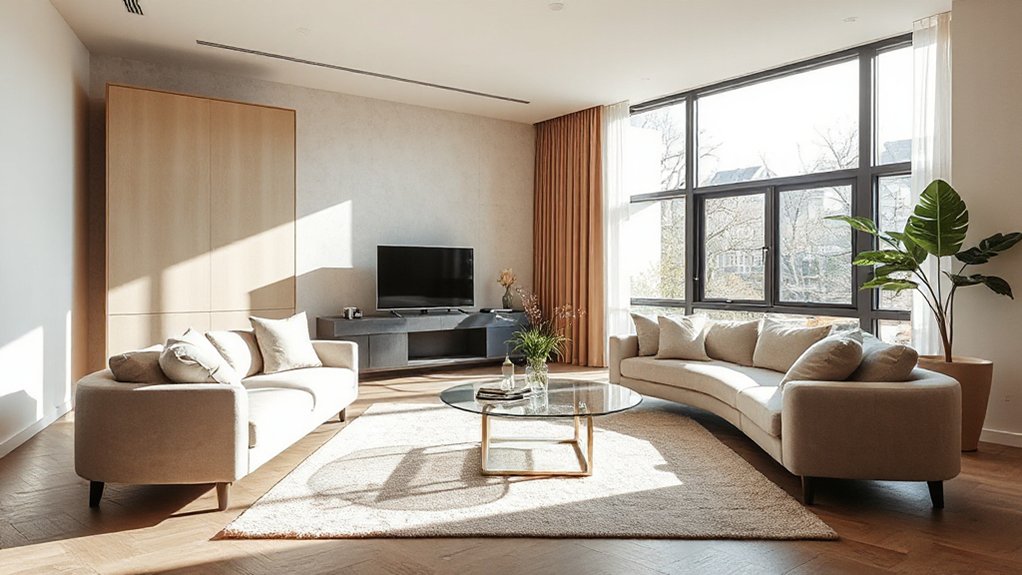
To create quiet, comfortable rooms, start with smart acoustics that absorb, not echo. You’ll reduce noise with practical layering: soft furnishings, rugs, and drapery that dampen footfall and voice reflections.
Use wall and ceiling treatments strategically; choose finishes that don’t trap sound in hard, flat surfaces. Implement soundproofing techniques where needed—seal gaps around doors, windows, and outlets, and consider floating floors in high-traffic zones.
Add targeted acoustic panel designs to control chatter and improve clarity without clutter. Place panels at first reflection points to maximize benefit while maintaining aesthetics.
Opt for modular options that blend with your decor and don’t shout “acoustic.” Test a room’s balance after each change, and fine-tune placement to achieve a calm, functional living space.
Durable, Sustainable Finishes for Low-Maintenance Living
Durable, sustainable finishes cut maintenance time while keeping your spaces looking sharp. For low-maintenance living, choose options that endure daily use while minimizing upkeep. Eco friendly finishes reduce environmental impact without sacrificing performance, and long lasting coatings resist wear, stains, and fading.
- Select stain- and scratch-resistant surfaces that clean easily, preserving color and texture.
- Prioritize low-VOC, durable sealants and finishes to maintain air quality and longevity.
- Opt for materials with proven longevity and simple repair options to extend life without full replacement.
Quick Wins: Affordable Updates That Transform a Room in Days
Looking for quick wins that fit any budget? You can transform a room in days with simple, high-impact updates. Start with a fresh focal point: swap in a bold vintage accents lamp, rug, or throw to redefine the space without a full overhaul.
Next, refresh the wall personality with an artistic murals accent or a cohesive mural strip that mirrors your style, avoiding heavy commitment. Update lighting to instantly widen rooms and elevate mood—think warm LEDs and layered fixtures.
Rearrange furniture to create better flow, add a mirror to bounce light, and swap hardware on cabinetry for a subtle lift. Finally, introduce texture with affordable textiles and a curated accessories plan.
These fast steps deliver a polished, cohesive result you’ll notice immediately.
Frequently Asked Questions
How to Personalize a Modern Look Without Clutter?
You don’t clutter—define space with artistic wall decor and clean display areas. Use personalized storage solutions, like modular units, to keep essentials hidden yet accessible, avoiding excess. Curate colors and textures to reflect you without overwhelming the room.
What Small Budget Upgrades Yield Big Impact Fast?
Upgrade with budget friendly lighting and DIY wall art for quick impact. You’ll transform spaces fast, saving cash, while keeping it practical and stylish; you’ll customize ambiance, highlight focal points, and feel accomplished without overspending.
Which Materials Age Best in High-Traffic Rooms?
You should choose materials with proven durability in high-traffic areas, like porcelain, hardened wood, and full-grain leather, because they resist wear. Durability considerations matter, and maintenance requirements stay manageable, keeping surfaces looking sharp while you confidently tread paths every day.
How to Balance Bold Accents With Timeless Design?
Balancing bold accents with timeless design means you mix vintage furniture with neutral foundations and statement lighting to anchor the room. Use restrained palettes, thoughtful proportions, and durable materials so bold elements feel deliberate, not overwhelming, and stay versatile.
What Are No-Fail Color Pairings for Rooms?
You’ll pick no-fail color pairings by sticking to Color psychology insights and Palette coordination. Pair calm neutrals with a bold accent, or warm tones with cool neutrals, ensuring contrast for depth and harmony throughout every room.
Conclusion
As you apply these tips, your space begins to breathe with purpose. You’ll notice flow guiding every move, colors calming the eyes, and furniture that earns its keep. But here’s the twist: the real transformation isn’t in the items you buy—it’s in the decisions you skip or keep. Will you clutter or curate? Keep the essentials, hide the rest, and watch as your rooms suddenly feel cohesive, doable, and unexpectedly alive. The next choice could redefine your entire home.
About the Author