
Luxury renovation trends for Hampshire country estates fuse timeless craftsmanship with modern efficiency. You’ll see architectural integrity preserved—silhouettes, masonry, and landscape thoughtfully respected—while adaptive layouts, energy upgrades, and smart systems enhance daily life. Expect restored classic detailing paired with durable, low-maintenance finishes, and high-performance windows with timber or subtle metal frames. Exterior materials emphasize durability and proportion, with weather-sealed timber and stone. Landscape features—water gardens, sculptures, subtle lighting—unify indoor and outdoor spaces. More insights await as you explore further.
Key Takeaways
- Emphasize architectural integrity with timeless craftsmanship, adaptive layouts, and restrained modernization that preserve Hampshire’s silhouette and masonry.
- Prioritize high-quality restorations using period detailing, durable finishes, and hand-finished cabinetry for vintage charm with modern comfort.
- Enhance energy efficiency through high-density insulation, triple-glazed windows, smart zoning, and renewable energy solutions like heat pumps.
- Integrate subtle outdoor living with landscape water features, durable materials (limestone, slate, timber), and lighting that extends usability at dusk.
- Utilize hidden storage, soft-close hardware, and discreet lighting to achieve luxurious, clutter-free interiors that balance comfort and practicality.
Hampshire Luxury Renovations: What Defines This Movement

Hampshire luxury renovations define a discerning approach that blends timeless craftsmanship with modern convenience. You engage a methodical process that prioritizes measurable quality, sustainability, and ideal function across estate-scale projects. This movement centers on curating spaces that honor place—right materials, appropriate scale, and enduring integrity—while integrating contemporary efficiencies. Historical preservation guides exterior silhouette, masonry details, and landscape alignment, ensuring authenticity remains intact. Architectural innovation drives adaptive layouts, energy performance upgrades, and smart systems that operate seamlessly within established aesthetics. You anticipate maintenance realities and future adaptability, balancing heritage with bold problem-solving. The discipline emphasizes disciplined budgeting, transparent governance, and rigorous site stewardship. By adhering to these principles, you achieve a refined, resilient result that respects Hampshire’s character and elevates daily living.
Classic Detailing Restored With Modern Performance
Classic detailing is restored with modern performance by marrying original craftsmanship to contemporary efficiency. You observe how period mouldings, timber joinery, and ironwork are retained, yet reinforced with modern detailing that elevates durability and comfort. You’ll notice precision bei ng applied to restoration work, ensuring every corner, sill, and panel aligns with archival intent while meeting current standards. Vintage charm remains evident in proportion, texture, and patina, but is complemented by improved warmth, air quality, and moisture control. Garden pathways are reinterpreted with durable coatings that echo historic palettes, creating a seamless exterior rhythm. You experience enhanced performance without compromising character, as upgraded materials respect light and shadow, scale, and proportion. The result is timeless aesthetics powered by efficient, contemporary systems.
Energy-Efficient Insulation for Hampshire Country Homes
Are you maximizing comfort and efficiency in Hampshire’s country homes through intentional insulation choices? In this context, energy-efficient insulation reduces heat transfer while maintaining historic character. For country estates, select high-density mineral wool or advanced cellulose blends that deliver superb thermal resistance without bulk, ensuring seamless integration with traditional wall assemblies. Consider multi-layered approaches: vapor retarders, air barriers, and continuous insulation to minimize thermal bridging, supporting steady interior temperatures across seasons. Align material performance with maintenance practicality to uphold historical preservation standards, avoiding visible alterations that compromise exterior or interior integrity. Pair insulation strategy with thoughtful interior lighting plans to prevent over-reliance on artificial heat while preserving ambiance. Implement professional commissioning to verify insulation performance claims and sustain long-term comfort, cost efficiency, and architectural fidelity.
High-Performance Windows With Aesthetic Appeal

You’ll explore how high-performance windows deliver superior thermal performance without sacrificing visual appeal, balancing advanced glazing with refined frames. The focus on material durability and style guarantees longevity and understated elegance that complements Hampshire’s country estates. By prioritizing both thermal efficiency and aesthetic restraint, you establish a cohesive approach to architectural fidelity and modern comfort.
Thermal Performance Aesthetics
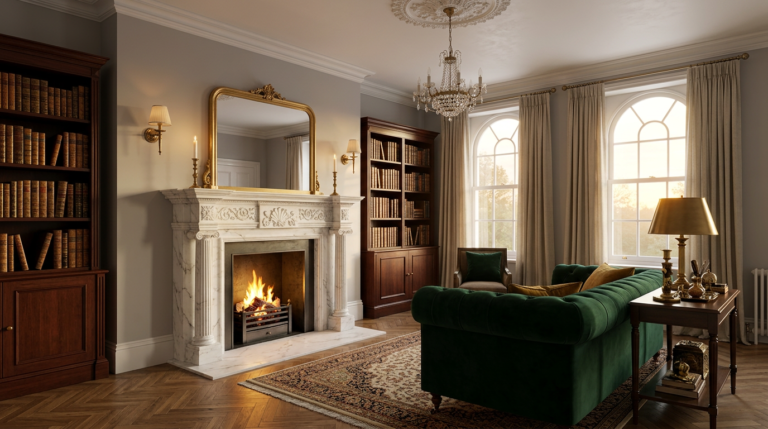
Thermal performance and aesthetics converge in high-performance windows that preserve Hampshire country-house character while delivering modern energy efficiency. You empower interiors with glazing that minimizes heat loss while maximizing natural light, aligning open lounge settings with traditional fireplace mantels and decorative corbels. The result is a seamless blend of preservation and progress, where specialist frames and low-emissivity coatings reduce drafts without compromising stylistic integrity.
- Select frames that echo timber or subtle metallic profiles for period-accurate silhouette
- Prioritize triple-glazing options and intelligent shading to balance comfort and view
- Integrate glazing with existing architectural features, including fireplace mantels and decorative corbels
- Employ airtight seals and thermal breaks to sustain seasonal performance year-round
Material Durability And Style
Material durability and style in high-performance windows must coexist without compromise: robust materials deliver longevity in demanding Hampshire climates, while refined detailing preserves period character. You consider material selection carefully, balancing thermal efficiency with visual authenticity to maintain architectural integrity. Choose frames that resist corrosion, warping, and fading, yet offer slim sightlines for ample daylight. Durability testing should simulate seasonal exposure, including humidity, wind loads, and sun exposure, to validate long-term performance under real conditions. You assess joinery quality, glazing seals, and hardware reliability to prevent leaks and drafts. Alignment with estate aesthetics matters; finish options must complement masonry and timber detailing without overpowering craftsmanship. Employ compliance benchmarks for security and weatherproofing, ensuring consistent operation across decades. Informed decisions yield windows that endure while preserving refined Hampshire charm.
Weather-Sealed Timber and Stone: Durability Meets Timeless Texture

Weather-sealed timber and stone combine durability with timeless texture, ensuring exterior elements endure Hampshire’s temperate maritime climate while maintaining a refined aesthetic. You’ll appreciate how timber craftsmanship delivers structural integrity, while stone textures provide enduring character. This pairing resists weathering, minimizes maintenance, and preserves architectural clarity across elevations.
- Timber selection prioritizes decay resistance and dimensional stability for long-term performance.
- Stone textures are chosen for slip resistance, weathering patterns, and minimal sealing requirements.
- Sealing systems are integrated at joints to prevent moisture ingress without compromising seams.
- Finishes balance sheen and patina, enhancing curb appeal while protecting substrates.
Bespoke Kitchens With Artisan Finishes and Soft-Closing Details
You’re shaping bespoke kitchen spaces with artisan finishes that reflect understated luxury. The popularity of Soft-Closing Mechanisms guarantees quiet, effortless access while protecting cabinetry and improving daily flow. Begin by evaluating bespoke cabinet finishes and how tactful hardware choices amplify both durability and refined quiet in Hampshire country estates.
Bespoke Cabinet Finishes
Bespoke cabinet finishes elevate a Hampshire estate kitchen by pairing artisanal craftsmanship with practical reliability. You select Bespoke cabinetry and Custom finishes that reflect your home’s character, ensuring durability alongside refined aesthetics. Each surface is conceived to resist wear while conveying quiet luxury, from hand-finished veneers to expertly sealed paints. You demand consistency, balanced tones, and ergonomic pull hardware that quiets routine use. The finishes integrate with lighting and textures across the space, enhancing depth without distraction. Your approach prioritizes longevity, ease of maintenance, and a cohesive palette across cabinetry, islands, and storage.
- Hand-applied veneers and glaze treatments
- Chalk, lacquer, or stain options aligned to architecture
- Low-sheen or satin sheens for timeless appeal
- Coordinated hardware and edge profiles for unity
Soft-Closing Mechanisms Popularity
Soft-closing mechanisms have become a defining feature in bespoke Hampshire kitchens, marrying artisan finishes with effortless quiet. You observe how soft-close drawers glide with controlled resistance, preserving the integrity of high-value timbers and bespoke hardware. The trend blends Smart technology with precise hardware calibration, delivering consistent closure and reduced noise across daily use. In this habit of careful design, you notice smoother progressions between cabinetry zones, improving workflow in both preparation and service areas. Artisanal craftsmanship remains evident, as hand-finished edges and bespoke profiles align with hidden damping and integrated hinges. The result is a disciplined, low-maintenance aesthetic that reinforces durability while maintaining restraint in overt luxury. Ultimately, soft-closing details elevate functional elegance without compromising timeless Hampshire sensibilities.
Spa-Inspired Bathrooms and Wellness Zones
Spa-inspired bathrooms and wellness zones bring a retreat-like atmosphere to country estates, marrying luxury finishes with soothing design that remains practical for daily use. You’ll notice serene materials, concealed storage, and water-conserving fixtures that support Spa serenity and Wellness retreats without sacrificing efficiency or durability.
- Choose temperature-controlled showers and frameless glass to maximize light, while ensuring accessibility and maintenance ease.
- Integrate freestanding tubs with anti-slip surfaces and ergonomic supports for long, relaxing soaks.
- Install humidity-aware ventilation and acoustic tuning to preserve tranquility across adjoining rooms.
- Design with insulated walls and radiant floors to sustain comfort, reduce drafts, and enhance energy efficiency.
Lighting That Elevates, Not Distracts: Timeless Yet Modern
You’ll want lighting that feels subtle yet distinctly present, shaping spaces without shouting for attention. This means choosing fixtures that offer a modern, understated glow while preserving timeless elegance. Consider how warmth, diffusion, and alignment with architectural lines can elevate rooms without distraction.
Subtle, Timeless Illumination
Subtle, timeless illumination in a Hampshire country estate should feel inevitable, not engineered; it elevates architecture and ambiance without drawing attention to itself. You achieve this through purposefully chosen fixtures, recessed layering, and controlled brightness that respects proportions and materials. The aim is an ambient glow that reveals form, texture, and footing while remaining unobtrusive. Subtle accents guide movement and highlight focal points without dominating spaces, creating a cohesive mood across rooms.
- Implement dimmable layers that *shift* from utility to atmosphere in response to time of day.
- Choose fixtures with warm, consistent color temperature to preserve natural tones.
- Use hidden coves or discreet wall washes to emphasize architectural lines.
- Prioritize low-glare sources and seamless integration with trims and fabrics.
Modern Yet Understated Glow
Modern yet understated glow emerges from carefully calibrated lighting that elevates architecture without competing with it; the result is a timeless, contemporary ambiance that feels inevitable rather than engineered. You design illumination to reinforce form, selecting fixtures that recede while performing. Subtle analogues—wall sconces with quiet symmetry, recessed coves, and dimmable LEDs—grant depth without glare. You prioritize color temperature to preserve natural textures, ensuring timber, stone, and plaster retain their integrity. Rustic charm appears in restrained, tactile finishes; Vintage elegance is achieved through refined metalwork and historically inspired profiles, executed with modern efficiency. This approach guides passages between rooms, highlighting architecture instead of dominating it. The overall impact is coherent, serene, and purposeful, a tested balance of sophistication and restraint suitable for Hampshire’s country estates.
Scale-Appropriate Materials for Estate Homes
Scale-appropriate materials are essential for preserving the proportional grandeur of estate homes while ensuring durability and low maintenance. You select textures and scales that harmonize with surrounding landscapes and the building’s silhouette, avoiding overscaled or underscaled elements that disrupt balance. Precision in material choice supports historical preservation goals while delivering modern performance. You’ll prioritize joints, color palettes, and surface finishes that read cohesively from distance, then integrate these choices with site plans to minimize ongoing upkeep and visual discord. Landscape integration remains central: materials should transition smoothly to driveways, terraces, and garden rooms without competing with architectural lines.
- Timber cladding in proportioned widths to echo traditional forms
- Limestone and ashlar alternatives aligned with building scale
- Cast stone detailing for heritage-inspired accents
- Slate or metal roofing with appropriate pitch and texture
Outdoor Living Cues From English Gardens

Outdoor living spaces should draw the quiet discipline of English garden design into every pavilion, terrace, and passage zone. You curate passages that respect sightlines, scale, and material honesty, ensuring landscapes read as intentional extensions of the estate. Garden pathways guide movement with restrained geometry, aligning with hedges, specimen trees, and clipped borders to create contemplative strolls. Pair these routes with seating and focal vistas that invite sustained observation without interruption. For outdoor dining, select durable, refined surfaces and weather‑resistant dining elements that mirror indoor elegance while withstanding Hampshire climate. Introduce timeless planting palettes—soft greens, muted florals, and seasonal notes—that frame guests and delineate rooms within the landscape. Maintain disciplined repetition, balanced by purposeful focal points, to achieve cohesive, noble exterior living spaces.
Thermal Comfort Across Hampshire Seasons
Thermal zoning, seasonal temperature moderation, and sustainable insulation practices shape comfort across Hampshire’s varying climates. You’ll balance occupancy patterns with controlled heat distribution, adaptive cooling, and airtight integrity to guarantee consistent interiors year-round. This discussion establishes a framework for precise implementation in luxury country estates.
Thermal Zoning Strategies
Effective thermal zoning throughout Hampshire’s country estates hinges on tailoring climate control to occupancy patterns and seasonal shifts. You implement discrete zones that align with room usage, ensuring comfort remains consistent without excess energy use. Smart thermostats coordinate settings across spaces, adapting to occupancy data and external conditions. Insulation materials underpin zone efficiency, reducing heat transfer and stabilizing temperatures between periods of high and low demand.
1) Define occupied zones by function, not just layout, to maximize performance.
2) Program adaptive schedules that reflect daily routines and seasonal occupancy.
3) Integrate smart thermostats with occupancy sensors for responsive control.
4) Couple zoning with high-quality insulation materials to minimize loss and drafts.
Seasonal Temperature Moderation
Seasonal temperature moderation centers on delivering consistent comfort across Hampshire’s climate swings by aligning interior conditions with seasonal demand. In practice, you implement precise control strategies that anticipate daily and monthly shifts, ensuring occupants experience steady thermal conditions. Seasonal comfort hinges on harmonizing heating, cooling, and ventilation with architectural design, occupancy patterns, and glazing performance, rather than reacting to sporadic temperature spikes. You calibrate automation to pre-cool or pre-heat spaces ahead of peak loads, reducing energy peaks while preserving comfort. Temperature regulation relies on staged systems, zoned delivery, and intelligent thermostats that learn routines, improving setpoint stability. By coordinating mechanical systems with passive design elements, you achieve reliable comfort year-round, supporting both Lambourn mornings and coastal springs while maintaining efficiency and architectural integrity.
Sustainable Insulation Practices
Sustainable insulation practices are essential for maintaining consistent thermal comfort across Hampshire’s seasons, reducing heat loss in winter and minimizing heat gain in summer. You’ll balance performance, efficiency, and aesthetics by selecting systems that harmonize with historic fabric, while ensuring long-term comfort and energy savings.
- Choose Eco friendly materials with high R-values that minimize thermal bridging and maintain indoor air quality.
- Integrate continuous insulation and airtight membranes to reduce drafts without compromising ventilation.
- Incorporate renewable energy-compatible solutions, such as heat pumps, solar-assisted heating, and smart controls.
- Prioritize warranties, buildability, and ongoing maintenance to sustain performance and minimize lifecycle costs.
Sustainable Practices in Estate Renovations
In Hampshire estate renovations, sustainable practices are integral to preserving historic character while reducing long-term impact. You implement a strategy that respects era-specific detailing while prioritizing efficiency, durability, and responsible resource use. Begin with a thorough site assessment to identify environmental sensitivities, then select Eco friendly materials that balance authenticity with modern performance. Prioritize durable, low-maintenance finishes and responsibly sourced timber, stone, and insulation alternatives that minimize embodied energy without compromising aesthetics. Integrate renewable energy systems where feasible, ensuring discreet installation and compatibility with listed-building constraints. Waste management is proactive: reuse where possible, recycle aggressively, and document provenance for future stewardship. Maintain strict indoor air quality controls, optimize natural daylighting, and monitor performance data to refine strategies over time.
Local Craftsmanship and Supply Chain Choices

You prioritize local craftsmanship choices and set criteria that align with Hampshire’s heritage. You weigh regional material sourcing against provenance, ensuring each selection reflects skilled workmanship and traceable origins. You also establish a clear timeline that respects the sequence of construction and the durability of the finished estate.
Local Craftsmanship Choices
Local craftsmanship and supply-chain choices shape the character and resilience of Hampshire estates; selecting regional makers and suppliers reduces lead times, supports skilled trades, and guarantees timber, stone, and finishes harmonize with local geology and climate.
You prioritize recognized artisans who demonstrate artisan techniques and uphold craftsmanship heritage, ensuring restorations respect historically accurate methods while incorporating modern performance. You evaluate workshops for continuity of supply, quality control, and climate-conscious practices, aligning with estate requirements. You seek transparent pricing, clear warranties, and collaboration with conservation officers to preserve authenticity. You document provenance, adjust for site-specific microclimates, and preserve tonal harmony across interiors and exteriors. Your choices emphasize durability, maintenance ease, and long-term value.
- Regional master builders
- Local timber and masonry suppliers
- Conservators and finish specialists
- Commissioned craft studios
Regional Material Sourcing
Sourcing materials from Hampshire and nearby counties aligns projects with local geology, climate, and construction rhythms, ensuring tonal harmony and enduring performance across interiors and exteriors. You engage in deliberate material sourcing, prioritizing regional quarries, timber, and stone that resonate with the estate’s character. You assess supplier reliability, lead times, and mutually beneficial warranties, safeguarding continuity through phases of restoration and expansion. Artisan craftsmanship informs selection criteria, translating tradition into scalable practice while maintaining strict quality controls. You map supply chains to minimize transport distance, reduce embodied energy, and support regional economies without compromising material performance. You document provenance where feasible, preserving authenticity and accountability. Your approach integrates contractor coordination, on-site testing, and clear acceptance standards to sustain precision, durability, and refined aesthetics throughout the estate.
Timeline And Provenance
Timeline and provenance anchor decisions to local craft and supply chain choices by establishing clear sequencing, milestones, and traceability from quarry to finished joinery, so your Hampshire estate benefits from predictable performance and authentic workmanship. You will align Historical preservation with modern standards, ensuring archival methods inform every stage. This approach foregrounds Artisanal craftsmanship, preserving regional identities while certifying provenance for each component. You gain rigorous documentation, supplier vetting, and transparent logistics that uphold quality and compliance.
- Define source locations, quarry records, and material grades to verify authenticity.
- Schedule milestones that map fabrication, delivery, and installation with risk controls.
- Implement chain-of-custody logs from raw material to final product.
- Conduct post-installation quality audits to guarantee long-term integrity.
Hidden Storage That Maximizes Space, Minimizes Maintenance
Hidden storage should blend seamlessly with a country estate’s architecture while delivering maximum capacity with minimal upkeep. You secure corridors and living spaces through concealed wardrobes and push‑pull panels that disappear into panelling and moldings, preserving heritage lines. Hidden compartments beneath stairs, benches, and raised floors offer discreet, accessible solutions without visual clutter, supporting space optimization across common rooms and service areas. You select moisture‑resistant finishes and hardware engineered for longevity, reducing maintenance cycles while preserving function. Multi‑use furniture—ottomans, credenzas, and trunks—further extend capacity without compromising aesthetics. Integrated lighting and sensor‑activated closures enhance usability while safeguarding valuables. You map storage to routines, ensuring logical access, immediate retrieval, and minimal disruption to daily flows within a refined, timeless country estate environment.
Reimagined Floor Plans for Modern Living
Reimagined floor plans for modern living prioritize flexible, flow‑driven layouts that adapt to daily routines while preserving classic Hampshire character. You’ll integrate intelligent zoning, ensuring that circulation supports both quiet study and social gatherings, without compromising historic preservation principles. Functional reconfigurations should be conservative, avoiding ostentation while maximizing light, proportion, and material honesty. You gain efficiency through space‑pairing—private retreats beside generous entertaining spaces—maintaining a refined, timeless ambiance. Throughout, smart technology enhances comfort and security, yet remains discreet to honor heritage. This approach sustains value by combining contemporary function with architectural integrity, aligning renovation with landscape, manor scale, and local sensibilities.
- Flexible corridors and adaptable rooms
- Subtle tech integration for comfort
- Defined zones preserving historic character
- Natural light and material restraint
Reconfigured Layouts: Open Plans With Defined Zones
Reconfigured layouts fuse open-plan living with clearly defined zones to sustain Hampshire’s architectural integrity while enhancing daily practicality. You’ll experience spaces that feel expansive yet organized, with careful zoning that preserves sightlines and daylight. Open plans encourage sociability and flexible use, while designated zones ensure functional distinctness for cooking, dining, work, and relaxation. You should expect durable passages—thresholds, varied ceiling heights, and subtle material shifts—that delineate purpose without visually breaking the cohesion. The result is a refined balance: shared moments across a generous plan, paired with quiet corners for focus or respite. When you plan walls, beams, and cabinetry, prioritize rhythm, proportion, and acoustic control to maintain intelligibility. Open plans, defined zones, and Hampshire sensibilities converge for timeless, practical luxury.
Landscape-Integrated Water Features
Landscape-integrated water features weave artistry with function, forming ambient focal points that enhance Hampshire’s outdoor rooms. You’ll select solutions that harmonize form and landscape, ensuring low maintenance and high resilience. Consider materials that echo architectural tones while withstanding seasonal shifts, and place circulation routes to invite lingering views.
- Water gardens balance plantings with reflective surfaces, creating tranquil zones that feel curated yet natural.
- Garden sculptures inject cadence and scale, guiding attention to focal points without overpowering adjacent vistas.
- Submerged lighting highlights dusk textures, extending usability and emphasizing sculptural elements.
- Acoustic considerations, including waterfall sequencing, preserve comfort while adding cinematic drama.
Your approach should prioritize durability, accessibility, and seamless integration with surrounding Hampshire scenery.
Security and Privacy Without Compromise
Security and privacy do not have to be at odds with the aesthetic of a Hampshire country estate; instead, they should be integral, discreet components of the design. You accomplish this through architecture-forward privacy zoning, leveraging sightlines that favor controlled visibility without conspicuous barriers. Privacy enhancement starts with site-aware landscaping, strategic planting, and screened entry sequences that deter intrusion while preserving grandeur. Security systems are embedded within walls and fixtures, featuring discreet cameras, motion detectors, and encrypted access points that harmonize with period details. Consider layered authentication and remote monitoring to maintain vigilance without habitually visible hardware. Integrate fail-safes for power outages and redundant communication paths to guarantee constant protection. This disciplined approach preserves serenity, convenience, and polish, reinforcing trust in your Hampshire estate’s enduring refinement.
Budgeting for Luxury: Worthy Investments in Hampshire
Having established discreet security and privacy as integral design elements, you can now allocate your Hampshire estate’s resources with purpose and clarity. In budgeting for luxury, identify investments that preserve value, enhance comfort, and reinforce estate security while delivering measurable returns. Prioritize durable, timeless elements that elevate daily life and guest experience, rather than transient trends. Align spend with long‑term resilience, maintenance efficiency, and energy stewardship, ensuring each purchase supports your overarching estate strategy.
1) Luxury amenities that deliver enduring convenience and adaptability, minimizing future upgrade costs
2) Proven security upgrades that deter risk while blending with architectural integrity
3) High‑quality finishes with superior maintenance profiles and resale appeal
4) Strategic renovations that improve circulation, sustainability, and marketability
Hampshire Estates Reimagined: Case Study Previews
These previews distill representative projects that balance timeless design with practical performance, illustrating how strategic renovations can elevate estate value, comfort, and security. You will examine Hampshire estates reimagined through concise case studies that highlight scalable intervention, enduring materials, and predictable outcomes. Each preview foregrounds Historical preservation within adaptive reuse, ensuring heritage elements inform modern layouts without compromise. You’ll note how site-oriented planning preserves views and light, while mechanical upgrades enhance efficiency and reliability. Emphasis on Artisanal craftsmanship reveals the tactile value of hand-finished surfaces, tailored joinery, and locally sourced materials that endure. Across examples, you consider risk mitigation, compliance, and maintenance planning as integral components of long-term stewardship, ensuring projects remain relevant, legible, and financially sustainable for estate owners.
Frequently Asked Questions
How Do You Balance Historic Charm With Modern Tech?
You balance historic charm with modern tech by prioritizing Smart integration while respecting proportions and materials, and you apply Preservation techniques to conceal circuitry. You collaborate with craftsmen, test performance, and guarantee seamless aesthetics, reliability, and guest comfort throughout.
What Are the True Costs of Hampshire Estate Renovations?
You’ll need to budget meticulously, as Hampshire estate renovations hinge on complexity and scope. Expect substantial costs for Estate landscaping and Interior design themes, with contingencies. You’ll balance approvals, contractors, and durations to safeguard quality and timely delivery.
Which Local Craftspeople Excel in Luxury Finishes Here?
You’ll find local specialists renowned for artisan craftsmanship and bespoke detailing, delivering precision finishes. You should engage firms that pair traditional methods with modern materials, ensuring consistent luxury, durability, and seamless integration into your estate’s architecture and interiors.
How Long Does a Typical Estate Project Take?
A typical estate project lasts 12 to 18 months, depending on scope. You’ll oversee staged progress, with milestones aligned to estate gardening and interior lighting improvements, ensuring precision, quality control, and seamless integration of luxury finishes throughout the timeline.
What Sustainability Certifications Matter for Estates?
You should prioritize Eco friendly materials and Renewable energy certifications, such as BREEAM or LEED, to demonstrate rigorous sustainability. You’ll verify supplier credentials, monitor lifecycle impacts, and document performance metrics, ensuring compliance with estate-scale governance and long-term operational efficiency.
Conclusion
In Hampshire, you harness heritage heat, harmonizing heritage with high-performance haven. You couple classic detailing with contemporary capability, calmly curating comfort without compromise. You invest intelligently in insulation, envisioning enduring efficiency; you seal with style, scaffolding security and privacy. You select superior, sensible systems—spectacular sash and casement windows, sturdy stone, timber—seamlessly woven into landscape luxuries. You budget with brisk prudence, balancing beauty and value while benefitting from bespoke bravura. You emerge enlightened, elevated, and empowered by Hampshire estate evolution.
About the Author