

Design a garden that guides guests from entry to dining and games with clear, inviting paths. Create cozy seating nooks and a welcoming dining zone, using weatherproof materials and low-maintenance finishes. Plan layered lighting for all seasons, and weave subtle sightlines, fragrance, and focal art to cue pauses. Keep routes safe and accessible, with durable surfaces and discreet storage for cushions and tools. Balance intimacy with openness, so guests linger—and if you keep exploring, you’ll learn even more.
Key Takeaways
- Map guest flow from entry to seating and amenities, minimizing cross-traffic with clearly defined paths.
- Create cozy seating nooks and outdoor dining zones with layered lighting for ambiance and focus.
- Use cohesive materials and sightlines to stitch dining, lounging, and games into a seamless zone flow.
- Plan year-round appeal with weatherproof furniture, adaptable lighting, and seasonal plant interest.
- Prioritize low-maintenance, durable surfaces and smart storage to keep spaces tidy and functional.
Map Conversation Zones and Flow
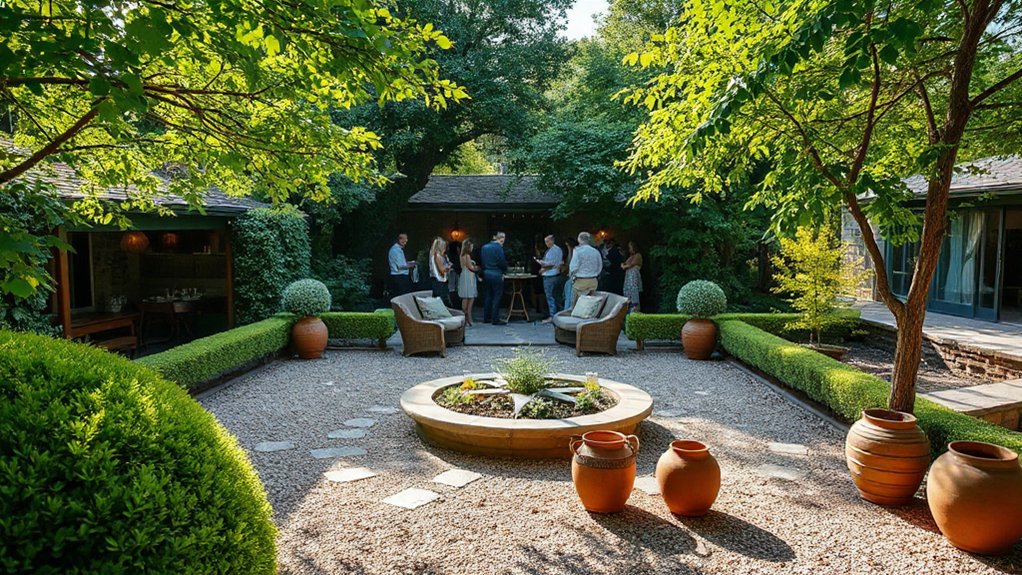
To map conversation zones and flow, start by outlining the paths guests will take from entry to seating, bar, and dining spots. You’ll design a circular or braided route that minimizes cross-traffic and preserves intimate moments. Position seating clusters near softly illuminated zones, letting conversation drift naturally between bites and drinks. Use sightlines to guide attention, not crowd it, with garden art as focal accents that cue pauses and conversations. Define transitions with subtle changes in surface texture or ground cover to signal shifts in activity. Plan plant selection to frame sightlines, offer fragrance, and soften hard edges without obstructing routes. Keep clear access to serving areas and exits, and test the rhythm with a dry run for comfort and flow.
Choose Weatherproof, Low-Maintenance Essentials
When you pick weatherproof basics, you’re investing in meals that last beyond the season and gatherings that stay stylish year-round. Choose low-maintenance gear that handles sun, rain, and stains with minimal fuss so you can focus on the moment, not the upkeep. Together, these essentials set a reliable, inviting backdrop for effortless entertaining.
Weatherproof Essentials
Weatherproof, low-maintenance essentials are the backbone of a garden designed for entertaining: you want spaces that look great year-round with minimal effort. Choose materials that resist weather, fading, and moisture, so upkeep stays simple. Opt for durable finishes, powder-coated metal, and weather-treated woods that age gracefully. Plan zones that remain functional in drizzle or sun, with versatile seating and easy-clean surfaces. When selecting garden furniture, prioritize modular pieces you can rearrange for gatherings without hassle. Include shading strategies that double as shelter, minimizing sun glare and wind exposure. For comfort after sundown, consider outdoor heating that’s efficient, safe, and discreet, so guests linger longer. Clean lines and cohesive color palettes keep the space polished, practical, and inviting.
Low-Maintenance Gear
Kitchens of the garden? You want gear that performs under sun, rain, and heat without nagging maintenance. Choose weatherproof basics that stay stylish and sane. A compact, stainless steel grill station with a sealed cover handles outdoor cooking without rust or fuss, while a magnetic tool rack keeps down clutter. Opt for stackable, weatherproof seating that resists fading and cleans in a breeze. Durable planters and trellises, finished with UV coats, cut upkeep while framing conversation zones. Add a water feature pump that’s serviceable but low-effort, so you don’t chase clogs. Let garden art provide focal points, not maintenance reminders. With this setup, entertaining stays effortless, and your space remains ready for last-minute gatherings.
Create Welcoming Outdoor Dining
Create a welcoming outdoor dining space starts with a clear, inviting entry that draws guests toward the table. Align the al fresco flow so paths and seating feel cohesive, from the door to the dining area. Use thoughtful details—lighting, seating, and shade—that set a practical, stylish tone for lingering conversations.
Welcoming Entryways
A welcoming entry sets the tone for outdoor dining, so start with a clear path, inviting lighting, and a compact, functional vignette—think a small console, a few potted herbs, and seating that invites conversation. You’ll create instant hospitality by pairing entrance decoration with purposeful scale: a low, durable surface for keys and phones, a chair or bench, and a subtle rug that defines the welcome zone. Choose walkway materials that deter moisture and glare while guiding guests naturally toward the dining space. Use lighting at eye level along the route to cast warmth without glare. Keep clutter minimal; let greenery frame the entry without obstructing the view. The result: an approachable, stylish threshold that signals comfortable, intimate gatherings.
Al Fresco Flow
Ever wonder how to make outdoor dining feel effortless and inviting? You’ll craft a seamless flow from house to table by zoning for function and comfort. Place a sturdy dining surface beneath a shade structure or trees, so guests stay cool without fuss. Build sightlines with a simple, cohesive palette—think natural textures, woven seating, and soft lighting at dusk. Integrate outdoor art as focal points near the dining zone to spark conversation, not distraction. Use seasonal decor to mark changes in weather and occasions, swapping textiles or centerpieces as needed. Keep movement clear: a dedicated service area, a nearby drink station, and easy access to restrooms. With thoughtful layout and tasteful details, the al fresco flow feels natural and inviting.
Design a Cozy Seating Nook for Any Gathering
Designing a cozy seating nook for any gathering creates an inviting pulse in your outdoor or indoor space. You’ll craft a compact, conversation-friendly retreat that feels effortless and chic. Choose a focal point, like a Cozy fire pits or a low-profile fireplace, so energy stays centered. Layer textures and color with decorative accents that reflect your style without clutter.
1) Center a comfortable seating layout that encourages eye contact and easy conversation
2) Use durable, weather-friendly materials to keep the nook welcoming year-round
3) Integrate storage for blankets and cushions to stay neat
4) Mix lighting and candles for ambiance without overpowering the scene
Keep the setup simple, stylish, and functional, so every gathering feels curated and cozy.
Plan Lighting for All-Season Use
What makes lighting truly adaptable is planning for every season right from the start. You’ll design zones that glow differently as days lengthen or shorten, so entertaining never pauses. Start with warm, ambient porch and path lighting, then layer task and accent LEDs to highlight seating, garden art, and focal plants. Choose dimmable fixtures and a weatherproof rating suitable for all climates, plus smart controls that adjust brightness based on sunset times. Balance function with style: sleek metal, soft glass, and subtle color temperatures that flatter flora and guests. Consider wildlife habitat needs by avoiding harsh, blue-heavy light late at night and spacing fixtures to minimize glare. A thoughtful scheme keeps conversations flowing, and garden art shines, season after season.
Balance Sightlines, Sound, and Privacy

Balancing sightlines, sound, and privacy starts with a clear layout that welcomes guests while screening mantener unwanted views. You design zones so conversations stay intimate, yet the garden never feels closed off. Use hedges, screens, and layered plantings to frame vistas while absorbing noise with soft surfaces and water features. Consider Cultural influences in plant selection and seating arrangements to reflect your guests’ comfort rituals, and plan Seasonal adjustments so color and fragrance shift through the year.
- Align seating to sightlines for natural conversation
- Layer textures to dampen noise and add privacy
- Use culturally resonant accents without overwhelming the space
- Schedule seasonal changes in plants and lighting for year-round balance
Build Pathways Between Entertaining Zones
You’ll map clear path flow so guests move naturally between entertaining zones. Connect each area with deliberate sightlines and subtle shifts that feel seamless rather than choreographed. Prioritize intuitive zone connection points, keeping traffic smooth without interrupting the garden’s atmosphere.
Clear Path Flow
Clear path flow guides guests smoothly from one entertaining zone to the next, minimizing trip hazards and wait times. You design with sightlines, turning radii, and purposeful width, so queues and mingling feel effortless. Path choices influence mood: stone for formality, gravel for casual chats, or a permeable mix that hides clutter. Keep garden ornamentation and a water feature as focal cues along routes to guide attention without crowding edges. Material contrast brightens corridors and reduces missteps, especially at dusk. Plan gentle grade changes to avoid stumbles, and tuck seating beyond sightlines to invite exploration.
- Prioritize equal footing for high-traffic routes.
- Use lighting that highlights edges and sculpture.
- Create clear pauses at shading corners.
- Connect zones with low-maintenance pathways.
Zone Connection Points
Connecting entertaining zones means stitching pathways so guests flow without thinking about logistics. Zone connection points anchor these journeys, shaping how you move from dining to lounging to games without missteps. Use subtle sightlines and consistent materials—gravel, pavers, or pressed concrete—to guide while staying cohesive with your garden art. Elevate passages with seating nooks at shifts in direction, creating pauses that feel deliberate rather than accidental. Consider sight, sound, and scent: a soft fountain near a planting screen or fragrant herbs along a corridor invites lingering. Pest control should be integrated discreetly—hedges trimmed to deter pests, planters elevated for air circulation. Keep links direct but varied, balancing enclosure with openness for a polished, guest-friendly flow.
Plant for Year-Round Color and Texture
A year-round garden stays vibrant if you choose plants that offer color and texture across seasons. You’ll mix blooms, berries, and foliage so your entertaining spaces glow from spring sunsets to winter lights, without gaps in interest. Focus on texture rich foliage and thoughtful Seasonal flower combinations to keep motion and depth throughout the year. Plan with height and contrast in mind, so borders read as a living, dynamic backdrop for guests.
- Pair feathered grasses with glossy evergreen leaves for year-long structure
- Use seasonal bloom sequences to guarantee continuous color
- Layer color temperatures (cool tones by water, warm near seating)
- Introduce textured foliage near pathways for tactile interest
Weatherproof Storage and Quick-Clean Surfaces
Weatherproof storage and quick-clean surfaces are your garden’s best friends when you’re entertaining. You’ll keep cords, cushions, and tools tucked away in weatherproof bins or cabinets, so guests move freely without tripping or leaning on damp corners. Choose benches with sealed tops and stainless hardware, then pair them with wipe-clean tabletops for speedy service. For surfaces, opt for non-stain finishes and hidden drains that handle spills effortlessly. Integrate garden art and seasonal blooms in planters that double as décor and storage lids, crafting functional focal points. Keep a dedicated outdoor cart stocked with napkins, sanitizer, and a compact broom kit, so cleanup stays swift. Prioritize durable, low-maintenance materials to sustain style through rain, sun, and everyday gatherings.
Budget-Friendly Garden Layouts for Entertaining

If you’re entertaining on a budget, smartly arranged zones can elevate any yard without breaking the bank. A practical layout guides guests through conversation-friendly nooks, dining corners, and a prep area, using inexpensive foundations like gravel paths, deck planks, or pavers. Add garden art and floral arrangements to create focal points without crowding space. Keep sightlines open, but define edges with simple borders and lighting that doubles as security.
- Zone by activity: cooking, dining, lounging, and chill-out corners
- Use multipurpose furniture to save space and cost
- Layer lighting for mood and safety
- Integrate seasonal plantings and cut-flower prompts for dynamic color
Frequently Asked Questions
How Can I Mute Outdoor Noise From Nearby Streets?
Yes, you can mute outdoor noise by installing sound barriers like lush hedges or walls, and use water features to aid noise reduction; choose materials that absorb sound, and position seating away from streets for practical, stylish, insightful comfort.
What Are the Best Portable Cooking Options Outdoors?
Truth is, portable grills and outdoor pizza ovens are your best bets. You’ll cook fast, clean, and stylishly, enjoying flexibility and flavor outdoors. Grab a portable grill for searing, or an outdoor pizza oven for artisanal perfection.
How Do I Accommodate Wheelchair Access in Layouts?
You guarantee accessible pathways and ramp integration by widening main routes, smoothing surfaces, and adding gentle slopes. You place seating near shade and social hubs, maintain clear sightlines, and use textured pavers for stylish, practical, inclusive gatherings.
Which Plants Deter Pests Without Chemicals?
Natural repellents and pest resistant plants help you deter pests without chemicals. You’ll notice fewer invasions as you prune, mulch, and rotate beds; you stay practical and stylish, guarding your garden with smart, eco-friendly choices.
How Can I Create Flexible Space for Larger Groups?
Aim for flexible spaces by using multi purpose furniture and modular layouts that you can reconfigure quickly for larger groups. You’ll gain practical, stylish zones, easy cleanups, and inviting flow that adapts to any gathering.
Conclusion
Plan with purpose, then refine with ease. Map zones, flow, and pathways; choose weatherproof, low-maintenance essentials; create welcoming dining and a cozy seating nook; plan lighting for all seasons; plant for color and texture year-round; provide weatherproof storage and quick-clean surfaces; and craft budget-friendly layouts that maximize entertaining potential. Prioritize comfort, practicality, and style. Maintain flexibility, consider guests’ needs, and let your garden evolve gracefully. Design for gatherings, design for memories, design for effortless entertaining.
About the Author


