

Is your garden ready for the next heat wave? Start with a quick readiness check: assess baseline soil health, texture, and drainage; test moisture at root depth and adjust irrigation to prevent runoff or drought stress. Identify cool microclimates and place heat-sensitive plants where they’ll benefit from shade or airflow. Choose heat-tolerant varieties and mulch 2–4 inches to conserve moisture. For a confident, proactive plan, keep going and you’ll uncover actionable steps you can implement today.
Key Takeaways
- Assess soil health and moisture: test pH/nutrients, monitor root-zone moisture, and adjust irrigation to prevent runoff or drought stress.
- Identify and protect heat-sensitive areas: map microclimates, provide shade, and position heat-tolerant plants where needed.
- Establish a cooling mulch regime: apply 2–4 inches of organic mulch to conserve moisture and insulate soil.
- Implement irrigation strategy: deep, dawn watering with sensors or readings to maintain optimal root-zone moisture.
- Monitor for heat stress signs: look for wilting, leaf scorch, slowed growth, and prune/damage control promptly.
Why Heat Stress Matters in Your Garden

Heat stress can seriously reduce plant growth and yield, so recognizing it early is essential. When temperatures rise, your plants divert energy to cooling and preservation, slowing photosynthesis and fruit set. You’ll notice wilting where soil moisture isn’t the sole cause, leaf curling, and accelerated respiration that drains carbohydrates. Heat stress can amplify soil moisture loss, reduce pollination success, and invite stress-related diseases, undermining overall performance. To protect garden resilience, monitor daytime highs, afternoon airflow, and sun exposure patterns, then adjust spacing, mulch, and irrigation timing accordingly. Implement consistent irrigation at dawn or dusk, use shade cloth for delicate crops, and select heat-tolerant varieties. By acting proactively, you maintain steady growth, maintain yields, and preserve garden resilience through peak heat periods.
Assessing Baseline Soil Health Before the Heat
Before the heat arrives, establish a clear picture of your soil’s baseline health. You’ll base decisions on facts, not guesses, so start with a quick inventory of structure, texture, and organic matter. Measure baseline nutrients and pH, and note drainage and compaction. This groundwork informs how you’ll maintain soil fertility during stress and where to apply organic amendments for resilience.
- Test soil pH and nutrient levels now, then track changes through the season
- Assess texture, structure, and compaction to predict water movement
- Observe organic matter content and microbial activity as health indicators
- Align amendments with findings, prioritizing soil fertility and balance
This proactive check keeps your bed ready for heat, guiding precise, effective actions.
Gauge Soil Moisture for Heat Stress
How closely should you monitor soil moisture during heat stress? You should track it daily, focusing on critical rooting zones rather than the entire bed. Begin with a baseline reading at root depth, then compare against plant demand and weather forecasts. Use soil testing to establish acceptable moisture ranges for your crops and adjust irrigation to maintain that window. When readings fall below the target, initiate a deeper, slower irrigation to reach the root zone without causing runoff. If readings stay high, reduce watering frequency and promote drainage to prevent anaerobic health issues. Rely on Moisture sensors for ongoing feedback and automate where possible to avoid guesswork. Pair soil testing results with plant cues to fine‑tune irrigation reliably.
Microclimates and Shade: Finding Cool Spots

Microclimates and shade can dramatically cut heat stress, so identify cool spots in your garden by observing sun patterns throughout the day and noting where wind and existing structures alter temperature. You’ll map these zones through microclimate mapping, then plan shade placement to protect heat-sensitive areas. Use walls, fences, and mature trees to create lasting cool pockets, especially near seating or delicate plants. Test different times of day to confirm consistency, not just morning shadows. Prioritize spaces that stay cooler longest and dry out slowly, reducing irrigation needs. Integrate temporary shade during peak heat with breathable fabrics or shade sails for flexibility. Track changes seasonally and adjust accordingly for ongoing protection.
- Observe sun angles across the day
- Map cool zones with microclimate mapping
- Position strategic shade placement
- Reassess with seasonal shifts
Choosing Heat-Tolerant Plants for Your Beds
After identifying cooler microclimates in your garden, you’ll want sturdy, heat-resilient options that thrive in those conditions. Begin with proven, drought-tolerant perennials and sturdy annuals that tolerate high temps and direct sun. Prioritize vigor over novelty; choose plants with strong, deep root systems and compact growth to reduce stress. In Plant selection, favor varieties labeled heat-tolerant or Mediterranean, and confirm their performance in similar climates. Factor pest resistance into your choices; select species with natural deterrents or fewer common pests to minimize interventions. Space wisely to improve airflow and reduce heat buildup between specimens. Group plants by water needs to simplify irrigation, then tailor schedules to each bed’s sun exposure. Monitor regularly, replace stressed individuals promptly, and document outcomes for future rotations.
Mulching for Moisture Retention and Soil Cooling
Mulching is your first line of defense against heat and moisture loss. Proper mulch moderates soil temperature, reduces evaporation, and protects roots during extreme days. Choose organic materials, apply a 2–3 inch layer, and keep mulch away from stems to prevent rot. Mulching also supports soil structure and microbial activity, especially when you incorporate organic amendments over time. For best results, replenish annually and monitor soil moisture between deep watering. Consider coarser textures to reduce crusting and improve aeration, while avoiding compacted layers that impede soil aeration. Pair mulching with targeted soil testing to adjust amendments and maintain nutrient balance.
- Retain moisture with a 2–3 inch mulch depth
- Use organic amendments to feed soil life
- Keep mulch clear of stems and crowns
- Inspect and refresh after heavy rain and heat events
Smart Irrigation for Hot Days
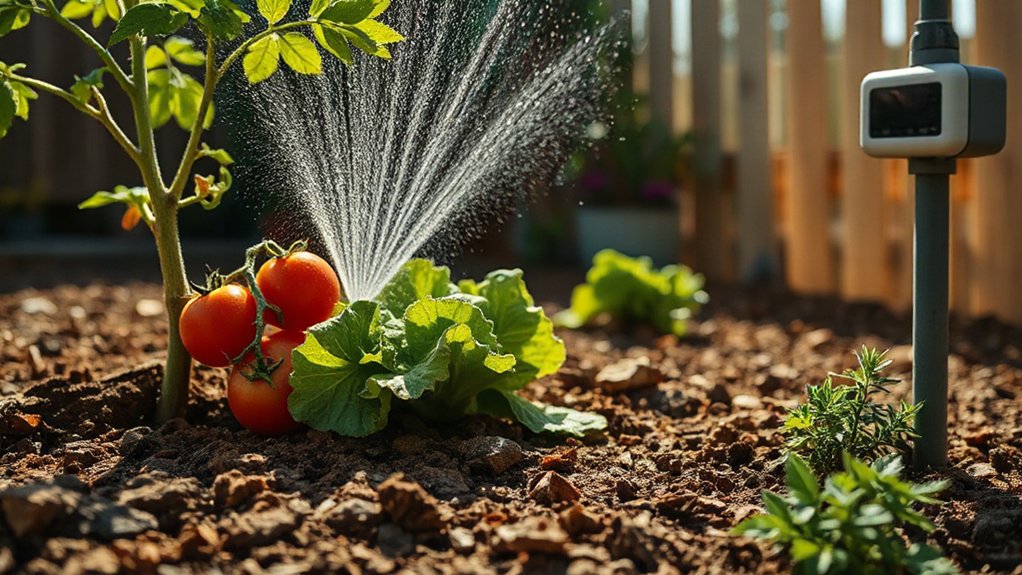
Smart irrigation is essential on hot days, delivering water efficiently where it matters most. You configure systems to target root zones, avoiding foliage wetting that encourages disease. Use drip lines or soaker hoses for precise delivery, paired with soil moisture sensors to prevent overwatering. Set irrigation to early morning or late evening to minimize evaporation and align with plant uptake. Schedule based on weather, soil type, and plant needs, adjusting for heat waves as they occur. Maintain emitters and filters to prevent clogging from mineral deposits. Monitor garden pests that exploit stressed plants, and address issues quickly to preserve vigor. Integrate composting techniques nearby to improve soil structure, then reduce water demand by using mulch in exposed beds.
Timing Chores to Beat the Sun
Schedule chores before peak sun to cut heat exposure and water loss. Hydrate plants as you go, mulch to retain moisture, and move tasks to early morning or late afternoon for precision and efficiency. This approach keeps roots cool and minimizes stress, so you get healthier growth with less effort.
Schedule Before Peak Sun
To beat the heat, start chores before the sun climbs high: water the garden, mow, and tidy beds while costs and evaporation stay low. Schedule tasks to align with cool morning hours, then pause as heat builds. This cadence minimizes stress on plants and maximizes efficiency for the day ahead. Use this window to apply essential practices and protect your investment.
- Prioritize watering early, targeting root zones rather than foliage
- Apply Garden fertilizers promptly after a light dew to improve uptake
- Perform light pest checks and implement Pest control measures as needed
- Clip and tidy edges, boosting air circulation and reducing disease risk
Adopt this discipline to maintain steady growth, conserve water, and support resilient, productive beds.
Hydrate, Mulch, Move Early
Hydration, mulch, and movement should come early when heat starts to rise. You’ll conserve water, protect roots, and keep plants healthy by acting before the sun dominates. Hydrate deeply in the morning, targeting container soil and root zones to prevent midday stress. Mulch with a breathable layer—2 to 3 inches—so moisture stays put and soil stays cool, reducing watering frequency. Move tasks to dawn or late afternoon; shift sensitive species to shade or near reflective garden decor to minimize exposure. When temps spike, avoid pruning; pest control is easier when leaves stay robust, not stressed. Plan landscapes with drought-tolerant choices, and monitor soil moisture daily. Precise scheduling improves resilience and preserves garden decor while easing heat-wave pressure.
Signs of Heat Stress and Remedies
Heat stress signs show up as wilting leaves, pale color, and slowed growth, so monitor plants closely during peak heat. If you spot stress, apply remedies like gentle irrigation, shade cloth, and mulch to stabilize soil moisture, then adjust feeding and spacing to reduce strain. Preventive care—consistent watering, mulching, and brief, early-day chores—keeps your garden resilient and ready for heat waves.
Signs Of Heat Stress
Heat stress in the garden can show up quickly, so learn to spot the signs early and act fast. You’ll notice wilting leaves, pale or scorched patches, brittle stems, and slower growth. Check for leaf curling, edge burn, and drooping despite adequate watering. Stunted fruit set and uneven ripening also signal trouble. If you spot pests, stress often compounds damage, so inspect both foliage and stems. Consistent moisture helps, but overwatering ghosts roots, so aim even soil moisture and good drainage. Prioritize plant pruning to remove heat-damaged tissue and improve airflow. Practice pest prevention to reduce additional stress. Quick responses protect your core crops and ornamentals, preserving vigor during heat waves.
- Wilting, leaf scorch, and curling
- Stunted growth and uneven ripening
- Damaged fruit set indicators
- Pest prevention and pruning priorities
Remedies For Heat Strain
When heat stress hits, you can act fast to recover stressed plants by applying targeted remedies that address both symptoms and underlying causes. Start with immediate relief: water deeply at soil level to rehydrate roots, avoiding wetting foliage if leaf burn is present. Use mulch to conserve moisture and maintain even soil temperature. Inspect for garden pests that exploit weakness and treat promptly, but avoid broad-spectrum sprays when possible; opt for targeted, compatible products. Prune only as needed to remove clearly damaged tissue, promoting airflow and new growth, but don’t over-prune and stress plants further. After pruning, shield exposed parts with light shading during peak sun. Monitor closely for rebound signs, adjusting irrigation and feeding to support recovery without encouraging new stress. If symptoms persist, reassess cultural practices.
Preventive Care Tips
To prevent heat damage before it starts, monitor plants daily for subtle signs of stress and act quickly with targeted adjustments. You’ll spot heat stress indicators like drooping leaves, pale color, or slowed growth, then intervene with precise remedies. Prioritize preventative care: proper irrigation, mulching, and timely pruning to reduce water loss and improve airflow. Garden pests can worsen heat stress, so inspect undersides of leaves and treat early with spot applications or beneficial insects. Remember plant pruning to remove damaged tissue, resize crowded canopies, and promote resilience. Maintain consistent schedules, avoid overwatering, and protect roots with mulch. Use shade cloth during peak sun, and monitor soil temperature to guide watering.
- Monitor daily for signs of stress
- Prune selectively to improve airflow
- Watch for garden pests and treat early
- Use mulch and shade during peak sun
Ground Covers and Mulch That Cool the Soil
Ground covers and mulch can substantially lower soil temperatures and suppress weeds during a heat wave. You’ll benefit from choosing dense, drought-tolerant ground covers that shade roots without choking decorative plants. Ground cover strategies should emphasize spreading quickly, coordinating with your existing planting scheme, and tolerating local conditions. Consider live mulches or low-growing perennials that restrict weed emergence while maintaining airflow to the soil. Mulch types matter: opt for thick, organic mulches (composted bark, wood chips, straw) to insulate soil, retain moisture, and gradually enrich the soil. Apply 2 to 4 inches, avoiding mulch piling against stems. Replenish annually and keep edges neat to prevent pests. With deliberate selection and maintenance, you’ll sustain cooler soil, conserve moisture, and improve plant resilience during heat waves.
Quick At-a-Glance Heat-Wave Readiness Checklist

You’ll start with quick checks on hydration and mulching to keep soil moisture steady without stressing plants. Next, secure shade and airflow to prevent overheating, while tuning soil moisture monitoring for timely adjustments. Keep these core points—hydration and mulching, shade and ventilation, and soil moisture checks—top of mind as you prep for the heat wave.
Hydration and Mulching
Hydration and mulching are your frontline defenses during a heat wave. Proper water rituals and a smart mulch layer keep roots cool, reduce evaporation, and support steady growth. You’ll prioritize deep, infrequent watering early in the day and target root zones to avoid leaf burn. Mulch acts as a blanket, moderating soil temperature and suppressing weeds that compete for moisture. Include companion planting to stabilize microclimates and reinforce pest control without chemical upshots. Maintain moisture sensing and adjust applications as conditions shift.
- Water deeply at dawn, focusing on root zones
- Apply 2–3 inches of organic mulch and replenish as needed
- Use companion planting to diversify airflow and resilience
- Inspect soil moisture and adjust irrigation to curb pest-friendly hotspots
Shade and Ventilation
Shade and ventilation are your quick-draw tools to cool the garden fast during a heat wave. You’ll deploy shade structures, strategic plant spacing, and vented enclosures to reduce heat buildup without stressing plants. Position tall, heat-tolerant specimens to shade cooler ones; use shade cloths on hot afternoons where full sun persists. Guarantee air moves: rotate crops to prevent stagnant pockets, install passive vents near plant canopies, and create cross-ventilation through garden rooms. Use reflective mulches and light-colored surfaces to deflect radiant heat. For aesthetics, integrate garden art that guides airflow and visually marks shade zones. Monitor pest control needs without blocking vents or shade, keeping airflow clean. Maintain boundaries to avoid heat-trapping enclosures while preserving access for routine care.
Soil Moisture Monitoring
Is your soil ready for a heat wave? You’ll verify moisture patterns now, not later. Track soil water content at root depth (6–8 inches) to prevent drought stress and root damage. Use a reliable meter or simple spring-stake test to gauge consistency, not just surface dampness. Aim for even moisture, not soggy pockets, to maintain air exchange and nutrient uptake. Plan adjustments with soil aeration and compost enrichment to stabilize structure and water-holding capacity.
- Monitor at multiple spots for representative readings
- Water deeply, less often, to encourage deep roots
- Improve soil aeration to prevent compaction
- Incorporate compost enrichment to boost moisture retention and microbial activity
Frequently Asked Questions
How Can I Tell if My Microclimate Needs Extra Shade?
Yes, you need a microclimate assessment to gauge shade needs. Observe sun exposure, heat buildup, and soil moisture; compare to nearby shaded areas. Measure peak afternoon temps, note leaf scorch, and define your shade requirements precisely.
Are Native Plants More Heat-Tolerant Than Ornamentals?
Native plants tend to be more heat-tolerant than ornamentals, with native resilience and practical precision guiding your choice; rely on their hardy habits, while noting ornamental adaptability may still suit specific spots and seasonal needs.
What Tools Best Measure Soil Salinity Affecting Heat Stress?
You should use a soil EC meter and portable TDS tester to gauge salinity influencing heat stress, then perform soil testing. For salinity management, adjust irrigation, leach salts, and monitor regularly with practical, precise steps.
Can Guest Plants Survive Drought Without Daily Watering?
Yes, some guest plants can survive drought without daily watering. Try drought resistant varieties and water conservation techniques; you’ll dramatically reduce irrigation needs while keeping vigor. Monitor soil moisture, mulch deeply, and stagger plantings for resilience and consistency.
Do Air Humidity Levels Impact Heat Stress in Containers?
Yes, humidity levels profoundly influence heat stress in containers; higher humidity reduces evaporation cooling, while lower humidity worsens stress. Monitor daily, adjust watering, and group pots together to stabilize microclimates, using shade and airflow to mitigate heat impact.
Conclusion
You’re ready for the next heat wave if you’ve checked soil health, moisture, and microclimates, and chosen heat-tolerant plants. Keep shade handy, time chores to cooler moments, and mulch to lock in moisture. Watch for signs of heat stress and respond quickly with water, mulch, and tender care. With these steps, your garden will thrive under extreme sun—like a well-armored oasis in a desert, unshakable and cool. Stay vigilant, stay proactive, stay productive.
About the Author


