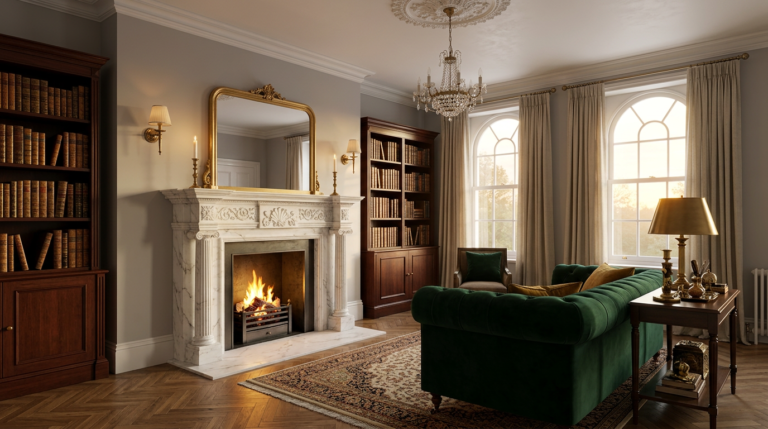
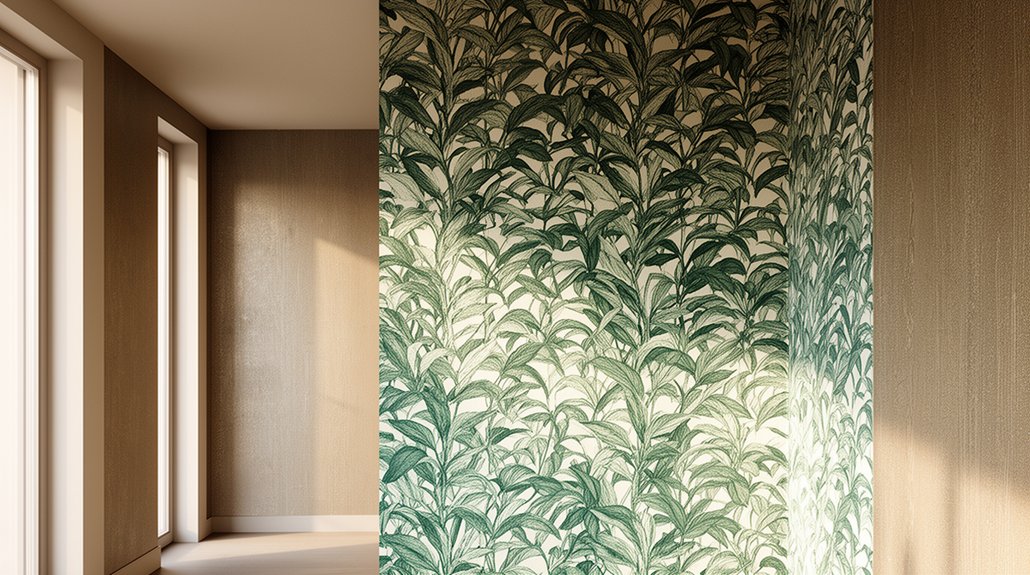
Choose patterns by room function and lighting to set mood and practicality. For living spaces, favor balanced repeats in calming colors; kitchens and baths benefit from small-scale, high-contrast patterns with good lighting. Use softer motifs in bedrooms to reduce glare, and test historical patterns on solid backdrops in actual light. Pick wallpaper weight and finish wisely—matte hides flaws, satin adds dimension, textured papers add depth. This foundation supports bold decor and easy maintenance for lasting transformation; you’ll uncover more tips next.
Key Takeaways
- Choose pattern styles by room function and lighting to set mood while maintaining practicality and balance.
- Select wallpaper weight and finish to fit traffic, lighting, and ease of maintenance, using matte for calm and satin for dimension.
- Balance bold patterns with solid furniture and cohesive colors drawn from the wallpaper to avoid visual clashes.
- Install carefully: prepare walls, align strips, smooth from center outward, and address repairs and cleanup promptly.
- Plan room zones with focal walls, cozy nooks, and durable backdrops; test samples in different light to confirm impact.
Choose Pattern Styles for Your Room: What Works Before You Buy

Before you buy, narrow down pattern styles by room function and lighting. You’ll choose patterns that enhance mood and practicality, not just looks. For living spaces, favor balanced repeats and calming color psychology to avoid visual fatigue. In kitchens and baths, keep scale smaller and patterns high-contrast only where lighting is ample. Bedrooms benefit from softer, flowing motifs that reduce glare, reinforcing restful vibes. Consider historical patterns for character, then modernize with a solid backdrop to keep the room anchored. A bold motif can act as a focal wall, while subtle repeats expand a compact area. Always test samples in your actual light, at different times of day, so the pattern reads true. Balance motif with orientation, scale, and furniture style to achieve timeless cohesion.
Pick the Right Wallpaper Weight and Finish (Matte, Satin, or Textured)
Choosing the right wallpaper weight and finish matters for durability, appearance, and ease of maintenance, so pick a level that fits your room’s traffic and lighting. Weight affects durability and handling—heavier options feel premium and resist scuffs in busy hallways, while lighter papers suit low-traffic spaces. Matte finishes hide flaws and read calm, satin adds subtle sheen for dimension, and textured papers deliver tactile depth but require careful cleaning. Match the finish to lighting: dim rooms benefit from slightly brighter sheens; bright rooms tolerate matte more easily. Before you hang, prepare with wallpaper adhesive that suits your chosen weight, then press firmly from center outward. Plan for removal later by scoring and soaking if you need wallpaper removal. This minimizes damage during updates and simplifies future refreshes.
Balance Bold Wallpaper With Your Furniture and Decor
Bold wallpaper can set the tone, but it needs partners in the room that let it shine instead of compete. To balance it, start with a cohesive palette across furniture and decor. Choose upholstery and rugs in solid tones drawn from the wallpaper’s dominant color or pick a complementary hue with subtle contrast. Keep patterns subdued in large furniture so the wall remains the focus. When you mix patterns, aim for scale variety and shared colors to avoid visual clash—this is color coordination in action. Introduce texture with fabrics, cushions, and natural materials to add depth without competing patterns. Finally, test samples in natural light, adjust as needed, and maintain a calm, uncluttered backdrop to preserve bold wallpaper’s impact.
Install and Maintain Wallpaper: Step-by-Step Tips and Hacks
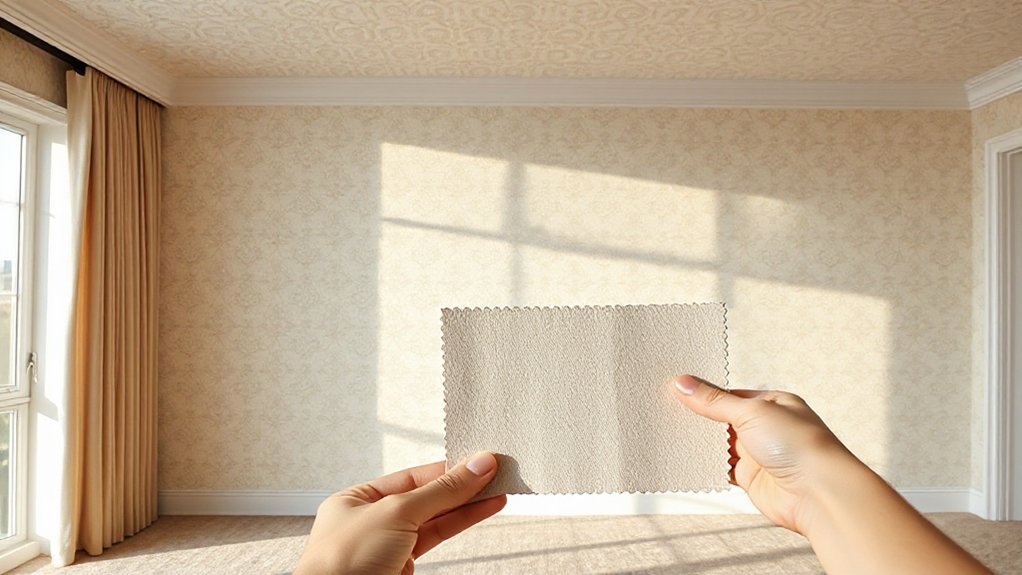
To install wallpaper efficiently, start with clean, dry walls and accurate measurements. First, prep the surface: remove old paper, repair cracks, and sand rough patches. This is wallpaper prepping that prevents bubbles and edge lift later. Mix paste or prepare adhesive per instructions, then align your first strip with a plumb line to ensure verticals stay true. Apply adhesive evenly, avoiding excess that could squeeze through seams. Smooth from center outward with a wallpaper brush or smoother, working air pockets toward the edges. Set seams with light pressure to avoid tearing. For maintenance, wipe promptly with a damp cloth to prevent staining, and address any lifted edges as soon as you notice them. If you must redo a panel, plan quick, clean removal and reseating.
Room by Room: Focal Walls, Cozy Nooks, and Timeless Backdrops
As you plan wallpaper for each room, start by identifying a focal wall, inviting nooks, and timeless backdrops that anchor the space. Choose a bold pattern or texture for the focal wall, then offset with calmer walls to create balance. In cozy nooks, select smaller repeats and softer colors to enhance intimacy without overpowering the area. Timeless backdrops should offer durability and easy maintenance, serving as a steady base for furniture and art. Use decorative borders sparingly to frame features or delineate zones, ensuring they enhance rather than clutter. Prioritize color coordination across walls, trim, and accents to unify the look. Consider lighting and furniture scale to preserve harmony. Measure accurately, order samples, and test under different light to confirm your room’s rhythm.
Frequently Asked Questions
How Long Does Wallpaper Typically Last Before Replacement?
Wallpaper typically lasts 5–15 years, depending on quality, placement, and maintenance. You’ll maximize wallpaper durability by choosing vinyl or fabric-backed options and following maintenance tips, such as gentle cleaning and avoiding excess moisture. Regular inspections help prevent early failure.
Can Wallpaper Be Reused After Removal Without Damage?
Yes, you can reuse wallpaper if the backing remains intact and clean. Symbolically, it survives flaws, like scars on memory. While removing wallpaper, handle gently; wallpaper removal may damage patterns. Reusable wallpaper works best with careful storage and intact adhesive.
Is Wallpaper Suitable for Rental or Lease Restrictions?
Yes, wallpaper can work in rentals with approval; choose temporary solutions and damage prevention measures. You’ll avoid penalties by using removable options, test patches, and careful removal, ensuring walls stay intact and you meet landlord requirements.
What Are Cost-Effective Alternatives to Traditional Wallpaper?
Temporary solutions and DIY options save you money, you know. Consider removable wallpaper, wall decals, fabric panels, or paintable textures; they’re fast, reversible, and rent-friendly. You’ll achieve stylish results without long-term commitment or high costs.
Do Patterns Affect Room Acoustics or Light Reflection?
Patterns influence light and sound: they subtly scatter light, affecting diffusion, and textured surfaces improve sound absorption. You’ll notice better room balance as sound absorption and light diffusion shift with bold or intricate patterns.
Conclusion
Ready to transform your space? Use wallpaper to set the mood you want—bold for drama, subtle for serenity, textures for depth. Choose patterns that echo your furniture, pick the right weight and finish, and balance wall visuals with existing decor. Install with confidence, maintain with simple care, and tweak room by room. Remember: wallpaper isn’t just a wall cover—it’s a design choice you live with. Like a tailor-made costume, it makes the room you, unmistakably.
About the Author