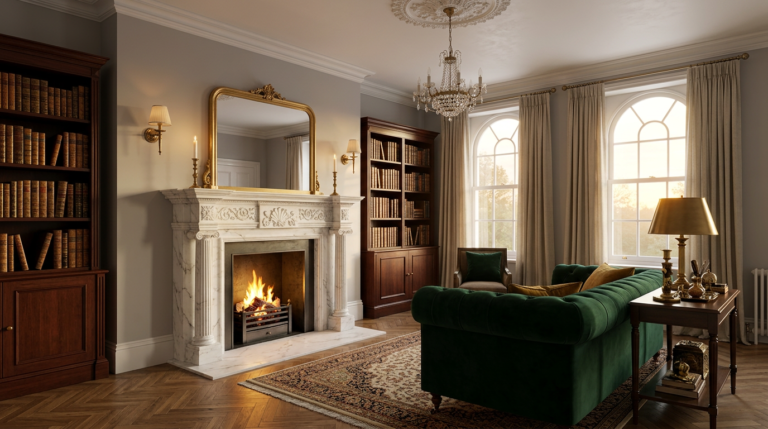

To make a room feel bigger, place mirrors where they bounce natural light and reflect depth. Use large or tall mirrors opposite windows to double brightness, or pair smaller pieces for a sense of extended surfaces. Hang mirrors at eye level and vary shapes to suit the space—trectangular for height, round for softness. Keep frames slim or matching your furniture, and avoid showing clutter in reflections. With thoughtful placement and lighting, you’ll uncover more space—and there’s more to learn ahead.
Key Takeaways
- Place large mirrors opposite windows to reflect natural light and double the perceived space.
- Use tall, slim mirrors on narrow walls to elongate the room and create a sense of height.
- Hang mirrors at eye level and angle slightly to maximize light bounce without glare.
- Mix mirror shapes and frames to add depth while keeping a cohesive color scheme.
- Combine ambient and task lighting with mirrors to enhance brightness and perceived space.
Make a Small Space Feel Bigger: The Mirror Solution

Mirrors can instantly enlarge a small room by doubling its perceived space. You’ll gain depth and brightness by thoughtful mirror placement, avoiding clutter that traps the eye. Position a large mirror opposite a window to reflect natural light, or place two smaller mirrors to create the illusion of a larger surface area. Keep frames slim and simple to reduce visual weight, or choose decorative accents that echo your furniture’s finish for cohesive cohesion. When you hang mirrors, align their tops with eye level for practical viewing and to maximize light bounce. Use vertical mirrors to heighten ceilings in low rooms, and horizontal ones to widen a narrow wall. Prioritize purposeful placement over quantity; intentional mirrors deliver a cleaner, more expansive feel.
Assess Your Space: When to Use Mirrors for Light and Depth
When you place mirrors, start by targeting spaces with abundant natural light to amplify brightness without overpowering the room. Plan for depth by pairing mirrored surfaces with furniture that creates layered sightlines, so the space feels extended rather than busier. Consider the room’s flow and avoid reflections of clutter or distractions, ensuring light and depth reinforce calm, usable spaces.
Natural Light Amplification
Need more light, or do you want to fake it? Natural light amplification with mirrors hinges on placement and orientation. Position a large mirror opposite a window to bounce daylight deeper into the room, then test at different times of day for consistency. Aim for parallel alignment with the window edge to maximize reflected brightness without creating glare. In tight spaces, use a tall, narrow mirror to capture vertical light and visually raise ceilings. Light-colored frames reflect more, while glass edges minimize distractions. Maintain mirrors with routine mirror maintenance—clean glass, dust-free surfaces, and secure mounting to prevent shifting. Consider vintage mirror styles to add subtle glow without overpowering the light scheme. Use restraint to keep the space cohesive and bright.
Spatial Depth Planning
To plan spatial depth with mirrors, start by mapping how you move through the room and where natural light lands at different times of day. Observe sightlines from seating areas and entryways, noting gaps and walls that feel obstructed. Use this assessment to determine mirror placement that expands perceived distance without creating glare. Prioritize color coordination so reflections reinforce a cohesive scheme rather than clash; choose finishes and tones that complement adjacent surfaces. Focus on furniture placement that creates logical flow and avoids crowding, letting mirrored planes echo open space. Use vertical mirrors to draw the eye upward for added height, and consider angled panels to multiply depth subtly. Confirm mirrors align with architectural features for a balanced, refined look.
Choose the Right Size: How Big Should a Mirror Be in Your Room
For the right feel, start by sizing the mirror to the space and your furniture—larger isn’t always better, but it should balance with nearby pieces. Consider room proportion: mirrors that are proportional to your wall and treatments create a cleaner, more expansive look. Use these guidelines as a starting point to discuss how size affects perception and function, then adjust based on your room’s layout and light.
Mirror Size Guidelines
Choosing the right mirror size starts with the room’s dimensions and the purpose of the mirror. In practice, measure wall space and consider traffic flow before selecting dimensions. For narrow walls, opt for tall, slim mirrors to visually elongate the area without crowding. In tight spaces, a medium-width mirror can reflect more light without dominating the scene. In larger rooms, go bigger to create a focal point or balance furniture scales. Think about height: hang at eye level for seating areas, slightly higher over vanities, and lower above consoles if you want drama. Consider mirror placement carefully—center pieces above consoles or sofas, and use decorative accents to tie the mirror to the room’s palette and textures.
Room Proportion Tips
Room proportion starts with matching mirror size to how a room flows and feels. Start with scale: a large mirror in a small space can bounce light but may overwhelm; a tiny one won’t impact. Aim for a mirror about half the wall length or a third of the room width, depending on placement. Consider the distance to furniture and walls to avoid crowding. Color contrast matters: a frame or glass that contrasts with surrounding walls helps define depth, while a subtle frame smooths the progression. Think furniture arrangement first; position mirrors opposite sources of light or near reflective surfaces to maximize brightness. Testing angles before commit prevents misalignment. Use multiple smaller mirrors for rhythm, or a single statement piece for clarity.
Pick Shapes That Suit Each Room
When selecting shapes, tailor your choices to how the space flows and what you want to emphasize. In small rooms, opt for elongated or vertical formats to draw the eye upward. For open areas, use broader silhouettes to balance wide perspectives. Curvatures soften edges and create softness, while angular silhouettes amplify structure and clarity. Consider mirror materials and frame styles that echo your room’s character. Decorative shapes can reinforce focal points without clutter.
- Favor tall, rectangular mirrors to extend ceilings
- Choose round or oval forms for softer vibes
- Use rectangular grids for contemporary spaces
- Pair decorative frames with classic interiors
- Match mirror materials to furniture tones and metals
Place for Light: Position Techniques That Maximize Reflection
Strategically place light sources to maximize reflection without creating glare. You position lighting fixtures to bounce light across walls and mirrors, avoiding harsh hotspots. Place taller sources toward the back of the room to spread illumination evenly, and angle fixtures slightly downward to reduce direct glare on glass. Use a mix of ambient and task lights so reflections stay soft rather than sharp. Align light with focal points, such as a large mirror opposite a window, to double brightness without overwhelming the space. Choose color schemes that enhance glow—cool whites feel spacious, warm tones add coziness without dulling reflections. Keep fixtures slim and unobtrusive, balancing function with form. Narrow down options to maximize depth while preserving clarity and control.
Style Without Clutter: Pairing Mirrors With Decor

Pair mirrors with decor in a way that enhances the room without adding clutter. When you pair mirrors with decorative accents, keep surfaces clean and purposeful, so reflection amplifies rather than competes. Use color coordination to tie the mirror to existing pieces, selecting hues that echo upholstery or rugs. Choose a single focal point for decor near the mirror, avoiding overload.
- Pick one decorative accent color and repeat it through cushions, a vase, or a small sculpture
- Place mirrors to reflect a complementary accent piece, not every surface
- Balance metal or wood tones across the room for cohesive warmth
- Limit sizes; mix a large mirror with a few smaller accents
- Maintain negative space around the mirror to preserve airiness
This approach preserves polish while suggesting intentional style.
Create Depth: Frames, Borders, and Borderless Looks
Frames, borders, and borderless looks can dramatically alter perceived depth by shaping how light travels and how you perceive space. You’ll create dimension by selecting frame styles that reflect or mute definition, guiding the eye toward focal points and away from walls. Use thin, light-colored frames to reduce visual weight, or bold, dark frames to anchor far corners and maximize perceived height. For border designs, opt for minimal or softly curved edges to soften transitions, or adopt strong, crisp borders to declare geometry and create contrast. Borderless looks, achieved with frameless mirrors or hidden mounting, feel expansive and seamless, especially when paired with strategic lighting. Balance symmetry with deliberate asymmetry to avoid a static vibe while preserving coherence.
Avoid Pitfalls: Practical Tips for Glare, Maintenance, and Troubleshooting
Glare is a common hurdle when using mirrors to enlarge a room, but you can prevent most issues with simple setup tweaks. To curb glare, position mirrors away from direct light and use diffusers or curtains during bright days. For maintenance, establish a quick cleaning routine: wipe with a microfiber cloth, use a mild cleaner, and dry thoroughly to prevent streaks. If reflections annoy you, tilt or angle the mirror slightly for a softer bounce. Troubleshooting is faster when you track frequent trouble spots and adjust placement before finishing touches.
- Glare prevention strategies
- Regular mirror cleaning steps
- Angle adjustments for comfort
- Light source management
- Quick fixes for stubborn reflections
Frequently Asked Questions
How Do Mirrors Affect Room Acoustics in Small Spaces?
Mirrors affect room acoustics by creating acoustic reflection, which can brighten signals but also cause flutter and echoes in small spaces. They may cause sound amplification at certain frequencies, so place them thoughtfully and test before finalizing layouts.
Can Mirrors Increase Natural Light Without Windows?
Yes. A study shows reflective surfaces can boost natural light by up to 40%. You can use mirrors for light enhancement, placing them opposite windows and layering with translucent walls to brighten spaces effectively.
Do Mirrored Furniture Work as a Design Element?
Yes, mirrored furniture works as a design element, enhancing light and perception. Use it sparingly as decorative accents within Modern aesthetics, ensuring clean lines. It stays practical, polished, and coordinated, elevating space without overpowering the room.
Are Anti-Fog Mirrors Practical for Bathrooms?
Yes, anti-fog mirrors are practical for bathrooms. With anti fog technology, you’ll reduce bathroom condensation and enjoy clear views after hot showers, maintaining a polished space and fewer wipe-downs.
How Often Should I Clean Mirrors to Maintain Brightness?
Usually clean once weekly; if you use the bathroom often, you might shorten to every few days. Follow a steady cleaning schedule for spotless shine, and practice mirror maintenance to keep brightness and clarity consistently reliable.
Conclusion
Using mirrors to enlarge a space isn’t magic—it’s a practical trick you can apply today. You’ll light rooms, add perceived depth, and keep clutter down with well-placed pieces. Start small, test reflections, and adjust height for eye level. Pair mirrors with light colors and clean lines to stay polished. Don’t overdo it; you don’t want to feel like you’re living in a funhouse. With thoughtful placement, you’ll see real impact—brighten, balance, and breathe easier, a win-win.
About the Author