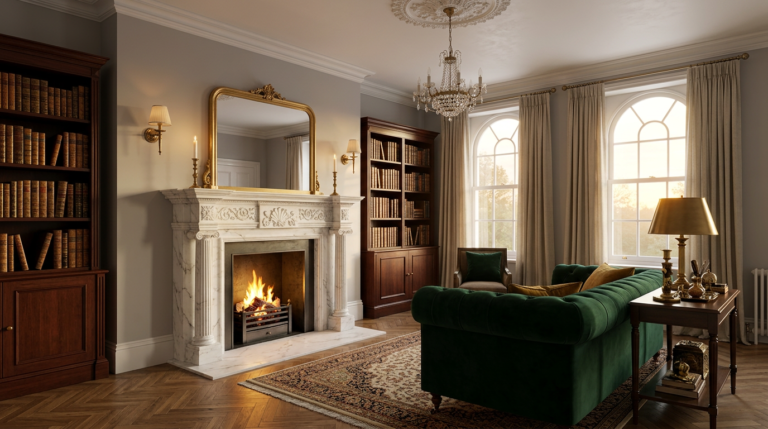
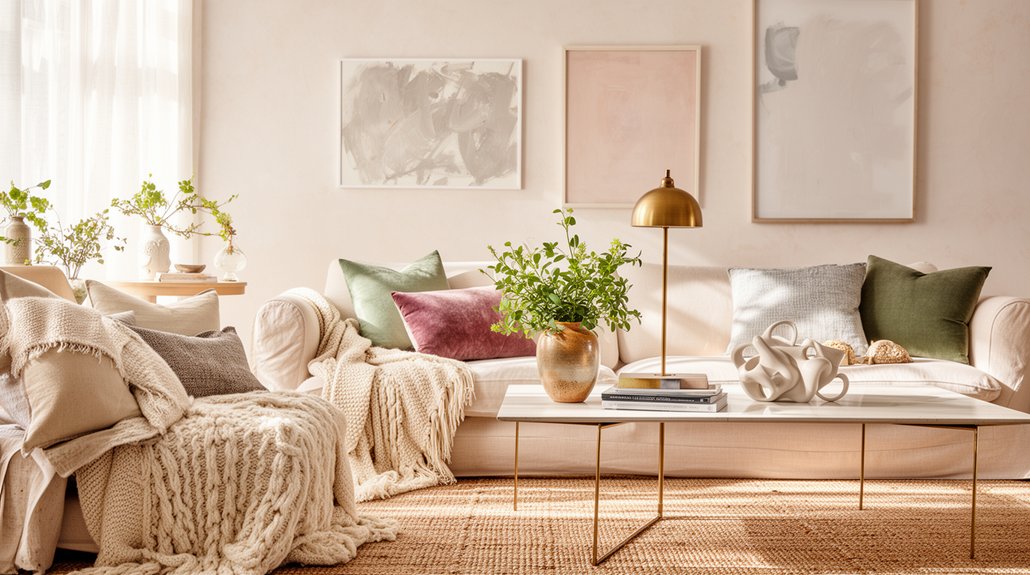
Refresh your space without renovating by starting with quick goals: pick a dominant color, reconfigure furniture for better flow, and sketch simple before–after visuals. Swap textiles—pillows, throws, and rugs—for instant depth, layer lighting with ambient, task, and accent sources, and add wall texture or light panels to elevate walls without paint. Introduce greenery and budget-friendly accessories to anchor the look. Establish routine maintenance to keep the vibe fresh, and you’ll reveal even more simple, impactful tweaks ahead.
Key Takeaways
- Refresh with textiles: swap pillows, throws, and rugs seasonally to instantly elevate texture and color without remodeling.
- Reorganize for flow: reconfigure furniture to create clear pathways and strong sightlines with minimal pieces moved.
- Add texture and wall interest: use wall coverings or panels and layered lighting to deepen rooms without painting.
- Introduce greenery: place tall plants in corners and layer greenery at eye level for natural focal points.
- Curate accessories: rotate small decor, mix textures, and DIY wall art to refresh visuals while keeping clutter low.
Identify Your Quick-Refresh Goals (Before-and-After Visuals)
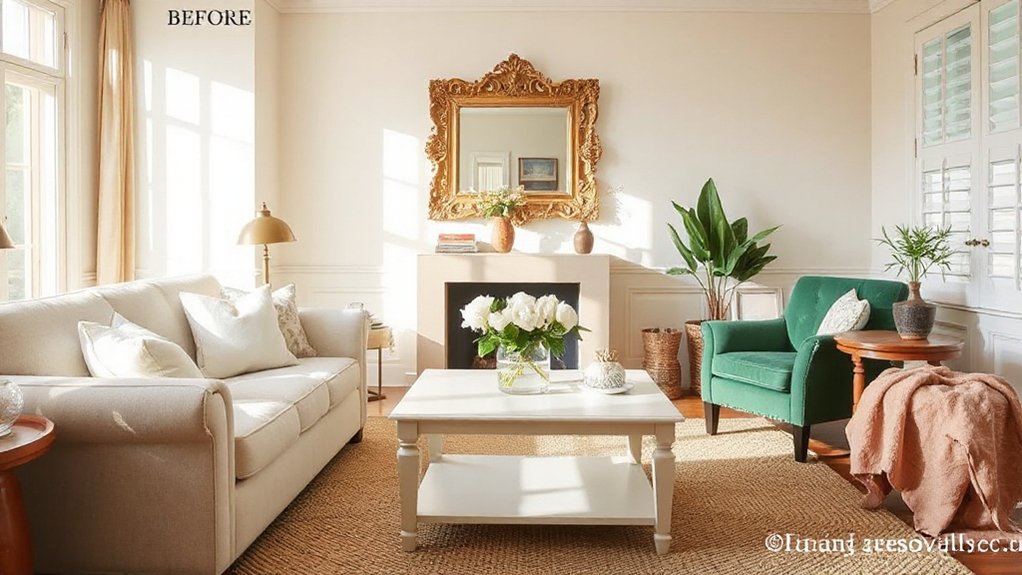
To kick off a quick refresh, start by defining clear before-and-after goals. You’ll map what changes you want and why, then sketch a simple visual to compare outcomes. Focus on two measurable targets: Color schemes and furniture arrangements. For color schemes, pick a dominant hue and 1–2 accents you can swap or elevate with minimal effort. For furniture arrangements, decide if you’ll reclaim floor space, improve traffic flow, or spotlight a focal piece. List the fixes you can implement this week—paint swatches, swap lamps, reconfigure a sofa layout. Keep the plan objective and actionable, avoiding vague vibes. Review your visuals, confirm alignment with daily routines, and commit to a concise checklist. This clarity preserves momentum and guides quick, decisive updates.
Refresh Textiles for Instant Impact (Pillows, Throws, Rugs)
Swap textiles seasonally to keep your look fresh without a full redo. Layer with throws and add patterned rug accents to create instant depth and cohesion. This approach is practical, decisive, and designed to shift the room’s vibe with minimal effort.
Swap Textiles Seasonally
Seasonally swapping textiles instantly refreshes a room; simply switch your pillows, throws, and rugs to match the current vibe. You don’t need a full makeover—just changes in textile choices. Focus on cohesive Textile patterns that echo your room’s architecture, then pair them with Seasonal colors that fit the season’s mood. Keep a small rotation system: rotate a few core pieces, plus one accent item per season, to maintain balance without clutter. Choose fabrics with durable textures for high-traffic areas, and store off-season items in labeled bins to avoid misplacement. When mixing patterns, vary scale and maintain a unifying color thread to prevent chaos. This quick swap delivers instant cohesion, elevating style while preserving budget and time.
Layer With Throws
Layering with throws adds immediate depth and time-tested texture to any room. You can elevate a plain sofa or bed with lightweight throws for instant impact, then swap seasonally to refresh the look without major work. Choose textiles that complement existing colors and layer them in varying weights and sizes for visual interest. Textile layering works best when you mix textures—knits, boucles, and faux fur—keeping patterns restrained to avoid clutter. Fold or drape throws in thirds, not flat, to create natural, inviting folds. Store off-season options in a chest or basket so you can rotate quickly. Seasonal swapping keeps spaces feeling fresh while maintaining cohesion, and it’s a simple, affordable way to refresh decor without renovations.
Patterned Rugs Accents
Patterned rugs are a quick way to anchor a room and refresh textiles without a full redo. Start by choosing a motif that complements existing colors, then let the pattern guide your palette for accent furniture and cushions. If you’re short on space, a bold rug creates a focal point and visually expands the area. To keep cohesion, echo one color from the rug in pillows or throws, avoiding overloading the scheme with competing patterns. For high-traffic areas, pick durable fibers and a low pile for easy cleaning. Layer with coordinated textures—linen, wool, and velvet—to add depth without clutter. Remember, patterned rugs can redefine scale; size accordingly so furniture legs still ground the space and maintain practical flow.
Layer Lighting for Depth and Mood
Layer lighting creates depth and sets the mood by combining multiple sources—ambient, task, and accent—so your rooms feel layered, not flat. Use a mix of fixtures at different heights to sculpt shadows and highlight textures, guiding the eye where you want it. Start simple: add a floor lamp or wall sconces to complement ceiling lighting, then adjust brightness to shift the atmosphere.
Layered Lighting Concepts
To create depth and mood, combine ambient, task, and accent lighting so each layer serves a practical purpose. You’ll shape spaces that feel inviting yet purposeful with deliberate placement and dimmable controls. Ambient layering sets the room’s tone, while task illumination targets reading, cooking, or work tasks. Accent lighting highlights architectural details, art, or textures, adding depth without clutter.
1) Map each area: identify where soft, broad light is needed, where you read or prep, and where features deserve spotlight.
2) Use dimmers and layered fixtures to switch between moods and tasks without changing fixtures.
3) Choose consistent color temperature to avoid jarring shifts.
This approach keeps spaces functional, cohesive, and visually engaging, aligning with ambient layering and task illumination.
Depth Through Illumination
Ever wondered how to make a room feel larger and more inviting with lighting? You can achieve depth by layering light sources at different heights and intensities. Start with a soft ambient base to eliminate flat, dull floors and walls. Add task lighting near work zones, and accent lights to sculpt architectural details or artwork. The goal is subtle contrast, not glare, so keep brightness levels balanced. Use dimmers to shift mood from bright, practical daytime to cozy evenings. Position lamps and fixtures to create ambient shadows that add dimension without overpowering spaces. Avoid relying on a single source; instead, mix floor, table, and wall lighting to guide the eye. Remember, light layering creates perception, making rooms feel more expansive and thoughtfully designed.
Mood-Setting With Fixtures
With depth established by your lighting, the next move is to dial in mood via fixtures. You shape atmosphere by layering sources and selecting fixture styles that support function and feel. Aim for ambient lighting as a base, task lighting for work zones, and accent pieces to highlight art or architecture. Here are practical steps to get it right:
- Choose fixture styles that complement your room’s character, from modern metal to warm brass.
- Mix heights and directions: ceiling cans, floor lamps, and wall sconces to create depth and soften shadows.
- Dimmers and smart controls let you adjust mood without changing bulbs.
Refresh Walls Without Paint (Wallcoverings, Panels, Texture)
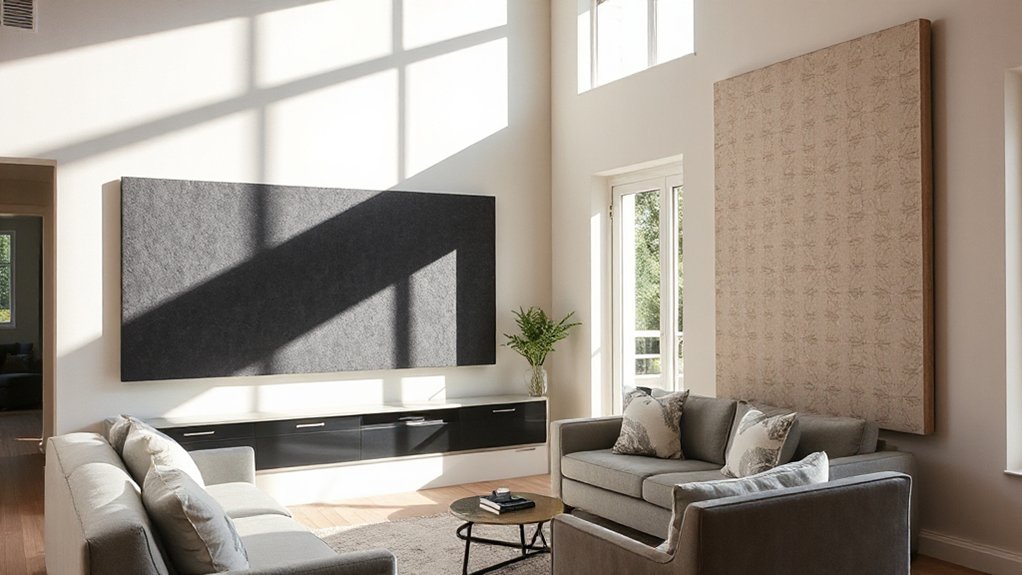
If you’re revitalizing walls without paint, wallcoverings, panels, or texture can deliver immediate impact with fewer messes and instant definition. Choose wallcovering textures that align with your space’s mood—textured vinyl, grasscloth, or linen-inspired substrates add tactile depth without a full renovation. For brightness, install lighter patterns or metallics to reflect natural light; for warmth, go with subtle textures in neutral tones. Panel designs offer architectural interest without drywall work: true raised panels add dimension, while flat laminate mimics paneled walls at a lower cost. Consider scale—large prints dominate small rooms, while subtle weaves suit open plans. Install correctly: prep, level seams, and seal edges to minimize damage. Finish with careful lighting to emphasize texture and frame the new wall statement.
Reconfigure Furniture for Better Flow
Reconfiguring furniture isn’t just about rearranging pieces; it’s about creating a clear, inviting path through the room. To improve function, focus on furniture placement that supports traffic flow and daily tasks without crowding pathways. Start with three essential moves:
1) anchor the seating area toward a focal point, leaving at least 3 feet of walking space.
2) position core furniture to form natural corridors, aligning with doorways and entrances.
3) swap bulky pieces for slim profiles or multi-use options to reduce clutter.
Assess sightlines: every chair or sofa should offer comfortable access to the room’s main functions. Test the route by walking the space and adjusting angles as needed. Small tweaks yield big gains in traffic flow and usability.
Personalize With Budget-Friendly Accessories
Want to add personality without breaking the bank? Personalizing your space with budget-friendly accessories is practical and quick. Begin with a few high-impact tweaks: swap out oversized decor for smaller, cohesive pieces in your color palette. Choose statement accessories—bold cushions, a striking lamp, or a sculptural vase—to anchor a room without overpowering it. DIY wall art can deliver custom flair at low cost; frame fabric swatches, print a favorite quote, or assemble a gallery of small images in a unified grid. Keep balance in mind: mix textures, metals, and finishes, but avoid clutter. Rotate items seasonally to refresh the vibe. Finally, curate clutter-free surfaces; fewer pieces, stronger impression. Your space feels refreshed, cohesive, and distinctly you.
Greenery and Natural Elements, Big Visual Payoff
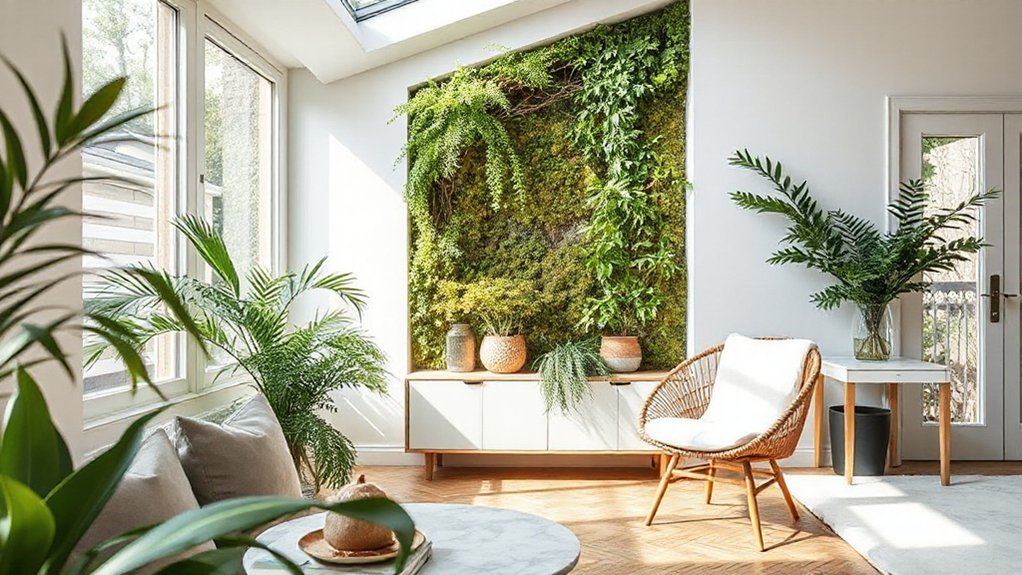
Incorporating greenery and natural elements instantly adds life and depth, elevating your refreshed space without a full overhaul. You’ll see a bold visual payoff by weaving indoor plants and natural textures into everyday scenes. Start with structure and scale to avoid clutter.
- Place a tall plant in a corner to anchor the room and draw the eye upward.
- Mix textures—bamboo, jute, linen—to add tactile contrast without competing colors.
- Layer greenery at eye level on shelves and tables to create frequent focal points.
Keep maintenance simple: choose low-maintenance indoor plants, rotate pots seasonally, and dust foliage to sustain vibrancy. This approach delivers immediate impact with minimal effort, reinforcing a cohesive, natural aesthetic throughout your home.
Create Focal Points Without Renovation
Strategically highlight key areas with purposeful tweaks that don’t require a full renovation. You can create focal points quickly by layering elements that draw the eye. Start with statement art placed at eye level to anchor a wall; choose bold colors, strong contrasts, or a single oversized piece to command attention. Add decorative shelving to display a curated mix of textures—ceramics, books, metal accents—making a secondary focal area that complements the art without clutter. Balance scale: one large piece or two smaller works flanked by shelves. Use lighting to spotlight the focal points—adjustable lamps or wall washers create drama and depth. Keep surrounding surfaces calm to preserve impact, and rotate pieces seasonally for fresh emphasis without any renovation.
Maintenance Habits to Keep the Vibe Fresh
To keep the vibe fresh, establish simple upkeep routines that you actually stick to. Consistency beats dramatic overhauls, and small habits compound over time. Focus on Seasonal maintenance to anticipate changes in light, humidity, and wear, and tackle clutter control before it spheres into chaos. Your goal is clarity, not perfection.
- Set a weekly 15-minute reset: declutter, wipe surfaces, and reset textiles.
- Schedule monthly checks: test lighting, refresh greens, rotate decor accents for balance.
- Create a seasonal purge: donate or store items that no longer serve the mood.
Maintain boundaries around dusting, vacuuming, and trash removal to sustain airflow and color integrity. A tight routine preserves freshness without renovation.
Frequently Asked Questions
How Can I Budget a Quick Refresh Without Overspending?
To budget a quick refresh without overspending, you’ll plan, cap each category, and track every purchase. Focus on furniture arrangement and wall art selection, reuse what you have, and swap highlights—adeptly allocating funds for impact, not excess.
Which Color Accents Yield the Biggest Impact Fast?
Bold bursts of color boost mood and pace; pick blue, charcoal, or olive for calm, confident rooms. Color psychology and accent palettes guide you, so choose two hues, balance with neutrals, and let contrast create impact fast.
How Do I Refresh Small Spaces Without Crowding Them?
You keep spaces airy by choosing wall art and lighting fixtures that are scaled for small rooms. Opt low-profile, multi-functional pieces, hang art at eye level, and use lighting to brighten corners without crowding.
Can I Refresh Flooring Looks Without Ripping Out?
Yes—swap wall art, rearrange furniture, and add runners or decals to refresh flooring looks without ripping out. You’ll feel renewed momentum, focusing on proportional balance, color harmony, and texture contrast to elevate the space efficiently.
What Maintenance Ritual Keeps the Vibe Years Long?
Your maintenance ritual is simple: do seasonal cleaning weekly, dust surfaces, and refresh fabrics while preserving the vibe. Practically, opt for artistic layering—swap textiles and art seasonally, and rotate accents to keep spaces feeling fresh year-round.
Conclusion
You can refresh without ripping out walls or wrecking wallets. So seize small swaps: sketch sensational before-and-after visions, swap textiles, and layer lighting for mood. Choose clever wall treatments, reconfigure furniture for flow, and curate affordable accents. Grow with greenery, honor personal taste, and highlight focal points. Sustain the vibe with tidy routines and quick touch-ups. Stay steady, stay selective, stay stylish—savvy, simple steps spark impactful, enduring atmosphere. Refresh today, relish tomorrow, relish always.
About the Author