
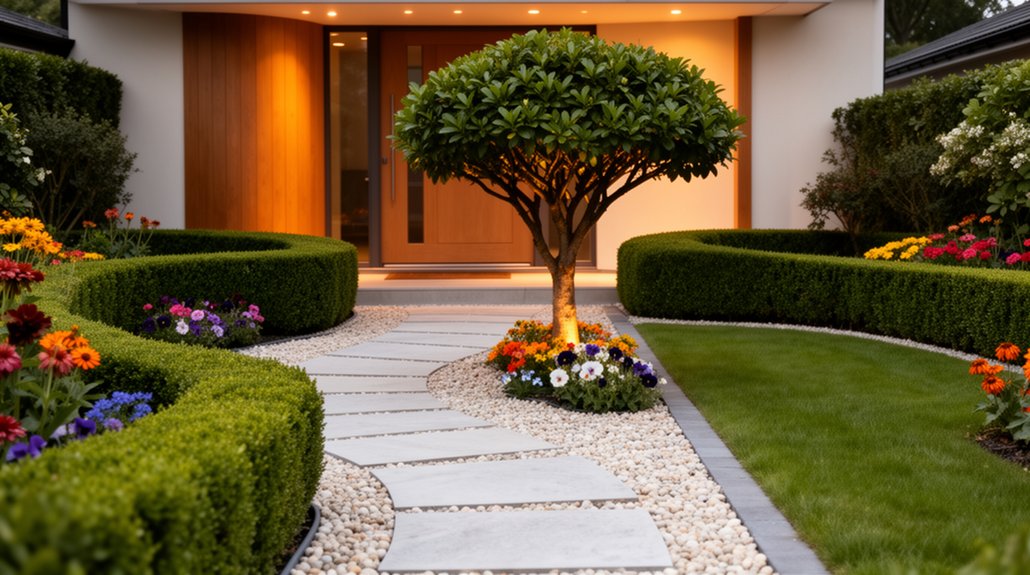
To maximize kerb appeal, define goals, style, and curb presence from the start, then translate them into measurable criteria for proportion, focal points, and sightlines. Assess your site and climate to select plants that thrive, using microclimate mapping, soil tests, and zone guidelines. Create a cohesive layout with structured pathways, back-placed taller plants, and vertical accents, and choose a curb-friendly color palette with restrained accents. Use low-maintenance hardscape and year-round interest, plus a practical planting timetable—you’ll uncover more strategies as you continue.
Key Takeaways
- Define a clear concept and cohesive style early to guide plant choices, materials, and lighting for instant kerb appeal.
- Plan a proportionate layout with layered plantings, focal sculpture or water features, and logical sightlines from the curb.
- Choose a curb-friendly color palette with neutrals and a single warm accent to create visual harmony.
- Opt low-maintenance, drought-tolerant plants and permeable hardscapes arranged by similar water needs to reduce upkeep.
- Enhance curb impact with strategic accents, high-contrast finishes, and well-defined entrances for immediate visual reading.
Define Kerb Appeal: Goals, Style, and Curb Presence

Kerb appeal is the first impression your front garden makes from the street, so define clear goals for what you want to convey—whether timeless, modern, or cottage-style—and align plant choices, materials, and hardscape with that vision. You establish a defining concept early, then translate it into measurable criteria: proportionality, focal points, and repeatable cues. Prioritize how garden sculptures integrate with scale and sightlines to avoid clutter, and specify outdoor lighting to highlight key features without glare. Document exact textures, colors, and finishes for borders, paths, and accents, ensuring consistency across elements. This framework guides supplier selections, installation sequencing, and future maintenance, maintaining cohesion from curb to doorway while reinforcing the intended style and curb presence.
Assess Site and Climate to Choose Plants That Thrive
Assess your site’s microclimate, soil, and sun exposure to select resilient, well-suited species. Consider how local soil conditions and drainage influence root development, moisture needs, and fertilizer requirements. Verify plant suitability by zone to guarantee reliable performance and minimal maintenance over time.
Site Microclimate Analysis
How does your site’s microclimate shape plant success? You assess temperature range, wind exposure, solar access, and thermal mass to forecast performance. Map sun paths across seasons and note shading from structures, pavement, and nearby trees. Measure soil moisture tendencies and drainage during dry spells and rainstorms, then correlate with plant water needs. Identify frost pockets, hot aisles, and wind corridors that influence transpiration and injury risk. Use this data to select cultivars with compatible hardiness, sun tolerance, and humidity preferences, prioritizing established performance in similar microhabitats. Plan placement to maximize protective microclimates for juveniles and leverage radiant heat for evergreen structure. Integrate garden art and decorative edging to define edges while preserving microclimate integrity and airflow. Documentation guides future adjustments and plant replacements.
Local Soil Conditions
Local soil conditions determine which species will establish quickly and persist. You assess texture, drainage, pH, and nutrient status to select resilient plants and minimize transplant stress. Conduct soil testing to establish baseline fertility and soil acidity, then tailor amendments to optimize root development and microbial activity. Use amendment techniques that suit your site, avoiding overprocessing or oversimplification, and document results for future maintenance.
- Soil testing informs nutrient targets and drainage corrections
- Amendment techniques focus on organic matter, lime or sulfur adjustments, and proper incorporation
- Follow up with staged monitoring to verify improvements and adjust planting choices accordingly
Plant Suitability By Zone
Choosing plants that thrive requires aligning species with your zone and climate, then verifying site conditions like sun exposure, wind, and microclimate. Plant suitability by zone focuses your selection on species proven to perform within specific average temperatures and frost dates. Start with your hardiness zone and match it to the plant’s labeled tolerance range, then assess microclimates across the site—areas of reflected heat, shade pockets, and wind corridors. Favor drought tolerant plants in drought-prone zones to minimize irrigation. Prioritize native species where possible to support local pollinators and ecosystem function, while ensuring maintenance needs align with your routine. Consider soil moisture, drainage, and nutrient availability; group plants by similar water requirements to reduce stress and conserve resources. This disciplined approach yields resilient, low-maintenance front garden results.
Create a Cohesive Layout With Structure and Scale
Pathways should establish clear proportions that guide movement and frame planting beds. Use scale cues in planting to reinforce rhythm, ensuring taller elements anchor the back and shorter ones front to back. This structure creates a cohesive layout where pathways and plantings read as a unified plan.
Proportions For Pathways
Ideal proportions establish a clear hierarchy between the path and surrounding beds, guiding movement while reinforcing the garden’s structure. You’ll balance width, curvature, and sightlines to achieve cohesive flow without overwhelming focal points. Use proportion to emphasize entrance cues and quiet edges, aligning the path with key features like gateways and garden sculptures. Maintain consistent paving rhythm and turning radii that suit the pace of foot traffic. Integrate decorative lighting to reveal form after dark without overpowering daylight textures. Implement material shifts at logical intervals to mark zones and improve readability.
- Choose a primary path width and a secondary width for side jogs to create subpaths
- Align curves with sightlines toward focal points such as sculpture focal points and entry features
- Plan lighting and texture changes to complement garden sculptures and soft shadows
Scale Through Planting Structure
Scale through planting structure is about arranging plant materials to reinforce the garden’s layout and convey a clear sense of proportion. You’ll achieve cohesion by selecting species with contrasting yet compatible growth habits, ensuring tall forms sit at the back or center of beds and gradually step down toward the front. Use repetition to reinforce rhythm, repeating leaf shapes, textures, and colors at intentional intervals. Consider vertical accents, such as narrow evergreen evergreens or ornamental grasses, to anchor sightlines and create architectural outlines. Combine evergreen and seasonal interest to maintain year-round structure. Integrate garden sculpture and Water features as focal anchors, aligning them with plant massing to guide movement. Maintain scale consistency across hardscape and planting to strengthen kerb appeal. Regular pruning keeps linework crisp and proportional.
Pick a Curb-Friendly Color Palette That Feels Inviting
Choosing a curb-friendly color palette starts with contrast and cohesion. To maximize kerb appeal, select a restrained base and use accent colors strategically, ensuring visual flow from street to entry. Consider color psychology: cool tones recede and read calm, while warm tones advance and feel welcoming. Plant symbolism matters: greens imply growth; dusky purples suggest sophistication; yellows signal cheer. Balance is key, so pair 1–2 dominant shades with 1–2 supporting hues. Use contrasting trim to define edges without shouting.
- Build a base of muted neutrals and add one warm accent
- Introduce a cool secondary color for foliage highlights
- Reserve a bold, limited color for focal points and entry cues
Choose Low-Maintenance Plants and Practical Hardscape
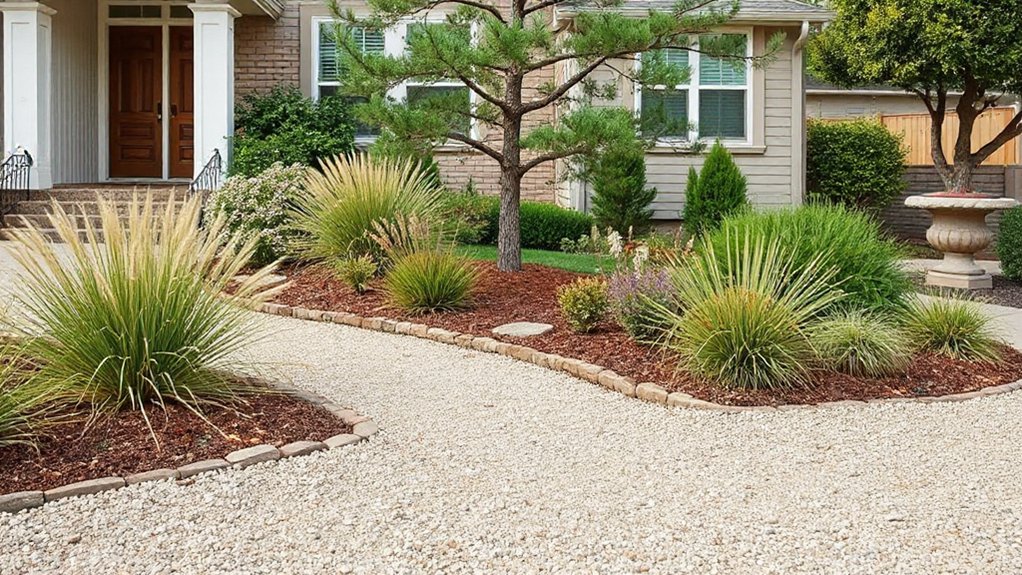
To keep maintenance minimal while preserving curb appeal, select plants and hardscape elements that thrive in your local climate with little intervention. Favor drought-tolerant perennials and native grasses that require infrequent pruning and minimal fertilization. Pair them with permeable, low-effort hardscape like crushed gravel paths, compact pavers, or laid-stepping-stone grids to reduce weed pressure and irrigation demand. Choose plant groupings with similar water needs to simplify irrigation scheduling. For Garden art, embed durable, weather-resistant features that complement scale and texture without added upkeep. Integrate a modest Water features element, such as a recirculating fountain or shallow splash pool, sized for seasonal maintenance access and filtration ease. Document maintenance routines, focusing on routine inspections, seasonal pruning, and annual system checks to sustain performance. Regularly assess soil structure and drainage to prevent buildup.
Plan Year-Round Seasonal Interest
Seasonal interest should be engineered through a layered planting plan that delivers visual impact across all seasons. You shape year-round appeal by combining evergreens for structure, deciduous shrubs for seasonal color, and herbaceous perennials for texture. Integrate garden art and water features as focal accents to reflect light and provide motion, while avoiding clutter. Prioritize contrast in form, height, and color, ensuring progressions between seasons stay cohesive. Select species with complementary bloom times and winter textures to sustain interest through dormancy periods.
- Use evergreen backbone with seasonal accents
- Position garden art and water features for focal emphasis
- Plan sightlines to reveal interest from multiple angles throughout the year
Budget, Zoning, and a Realistic Planting Timetable
How can you align your landscape goals with practical constraints to guarantee a smooth, timely installation? You approach budget, zoning, and timetable as integrated constraints, not separate tasks. Begin with Budget planning: allocate a baseline for materials, soil amendments, and labor, then add a contingency of 10–15% for unforeseen costs. Document all line items to prevent scope creep. Next, assess zoning regulations early—property setbacks, height limits, and permitted plantings—to avoid redesigns later. Translate rules into actionable steps: choose compliant species, plan buffers, and schedule inspections if required. Create a planting timetable anchored to seasonal availability, three to six months out, prioritizing erosion control, root establishment, and storm-water considerations. Maintain a living schedule, review quarterly, and adjust as costs, permits, or inventory shift.
Curb-Appeal Tweaks That Deliver Fast Results

Small, targeted curb-appeal tweaks can yield immediate impact without a full overhaul. You deploy fast results by focusing on visible elements and informed color cues, then measure impact with quick checks. Use garden art strategically to punctuate entry points, creating focal contrasts that draw the eye without clutter. Tap into color psychology to reinforce mood—cool tones for calm, warm tones for approachability, high-contrast accents for definition. Guarantee finishes are high-contrast against your siding and walkway for legibility at a distance.
- Garden art placements that frame the door and emphasize symmetry
- Color-coordinated accents tied to the main façade palette
- Bold, minimal contrasts that heighten curb readability without overwhelm
Maintain Momentum With a Simple Care Routine
A simple care routine keeps your front garden’s momentum steady by establishing consistent, repeatable tasks that protect plant health and curb appeal. You’ll schedule seasonal checks, mulching, and timely pruning to minimize stress and maximize visual impact. Precision irrigation, soil moisture monitoring, and targeted Fertilizer applications sustain vigor without overwatering, while weed control preserves neat lines and reduces competition. Routine inspection catches pests and diseases early, enabling prompt intervention and reducing collateral damage. Integrate garden art and water features into maintenance planning to prevent debris buildup and guarantee continued visual harmony. Maintain cleanliness around pathways, edging, and focal points to reinforce structure. Document actions and observe seasonal cues, adapting tasks to weather, plant response, and evolving landscape goals for consistent, durable kerb appeal.
Frequently Asked Questions
How Long Does It Take for Front Garden Improvements to Show Impact?
You’ll see effects within weeks to months; garden lighting highlights features now, while plant selection influences seasonally, with most structural improvements evident after a growing season. Plan for ongoing maintenance, consistent irrigation, and adjustment of lighting and plant choices.
Which Initial Steps Yield the Strongest Curb Appeal Quickly?
Immediate steps yield the strongest curb appeal quickly: prioritize plant selection and adhere to design principles, then refine with clean edges, focal points, and high-contrast textures. You’ll see impact as you implement thoughtful plant choices and precise layouts.
What Are Common Mistakes to Avoid for Beginners?
Avoid common beginner mistakes: mismatched plant selection and poor maintenance tips derail curb appeal. Focus on plant selection suited to light and soil, then implement maintenance tips like pruning, mulching, and irrigation schedules to guarantee long-term structure and health.
How Can I Maximize Impact With a Tight Budget?
Yes, you can maximize impact on a tight budget by prioritizing Budget friendly planting and DIY landscape tips. You’ll allocate basics first, install focal accents, prune strategically, and select hardy, low-cost species for rapid, durable curb appeal.
Which Regulatory Restrictions Commonly Affect Front Garden Projects?
Front garden projects are subject to setback regulations and permitted plantings. You must verify local buffer distances, height limits, and visibility requirements; guarantee compliant fencing, hardscape setbacks, and sightlines to driveways and intersections for regulatory compliance.
Conclusion
You’ve got this: a sharp sight for curb appeal starts with a solid plan and steady progress. Prioritize planting, pruning, and porous paths, then pair practical hardscape with color-coordinated, low-maintenance perennials. Align layout to sightlines, scale, and seasonality, while budgeting briskly and zoning wisely. Regular, simple routines keep results reliable, recurring, and rewarding. With consistency, you’ll cultivate confident curb presence, compelling passersby, and a striking, sustainable frontage that stays sharp year-round.
About the Author


