

A sustainable garden starts with healthy soil. Build resilience by feeding soil life with mulch, compost, cover crops, and minimal tillage, then test and fine‑tune pH and nutrients. Choose drought‑tolerant, native plants suited to your climate, grouped by water needs, and bloom year‑round for pollinators. Save water with drip irrigation, weather‑smart scheduling, and rain harvesting. Reuse materials and design for modular, low‑maintenance beauty. Keep adapting; better loops and tools will show you even more practical gains.
Key Takeaways
- Build soil health with mulch, finished compost, and diverse cover crops to support microbes and long-term fertility.
- Design with low-maintenance, modular elements using salvaged materials and repeated color palettes for durability.
- Select climate-appropriate, drought-tolerant natives and create layered habitats with flowering perennials and grasses.
- Optimize water use via drip irrigation, rain harvesting, mulch, and strategically placed shade and windbreaks.
- Plan seasonally with succession planting, data tracking, and adaptive management to refine yields and ecological balance.
What a Sustainable Garden Really Means

A sustainable garden means growing in a way that protects soil, water, and biodiversity while meeting your gardening needs now and for future seasons. You’ll prioritize resilience, efficiency, and harmony with local ecosystems. You avoid wasteful inputs, reuse resources, and design with natural processes in mind. Conservation starts at the ground: soil health, moisture retention, and minimizing disturbance shape every decision. You implement practices that reduce soil erosion, such as mulching, cover crops, and contouring slopes to slow runoff. You assess material choices, steering clear of chemical additives that can harm pollinators, water quality, and soil life. You select drought-tolerant, regionally appropriate plants and adopt a low-input management style. This definition guides all planning, installation, and ongoing maintenance toward long-term sustainability and practical garden success.
Start With Soil Health for Long-Lasting Growth
Healthy soil starts with a thriving microbiome, so you’ll build resilience by encouraging beneficial microbes through minimal disturbance and diverse organic matter. Use mulch and compost to feed the soil, suppress weeds, and improve moisture retention, creating a stable environment for roots. By prioritizing soil health now, you set up long-lasting growth and reduce the need for synthetic inputs later.
Build Healthy Soil Microbiome
To build a healthy soil microbiome, start by prioritizing soil health as the foundation for long-lasting growth. You’ll optimize structure, texture, and drainage to support microbial activity and root access. Stop relying on synthetic inputs; instead, implement targeted practices that boost soil life. Use cover crops, diverse rotations, and minimal tillage to preserve habitat and reduce disruption. Encourage soil fungi by maintaining adequate organic matter and avoiding harsh chemical sterilants. Rotate legumes to fix nitrogen and feed microbial partners. Regularly test soil to track pH, organic carbon, and nutrient balance, adjusting amendments precisely. Promote microbial diversity through a variety of organic amendments and forage crops. With disciplined management, you’ll create a resilient, productive soil ecosystem that sustains plant health year after year.
Mulch and Compost Benefits
Mulch and compost act as core soil investments, locking in moisture, moderating temperature, and feeding the soil food web from the first day. Mulch benefits include erosion protection, weed suppression, and gradual nutrient release, supporting steady rooting and climate resilience. Use a thick, even layer suitable for your plants, and replenish annually to maintain soil structure. Compost advantages lie in improving soil tilth, increasing microbial diversity, and boosting nutrient availability without synthetic inputs. Incorporate finished compost into beds before planting, and topdress annually to sustain fertility. Combine both practices to reduce waste and close nutrient loops. Water wisely after application to minimize crusting and runoff. With these approaches, you establish durable soil health, promote long-lasting growth, and simplify ongoing garden maintenance.
Plan for Your Climate: Drought-Tolerant and Native Plants
Wondering how your climate shapes your garden? Plan with drought-tolerant and native plants to align with local conditions. Identify your hardiness zone, summer heat, and rainfall patterns, then select species proven to thrive there. Prioritize plants adapted to low water, poor soils, and high solar exposure, reducing irrigation needs and maintenance. Pair native selections with drought-tolerant cultivars to support local pollinators and wildlife while preserving ecosystem balance. Group plants by water needs and create microclimates with mulch, shade, and windbreaks to boost drought resilience. Favor deep-rooted perennials and long-lived shrubs that endure seasonal stress and competition. Reassess annually; introduce climate-appropriate varieties as conditions shift. This climate adaptation approach minimizes inputs and sustains vibrant landscapes through variable weather.
Water-Wise Irrigation: Methods So You Use Less Water
Water-wise irrigation conserves water and protects plant health by delivering moisture only where and when it’s needed. You’ll optimize your system with disciplined zoning, tailoring schedules to each bed’s sun exposure and soil type. Prioritize drip irrigation for beds and shrubs, delivering slow, targeted moisture with minimal evaporation. Use a timer and smart controller to align watering with weather data, reducing waste on rainy days. Implement rain harvesting to capture runoff and supplement your supply during dry spells, feeding a storage barrel or cistern for re-use. Mulch generously to stabilize soil moisture and suppress weeds, then verify uniform emitter flow and confirm pressure is appropriate for your line. Regular spring checks prevent leaks, clogs, and overwatering, keeping irrigation efficient year-round.
Smart Use of Recycled Materials in Landscaping
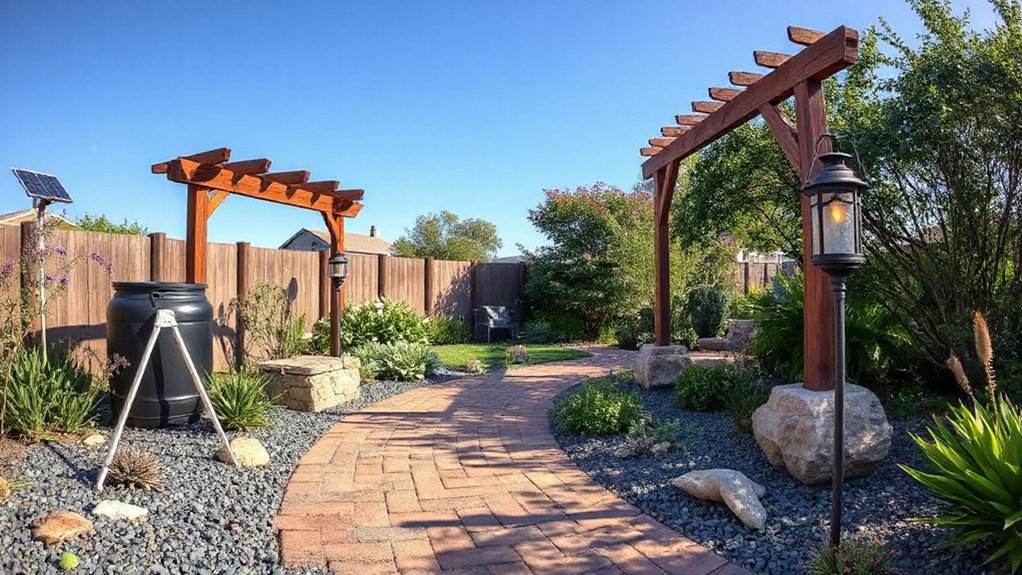
Smart use of recycled materials in landscaping builds on efficient water practices by lowering inputs and extending space between new purchases. You apply salvaged bricks for edging, pallets for planters, and crushed concrete for pathways, reducing waste while preserving resources. Prioritize durable, non-toxic options and verify safety for soil contact and drainage. When sourcing, choose locally to cut transport emissions and support eco friendly landscaping goals. Design with modularity in mind: reuse containers, adapt existing structures, and layer mulches to conserve moisture. Integrate reclaimed metal joints or hardware to reinforce structures without new fabrication. Label recycled items clearly to prevent future waste. Maintain aesthetics by mixing textures, colors, and sizes, ensuring accessibility without compromising function. You’ll create a resilient, sustainable space that respects limits and resources.
Low-Maintenance Design for All Seasons
Low-maintenance design for all seasons focuses on simplicity, durability, and practical year-round performance. You build resilience by selecting hardy, drought-tolerant plants suited to your climate, minimizing frequent replacements. Group plants with similar water and light needs to reduce maintenance tasks and irrigation waste. Choose strong, weatherproof materials for paths and edging to withstand freeze-thaw cycles without frequent repairs. For garden aesthetics, favor clean lines, consistent color palettes, and layered textures that remain attractive year-round with minimal input. Implement routine, short maintenance slots: quick weeding, pruning, and debris removal. Prioritize pest management with integrated practices—monitoring, proper spacing, and beneficial companions—to minimize chemical interventions. Emphasize mulching and soil health to stabilize moisture and suppress diseases, ensuring reliable performance across seasons.
Create Habitats for Pollinators and Wildlife
Start by selecting native plants that attract pollinators and support local wildlife, prioritizing species that bloom at different times of the year. Build year-round habitat resources with nesting sites, shelter, and foraging options, ensuring consistent cover and food. Add water-wise shelter and water features to reduce maintenance while stabilizing microhabitats.
Native Plant Selection
Choosing native plants sets the stage for thriving pollinator and wildlife habitats, because locally adapted species provide food, shelter, and seasonal interest with less maintenance. You’ll optimize resilience by selecting species that match your soil, light, and moisture conditions, reducing irrigation and chemical needs. Start with a climate-relevant mix of flowering perennials, grasses, and shrubs that bloom across seasons to support diverse pollinators and birds. Prioritize native plant selection that supports local fauna, especially larval hosts and nectar sources, to strengthen ecological networks. Consider plant height, spacing, and succession to create layered habitats without crowding. Avoid invasive lookalikes and verify regional recommendations. Document bloom times and maintenance needs, then monitor performance to refine your choices and maximize ecological benefits.
Year-Round Habitat Resources
A year-round habitat isn’t a single fix but a continuous plan that sustains pollinators and wildlife through every season. To implement it, choose diverse plantings that provide nectar, pollen, seeds, and shelter across spring, summer, fall, and winter. Group species by bloom time and size to create layered habitats that invite beneficial insects and small birds. Minimize urban pollution by situating pollinator beds away from heavy foot traffic and exhaust sources, and use certified organic mulch to reduce soil disturbance. For pest control, favor targeted, non-chemical methods: physical barriers, habitat for natural predators, and regular monitoring. Maintain year-round water sources only where safe and accessible, ensuring drainage. Review plant health quarterly, replacing stressed specimens promptly to sustain resilient ecosystems.
Water-Wise Shelter Options
Water-wisdom means designing shelter that supports pollinators and wildlife while conserving water. You create practical, durable habitats by grouping shade structures with native plantings to reduce heat stress and water loss. Select shelter design features that provide year-round cover: low rock refuges, brush piles, and log piles mixed with ground cover for microhabitats. Use permeable paths and mulches to slow evaporation without inviting pests. Position structures to exploit morning sun and afternoon shade, guiding wildlife through the landscape rather than trapping it. Integrate drinking stations and nectar sources near shelter zones to minimize movement and energy use. Avoid overbuilding; simplicity sustains biodiversity. Regularly inspect for stability, debris buildup, and water runoff, adjusting shelter design to evolving garden needs.
Plan Seasonal Changes and Food-Production Opportunities
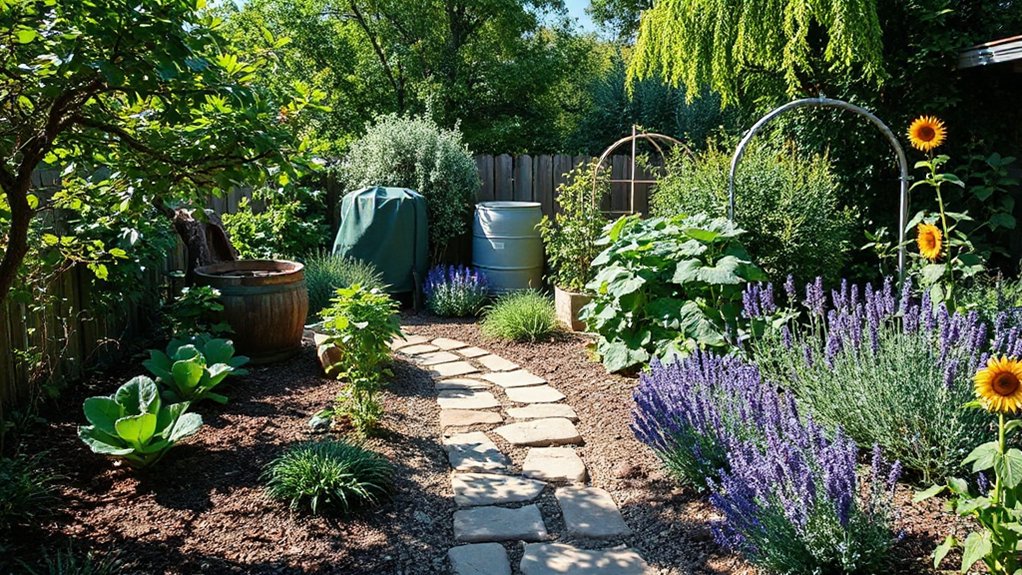
Planning seasonal changes and food-production opportunities starts with a clear calendar and practical goals: map when to plant, harvest, and rotate crops to align with your climate, soil, and available space. You budget time for succession planting, frost windows, and soil rest, then deploy crop families to maintain fertility and reduce pests. In parallel, design for urban farming opportunities by stacking crops in raised beds, containers, and vertical planters to maximize output without expanding footprint. Schedule composting techniques alongside planting to feed soil biology, recycle residues, and cut waste. Track yields, note which varieties perform best in your microclimate, and adjust intervals accordingly. This disciplined cadence supports consistent harvests, resource efficiency, and resilient, sustainable production year-round.
Monitor, Adapt, and Sustain Your Garden Long-Term
To monitor, adapt, and sustain your garden long-term, establish a simple, ongoing feedback loop: regularly track growth, yields, and pest pressures; compare actual results with your planned calendar; and adjust practices accordingly. You’ll collect concise data on plant performance, soil moisture, and nutrient status, then translate findings into concrete actions. Schedule quarterly reviews to refine crop choices, timing, and water use. Prioritize pest management by identifying pressures early, rotating crops, and integrating beneficials. Use garden decor to mark microclimates and track changes visually, aiding quick decisions. Maintain consistent records, assess cost-benefit tradeoffs, and avoid over- or under-watering. This disciplined approach sustains productivity, reduces inputs, and supports ecological balance, ensuring your eco-friendly landscape remains resilient and productive year after year.
Frequently Asked Questions
How Do I Measure My Garden’s True Carbon Footprint?
You measure your garden’s true carbon footprint by auditing emissions from soil, irrigation, and materials, then subtracting sequestration gains; track with a simple tool. Use composting techniques to reduce waste, and water conservation to lower inputs.
Can I Convert a Garden Into a Passive Solar Microclimate?
Yes, you can convert it into a passive solar microclimate. Use solar heat collectors, sheltered southern exposure, windbreaks, and thermal mass. Design microclimate features, optimize daylight, and monitor soil temperature to stabilize your garden’s energy balance.
What Are Cost-Effective, Professional-Grade Soil Tests?
Quoting Galileo aside, you’ll find soil testing options include sending samples to a lab or using affordable testing kits, giving precise results. You get actionable data, compare costs, and choose affordable testing kits for professional-grade insights.
How Do I Balance Aesthetics With Ecological Function?
You balance aesthetics with ecological function by prioritizing native species and water conservation, selecting visually pleasing, drought-tolerant plants, grouping by sun exposure, using mulch to reduce evapotranspiration, and designing layered canopies for habitat while maintaining landscape appeal.
Which Plants Provide Year-Round Pollinator Support?
Native blooms sustain year-round pollinators; you’ll want a sequence that forms pollinator corridors. You plant spring, summer, and fall blooms, bridging gaps with natives, spacing for nectar and pollen, ensuring continuous forage for bees, butterflies, and beneficials.
Conclusion
Sustainable landscaping isn’t a trend—it’s a practical habit you build over seasons. Start with healthy soil, choose climate-appropriate natives, and install water-smart irrigation. Reuse materials where possible, keep maintenance low, and design habitats for pollinators. Watch for seasonal shifts, adjust planting, and measure results to stay efficient. Think of your garden as a living ledger: each rain barrel, mulch layer, and drought-tolerant plant adds credit toward lasting beauty. When you see the first bloom after a dry spell, you’ll know it pays.
About the Author


