
To eco‑renovate a Cornwall cottage, set clear goals, budget, and carbon targets from the start, prioritizing authentic restoration and low‑toxicity finishes. Choose coastal‑durable materials, breathable insulations, and locally sourced timber or stone. upgrade windows with insulation and low‑emissivity coatings, pair with efficient heat pumps, and add solar where feasible. Harvest rainwater for garden use and toilets, while filtering greywater for irrigation. Maintain heritage features with discreet upgrades and plan monthly maintenance to sustain performance—more practical tips await if you keep exploring.
Key Takeaways
- Prioritize local, low-carbon sourcing and heritage-preserving materials to reinforce Cornwall’s climate and character.
- Install energy efficiency upgrades: high-performance windows, heat pumps, and solar to reduce boiler demand.
- Implement rainwater harvesting and greywater reuse for irrigation and toilets to cut mains water use.
- Use moisture- and salt-resistant materials, coastal finishes, and durable claddings for longevity in a marine environment.
- Plan with a heritage-friendly approach: authentic features, load-bearing assessments, and documented maintenance to balance sustainability and character.
Assess Your Cornwall Cottage: Define Goals, Budget, and Carbon Targets

To start, define clear goals for your Cornwall cottage renovation and set a realistic carbon target that aligns with your values and budget. You’ll translate these into a practical plan: scope, timelines, and measurable milestones. Establish a budget cushion for sustainable upgrades, prioritizing high-impact changes first. Clarify whether your priority is energy independence, reduced running costs, or enhanced biodiversity through Sustainable gardening. Map financial trade-offs and return-on-investment scenarios, then lock in a carbon target you can track via yearly audits. Identify constraints like listed-building rules or planning limits early to avoid redesigns. Integrate Renewable energy integration from the outset, such as solar PV or heat pumps, while selecting low-impact materials. Document decision criteria, enable accountability, and maintain flexibility for adjustments as your cottage evolves.
Plan for Coastal Durability: Materials and Construction Choices
Coastal climates demand materials and details that withstand salt spray, wind, and shifting sands while minimizing maintenance. You can plan for durability by selecting corrosion-resistant metals, treated timber, and durable claddings, paired with proper detailing to shed moisture. Use proven fasteners and sealants designed for marine environments to extend life and reduce repair cycles. Focus on strong foundations, compatible materials, and thoughtful ventilation to prevent rot and mold.
1) Choose storm resistant windows with marine-grade glazing and reinforced frames.
2) Prefer coastal inspired decor that uses low-maintenance finishes and durable textiles.
3) Specify air-permeable, moisture-control barriers behind exterior finishes to manage humidity without sacrificing energy efficiency.
This approach centers sustainability, lowers ongoing costs, and keeps your cottage resilient against coastal forces.
Low-Cost Energy Upgrades That Cut Bills in Cornwall
You can start with simple, low-cost tweaks like upgrading to insulated windows to reduce heat loss and cut bills in Cornwall. Pair that with efficient heating alternatives, such as heat pumps or well-tuned radiators, to maximize savings without sacrificing comfort. These steps offer practical, scalable gains that support ongoing sustainability for your cottage.
Insulated Window Upgrades
Even small changes to windows can dramatically cut Cornwall’s heating bill, so start with the basics: assess current glazing, frames, and seals to spot drafts and heat loss. You’ll improve efficiency by prioritising insulation alongside aesthetics, balancing function with window aesthetics and glazing options.
- Seal gaps with weatherstripping and caulk to stop hidden drafts.
- Upgrade to double or secondary glazing where feasible, focusing on low-emissivity coatings.
- choose draft-together solutions like insulated window films or low-thermal-loss frames that suit your cottage style.
With a practical approach, you reduce heat leakage without overhauling character. Maintain sustainability by selecting recycled or long-lasting materials and verifying DIY compatibility. This foundation supports longer-term savings and steadier indoor comfort.
Efficient Heating Alternatives
Installing affordable heating upgrades can dramatically cut your Cornwall energy bills without sacrificing comfort. In practice, start with heat loss awareness: seal gaps, insulate pipes, and program controls to optimize run times. Next, compare low-cost options that lower bills now and pay back over time. Solar panels can supplement daytime heating with clean electricity, reducing boiler demand and enabling smarter thermostat scheduling. For properties with higher thermal demand or off‑grid needs, biomass boilers offer a reliable, renewable heat source when you have access to sustainable fuel and local support. Pair either option with a properly sized, efficient heat emitters system—radiators or underfloor—wired to a smart thermostat. Finally, confirm grants or incentives to maximize upfront affordability and long-term savings.
Water Wisdom for Cottages: Efficient Systems and Rainwater Use
You can boost your cottage’s resilience by pairing rainwater harvesting systems with careful water-use practices, so you lower mains demand and stormwater runoff. Start with a simple collection setup, a first-flush diverter, and a robust filtration plan, then adapt based on your site’s rainfall and usage. Consider graywater management options that suit your needs, from reuse in toilets and irrigation to mindful discharges, keeping regulations and safety front and center.
Rainwater Harvesting Systems
Could you harvest rainwater efficiently on a cottage in Cornwall? Yes, with a smart setup that protects the landscape and cuts bills. A practical rainwater harvesting approach centers on reliability, filtration, and modest storage. Begin with a first‑flush diverter to keep debris out, and pair it with a fine mesh screen on gutters to reduce sediment. Use a compact, above‑ground tank sized for your annual rainfall and household needs. Then connect a simple pump with a pressure tank for garden irrigation and toilet flushing. 1) Assess roof catchment area and rainfall data 2) Choose corrosion‑resistant tanks and filters 3) Install an overflow to protect the landscape. Rainwater harvesting supports Water conservation, lowers mains reliance, and fits Cornwall’s eco ethos.
Efficient Water Use Practices
Efficient water use starts with precise planning and disciplined habits that stretch every drop, especially in a cottage setting where rainfall patterns and landscape health matter. You’ll implement targeted measures that minimize waste while maximizing comfort. Begin with Water conservation in daily routines: fix dripping taps, install low-flow fixtures, and run full loads of laundry or dishes. Use short, efficient shower routines and keep hot-water pipes insulated to reduce standby losses. Leak prevention is essential; regularly inspect hoses, connectors, and toilets for slow leaks that secretly drain resources. Choose weather-backed irrigation schedules and soil-moisture sensors to tailor watering to plants’ needs. Prioritize drought-tolerant species and mulch to reduce evaporation. Pair rain barrels with smart controllers to align supply with demand, ensuring resilience during lean spells.
Greywater Management Methods
Greywater management smartly ties your daily routines to garden health and cottage comfort. You’ll implement practical, low‑tech solutions that reduce demand on mains water and improve sustainability. Start with simple strategies that reliably work in a Cornwall cottage setting:
- Greywater recycling basics: separate sinks and showers, use gravity or pump‑assisted filters, and route to mulch basins or drip irrigation.
- Eco friendly flushing: install dual‑flush or low‑flow toilets, and pair with greywater reuse where codes allow to minimize waste.
- Screening and maintenance: grease traps, lint filters, and routine checks prevent clogs and odors, keeping systems reliable year‑round.
With careful design, you’ll gain resilient water cycles, healthier gardens, and ongoing cost savings.
Preserve Character With Eco-Friendly Restoration of Original Features

Preserving a cottage’s original features doesn’t mean sacrificing sustainability; with careful restoration, you can keep character while boosting efficiency. You approach preservation with practical steps that protect heritage while upgrading performance. Begin with assessment: identify load-bearing timbers and authentic finishes, then plan upgrades that minimize disruption to historic fabric. Use breathable, low-toxicity coatings that respect patina and moisture balance, avoiding sealed systems that trap decay. Replace only where necessary, opting for modern equivalents that match grain, texture, and color. Improve insulation behind plaster or under floors without removing historical elements, and integrate discreet mechanicals—ghost vents, compact heat pumps, and renewables—so aesthetics stay intact. Prioritize heritage preservation and architectural authenticity in material choices, ensuring repairs reinforce structure rather than overpower it. Maintain proportion, scale, and daylight to sustain timeless appeal.
Local, Low-Carbon Sourcing: Support the Coast and Community
Local, low-carbon sourcing keeps coastal ecosystems healthy and communities resilient, so start by prioritizing materials and services from nearby suppliers who share transparent carbon data. You’ll reduce transport footprints while boosting local resilience, and you’ll tap into local craftsmanship that withstands Cornwall’s climate. Build strong community collaborations to align incentives, share risk, and sustain skilled trades.
- Identify nearby mills, builders, and transport partners with verified carbon metrics.
- Prefer locally produced timber, stone, and reclaimed materials with documented provenance.
- Partner with regional suppliers for cross‑project knowledge, bulk discounts, and timely delivery.
This approach supports Local craftsmanship, strengthens community collaborations, and guarantees practical, measurable sustainability gains without sacrificing quality or aesthetic.
Finishes That Breathe: Natural Paints, Insulation, and Sealants
Finishes that breathe start where sourcing left off: you’ll want coatings, insulation, and sealants that perform without compromising indoor air quality or the coast’s delicate ecosystems. Choose natural finishes that minimize VOCs, avoid solvent-heavy blends, and provide durable, breathable textures for walls, ceilings, and timber. Opt for lime, clay, or mineral-based paints that regulate moisture and resist mold, while maintaining a gentle, authentic palette. For insulation, select breathable materials like sheep’s wool, wood fiber, or mycelium composites that trap heat without trapping moisture. Sealants should be low-emission, plant-based or waterborne, offering gap-filling performance withoutoff-gassing. Prioritize certifications and local provenance where possible, and test in small areas first. Your cottage stays comfortable, resilient, and true to Cornwall’s ecological ethos with these choices.
Maintenance Mindset: Long-Term Care to Keep Your Cottage Green
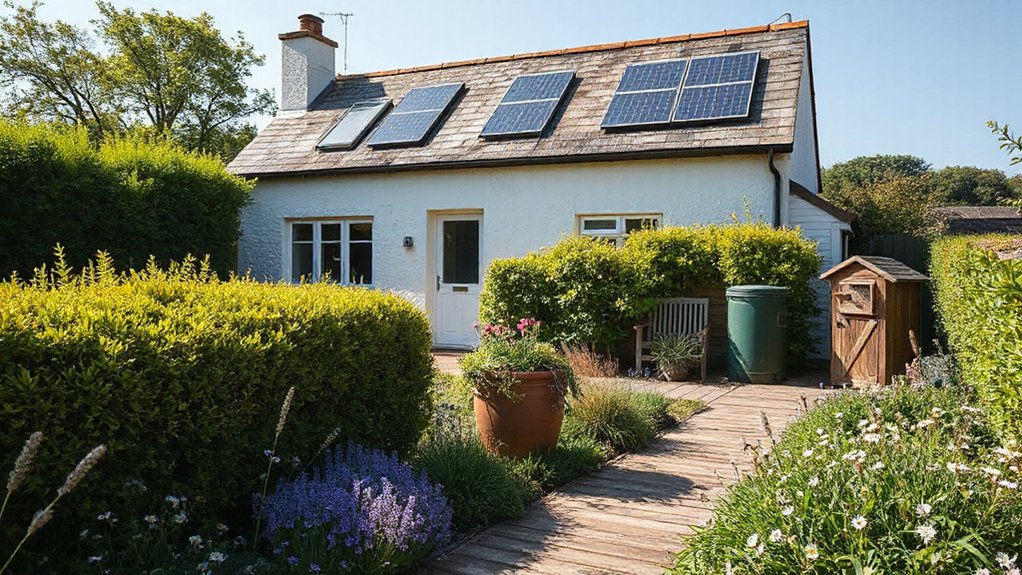
A maintenance mindset is your best long-term strategy for a green cottage: proactive, simple routines save energy, money, and materials while preserving the coast’s delicate balance. To keep sustainable landscaping thriving, schedule seasonal checks on rainwater use, mulching, and native plant care. Consistently monitor insulation gaps and door seals to minimize heat loss, and treat wood dashboards with eco friendly cleaning products to extend life.
- Establish monthly quick-clean and inspection rounds to catch leaks, drafts, and wear early.
- Implement a watering plan using rain barrels, drip irrigation, and native species to reduce water use.
- Schedule annual maintenance on roofs, gutters, and solar or wind systems for peak efficiency.
This approach emphasizes durability, low impact, and long-term savings.
Frequently Asked Questions
How Can I Measure My Cottage’s True Embodied Carbon Baseline?
To measure your cottage’s embodied carbon baseline, you’ll compile materials data, use a lifecycle assessment tool, and set a carbon baseline from production through disposal; compare modules, account for operational energy, and update with renovations for accuracy.
What Grant Schemes Support Eco-Renovation in Cornwall?
You can access Cornwall-specific grants like affordable warmth and ECO schemes that fund renewable energy installations and eco friendly insulation, plus retrofit schemes. You’ll assess eligibility, submit proposals, and implement cost-effective projects to enhance energy efficiency and carbon savings.
Which Local Trades Guarantee Low-Impact, Durable Finishes?
You’ll find local trades that guarantee low-impact, durable finishes by sourcing sustainable paint and local timber. They’ll advise on prep, longevity, and VOC-free options, ensuring you get lasting results without compromising Cornwall’s environment or your budget.
How to Retrofit Without Compromising Heritage Features Ethically?
Picture a sailor saving a ship’s timbers: you can retrofit without harm. You’ll prioritize Heritage preservation and Ethical renovations, inspect originals, use reversible updates, document decisions, and choose low‑impact materials for durability and respectful, sustainable renewal.
What Are Seasonal Maintenance Checks for Sustainability Performance?
Seasonal inspections help you verify performance; schedule quarterly checks of insulation, HVAC efficiency, and moisture. Conduct sustainability audits to spot energy waste, water use, and material wear, then implement timely fixes to maximize long‑term environmental impact.
Conclusion
You’ve got the tools to make a Cornwall cottage greener, practical, and resilient. Align goals with a realistic budget, pick durable, low‑carbon materials, and upgrade systems that cut bills without compromising charm. Embrace water wisdom, breathable finishes, and maintenance habits that extend life. Source locally where you can, support the coast and community, and document progress to stay accountable. Final tip: treat your home like a living organism—adaptive, efficient, and forever evolving. Now go forth, gearheads of the green future, flux capacitor optional.
About the Author