

A great low-maintenance landscape starts with an evergreen backbone—shrubs and small trees that provide year‑round structure—paired with drought-tolerant perennials and smart groundcovers. Choose sun-to-shade tolerant, pest-resistant natives when possible, and group plants by light and water needs to reduce upkeep. Add simple pruning, targeted pest control, and slow-release fertilizers to minimize interventions. Irrigate deeply and infrequently, mulch to retain moisture, and rework beds for seasonal color. If you keep going, you’ll uncover practical, field-tested options.
Key Takeaways
- Choose drought-tolerant perennials and grasses that need minimal watering once established.
- Include evergreen shrubs or small trees for year-round structure and low pruning needs.
- Group plants by sun exposure and water needs to simplify maintenance and irrigation planning.
- Use groundcovers and native plants to suppress weeds, reduce mulch, and support pollinators.
- Prioritize compact, disease-resistant varieties with tolerant light/moisture ranges for easy care.
Defining Low-Maintenance Plants: Key Traits That Minimize Work
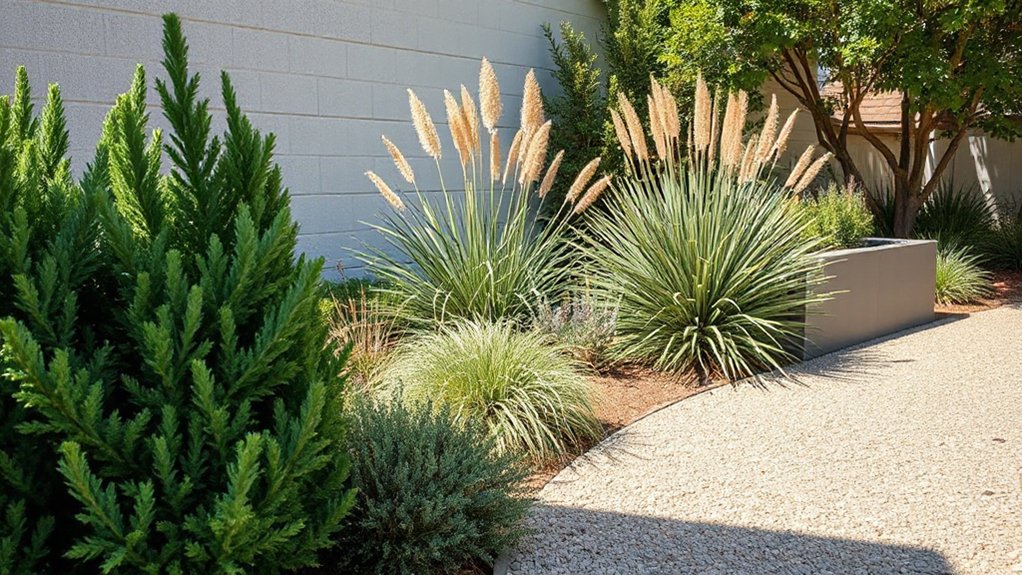
Low-maintenance plants are chosen for durability, simplicity, and low upkeep. You’ll want traits that reduce care without sacrificing garden performance. Prioritize plants with strong drought tolerance, minimal rewatering, and resilience to seasonal stress. Look for compact growth habits that limit pruning, and species that thrive in your native climate with sun or shade match. Plant propagation should be straightforward, enabling you to duplicate successful performers without complex methods. Favor varieties with pest resistance, reducing treatments and preventative sprays. Target hardy root systems, disease tolerance, and slow nutrient needs to maintain steady health with light intervention. In practice, measure your site’s light, soil, and water, then select proven performers rather than fads. This approach yields reliable color and structure with minimal ongoing labor.
Build an Evergreen Backbone for Year-Round Structure
Evergreen plants form the backbone of year-round structure, providing reliable color, texture, and form even when other beds go dormant. You build this backbone by selecting a core couple of evergreen shrubs and small trees that fit your site’s light, soil, and scale. Choose species with year-round foliage and complementary textures to maintain visual interest through winter. Plan for an evergreen structure that anchors borders, defines spaces, and reduces maintenance by minimizing seasonal cleanups. Pair these evergreens with a varied plant palette to preserve plant diversity, ensuring color and habit changes occur at different times. Keep pruning simple and consistent to preserve shape, health, and density. This approach delivers consistent structure, low ongoing effort, and lasting appeal.
Drought-Tolerant Perennials: Sun vs. Shade Anchors
Drought-tolerant perennials can anchor both sun and shade beds by choosing species that demand minimal water while delivering reliable color and form. You’ll pick sun loving perennials for hot, exposed sites and shade tolerant perennials for dawn-to-dusk shade, ensuring steady drama without irrigation guilt. In sun, prioritize deep-rooted, drought-hardy options like agave, yucca, and gaillardia, paired with compact grasses for texture. In shade, opt for moisture-efficient choices such as heuchera,likes bergenia, and astilbe cultivars that tolerate dry conditions better than their peers. Group plants by sun exposure, water needs, and bloom period to minimize maintenance. Mulch lightly to retain soil moisture, and water deeply but infrequently to encourage deep roots. This approach yields resilient color year-round without fuss. Sun loving perennials, Shade tolerant perennials.
Groundcovers That Cut Weeding and Mulch Needs

Dense groundcovers reduce weeds by sheltering the soil and forming a dense mat. They stay compact, limit maintenance, and slash mulch needs by minimizing bare soil. Look for varieties with strong coverage, low weed pressure, and mulch-saving growth habits.
Dense Groundcover Coverage
Groundcovers that cut weeding and mulch needs deliver dense, low-growth mats that suppress weeds and reduce mulch replacement. You’ll enjoy durable coverage that fills gaps between paths, rock beds, and planting borders without tall shoots to trim. Choose dense species that form a carpet, tolerate sun or shade, and resist drought once established. Prioritize native species when possible, as they adapt to your climate and support local pollinators. Pest resistance matters too: pick cultivars known for strong resilience against common pests to minimize interventions. Establishment should be gradual but steady; water deeply at first, then wean to a longer irrigation interval. With the right groundcover, you lessen maintenance, improve soil underfoot, and keep your landscape tidy throughout seasons.
Low-Millweed Weeding Needs
Choosing groundcovers that minimize weeding and mulch needs starts with selecting dense, low-growth mats that form a continuous layer. You’ll want species that naturally outcompete weeds, reducing disturbance and weed seeds finding space. Focus on robust root systems and shallow profiles that tolerate diverse soils without frequent intervention. For weed prevention, guarantee you establish solid plant spacing early so gaps don’t lure volunteers. Tight spacing discourages sunlit patches that spark weed growth and accelerates canopy cover. Choose varieties with slow growth spurts to maintain a uniform mat, then monitor edges to prevent encroachment into beds. Regular but light maintenance—occasional trimming, edge upkeep, and consistent irrigation—sustains the cover’s density. With the right plant spacing, you minimize upkeep while preserving a cohesive, low-maintenance landscape.
Mulch-Saving Plantings
When you pick robust groundcovers, you’ll slash both weeding and mulch needs by creating a dense, self-sustaining mat that shields soil and suppresses volunteers. Mulch-saving plantings excel by spreading quickly, forming continuous cover, and limiting bare soil exposure. Choose low-maintenance native species that thrive in your conditions to boost pest resistance and reduce irrigation. Groundcovers with shallow roots prevent soil erosion while staying tidy and unobtrusive. For sun, consider creeping jenny or vinca; for shade, ivy or periwinkle. Maintain by light pruning to keep vigor, not cleanup. Plant in groups to maximize canopy cover fast. Avoid high-water, high-maintenance species that demand mulch or frequent weeding. Prioritize durability, adaptability, and compatibility with your landscape style for lasting mulch savings.
Shrubs for Color, Privacy, and Easy Care
Shrubs that bring color, privacy, and low maintenance are the backbone of an easy-care landscape. You’ll want selections that bloom, block sightlines, and resist common chores. Choose flowering shrubs that deliver season-long interest with minimal effort, and pair them with dense evergreens for reliable privacy hedges year-round. Consider compact varieties that tolerate pruning and thrive in your climate, reducing replacement costs and maintenance time. Opt for plants with disease resistance and low water needs to minimize inputs. Space thoughtfully to avoid overcrowding, which drains vigor and invites pests. For color, mix bloom times and foliage colors to extend drama without extra care. Target a simple palette, and prune strategically to maintain shape without overdoing it. Flowering shrubs, Privacy hedges complete a cohesive, low-maintenance border.
Simple Planting Layouts for Low Upkeep
Simple planting layouts keep maintenance quick by grouping plants with similar water and sunlight needs and using clear, repeatable patterns. You’ll design beds with basic shapes, repeat textures, and predictable plant heights to minimize edits over time. Use grid-like spacing or staggered rows to support neat edges and easier trimming. Plan for garden decor accents that reinforce function without crowding space, like low-profile paths or containers that blend with the palette. For pest control, choose companion plants and unified mulch color to reduce hotspots and hide pests. You’ll also keep irrigation simple with zone-based plants and drip lines.
- Group by water and light requirements for uniform care
- Repeat plant forms and colors for cohesion
- Integrate garden decor that’s low-profile and functional
- Use pest-control friendly companions to minimize interventions
Quick Care Habits: Watering, Soil, and Feeding Essentials

Watering, soil, and feeding should be straightforward and repeatable. You’ll establish a simple routine: water deeply but infrequently, check moisture before each irrigation, and adjust for weather. Use a slow, thorough soak to encourage deep root growth and reduce evaporation. For soil, mix in compost a couple times a year and mulch to retain moisture and suppress weeds. Feeding is minimal: apply a balanced, slow-release fertilizer in early spring and again midseason if growth dictates. Track plant responses and avoid overfeeding, which can stress roots. Integrate plant pruning into maintenance—deadhead and trim to maintain shape and airflow. Maintain pest control with proactive inspection, removing affected tissue early and applying targeted, garden-safe solutions when needed.
Region-Specific Picks: Adaptable Options for Common Climates
Region-specific picks matter because climate shapes growth, maintenance needs, and plant performance, so choose adaptable options that perform well across typical temperature, rainfall, and soil conditions. You’ll focus on Region-Specific picks that require minimal intervention, reliable vigor, and broad compatibility with common climates. By prioritizing plants with flexible light and moisture tolerances, you ease Plant selection decisions and streamline Maintenance schedules. This approach lowers surprises, improves survival, and sustains curb appeal year-round.
- Drought-tolerant grasses and low-water perennials
- Native shrubs with pest resistance and seasonal interest
- Sedum and evergreen groundcovers for alkaline or poor soils
- Mixes that tolerate sun-to-shade progressions
Prioritize scalable options, verify microclimate factors, and pair plants for low maintenance.
Frequently Asked Questions
How Often Should I Prune Low-Maintenance Shrubs?
Pruning frequency depends on the shrub, but generally every 1–3 years; inspect annually. You’ll avoid stressing plants, improve shape, and promote Shrub health management. Stay consistent, prune after flowering or during dormancy, using clean tools and proper cuts.
What Soil Amendments Reduce Maintenance for Beginners?
For beginner-friendly maintenance, choose mulch selection that retains moisture and suppresses weeds, and perform soil testing to adjust pH and nutrients. This reduces future work by keeping roots happy and minimizing follow-up amendments.
Which Evergreens Require Least Watering and Care?
Drought tolerant varieties demand less watering, yet you still need steady care. Choose pest resistant options, then plant wisely; you’ll enjoy evergreen structure with minimal effort, finding resilience in contrast to labor-intensive greens. Your landscape stays vibrant, efficient, calm.
Can Native Plants Replace Exotics for Low Upkeep?
Yes, native plants can replace exotics for low upkeep. Native plant benefits include better adaptation and lower maintenance, while exotic plant drawbacks involve higher water needs and potential invasiveness. You’ll reduce irrigation and support local wildlife without extra effort.
What Are Signs of Soil Nutrient Imbalance in Easy-Care Beds?
You’ll notice stunted growth, uneven coloring, or leaf drop—signs of nutrient imbalance. Do soil testing, then address nutrient deficiencies with balanced amendments. Monitor drainage and incorporate organic matter to stabilize beds and prevent repeated deficiencies.
Conclusion
You’ve got a toolkit of sturdy, low-fuss options, ready to anchor your landscape. Think of evergreens as your quiet backbone, drought-tolerant perennials as dependable neighbors, and groundcovers as the weed-snuffing team you can trust. When you plan, you’re composing a durable scene—one that endures heat, rain, and time. Like a well-worn compass, these choices guide you toward easy care, steady color, and year-round structure, always returning you to simplicity.
About the Author


