
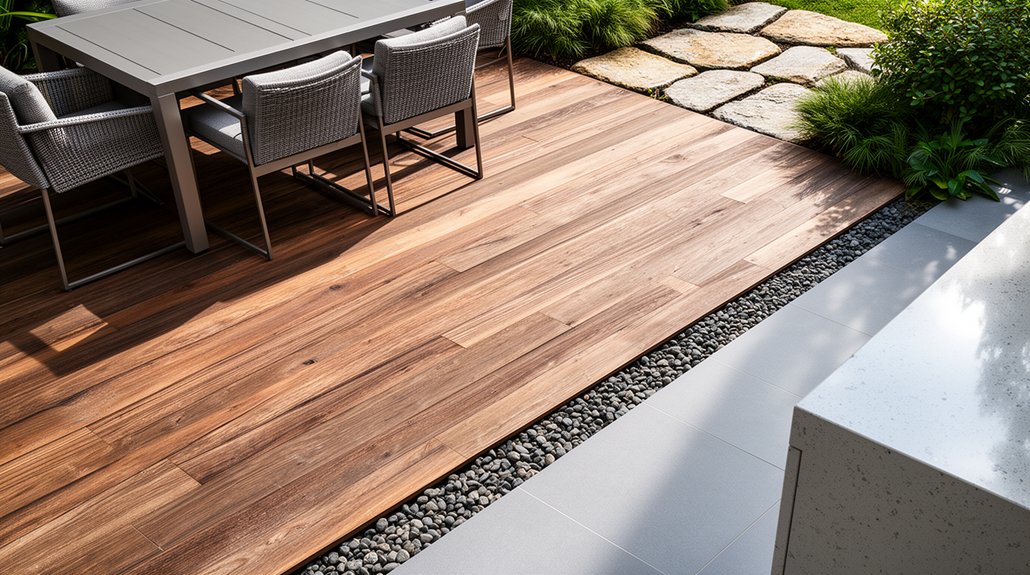
For durability and style, start with stone and concrete options that age gracefully and resist weather, choosing honed or lightly textured finishes for traction and easy maintenance. Pair with permeable or well-drained bases to handle freeze–thaw cycles, and use pavers for flexible patterns and simple repairs. Integrate a cohesive palette, textures, and lighting to extend usability after dark. Plan for future upgrades and cohesive hardscape–softscape integration, so your space stays timeless—and you’ll see why more details matter as you proceed.
Key Takeaways
- Prioritize natural stone or concrete (Stamped/Brushed) with proper sealing, texture, and slip-resistant finishes for durability and style.
- Use permeable surfaces where suitable to manage drainage, reduce erosion, and support long-term landscape cohesion.
- Plan sub-base, slope, and drainage first to ensure stability and prevent pooling or freeze-thaw damage.
- Balance color, texture, and lighting to create a cohesive, low-maintenance aesthetic with durable, timeless materials.
- Choose furniture and finishes that resist wear, with harmonious textures and colors to extend visual appeal over time.
How to Choose Durable, Stylish Patio Materials

Choosing durable, stylish patio materials starts with a clear plan: balance climate, foot traffic, maintenance, and visual impact. You evaluate coverage area, sun exposure, and drainage influences to prevent warping and staining. Prioritize material families by environmental resilience and upkeep—composites, high-grade concrete, and dense woods with proper sealants. You’ll compare slip resistance, colorfastness, and fade tolerance for steady long-term performance. Consider how garden furniture sits within sightlines and how outdoor lighting extends usability after dark. Your selection should harmonize texture, tone, and scale with the home’s architecture. For simplicity, choose a core material and complement with accents that don’t overwhelm. Guarantee compatibility with installation methods, warranty terms, and seasonal maintenance routines to sustain aesthetics and function.
Stone Options for a Timeless, Durable Patio
Natural stone offers enduring durability you can trust, with surfaces that resist wear while aging gracefully. Consider timeless varieties—granite, limestone, and slate—that bring texture and character without sacrificing performance. Prioritize slip-resistant finishes and proper jointing to maintain safety and longevity across seasons.
Natural Stone Durability
Natural stone offers lasting durability for a patio, resisting wear, weather, and heavy use when properly selected and installed. You’ll notice that material choice, finish, and slab thickness drive long-term performance more than color or trend. Natural stone provides inherent strength, low maintenance, and a timeless aesthetic, yet you’ll encounter durability myths that tempt oversimplification. For best results, match stone type to traffic, climate, and maintenance routines, and seal appropriately without over-reliance on coatings. Plan joints that accommodate movement and freeze-thaw cycles, and confirm proper drainage to prevent surface scaling. You’ll achieve a refined, resilient patio by prioritizing warranted, tested products, precise installation, and routine upkeep. Embrace natural stone for a durable, design-forward outdoor living space.
Timeless Stone Varieties
Timeless stone varieties offer enduring appeal and proven durability for a patio, combining classic aesthetics with reliable performance. You’ll choose marble, limestone, granite, or travertine for a refined foundation that ages gracefully. Each option delivers distinctive character: marble’s veining for formal elegance; limestone’s warm, uniform tones for understated sophistication; granite’s granular strength for high-traffic zones; travertine’s porous texture for Mediterranean charm. Consider color consistency, finish, and edge details to maintain a cohesive look with your landscape. Pair these stones with outdoor-grade sealants to protect against weathering without masking inherent allure. Plan around site conditions, avoiding excessive heat absorption or slippery surfaces. Integrate garden furniture and decorative accents that reinforce the stone’s mood, ensuring durability, low maintenance, and timeless coherence.
Slip-Resistant Surface Options
If you’re aiming for a patio that stays safe year-round without compromising style, prioritize stone options that resist slipperiness while aging gracefully. Slip-resistant textures matter as much as color and vein pattern, so choose finishes with micro-roughness or brushed surfaces that maintain traction when wet. Avoid highly polished faces on high-traffic zones; instead, favor honed or lightly textured slabs with consistent slip resistance across installation. Sealers should be breathable and durable, preserving grip without creating slick overdoses. Pair stone with deliberate outdoor furniture layouts that keep circulation clear and edges visible, reducing stumble risks. Integrate shade solutions—cantilevered pergolas, timber screens, or fabric sails—to minimize glare and slick shaded patches. This cohesive approach yields a timeless, durable patio that remains stylish in wet or dry conditions.
Concrete: Practical, Budget-Friendly Patio Choices
Concrete remains a workhorse for patios: durable, affordable, and easy to maintain, it adapts to a wide range of design styles with clean lines and a modern edge. You’ll appreciate its flexibility, whether you’re aiming for minimalist, industrial, or warm contemporary tones. Precision finishes—stamped, scored, or brushed—establish texture without sacrificing slip resistance. For longevity, sealers protect against staining and weather, while integrated control joints reduce cracking risk. Pair concrete with garden furniture that complements the surface’s neutrality: powder-coated metals, plain woods, or resin composites all read cleanly. Outdoor lighting should emphasize depth and function: low-profile uplights, hidden LEDs, and warm temps extend usability after dark. Keep maintenance simple with routine cleaning and seasonal sealer reapplications to preserve color and uniformity.
Paver Varieties for Beauty and Flexibility

Pavers offer a blend of beauty and flexibility, delivering varied textures, colors, and patterns that elevate any patio design. You’ll choose from modular sizes and surface finishes that adapt to traffic, climate, and intended mood, without sacrificing durability. Paver patterns guide visual rhythm, from simple runs to intricate baskets and herringbone layouts, enabling distinct zones and flow. Color customization lets you tailor tones to architecture and landscape, whether you favor warm earthy hues or cool modern contrasts. Edge constraints and joint stabilization influence maintenance, so plan for proper base prep and drainage. You’ll enjoy rapid installation and repair, as individual units can be replaced without disrupting the whole surface. Informed paver choices deliver lasting texture, tone, and finesse with minimal upkeep.
Composite Materials: Low Maintenance, High Resilience
Composite materials offer a refined balance of durability and low maintenance, making them a logical next step after the flexibility of pavers.
You’ll experience low upkeep without sacrificing style or performance, thanks to engineered surfaces that resist staining, fading, and warping. Composite innovation delivers consistent color and grit-free textures, while built-in slip resistance heightens safety and usability.
- High resistance to moisture and temperature swings
- Minimal sealing and cleaning requirements
- Color stability through years of sun exposure
- Design versatility for modern or traditional patios
These resilience factors translate to longer life cycles and reduced lifecycle costs, reinforcing your outdoor space as a cohesive, design-forward extension of your home. Choose composites for predictable performance and a contemporary aesthetic that endures.
Brick, Clay, and Rustic Alternatives That Last
Brick, clay, and rustic alternatives offer enduring charm without sacrificing durability. You’ll appreciate hard-wearing textures that weather gracefully, with ample color depth and timeless character. Choose bricks with low porosity for stain resistance, and opt for clay pavers that resist frost and wear when used across high-traffic zones. Rustic materials, like tumbled pavers or reclaimed bricks, deliver patina without sacrificing performance. Plan landscaping integration by aligning joints and color with surrounding plantings to knit spaces together. Pair these surfaces with outdoor furniture that respects scale and line, ensuring seating and tables sit flush with paths for seamless flow. Prioritize slip resistance and evenness to maintain safety and accessibility, while preserving an curated, design-forward outdoor environment.
Slab vs. Permeable Surfaces: Drainage and Your Climate

Drainage needs shift with your climate: permeable surfaces reduce runoff where storms are frequent, while slabs demand slope and subgrade strength for similar performance. Permeable options offer long-term resilience and easier maintenance, but you must weigh their limits in freeze-thaw cycles and sediment load. Prioritize durable slab details and performance benchmarks, then align them with your climate-driven drainage requirements, to guide material choices and layout.
Drainage Requirements by Climate
When climate dictates, your drainage plan should favor permeable surfaces in wet or freeze-thaw regions and slab options where drainage can be precisely controlled and kept above grade. You’ll design for site conditions first, then material behavior, ensuring durability and aesthetics align. Permeable surfaces reduce runoff, shield foundations, and support lush planting zones, while slabs offer predictability around furniture placement and utilities. Your emphasis should be on controlled grading, proper slope, and appropriate infill to prevent pooling. Garden furniture and Lighting options should be considered early to avoid rework. Plan with climate data, load expectations, and maintenance access in mind.
1) Assess regional precipitation and freeze cycles
2) Match surface type to drainage control needs
3) Integrate grading and edge details for reliability
4) Align with outdoor furniture and lighting layouts
Permeable Surface Benefits
Permeable surfaces deliver drainage flexibility that slab options can’t match, yet slabs remain essential where you need exact control over water flow and utility access. You’ll evaluate climate impacts by prioritizing permeability values, runoff management, and seasonal loading. Permeable pavement choices let you design with intention: rain gardens, shallow depths, and alignments that decouple precipitation from storm sewers. In zones with heavy rainfall or freeze–thaw cycles, the ability to absorb and gradually release water reduces erosion and flooding risk—without compromising aesthetics. Eco friendly surfaces gain traction when you balance infiltration rate with durability, maintenance, and cleanability. Use design-forward layouts that emphasize texture, color, and contrast while ensuring sub-base stability. The result is climate-smart patios that maintain beauty, performance, and long-term value.
Slab Durability Considerations
Slab durability matters as you weigh durability against permeability. When you compare slab to permeable surfaces, consider drainage, climate, and loading. A well-chosen slab blends seamless integration with your overall design, while color looks purposeful across seasons.
- Assess your climate’s freeze-thaw cycles and their impact on cracks.
- Prioritize a rigid, low-porosity finish for stain resistance and easy maintenance.
- Match material color to the home palette for cohesive, timeless appeal.
- Plan drainage alignments that prevent pooling without compromising aesthetics.
Choose a slab that supports your porch, path, or terrace while maintaining a clean, modern look. Precision in texture, joint spacing, and color consistency ensures durable performance and a visually seamless integration with surrounding hardscape.
Slip Resistance: Safe, Walkable Patios
Slip resistance is nonnegotiable for patios you’ll use daily. You’ll select surfaces with proven traction, from textured concrete to grouted pavers, avoiding slick coatings after rain. Prioritize subtle texture over high gloss to keep grip predictable under shoes and barefoot. You’ll test slope and drainage so pooling never compromises footing. Edge details, such as chamfers or micro-texturing, reduce slips near transitions from indoors to outdoors. You’ll plan for consistent slip resistance across materials, considering seasonal wear and foot traffic. Garden furniture placement should leave clear walkways, with outdoor lighting guiding the path at night without glare. Choose finishes that maintain traction while celebrating design, balancing durability, ease of maintenance, and a cohesive, modern aesthetic.
Weather and Climate: Matching Materials to Your Region
Weather shapes what lasts on a patio, so you’ll choose materials that align with your climate and seasonal patterns. You’ll pair durability with aesthetics, selecting surfaces that handle temperature swings, humidity, and UV exposure while preserving form and color. Prioritize materials that respond to outdoor lighting and furniture placement, ensuring cohesive ambiance from dawn to dusk.
- Select weather-tolerant pavers or boards that resist cracking, warping, and fading in your seasonal range.
- Align color and texture with sun exposure, enhancing outdoor lighting effects and reducing glare.
- Plan furniture placement to optimize shade, wind protection, and moisture drainage for longevity.
- Use sealants or finishes appropriate to your climate, balancing maintenance with visual appeal.
Design-forward choices that stay resilient across regions.
Maintenance and Real-World Care for Patios

Your patio deserves proactive care that protects both look and longevity. Start with routine cleaning to prevent grime buildup, then address stains and seal maintenance to preserve color and material integrity. This moment sets the standard for durable, design-forward outdoor spaces.
Routine Cleaning Basics
Routine cleaning sets the baseline for longevity, performance, and good looks, so establish a simple, repeatable cadence that removes dirt, debris, and stains without harming the material. You’ll protect design intent by using material-appropriate methods and avoiding harsh abrasives. Focus keeps outdoor spaces inviting and durable, with attention to Outdoor furniture and Plant integration as part of the rhythm.
- Sweep and rinse regularly to prevent buildup and maintain surface clarity.
- Use mild cleaners suited to the material, avoiding chlorine on metals and acids on stone.
- Tackle spots promptly with a soft brush to prevent staining.
- Inspect fasteners, joints, and weep holes to preserve drainage and stability.
Stain and Seal Maintenance
Staining and sealing are essential to preserving color, texture, and slip resistance, so treat them as targeted maintenance rather than a one-time fix. You’ll guard overall longevity by scheduling routine checks, applying coatings only when surfaces are clean and dry, and selecting products that match your material’s porosity. For stain prevention, prep matters: sweep, rinse, and neutralize any contaminants before application. Use breathable sealers on porous substrates to avoid surface peeling and moisture entrapment. Choose sealing techniques that align with traffic patterns—high-traffic zones get more frequent reapplications, while shaded areas may require less frequent care. Document the product type, batch, and date to guarantee consistency across touchups. Adhere to manufacturer guidelines, test on inconspicuous spots, and maintain a cohesive, durable finish.
Cost and Value: Upfront Price vs. Long-Term Savings

While upfront cost matters, the real decision hinges on value over time: durable patio materials save on maintenance, replacements, and downtime. You’ll compare initial price against life cycle costs, factoring in reliability and design-forward performance. Prioritize options that reduce future upkeep while enabling clever layouts for outdoor lighting and privacy screens.
- Long-term durability: higher upfront, lower replacement frequency, preserving aesthetics with less disruption.
- Maintenance cadence: low-maintenance materials minimize ongoing costs and labor.
- Installation efficiency: precise, modular systems speed up builds and future upgrades.
- Value-retention: materials that age gracefully preserve resale appeal and design clarity.
Choose materials that balance cost and longevity, then integrate Outdoor lighting strategically and Privacy screens for enduring value and seamless, modern exterior harmony.
Aesthetics and Curb Appeal: Finishing Touches That Matter
Aesthetics and curb appeal hinge on thoughtful finishing touches that elevate both form and function, so you should treat color, texture, and scale as compositional elements in your outdoor room. You bring deliberate restraint to palettes, aligning hue with existing materials to avoid visual clutter. Subtle texture contrast—slats, ribbed surfaces, and smooth planters—adds depth without competing with architecture. Scale matters: oversized pots can overwhelm, while compact containers feel precious; choose sizes that read as a cohesive ensemble. garden lighting should extend the day’s mood beyond dusk, highlighting focal statements and guiding movement. Pair with outdoor furniture that reinforces line quality and comfort, ensuring steel, wicker, or teak finishes are consistent. Done correctly, finishing touches amplify durability, ambiance, and perceived value.
How to Choose Your Patio Material: A Practical Framework
Choosing the right patio material starts with clear criteria: durability, maintenance, climate fit, and how it reads with surrounding architecture. You’ll evaluate performance, feel, and upgrades in one framework, then tailor choices to your site. Consider how material interacts with light, shade, and adjacent landscaping. Keep practicalities—drainage, slip resistance, and color stability—front and center. Once you’ve aligned criteria, you can mix aesthetics with function for a cohesive outdoor room.
1) Assess durability and maintenance timelines for each option.
2) Match climate response and UV stability to your location.
3) Visualize the material with Patio lighting and garden furniture combinations.
4) Plan future updates, focusing on progressions between hardscape and softscape.
Frequently Asked Questions
How Do Materials Affect Resale Value of a Home?
Your choices affect resale by signaling quality and care; durable materials, good landscape lighting, and stylish outdoor furniture boost curb appeal, perceived longevity, and buyers’ confidence, increasing perceived value and sell-through while reducing negotiation friction.
Which Patio Surfaces Are Best for Pets?
Pet friendly surfaces top the list, and you’ll love how they resist paws and claws with scratch resistant materials. You’ll feel the suspense fade as durability and design converge, giving you confident, precise, pet-friendly patio perfection.
Are Eco-Friendly Options as Durable as Traditional Choices?
Yes, eco friendly options can match traditional durability with proper choices. Eco friendly alternatives offer sustainable durability through strong materials and smart design, delivering long-lasting performance while reducing environmental impact. You’ll design confidently, choosing resilient, eco-conscious patio solutions.
How Long Does Each Material Typically Last Outdoors?
You’ll typically see outdoor materials last 10–30 years, depending on use and climate. Consider color options and maintenance requirements; sealants or coatings extend life. With proper care, you’ll enjoy durable, stylish patios that resist wear and fading.
Can DIY Installation Save Money on Patio Projects?
DIY installation can save you money, especially with careful planning and quality tools. Follow cost saving tips like precise measurements, batch-material purchases, and scalable layouts to minimize waste while achieving durable, stylish patio results you’ll confidently own.
Conclusion
Choosing the right patio material balances durability, maintenance, and style. Prioritize stone for timeless resilience, or concrete for budget-friendly practicality, with pavers or composites adding flexibility and low upkeep. Consider climate, foot traffic, and your aesthetic. Finish with smart detailing—color, texture, and joints—that elevates curb appeal. In the end, your patio should feel intentional, like a well-planned room outdoors—a sturdy stage where design meets everyday life. Build for longevity, and enjoy the clean, lasting impression.
About the Author


