

Winter landscaping starts with a practical plan: protect your existing plants, choose hardy, low-maintenance varieties, and build structure with mulch, color, and energy-efficient design. Assess what needs shielding, prune weak branches, and tidy debris. Mulch 2–4 inches to insulate soil, but keep roots and perennials protected. Pick evergreen shrubs and ornamental grasses for year-round interest, group by sun needs, and guarantee good drainage. Stay on schedule, and you’ll master a healthy, attractive winter-to-spring progression—more tips await if you keep exploring.
Key Takeaways
- Assess and clean up gardens in late fall: remove disease debris, prune weak stems, and tidy beds to prepare for winter protection.
- Protect roots and young plants with mulch and wrapping, while testing soil and planning spring improvements.
- Mulch 2–4 inches deep to insulate soil; avoid fresh manure and keep mulch loose for breathability.
- Create winter interest with evergreens, grasses, berries, and varied textures; ensure pathways are clear and lightly lit.
- Monitor progress, adjust schedules for thaw windows, protect against pests, and maintain momentum toward healthy spring growth.
How to Prep Your Winter Landscape: A Beginner’s Step-By-Step

Getting your winter landscape ready starts with a simple, practical checklist: assess what needs protection, what can stay as-is, and what you’ll remove or prune. You’ll map priorities, noting erosion-prone slopes and exposed roots. Start with a light clean-up: remove diseased debris, mulch sensitive beds, and tidy edging to prevent winter washout. Next, protect core assets by wrapping young shrubs or wrapping trunks, if needed, and applying a fresh layer of mulch that protects moisture and moderates soil temperature. For landscape design, plan seasonal color accents and structural elements that endure frost. Finally, focus on soil improvement: test nutrients, amend deficient soil, and gently aerate where compaction exists. A structured prep routine saves time, supports plant health, and elevates winter performance with clear, measurable steps.
Choose Hardy, Low-Maintenance Plants for Winter
Think about hardy, low-maintenance picks that stand up to cold, wind, and variable moisture. Choose winter-ready plant selections that require minimal pruning and feed, yet provide consistent texture and color. Start with proven performers you can rely on, and tailor choices to your site’s sun exposure and soil.
Hardy, Low-Maintenance Picks
When selecting hardy, low-maintenance plants for winter, start with species proven to shrug off cold, drought, and compacted soil. Choose evergreen shrubs that keep color year-round and require minimal pruning, and pair them with ornamental grasses for texture and movement. Favor drought-tolerant varieties with strong root systems that tolerate root competition and compact sites. Avoid high-maintenance cultivars; instead, select plants with proven winter hardiness and salt tolerance if you deal with treated paths. Group by light needs: sun-loving options stay vibrant in full sun, while shade-tolerant picks endure dim weeks without effort. Plan for drainage, mulching, and occasional debris cleanup to prevent disease. This practical mix delivers structure, year-round interest, and reliable performance with minimal fuss.
Winter-Ready Plant Selections
Winter-ready plant selections start with proven hardiness and low maintenance. You’ll want evergreen varieties that stay leafy through cold snaps and provide year-round structure. Prioritize plants with compact habits and minimal pruning needs, so maintenance stays manageable when days are short. For foundation or borders, mix evergreens with hardy deciduous shrubs to preserve color in winter. Choose species tolerant of your soil type and sun exposure, then plan for seasonal interest with berries, bark, or form. When you select shrubs, consider shrub pruning guidance closely to avoid damaging winter growth or reducing bloom potential next season. Keep expectations realistic: hardy, low-maintenance choices won’t replace routine care, but they reduce effort while preserving structure, color, and resilience during harsh months.
Mulching for Winter Protection: Depth, Materials, and Benefits
Mulching for winter protection starts with selecting the right depth and materials to shield roots, conserve moisture, and prevent frost heave. You’ll apply a uniform layer that stays put through freeze-thaw cycles, avoiding gaps near stems that invite pests or rot. For most beds, aim a 2–4 inch depth, thicker around perennials and shrubs, thinner over shallow roots. Choose materials for lasting protection and soil health: shredded hardwood or pine bark, straw, or composted leaves, avoiding fresh manure or glossy plastics. Maintain soil insulation by keeping the mulch loose enough to breathe yet dense enough to deter temperature swings. Monitor soil temps and adjust depth after extreme cold or heavy snowfall. Soil insulation benefits come from consistent coverage, and mulch color options can influence heat absorption and garden aesthetics.
Pruning Dormant Shrubs: Safe, Easy Tips
Pruning dormant shrubs is straightforward work you can tackle now to boost plant health and shape. Start by inspecting for dead, diseased, or crossing branches, and prune those first to prevent pests and decay. Use clean, sharp tools and make clean cuts just above healthy buds or lateral branches. Before cutting, identify the plant’s natural form to preserve balance during regrowth. When you remove interior growth, light and air will penetrate, reducing disease risk. For most shrubs, prune lightly after the heaviest growth ends, avoiding severe cuts that stress the plant. Focus on maintaining a balanced structure rather than chasing perfect symmetry. This approach reflects pruning techniques that encourage even regrowth and promotes dormant shrub care throughout winter.
Create Winter Interest With Color and Texture
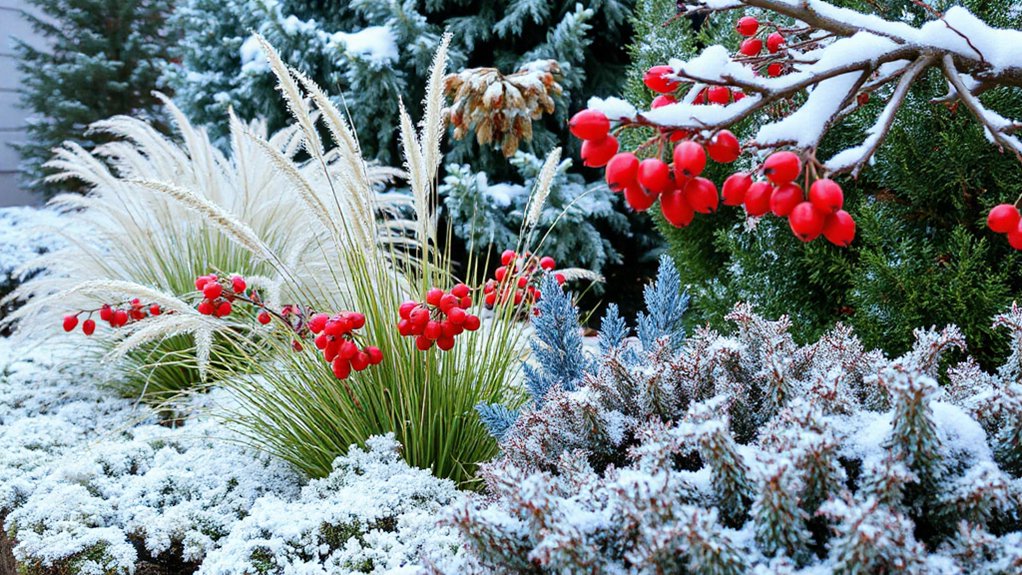
Even in the coldest months, you can create striking winter scenes by combining color and texture that stand up to gray skies. Start with bold color contrast contrasts—evergreens against bright berries, or a return of ornamental grasses with a sweep of red stems. Mix leaf textures: glossy evergreen needles, matte bark, and fluffy seed heads create depth even when leaves are gone. Use varied heights to guide the eye: low groundcovers, mid-height shrubs, and tall architectural accents. Plan for year-round structure, not just snow appeal. Introduce texture variation with rough bark, prickly junipers, and smooth, sculptural branches. Keep pathways clear and lighting subtle to showcase color bursts without glare. Regularly prune for air circulation and repeat focal points to maintain cohesion.
Design for Safety, Comfort, and Energy Efficiency
Design for safety, comfort, and energy efficiency starts with practical layout choices that protect you and save on costs. You plan walkways with clear sightlines, keeping stairs, ramps, and entrances well-lit to prevent slips. Focus on evergreen screening to reduce wind exposure and lower heating needs, while preserving access and aesthetics. Choose decking and paving with non-slip finishes and install snow guards or heated mats where needed, prioritizing safe passage during storms. For comfort, position seating and gathering spots to shield from prevailing winds, and use radiant or compact, energy-efficient lighting to minimize heat loss. Holiday lighting should be weatherproof and low-voltage, evaluated for drainage impact and energy use. Snow removal plans, with designated storage and timely response, keep spaces usable without overexertion.
Budget-Friendly Tools and DIY Tasks for Beginners
If you’re just starting out, budgeting smartly means choosing versatile tools and tackling simple tasks that build confidence without overwhelming your wallet. Start with a basic set: a sturdy trowel, pruning shears, a cultivator, a practical rake, and a handheld blower. Look for quality over quantity, and prioritize items that serve multiple jobs to maximize cost effective gardening. For DIY tasks, begin with quick wins like soil amendment, seasonal mulching, and container cleanup, which teach technique without heavy risk. Reuse household items where safe, like old buckets or buckets from paint projects, to minimize cost. Plan projects around weather windows, track gains, and replace only worn parts. This approach supports beginner DIY projects while keeping investment low and results steady.
Winter-to-Spring Prep Checklist: Plan, Act, Inspect

Start with a clear plan that outlines winter-to-spring tasks, priorities, and timelines so you know what to tackle first. Then act on those steps now—schedule inspections, prep tools, and set milestones to keep yourself on track. Finally, inspect every completed task and identify any gaps, adjusting your plan for a smoother shift into spring.
Plan Winter-to-Spring
As winter fades, map out a clear winter-to-spring plan by outlining what to do now, what to tackle next, and how to verify progress. Begin with a prioritized checklist: prune weak stems, sharpen tools, and repair irrigation if needed. Assess soil condition, note timing for early bloom protection, and schedule replacements or additions for beds. Plan where you’ll store winter ornaments and holiday lighting securely, so you can reuse or replace without clutter. Allocate resources for mulching, edging, and soil amendment, then assign realistic deadlines and owners. Create simple milestones: completion of cleanup, soil test results, and a first-round planting date. Verify progress by weekly reviews, updating a compact notebook or app. Keep routines efficient, reducing backtracking and ensuring a smooth changeover into spring growth.
Inspect Seasonal Tasks
Now that you’ve outlined your plan, inspect each seasonal task to confirm it’s moving forward on schedule. You’ll verify milestones, deadlines, and dependent steps, then adjust the calendar if delays appear inevitable. Focus on concrete checks: are pruning, mulching, and soil amendments aligned with forecasted thaw windows? Confirm equipment readiness, contractor availability, and any weather contingencies. As you inspect, document observations and compare them to your winter-to-spring objectives. Watch for Seasonal garden pests in sheltered spots or lingering debris that could harbor pests, and plan targeted controls if issues arise. Consider winter watering techniques now—how much water, frequency, and drainage will support new growth without oversaturating beds. Tighten gaps between planning and action to preserve momentum and protect plant health.
Frequently Asked Questions
How Often Should I Water Winter Landscape Plants?
You should water sparingly in winter, based on soil moisture and plant needs. Check weekly and adjust; don’t overwater. Use plant mulch to conserve moisture and set a simple watering schedule that respects freezing risks and root health.
Which Winter Pests Commonly Threaten Small Gardens?
Winter pests commonly threaten small gardens include aphids, mites, snails, and voles. Like a stealthy winter fox, you’ll identify winter pest identification signs and implement Seasonal pest prevention measures to protect roots and crops effectively. Stay vigilant and proactive.
What Are Safe De-Icing Options for Plant Beds?
You should use salt alternatives or organic de-icers carefully, applying sparingly to reduce plant damage. You’ll protect beds by choosing approved products, test spots first, and sweep residue to minimize runoff while reapplying after storms.
Can I Grow Edibles Year-Round in Winter?
You can’t grow edibles year-round in winter, but you can extend seasonality with cold-hardy varieties and season extension techniques. Emphasize winter planting when possible, protect crops, and plan for a seasonal harvest to maximize yields despite frost.
How Do I Protect Pets From Winter Hazards Outdoors?
Pet safety trumps curiosity: you protect pets from outdoor hazards by fencing, supervising, and applying salting/antifreeze safeguards. You’ll spot frostbite signs, limit exposure, provide heated shelter, fresh water, and insulated boots, boots, and pet-safe footwear for winter adventures.
Conclusion
Winter doesn’t have to be worrisome. With steady steps, you’ll quietly nurture resilience and curb chaos, tucking in your landscape like a well-worn coat. Embrace careful planning, mindful pruning, and simple mulching to soften risks and stretch your budget. You’ll discover quiet confidence as dormant plans awaken into subtle beauty—practical, doable, and rewarding. The season may hint at limitations, yet your steady, thoughtful actions whisper brighter days ahead, guiding you toward a healthier, more serene yard.
About the Author


