

Transform your outdoor space with modern landscaping by prioritizing function, style, and low maintenance. Start with a cohesive design palette and balance color with texture across materials, plants, and lighting. Choose drought-tolerant, native plants to reduce upkeep, and install clean, geometric patios and pathways that guide movement. Integrate multitasking hardscapes, vertical elements, and privacy features for a cohesive, inviting space. Add smart irrigation and lighting to simplify care and elevate ambiance; more tips await.
Key Takeaways
- Prioritize a cohesive design palette with repeating textures and colors across hardscape, plants, and lighting for timeless modernity.
- Use clean, geometric patios and pathways aligned to a grid to guide movement and visual balance.
- Incorporate vertical elements and trellises to define zones, add privacy, and support climbers with durable materials.
- Emphasize low-maintenance, drought-tolerant, native plants grouped by water needs to reduce irrigation and upkeep.
- Integrate fire, water, and textured materials as focal points to soften geometry while maintaining safety and efficiency.
What Modern Landscaping Delivers: Function, Style, and Low Maintenance

Modern landscaping delivers a clear trio of benefits: function, style, and low maintenance. You’ll gain spaces that perform—paths guide traffic, zones manage airflow, and drainage mitigates moisture issues. Function anchors every decision, ensuring your outdoor area supports daily activities without chaos. Style follows through precise plant selection, material choices, and lighting that render a cohesive, timeless look. Low maintenance is achieved through smarter design: durable materials, thoughtfully placed shade, and appropriate irrigation, reducing upkeep without sacrificing appeal. Incorporate Wildlife habitat considerations by selecting native plants that attract pollinators and sustain local ecosystems. Native plants also adapt to your climate, reducing water needs and fertilizer requirements. With these elements, your landscape remains elegant, resilient, and easy to maintain year after year.
Start With a Cohesive Design Palette for Your Space
Start by defining a unified color palette that guides every material, plant, and accent you choose. Balance color with texture—pair smooth surfaces with natural fibers and varied finishes to keep depth without chaos. Keep the palette consistent across spaces so your outdoor room feels intentional and cohesive.
Define a Unified Palette
A cohesive design palette anchors your outdoor space, guiding material choices, color relationships, and overall rhythm. You define a unified spectrum first, selecting base neutrals and two to three accent tones that repeat across elements. Choose finishes that reinforce the palette—stone, metal, wood—so texture supports rather than competes. Prioritize color harmony by limiting contrasts to deliberate pairs, ensuring balance between large areas and focal points. Map your palette to furniture, planters, pavers, and architectural features, then apply it consistently for cohesion. Document the rules: what to reuse, what to replace, and where to oscillate slightly for emphasis. This disciplined approach yields a timeless, refined outdoor space with clarity, order, and purposeful, enduring appeal. Texture contrast remains essential, never overpowering the unified color story.
Balance Color With Texture
To balance color with texture, begin by grounding your space in the cohesive design palette you established, then layer tactile contrasts that reinforce rather than compete with that palette. You achieve this by selecting a dominant color scheme and introducing accents through materials that offer distinct tactile surfaces. Pair smooth, reflective finishes with rougher textures to create depth without overwhelming the eye. Use color contrast intentionally: a light, airy backdrop balanced by deeper, saturated accents, so foliage and furniture read crisply. Introduce multi-sensory elements—wood, stone, metal, and fabric—each contributing texture while remaining visually cohesive. Repeat textures across zones to unify areas. Prioritize proportion and rhythm so contrast supports flow, not distraction, ensuring your space feels deliberate, refined, and resilient.
Choose Low-Maintenance, Drought-Tolerant Plants
Choosing low-maintenance, drought-tolerant plants sets the foundation for a resilient outdoor space: these species require less water, fewer inputs, and simplified upkeep while still delivering seasonal color and structure. You’ll prioritize native plants that thrive in your climate, reducing irrigation needs and soil amendments. Focus on xeriscape gardens, designed to maximize drought resilience with soil-smart selections and efficient water use. Choose plants with deep roots, high drought tolerance, and complementary textures to maintain year-round interest. Group species with similar water needs to avoid over- or under-watering zones. Implement mulching to reduce evaporation and suppress weeds. For ongoing care, favor pruning that sustains form and health rather than aggressive reshaping. This approach delivers a low-maintenance, vibrant landscape that endures without constant intervention.
Create Clean, Geometric Patios and Pathways
Create clean, geometric patios and pathways by prioritizing precise lines, consistent materials, and purposeful spacing. You’ll shape spaces that feel curated, modern, and durable, while guiding movement with confidence. To achieve this, focus on rhythm, repeatable modules, and restrained color. Precision cuts, clean grout joints, and aligned edging keep the look tight and timeless, echoing Contemporary Art in structure and form. Integrate water features as quiet focal points to add texture without visual clutter. Use contrast between smooth surfaces and textured accents to emphasize geometry. Maintain sightlines from house to landscape, enhancing openness.
- Plan modules on a grid for predictability and balance
- Choose low-maintenance materials with complementary tones
- Integrate subtle water features for serenity
- Align hardscape edges with surrounding planting for cohesion
Integrate Multitasking Hardscapes for Style and Use
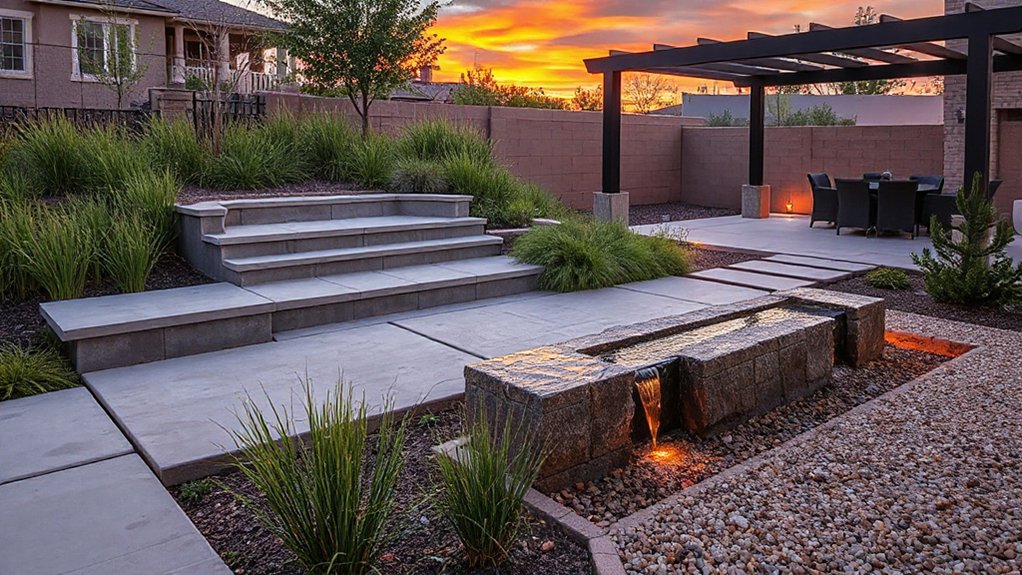
As you move from clean, geometric hardscapes to multitasking designs, prioritize surfaces and layouts that serve multiple uses without clutter. You’ll design seating that doubles as storage, stepping stones that become display niches, and patios that shift from dining to performance zones with simple furniture reconfigurations. Select durable, low-maintenance materials that unify zones and reduce upkeep, while subtle edge treatments guide foot traffic without visual noise. Integrate built-in planters to soften edges and create micro-rooms for garden art, adding personality without crowding space. Consider elevated counters for casual meals and work surfaces that fold away when not in use, preserving openness. Plan for wildlife habitat by including drought-tolerant natives near hardscape edges, attracting pollinators without sacrificing style. The result is cohesive, versatile, and visually sharp.
Install Smart Irrigation for Water Efficiency
Smart irrigation systems optimize water use without sacrificing turf and plant health. When you install smart irrigation, you gain precision, control, and savings that translate to immediate landscape benefits. You’ll reduce runoff, conserve resources, and maintain vibrant gardens with minimal effort. Follow these steps to maximize efficiency:
- Assess plant water needs and group zones by irrigation requirements.
- Install soil moisture sensors to tailor watering cycles.
- Integrate weather data and smart schedules for automatic adjustments.
- Regularly review performance and calibrate heads for uniform coverage.
Implementing smart irrigation supports garden art by sustaining color and texture with careful timing, while outdoor furniture remains unshaded by overwatering. Your yard stays healthy, cost-efficient, and ready for outdoor gatherings.
Lighting That Highlights Your Architecture and Plants
Lighting that highlights your architecture and plants blends form with function, extending the impact of smart irrigation by showcasing color, texture, and structure after dark. You select fixtures that emphasize architectural lines and plant silhouettes, using a layered approach: ambient, task, and accent lighting. Keep color temperature around 2700–3000K for warmth that flatters materials and foliage. Design should yield even illumination, avoiding glare and deep shadows that distort forms. Integrate fixtures with existing hardscape and garden art to create cohesive scenes, guiding movement and highlighting focal points without overpowering the landscape. Consider outdoor acoustics by pairing lighting with sound-dampening elements and strategic shading for comfortable evenings. Make certain controls are simple, reliable, and energy-efficient to sustain long-term impact.
Add Structure With Vertical Elements and Trellises

Vertical frame systems establish the backbone for your outdoor layout, offering strong, unobtrusive support for plants and space definition. Choose trellis materials with durability and aesthetics in mind—metal for modern edges, wood for warmth, or composites for low maintenance. Consider scale, fastening, and ventilation to guarantee healthy growth and a cohesive connection between structure and planting.
Vertical Frame Systems
Do you want to fortify outdoor spaces with a clean framework that defines zones and supports plants? Vertical Frame Systems provide structure without clutter, guiding movement while hosting climbers. You’ll create distinct rooms, emphasize sightlines, and reduce visual chaos with deliberate verticals that frame views.
- Install freestanding frames to anchor pathways and seating areas.
- Combine metal and wood for durability and warmth, avoiding visual heaviness.
- Integrate lattice panels behind garden sculptures to spotlight focal points.
- Attach trellises to walls for compact plantings and extra shade without crowding.
These systems optimize space, support climbers, and complement outdoor furniture, elevating the yard’s rhythm. Use them to balance openness with enclosure, crafting purposeful zones that feel intentional and cohesive.
Trellis Material Choices
To build durable, visually balanced trellises, choose materials that stand up to outdoor conditions and complement your frame system. Your selection sets the tone for structure, shade, and vine performance. For rigidity and longevity, consider pressure-treated wood or cedar, which resist rot and weathering, and steel or aluminum for modern, minimal lines with strong spans. When integrating with vertical frames, guarantee consistent grain or metal finish to preserve cohesion. Vine support requires surfaces that distribute weight evenly; slatted panels or gridwork provide predictable support without warping. If privacy screens are a goal, taller lattices with dense infill and weatherproof coatings resist staining and aging. Balance aesthetics with maintenance, selecting materials that align with climate, growth habits, and the scale of your landscape.
Define Foundational Hardscaped Zones for Living

Foundational hardscaped zones anchor outdoor living by defining clear, durable areas for circulation, seating, and dining. You’ll create structured paths and thresholds that guide movement, reduce wear, and support year-round use. Plan four primary zones that work together:
- Circulation corridors that minimize bottlenecks and keep furniture clear of traffic.
- Seating lounges placed to optimize sightlines and conversation without crowding.
- Dining pads sized for current furniture and easy service access.
- Multiuse patios that shift between shade, sun, and covers with scalable furniture.
Choose outdoor furniture that resists weather and pests, and install pest control measures where needed to protect plants and fabrics. Establish maintenance routines to preserve structure and safety.
Create Privacy Without Blocking Light
Creating privacy without blocking light starts with intelligent screening that lets sun through. You design with measured openness, using privacy screens that provide obfuscation while maintaining daylight. Position screens to align with sun paths, ensuring shade shifts harmlessly across terraces rather than accumulating glare. Consider natural barriers like slender evergreen columns or layered hedges that break sightlines without dense enclosure. Choose materials with light-reflective surfaces and airy verticals to preserve airflow and brightness. Integrate perforated panels, lattice, or slatted screens at varying heights to create depth without visual heaviness. Ground your selection in scale, proportion, and site conditions, avoiding monopolizing the view. This approach yields functional privacy that feels seamless, intentional, and integrated with the landscape.
Fire, Water, and Texture: Softening the Space
Even in outdoor spaces, fire, water, and texture work together to soften geometry and invite tactile engagement. You’ll harness controlled warmth, reflective surfaces, and varied materials to create inviting zones without sacrificing safety or efficiency. Balance is essential: choose compact heat sources, place screens, and maintain clear sightlines. Integrate water features with automated circulation to minimize waste and noise, and select textures that dampen echoes while guiding movement. Your design should prioritize harmony over spectacle, ensuring durability and ease of maintenance. Fire safety remains nonnegotiable, with proper clearances, guards, and shutoffs. Water conservation matters too; opt for low-flow, recirculating systems and drought-tolerant plants. 1) Define zones 2) Install protected outlets 3) Use passive shading 4) Schedule maintenance for reliability.
Edging and Mulch: Sustainable Borders for Clean Edges

You’ll select sustainable border materials that balance durability with aesthetics, creating crisp edges that require minimal upkeep. Maintain those edges with a simple, regular routine to preserve clean delineation between mulch and planting beds. By prioritizing crisp borders and practical mulch choices, you’ll achieve a polished, low-maintenance landscape that lasts.
Sustainable Border Materials
How can you achieve clean, durable borders in your landscape without sacrificing ecological performance? You can choose sustainable border materials that balance form and function, keeping edges crisp while minimizing impact. Favor products that prioritize recycled materials or responsibly sourced natural stone, and verify local manufacturing to cut transport emissions. Install components with proper compaction and a shallow contour to deter weed encroachment and water pooling. Sustain edge integrity by selecting stabilized mulches and permeable fillers that reduce runoff and conserve moisture. Keep maintenance minimal with durable neighbors that resist erosion and weathering.
- Recycled materials for edging
- Natural stone installations
- Permeable mulches with long-term stability
- Local sourcing and low-impact finishes
Crisp Edges Maintenance
Crisp edges start with precise installation and disciplined maintenance. You secure clean lines by choosing a durable edging material that resists shifting and contracts with seasonal changes. Set a straight reference line, stake it firmly, and bury the edge for a hidden yet sturdy boundary. Regular inspection matters: trim any overgrowth from lawn and mulch, preventing encroachment into garden pathways. Mulch should be evenly layered, not piled against edging, to avoid moisture pooling and edge deformation. In addition, practice targeted plant pruning to maintain shape and prevent root intrusion that could push borders outward. Schedule quarterly checks, and sweep detritus from the border to preserve visual sharpness. With consistent care, your borders stay defined, enhancing overall landscape cohesion and reducing maintenance time.
Seasonal Maintenance to Keep a Modern Look
Seasonal maintenance is essential to preserve a modern outdoor aesthetic and guarantee lasting performance. You stay ahead by aligning tasks with the season, not just the calendar. Focus sharp attention on structure, color, and form, delivering consistent results year-round.
- Inspect and prune selectively to preserve strong lines, prioritizing Seasonal pruning for shape and air flow.
- Refresh mulch and groundcovers to control weeds and sustain a clean, minimalist base.
- Schedule fertilization cycles to match plant needs, following clear Fertilization schedules for steady growth.
- Test soils seasonally, adjust irrigation, and document changes to maintain precise moisture control.
This disciplined approach minimizes waste, prevents overgrowth, and preserves a modern look with durable performance.
Budget-Friendly Upgrades That Look Expensive
Budget-friendly upgrades can elevate your outdoor space without a steep price tag by focusing on strategic details that convey quality. You’ll transform the look with precise layering of textures, colors, and form, selecting durable materials that read upscale. Opt for clean lines, unified palettes, and intentional focal points to create a cohesive, high-end feel without overspending. Affordable upgrades include refreshed hardscape edging, low-maintenance perennials, and elevated seating areas using weatherproof cushions and compact, timeless silhouettes. Lighting matters: install warm LEDs along paths and beneath rails to add depth and safety. Replace mismatched hardware on gates and planters with matte metal hardware to imply care and permanence. These stylish transformations rely on simplicity, proportion, and finish quality to signal luxury without costly enhancements.
Smart Outdoor Tech for Effortless Living
Smart lighting systems give you hands-free control that sets the mood and enhances safety without fuss. Automated irrigation keeps your landscape thriving while conserving water, adapting to weather and soil conditions. Together, these technologies streamline outdoor living—so you can enjoy more time outdoors with less maintenance.
Smart Lighting Systems
Smart lighting systems transform outdoor spaces by providing intuitive, energy-efficient control that adapts to your routines. You’ll shape ambiance, security, and usability with precise, scalable options, without wasted energy.
- Schedule and geofence automation syncs to your evenings and arrivals.
- Color temperature and dimming tailor mood for garden art and gatherings.
- Motion-activated paths illuminate safety corridors, deterring intruders.
- Weather-aware fixtures adjust brightness and power usage automatically.
This approach supports a wildlife habitat by using warm, low-intensity light and shielded fixtures that minimize glare. You gain reliable control from a single hub, with seamless integration into existing landscape features. Durable, integrated designs reduce maintenance, while efficiency metrics track savings. Implement smart lighting thoughtfully to elevate nighttime enjoyment and value, without compromising ecological balance.
Automated Irrigation Controls
Automated irrigation controls deliver precise, data-driven watering that keeps landscapes lush while conserving water. You’ll optimize schedules with weather data, soil type, and plant needs, eliminating guesswork. In practice, you’ll pair controllers with drip irrigation for targeted delivery, reducing runoff and evaporation. Integrate moisture sensors to monitor soil moisture levels, triggering irrigation only when thresholds are breached. Set seasonal adjustments to account for rainfall, temperature, and shade, guaranteeing consistent root hydration without overwatering. Prioritize zones—lawn, shrubs, beds—so each area receives appropriate water volume and frequency. Use smart controllers that log performance, enabling refinement over time. Confirm proper filtration and backflow prevention to protect water quality. Regular audits of root zones and sprinkler heads keep efficiency high and maintenance minimal.
Real-Life Modern Garden Makeovers for Inspiration
Real-life modern garden makeovers showcase how thoughtful design, durable materials, and smart planting choices can dramatically elevate outdoor spaces. You’ll see cohesive grids, durable pavers, and low-maintenance plant palettes that stay pristine with seasonal tweaks. A skilled approach blends garden art and wildlife habitat, creating focal points without sacrificing functionality.
1) Assess existing site conditions, then select materials with weather resistance and long life.
2) Layer textures and color through perennial beds, structural evergreens, and statement planters.
3) Introduce pollinator-friendly flowers and compact trees to attract wildlife while maintaining sightlines.
4) Integrate artful accents—sculptures, water features, or decorative screens—matched to scale and microclimates.
Next Steps: What to Plan Before You Start
Before you start, map out your goals, budget, and timeline to establish clear guardrails for the project. This planning sets the foundation for decisive choices and measurable progress. Prioritize practical functionality first—paths, drainage, and lighting—before aesthetics. Identify your site’s microclimates to guide plant selections and seasonal planting windows. Assess existing structures, utilities, and soil health to determine remediation needs and costs. Create a phased schedule that aligns with seasonal opportunities and budget constraints. Decide on a cohesive design language that anchors garden art within the landscape, avoiding discordant elements. Establish success metrics: durability, low-maintenance requirements, and visual impact at key moments. Finally, document decisions, sketches, and measurements to prevent scope creep. With these steps, you’ll execute confidently and refresh your space with intentional, enduring appeal.
Frequently Asked Questions
How Can I Prioritize Curb Appeal in a Cohesive Palette?
To prioritize curb appeal with a cohesive palette, choose a dominant color and repeat it across plantings, hardscape, and accents. Integrate garden art and outdoor lighting to unify textures, contrast, and focal points, creating continuity and inviting nighttime allure.
What Low-Maintenance Textures Suit Modern Spaces?
You should opt for low-maintenance textures like porcelain pavers and concrete panels that stay smooth and durable, and you’ll enhance appeal with garden lighting and outdoor furniture while keeping surfaces easy to clean and resistant to weather.
Which Drought-Tolerant Plants Fit My Climate Zones?
You’ll thrive when you plant snake plant and agave in zones 8–11; this example shows drought tolerance. For your climate, pursue succulent arrangements and xeriscape design, selecting drought-tolerant perennials and natives to fit your exact zone needs.
How Do I Balance Shade and Light in Hardscapes?
Balance shade and light by analyzing sun paths, choosing trees and screening strategically, and placing reflective hardscapes to enhance illumination. Practice shade management through adjustable screens, and implement light enhancement with warm fixtures and properly angled fixtures for even coverage.
What Budget-Smart Upgrades Deliver High-End Looks?
Investing in 1-2 scale-accurate garden lighting levels a space, delivering high-end looks on a budget. You’ll transform evenings with strategic garden lighting and durable outdoor furniture, creating ambience while saving money and boosting curb appeal.
Conclusion
You’ve got a clear blueprint for modern landscaping: cohesive palettes, drought-tolerant plants, clean lines, multitasking hardscapes, and budget-smart upgrades. Implement smart outdoor tech for effortless living, then let real-life makeovers guide you forward. Before you start, map your space, your needs, and your climate. Stay disciplined, execute with precision, and watch your yard transform—your outdoor room becomes a thoughtful extension of your home. The result is striking and practical, a quiet orchestra under open skies.
About the Author


