
Prioritize durability and simplicity to keep your outdoors looking great with minimal upkeep. Start with solid, low-porosity materials like concrete, pavers, or natural stone, and use uniform layouts to reduce weed growth and edging chores. Plan drainage and grading to prevent puddles, add swales or French drains where needed, and direct runoff to permeable buffers. Choose native, drought-tolerant plants in predictable grids or groundcovers. For ongoing ease, install easy-clean lighting, modular zones, and smart storage—you’ll uncover more tips soon.
Key Takeaways
- Choose durable, low-porosity materials (solid pavers, concrete, natural stone) with easy-clean, non-slip finishes to reduce maintenance.
- Use simple, predictable layouts with permeable surfaces and uniform planting grids to minimize upkeep and weed growth.
- Implement effective drainage (grading, swales, French drains) to prevent puddling and structural damage after rain.
- Define functional zones with modular furniture and simple borders, keeping clutter to a minimum for easy cleaning.
- Plan for water efficiency (rain barrels, drip irrigation, mulch) to support drought-tolerant native plant pairings and reduce upkeep.
Why Low-Maintenance Hardscaping Matters

Low-maintenance hardscaping saves you time, money, and ongoing headaches. When you choose durable materials and simple layouts, you minimize upkeep while maximizing usability. You’ll avoid frequent plant care, irrigation, and seasonal repairs that drain budgets and energy. This approach aligns with practical landscaping decisions that resist fads and overcomplication. Be mindful of landscaping myths that push labor-intensive features as “worth it.” In reality, intentional design reduces surprises and maintenance demands. Consider outdoor trends, but filter them through durability, accessibility, and long-term cost. Select permeable surfaces to manage runoff, clean lines for easy care, and scalable spaces for flexible use. Your goal: a functional, inviting space that stays attractive with minimal effort.
Define Your Scope: Site Goals and Constraints
Define your goals and map your constraints upfront. You’ll clarify what needs matter most—function, flow, and maintenance cadence—before you pick any layout. Assess site accessibility: how people move from house to yard, where steps or ramps may be needed, and how entrances align with daily routines. Identify zoning restrictions that can impact setbacks, impervious surfaces, or lighting, and note any permit requirements. Prioritize spaces that deliver reliability with minimal upkeep, like a compact seating area or a simple path network. Consider sun exposure, drainage, and future-proofing for growing needs. Keep a rough budget and timeline in view, so tradeoffs stay intentional. By defining scope early, you prevent design drift and costly changes later.
Choose Durable, Low-Maintenance Materials
When choosing materials, prioritize durability and ease of upkeep to keep your hardscape looking good year after year. You’ll select products with proven wear resistance, low porousity, and minimal staining, so maintenance stays simple. Favor solid, dense pavers, concrete, or natural stone that withstand freeze-thaw cycles and heavy foot traffic without cracking. Choose surfaces that resist scratches and weed encroachment, reducing resealing or frequent replacement. Consider material sustainability: long-lasting options reduce resource use, and recycled or locally sourced components can cut embodied energy without sacrificing performance. Aim for aesthetic consistency across elements—pavers, borders, and edging should share color, texture, and scale for a cohesive look. Prioritize easy-clean finishes and non-slip textures for safe, enduring outdoor spaces.
Simple Layouts That Minimize Upkeep
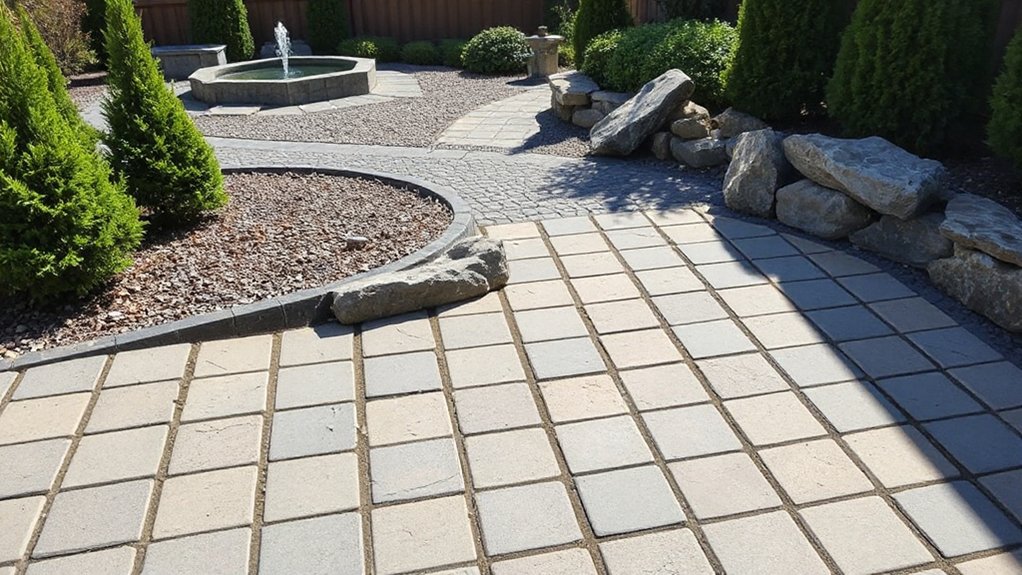
Look for simple layouts that cut upkeep by design. Opt for Low-Mussel Maintenance Paths, Uniform Planting Grids, and Multi-Functional Paver Layouts to streamline mowing, edging, and cleaning. Start with a clean grid and shareable, modular elements to keep maintenance predictable and efficient.
Low-Mussel Maintenance Paths
Low-mussel maintenance paths save you time by using simple layouts that require minimal upkeep. You’ll design routes that prioritize solid footing, predictable drainage, and clear borders, so you spend less time on repairs and more on enjoying the space. These paths guide traffic away from planting beds and are resilient against seasonal shifts, helping you sustain a neat, low-effort yard. When you choose materials, favor permeable options that reduce erosion and support long-term stability. Consider subtle color and texture changes to hide wear without frequent replacement. Mussel migration and shell diversity influence visual interest along the route, reminding you of natural cycles without demanding care.
- Choose compacted aggregate bases with edging to control movement and maintenance.
- Opt for hardwearing, slip-resistant pavers that tolerate foot traffic.
- Install proper grading and drainage to prevent puddling and cracking.
- Use low-growing groundcovers at edges to minimize weeding and mud.
Uniform Planting Grids
Uniform planting grids keep maintenance predictable and straightforward. You’ll simplify care by aligning shrubs, perennials, and groundcovers in a tidy matrix. Choose a limited palette of species with similar growth rates to avoid overhang and thinning. Regular irrigation and mulch help sustain even spacing, reducing weed pressure and soil erosion. Seasonal pruning stays clean and quick when plants are chosen for uniform habit, and you’ll prune to a consistent height to maintain the grid’s crisp look. Pest control becomes more efficient when monitoring is centralized, since identical beds reveal issues quickly. Keep paths clear of plant spillover, and set edge defines to preserve the grid’s geometry. With disciplined planting, you’ll enjoy durable, low-upkeep scenery that remains orderly year-round.
Multi-Functional Paver Layouts
What makes multi-functional paver layouts truly efficient is their ability to do double duty—driving movement and supporting living elements without extra effort. You’ll design with purpose, aligning paths, seating, and planting areas so foot traffic flows naturally while reducing weed growth and maintenance. Choose a consistent paver size to minimize joints and simplify upkeep, and use color contrast to define zones without extra edging. This approach creates cohesive spaces that feel larger and more intentional.
- Plan a unifying paver size across the main walkways to reduce cuts and joints.
- Use color contrast between walkways and resting areas to guide navigation and highlight focal points.
- Integrate seating or planter bands within the layout to consolidate features.
- Favor simple patterns (straight or running bond) for easy installation and long-term stability.
Smart Drainage and Grading for Long-Term Health
Smart drainage and grading are the foundation of long-term lawn and landscape health. You’ll prevent puddling and erosion by directing water flow away from structures and toward permeable, vegetated buffers. Start with a simple assessment: observe after a rain, note low spots, and identify improper slope. Implement grading strategies that maintain a gentle, continuous slope away from buildings, typically 1/4 inch per foot for typical surfaces. Use swales, French drains, or perforated pipe only where necessary, ensuring outlets terminate safely. Choose soil mixes that improve infiltration, and keep drainage paths clear of debris. Regular maintenance should focus on inspecting edges, reseeding compacted zones, and verifying outlet functions. With smart drainage, grading strategies become a long-term discipline that protects foundations and preserves hardscape integrity.
Drought-Tolerant Plantings That Fit a Minimal Routine
You can start with drought-tolerant ground covers that smother weeds and minimize maintenance. Pair native plants for resilient, low-water color and texture, then keep watering to a bare minimum with smart irrigation. For water-wise upkeep, follow simple tips—mulch deeply, prune strategically, and group plants by similar water needs to simplify care.
Drought-Tolerant Ground Covers
Drought-tolerant ground covers can slash maintenance while keeping your landscape green. You’ll choose low-water species that spread quickly, suppress weeds, and reduce mowing time. With the right selection, you’ll create year-round texture that complements garden art and outdoor furniture without crowding it. Plan for light foot traffic and occasional trimming to keep form tidy.
- Assess sunlight and soil; match varieties to conditions for durable coverage.
- Prefer native or well-adapted blends to minimize irrigation and fertilizer needs.
- Space plants to encourage dense mats that deter weeds and preserve air flow.
- Use layered edging and decorative mulch to finish borders and ease cleanups.
This approach delivers a cohesive look—functional, stylish, and easy to maintain.
Native Plant Pairings Here
Native pairings maximize a drought-tolerant bed by pairing tough natives with compatible allies that share water needs and bloom cycles. You’ll choose a core native plant and anchor it with pairing ideas that compliment its lifestyle, not complicate it. Look for companions with similar sun exposure and soil texture, ensuring staggered bloom times for continuous interest with minimal upkeep. Pair grasses or low shrubs with flowering perennials that attract pollinators while resisting drought. Favor selections with deep root systems to reduce irrigation, and avoid crowded beds that invite pests. Keep spacing generous to reduce maintenance and promote air circulation. In practice, document each pairing’s water needs and maintenance window, then adjust as your site evolves. Native plant pairings deliver resilient, attractive, low-effort landscapes.
Water-Wise Maintenance Tips
Water-wise maintenance keeps drought-tolerant plantings thriving with minimal effort. You’ll rely on smart basics that cut water use while keeping color and texture. Focus on steady routines, not constant tweaks, and pick equipment that lends itself to long-term care. Implement rainwater harvesting to reduce taps, and use drip irrigation to deliver moisture precisely where roots need it. With these practices, you’ll sustain healthy growth through dry spells and busy seasons.
- Install a simple rain barrel system and direct runoff to planted beds.
- Set drip lines with emitters spaced to match root zones, avoiding misting.
- Mulch generously to retain soil moisture and suppress weeds.
- Schedule brief, deep waterings—less often, more effectively—based on weather signals.
Groundcovers and Edgings to Curb Weeds

Groundcovers and edgings are your frontline defense against weeds. You’ll pair dense groundcovers with sturdy edgings to form a low, continuous barrier that competes with any germinating weed seed. Choose trailing or spreading varieties that tolerate sun or shade, and install edging to create clean boundaries that never stray into planted beds. Mulch remains useful, but groundcovers reduce bare soil exposure and moisture loss, diminishing weed vigor. Maintain with light, periodic pruning to sustain a tight mat and prevent gaps. For durability, pick native species that match your climate and traffic. In hardscaped zones, opt for groundcovers that adapt to foot pressure and compacted soil. Add thoughtful touches like accent pots, garden art, or outdoor artwork near the border, avoiding clutter. Consider these ideas when planning flower arrangements around walkways.
Paver Patterns That Hide Dirt and Wear
When you choose paver patterns, go for options that disguise dirt and wear, like staggered runs or careful checkerboard layouts that break up surface visibility. You’ll pick dirt- and wear-resistant colors and tones that hide stains, with slightly darker grout to blend imperfections. For low maintenance, emphasize pattern choices and grout lines that minimize cleaning needs while sustaining a clean, cohesive look.
Pattern Choices For Dirt
Pattern choices for dirt are all about optical tricks and maintenance ease. You’ll pick patterns that diffuse dirt visibility and minimize wear from foot traffic, while supporting soil and subbase conditions. Focus on alignment and joint design to reduce soil exposure and promote even compaction, reducing maintenance calls later.
1) Use staggered offsets to break uniform dirt patterns and conceal minor soil displacement.
2) Choose larger tiles with tighter joints to slow soil patterning and minimize visible grime.
3) Favor patterns that distribute load across several units, lowering soil compaction hotspots.
4) Prefer linear runs that guide pedestrian flow, limiting uneven wear and rutting.
Dirt patterning and soil compaction considerations should drive your selection, not decorative fluff. Keep joints filled and seal where appropriate to preserve the look and performance.
Wear-Resistant Color Options
Choosing wear-resistant color options is essential for paver patterns that hide dirt and wear. You’ll want colors that mask soil and tire marks while remaining visually appealing over time. Favor mid-tones in matte finishes, which resist showing grime and scratches better than glossy options. Consider color durability when selecting blends that withstand UV exposure and weathering without fading. Paver choices with consistent pigmentation help prevent blotchy patches after cleaning or quick wear. Look at pigment options that stay true across heavy use areas and shade changes. For practical results, test samples in real sunlight and traffic paths before committing. Don’t rely on anecdotal advice; verify manufacturer guarantees and color consistency data to ensure long-term performance.
Maintenance-Minimizing Grout Lines
Maintenance-minimizing grout lines matter because tight, well-planned joints reduce dirt and wear visibility, making cleanups quicker and less frequent. You’ll want paver patterns that conceal grime and stay sturdy with minimal upkeep. Focus on grout cleaning strategies that emphasize compact joints and durable materials. Use materials and joint designs that tolerate movement from expansion joints without cracking or spreading debris.
1) Choose tight, modular patterns that minimize exposed grout without sacrificing drainage.
2) Opt for resin or polymeric grouts that resist staining and resist washout at expansion joints.
3) Schedule simple, periodic sweeping and light cleaning to prevent buildup.
4) Pair pavers with edge restraints to keep joints stable, reducing weed intrusion and dirt ingress.
Low-Maintenance Lighting for Atmosphere
Ever wonder how to set atmosphere without constant upkeep? You can achieve it with low-maintenance lighting that fades into the background while delivering impact. Opt for durable, weather-rated fixtures and LED technology to maximize lifespan and efficiency. Choose smart lighting where you can schedule and adjust brightness remotely, reducing daily fiddling and energy waste. For ambient illumination, place low-angle, diffuse lights along paths, steps, and seating areas to create soft, welcoming glows without glare. Use warm-toned LEDs to mimic natural twilight and maintain comfort after dark. Minimize clutter by selecting a cohesive fixture family instead of random accents. Implement outlet protection and timer controls to avoid overuse. In short, plan strategically, automate where possible, and prioritize quality over quantity.
Easy-to-Clean Water Features and Zones

If you’re aiming for low upkeep, think easy-to-clean water features and clearly defined zones that stay tidy with less effort. You’ll prioritize simple systems that keep water calm, clear, and accessible for quick maintenance.
- Water circulation: choose a compact pump with a biofilter to move water steadily without loud operation.
- Pond aeration: install an air diffuser or fountain to boost oxygen and prevent stagnation.
- Cleaning zones: design shallow shelves or marginal planting that traps debris away from the main flow.
- Access points: place skimmers and vacuums at easy-to-reach spots for fast, hands-on cleaning without stripping hardscape.
Maintenance-Friendly Furniture and Outdoor Zones
To keep your outdoor spaces tidy with less effort, choose maintenance-friendly furniture and clearly defined zones that support easy upkeep. Start with durable, weather-resistant pieces in neutral tones that hide wear and resist fading. Favor modular seating and simple, wipe-clean surfaces so you can rearrange without disruption. Define zones for dining, lounging, and storage to minimize foot traffic across muddy or sandy areas. Use privacy screens or trellises as functional dividers to reduce clutter and create seams for easier maintenance. Incorporate outdoor art strategically to add personality without collecting dirt or debris. Choose low-profile planters and smart drainage for quick cleanup after rain. Keep cords and cushions tucked away when not in use to preserve cleanliness and extend the life of your setup.
Budgeting for Long-Lasting Hardscapes
Budgeting for long-lasting hardscapes starts with a clear cost plan and realistic expectations. You’ll prioritize durability, material longevity, and maintenance needs, then balance upfront costs with long-term savings. Plan for installation, permits, and seasonal discounts to optimize value. Factor in hidden expenses like drainage, edging, and outdoor storage needs for tools and garden art pieces. Allocate a contingency fund to cover unexpected fixes without derailing the project.
- Choose durable materials with proven wear resistance and low maintenance.
- Compare installation quotes that include preparation and drainage.
- Schedule seasonal purchases to capture rebates and discounts.
- Budget for complementary features like garden art and outdoor storage integration.
This approach keeps you on track, delivers lasting performance, and preserves curb appeal.
Quick-Start Plan to Implement Your Ideas
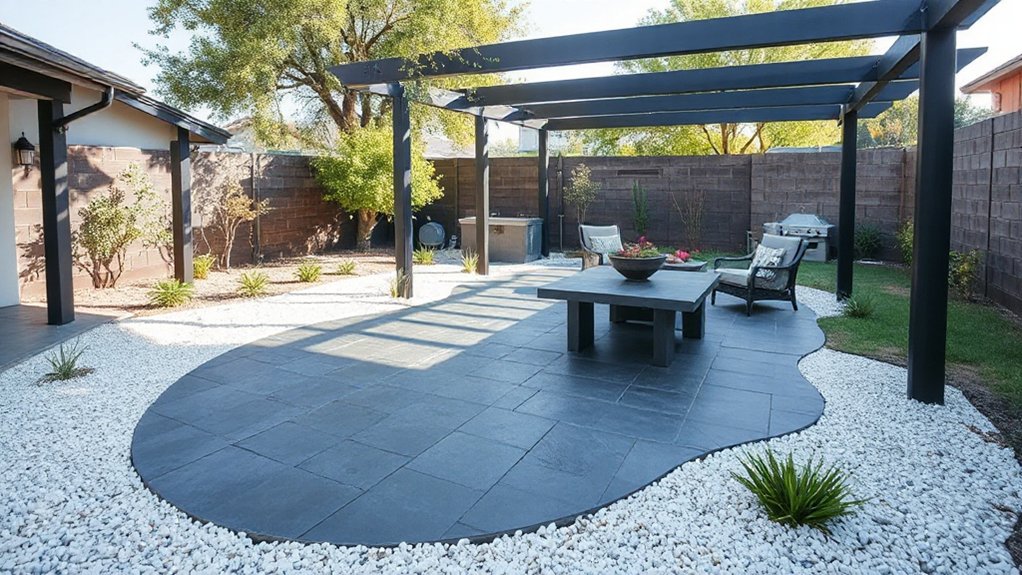
With a clear plan in hand, you can turn ideas into action fast. Start by prioritizing tasks: pick one area, one material, and one deadline. Create a simple checklist with three to five concrete steps, then set realistic timeframes to avoid overwhelm. Gather measurements, budgets, and permits up front, so you don’t stall later. Begin with quick wins that require minimal disruption, like installing a lightweight border or laying down weed barrier in a prepared bed. Choose durable, low-maintenance materials to reduce upkeep. Add garden art and outdoor decor strategically to anchor focal points without clutter. Schedule installation during favorable weather, and plan a follow-up review to track progress and adjust as needed. Stay flexible, document progress, and celebrate the completed steps.
Frequently Asked Questions
How Often Should I Reseal or Treat Hardscape Surfaces?
You should reseal every 2–3 years, or when surfaces start showing wear. Maintain garden lighting and outdoor furniture cleanliness, too. Use penetrating sealant on stone, and reapply after cleaning; avoid sealing during extreme heat for best results.
Can I Install Low-Maintenance Features Myself or Hire a Pro?
If you’re handy, you can DIY installation, but for reliability you might mix DIY with professional assistance. Imagine a small patio project: you handle layout and base, pros handle drainage and compaction for lasting results.
What Maintenance Frequency Is Needed for Drought-Tolerant Setups?
You should follow drought resistant plants’ needs and adjust watering schedules monthly. In dry seasons, water deeply every 2–3 weeks, and reduce further during rainier periods; monitor soil moisture and prioritize mulch to minimize evaporation.
Are There Eco-Friendly, Non-Toxic Cleaning Options?
Yes, you can use eco friendly cleaning and non toxic solutions. You’ll protect your plants and pets while effectively cleaning surfaces. Opt for vinegar-water mixes, baking soda pastes, or plant-based cleaners for routine maintenance and safe outdoor care.
Do Warranties Cover Wear and Replacement for Low-Maintenance Materials?
Warranty coverage varies, but most warranties exclude wear and normal replacement. Material durability matters; choose high-rated options and document maintenance. About 80% of long-lasting products show fewer defects, boosting your peace of mind with solid warranty coverage.
Conclusion
You’ve got a clear path to a durable, easy-care outdoor space. Keep goals in sight, choose tough materials, and favor simple layouts that cut maintenance time. Plan smart drainage, pick easy-clean features, and select furniture that ages well with you. Budget for longevity, not novelty. Start now with a quick sketch and a no-nonsense timeline. Think of a 1990s e-mail inbox—clean, organized, reliably scrollable—then translate that clarity into hardscape decisions that stay quietly stylish year after year.
About the Author


