
Smart budgeting starts before you shop. Map your priorities, define a tight scope, and emphasize soil health to cut waste. Choose native, drought-tolerant perennials and group plants by sun and water needs to reduce irrigation. Install a simple drip system with a smart timer, and plan DIY hardscaping with reclaimed materials. Track every purchase, set milestones, and prune costs weekly. With budget-friendly plant picks and affordable décor, you’ll boost curb appeal—and you’ll see more savings as you progress. Stay tuned for more practical steps.
Key Takeaways
- Map priorities and budgets upfront, focusing on drought-tolerant plants, efficient irrigation, and low-maintenance design to reduce long-term costs.
- Track every purchase, categorize expenses, and review weekly to prevent overspending and identify waste.
- Use phase-by-phase savings milestones with fixed costs and dates, revisiting monthly to adjust for price changes.
- Choose native, perennial, drought-tolerant plants with deep roots and extended bloom to minimize replacements and maintenance.
- DIY hardscaping with reclaimed materials, compacted bases, and repurposed decor to create affordable, durable outdoor spaces.
Budget Landscaping: Start Here With a Simple Plan

A simple plan is the quickest way to prevent budget blowouts. You should map priorities before you shop, listing core needs, timelines, and cost caps. Begin with a clear scope: select drought-tolerant plants, define focal points, and set a realistic maintenance cadence. Emphasize soil improvement early; healthy soil reduces water and fertilizer waste, boosting plant performance. Sketch zones for sun, shade, and traffic, then align plant choices with microclimates to minimize replacements. Invest in essential irrigation systems that water efficiently, such as drip lines or smart controllers, and schedule delivery to match seasonal demand. Track purchases against the plan, avoiding impulse buys and oversized materials. By starting precise, you keep projects small, controllable, and financially sustainable while achieving visible, lasting improvements.
Plan Your Savings: A Framework to Track Costs
Track your expenses as you plan, so you know exactly where every dollar goes. Set clear savings milestones and hold yourself to them, adjusting as prices shift. This framework keeps your budget practical, measurable, and ready to guide your landscaping decisions.
Track Your Expenses
Wondering where your money goes can be the first step to meaningful savings. You’ll get clearer with Track Your Expenses by setting a simple system, then sticking to it. Start with cost tracking: log every buy, even small ones, and note why you bought it. Use categories like soil, plants, tools, and labor, so you see where costs cluster. Next, practice expense management by reviewing weekly totals, comparing actuals to a rough budget, and adjusting promptly. Automate where possible—auto-deduct recurring purchases and set alerts for overspending. Keep receipts for returns and warranties, but avoid overstocking. Regular audits prevent drift, keep you aligned with priorities, and reveal opportunities to cut waste. With discipline, you conserve funds for smarter landscape choices and ongoing upkeep.
Set Savings Milestones
You’ve logged expenses, now set clear savings milestones to guide every landscape choice. Set concrete targets for major tasks, like planting, hardscaping, or lighting upgrades, so you prioritize value over impulse. Break costs into phases and assign a date, then track progress to stay on budget. Use garden aesthetics as a guiding criterion; every option should enhance appeal without overspending. Reserve a separate fund for outdoor lighting upgrades to avoid sweetening choices late in the project. Regularly review your milestones and adjust for price shifts or delays. This framework keeps you focused, informed, and prepared to seize cost-effective opportunities as they arise.
- Define phase-by-phase targets with fixed costs and dates
- Prioritize options that maximize impact per dollar
- Separate lighting budget to prevent crossovers
- Revisit milestones monthly for accuracy and adaptation
Smart Plant Picks: Perennials That Thrive on a Budget
Smart perennials are a-budget friendly backbone for a low-maintenance landscape, delivering color and structure year after year without repeated planting costs. You’ll get consistent results by choosing proven performers that thrive with little care. Favor native species for better adaptation to local conditions, pollinator support, and lower maintenance. Look for drought tolerant plants that withstand dry spells without constant watering, and group them to reduce irrigation needs. Prioritize plants with deep roots and extended bloom periods to minimize replacements. Prepare soil with modest amendments, mulch generously, and install drip irrigation to conserve water. Plan a cohesive palette that reduces peak-season upkeep while maximizing seasonal interest. By selecting these perennial staples, you simplify maintenance and stretch your budget further.
DIY Pathways and Edges: Affordable Hardscaping Ideas
DIY pathways and edges don’t have to break the bank. You can create durable, low-cost features that define spaces without heavy labor or pricey materials. Focus on simple materials, precise edges, and smart layouts to maximize impact with minimal effort. Use straight lines to reduce cutting and waste, and choose contrasting textures to emphasize borders. Prioritize edging ideas that deter grass intrusion and guide foot traffic, not just decoration. Plan pathways wide enough for comfortable passage and install compacted base for longevity. Maintain integrity with easy-to-repair sections and modular pieces. With DIY pathways ideas, you’ll boost curb appeal and accessibility while keeping costs down.
1) Brick or paver strips with gravel
2) Reclaimed timber prompts for borders
3) Steel or plastic edging for clean lines
4) Stepping-stone sequences with mulch fill
Reuse, Refresh, and Reclaim: Budget Outdoor Décor
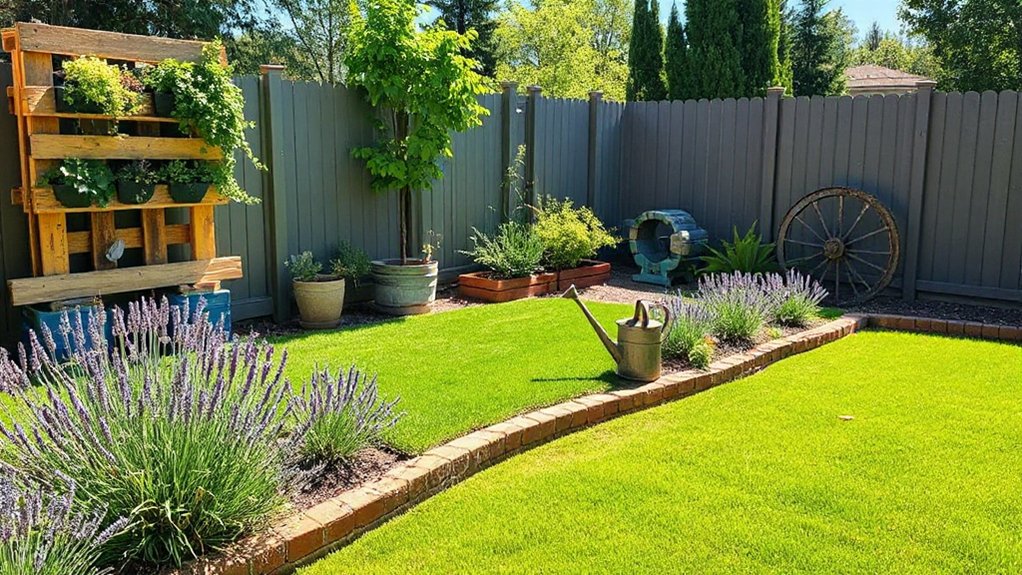
You can stretch your budget by repurposing what you already own and giving it a quick refresh. Start with simple upgrades—new coats of paint, updated hardware, or fresh cushions—to revive old pieces. Prioritize practicality: choose durable materials, low-maintenance finishes, and items that blend with your landscape for lasting impact.
Repurpose What You Have
Repurposing what you already own can drastically lower costs while boosting curb appeal. You’ll transform overlooked items into usable, stylish outdoor features without buying new. Use these practical ideas to repurpose smartly:
1) Inspect old planters for cracks; seal and repaint to refresh garden furniture’s look.
2) Transform a tired bench into a mini-tree shelter by adding a simple canopy or climbing vines.
3) Refinish pallets into a rustic coffee nook or vertical herb garden with decorative accents.
4) Upcycle jars, lanterns, and cans into ambient lighting or candle holders for evenings outside.
This approach keeps garden furniture cohesive and affordable while preserving charm. Focus on durability, cohesion, and a consistent color palette to maximize impact.
Refresh With Simple Upgrades
Revitalizing your outdoor space can be quick and affordable with simple upgrades that reuse, rejuvenate, and reclaim what you already have. Start with a focused refresh plan: assess durability, then swap or repurpose items to refresh the look. Choose garden art you love, but keep scale and color cohesive with your yard’s palette. Refresh containers by cleaning, repainting, or swapping inserts to breathe new life into borders and focal points. Improve outdoor lighting with solar path lights or warm LEDs to extend usability and safety without a big budget. Refinish furniture instead of buying new pieces, and add cushions or fabric wraps to unify styles. Finally, tidy edges, trim overgrowth, and group accents to create intentional, low-cost impact that feels intentional and polished.
Seasonal Wins: Quick Maintenance to Protect Your Investment

Seasonal wins start with a quick, proactive routine that protects your investment. You’ll reduce repair costs and keep your yard looking sharp by staying on top of small tasks before they become big problems. Prioritize seasonal protection to preserve plants, soil, and structures, supporting investment preservation with minimal effort and cost. Stay consistent, and your landscape rewards you year-round.
- Inspect and prune after storms to prevent damage and stabilize growth
- Mulch beds and refresh irrigation to conserve moisture and reduce stress
- Clean gutters, assess drainage, and address basins that invite root rot
- Seal paths, check edging, and repair small cracks before they worsen
Frequently Asked Questions
How Can I Measure ROI on Budget Landscaping Upgrades?
You measure ROI by tracking how improvements boost curb appeal and sale value, plus energy and maintenance savings. Start with landscape design and soil improvement milestones, compare costs to incremental value, and monitor time-on-market and bill-worthy savings.
What’s the Best Time to Buy Seasonal Plants for Savings?
The best time to buy seasonal plants is at the end of the planting season, when discounts rise. Use seasonal plant timing and planting season tips to maximize savings, and stock up before shortages hit. Adjust purchases for growing next year.
How Do I Estimate Ongoing Maintenance Costs Accurately?
To estimate ongoing maintenance costs accurately, track labor hours, equipment use, and plant lifespans, then add soil testing and mulch selection expenses; monitor quarterly, adjust for seasonal shifts, and factor weather impacts to stay within budget.
Which Low-Cost Irrigation Options Maximize Water Savings?
Drip systems maximize water savings by delivering precise amounts at roots, while rain barrels supply steady, low-cost refill. Install low-pressure emitters, mulch deeply, and schedule watering at dawn to minimize evaporation and optimize efficiency.
Are There Tax Credits or Rebates for Cost-Effective Landscaping?
Yes, you can usually access tax incentives and rebate programs for cost-effective landscaping. Check local utilities and state programs, and claim credits for energy-efficient features, drought-tolerant plants, and water-saving irrigation, ensuring you document receipts and program eligibility.
Conclusion
Budget landscaping proves you don’t need a big budget to get big results. Juxtapose ambition with practicality: dreaming of lush blooms vs. choosing hardy perennials that outperform pricey annuals; envisioning hardscape drama, yet starting with simple, DIY paths. Plan, save, and reclaim—without sacrificing style. You’ll protect investments with seasonal care, not costly upgrades. The contrast is your edge: affordable methods delivering lasting curb appeal, one smart choice at a time. Your yard, more vibrant, more resilient, more you.
About the Author


