

A practical, compact yard starts with clear goals and constraints, then you select durable, drought-tolerant plants suited to tight spaces and low water use. Add vertical interest with walls, trellises, and planters, and maximize seating with multi-use furniture that hides storage. Create pocket plant niches along paths for hidden greenery, and choose a cohesive color palette with layered textures to add depth. Implement water-wise irrigation, keep circulation clear, and you’ll discover a cohesive, space-maximizing design that rewards every choice—keep going to uncover more.
Key Takeaways
- Plan with clear goals, sun exposure, drainage, and a realistic budget to align features with small-space constraints.
- Use cohesive circulation, focal points, and microzones to enlarge perceived space and guide movement.
- Choose drought-tolerant, low-maintenance plants grouped by water needs for reliability and simplicity.
- Add vertical elements and containers to maximize height without crowding pathways.
- Implement water-wise irrigation, mulching, and multi-use furniture to reduce upkeep and keep spaces functional.
Define Your Small-Space Goals and Constraints
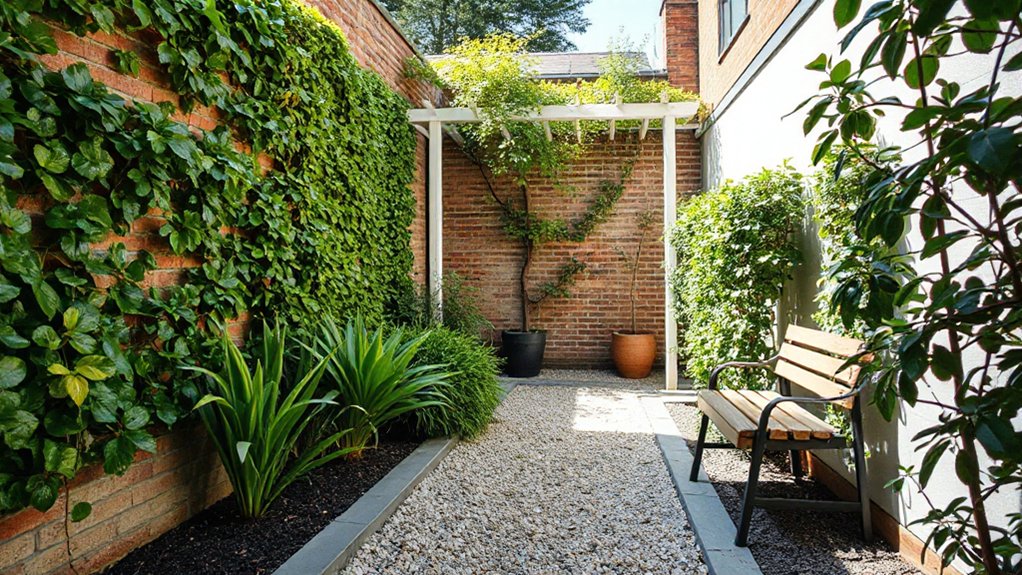
To make the most of a small yard, start by clearly defining your goals and recognizing your constraints. You’ll map how you’ll use the space, whether for entertaining, growing a few vegetables, or a quiet retreat. Measure available sun, shade, and drainage, and note preexisting features you’ll keep or remove. Establish a realistic budget and a deadline, then prioritize functions over form when conflicts arise. Incorporate soil testing early to guide amendments and plant choices, preventing waste and costly mistakes. Plan pathways that maximize accessibility and minimize turf. Consider pests upfront by integrating Pest management strategies with monitored, low-chem approaches. Style the plan with compact, multi-use elements, and document decisions for repeatability. Authoritative, concise, professional.
Select Durable, Drought-Tolerant Plants for Tight Quarters
Selecting durable, drought-tolerant plants for tight quarters starts by prioritizing species that thrive with minimal water and space. You’ll want compact, low-water choices that resist heat and soil variability, minimizing maintenance while preserving landscape function. Focus on drought resistant shrubs and herbaceous selections that mature without sprawling over borders, so you maintain access and visibility. A Xeriscape design approach guides you to group plants by similar water needs, mulch to reduce evaporation, and hardscape to funnel rainfall efficiently. Choose species with strong root systems for stability in windy, exposed spots. Keep color and texture varied, but avoid overplanting; every plant should justify its footprint. Plan seasonal interest with evergreen structure and drought-tolerant bloom timing within your small yard.
Add Vertical Interest With Walls, Trellises, and Planters
You’ll kick off vertical interest by pairing climbing plants with sturdy walls, trellises, and raised planters to maximize space. Consider a trellis material guide to match climate and weight, then place planters so eye lines travel upward without crowding pathways. Start with a simple arrangement of vertical planting strategies and test placement to find what feels balanced and accessible.
Vertical Planting Strategies
Vertical planting makes compact spaces feel larger by pulling greenery upward where it’s most visible. You’ll maximize small yards by using walls, trellises, and elevated planters to create layered interest without crowding floor space. Choose vertical elements that suit your light conditions: south-facing walls tolerate sun-loving varieties, while shaded walls suit ferns and shade-tolerant greens. For quick impact, install a mix of succulents in shallow, patterned planters along a sunny wall, then add a vertical herb garden for fresh, aromatic use. Fit sturdy trellises with climbing perennials or espaliered fruit trees where possible, ensuring good airflow and accessible pruning. Prioritize plants with compact mature sizes to minimize maintenance while maintaining visual intrigue. Choose durable fasteners and use irrigation to sustain succulent arrangements and vertical herb gardens. Authority, concise, professional.
Trellis Material Guide
You’ve got to choose trellis materials that stand up to your climate, sun exposure, and the weight of your plants, then pair them with walls and planters to keep vertical interest tight and accessible. For Vine support, select frames that resist warping and corrosion while supporting vigorous growth. Material durability matters: metal lattices should be powder-coated or stainless, wood needs rot resistance, and composites blend strength with low maintenance. Consider height variance to optimize sun angles and airflow, and guarantee fasteners won’t loosen over time. Woven panels, wire grids, and slatted screens each offer distinct textures; match them to wall surfaces and planter configurations. Endurance, load capacity, and ease of cleaning drive your material choice, ensuring a neat, durable focal point.
Planter Placement Tips
Strategically place planters to heighten vertical interest without crowding foot traffic, using walls, trellises, and freestanding containers as natural extensions of your garden’s structure. You’ll maximize visibility and accessibility by layering heights: wall-mounted troughs, lattice planters, and pedestal containers create a dynamic backdrop without taking up travel space. Choose container types that suit your light zones, ensuring appropriate drainage and rooting depth. For indoor gardening, lean toward compact, self-watering options to reduce maintenance while preserving moisture balance. Position taller planters at the rear and near supports to guide the eye upward, and place trailing varieties where they can spill over edges. Maintain cohesion with consistent colors and materials, and rotate crops seasonally to keep growth vigorous and visually balanced.
Optimize Seating and Storage With Multi-Use Furniture

You can maximize your small garden by choosing multi-use pieces that serve as both seating and storage. Opt for dual-purpose options that keep cushions, tools, and outdoor gear neatly hidden yet easily accessible. Start by selecting compact, durable designs that fit your space without sacrificing comfort or style.
Dual-Purpose Seating
Dual-purpose seating combines comfort with practicality, letting you host guests while keeping essential storage close at hand. You’ll choose benches or ottomans with hinged lids or hollow cores to hide gardening tools and cushions. Opt for compact, weatherproof Garden furniture that fits tight corners without feeling crowded. When you sit, use dual roles: store throws, porch lights, and small planters inside the seat, then flip the function for extra seating as needed. Integrate discreet cushions that resist fading and add a pop of color with lighting accents, such as solar lanterns perched on nearby rails. Maintain clean lines and avoid clutter by selecting pieces that serve two purposes, preserving space while elevating curb appeal. authoritative, concise, professional
Hidden-Storage Solutions
Hidden-storage options take the next step by pairing seating with built‑in concealment. You’ll maximize small yards without sacrificing style, using benches, ottomans, and planter boxes that hide essentials under hinged lids or removable cushions. This approach keeps tools, seed packets, and outdoor toys within arm’s reach while maintaining a clean silhouette. Choose durable, weather‑resistant materials that blend with garden art and native plants, so storage feels intentional, not cluttered. Color and texture should echo surrounding wildlife habitat elements to sustain visual harmony.
- Secret compartments under seating provide discreet organization
- Planter benches offer dual function and weather resilience
- Storage trunks double as extra seating and display space
Authoritative, concise, professional. Garden art, wildlife habitat.
Create Pocket-Plant Niches for Hidden Greenery

Pocket-plant niches transform empty wall space into lush, low-maintenance greenery without stealing square footage. You’ll plan narrow recesses that cradle compact ferns, moss, and trailing stems in hidden alcoves, so your vertical area becomes a verdant frame. Install shallow, modular pockets that drain easily and require minimal soil, then choose drought-tolerant species to cut maintenance. Place niches at eye level for easy viewing, and group several at different heights to form a living tableau. Use a concealed irrigation line or periodic misting to keep foliage vibrant without clutter. This approach creates secret gardens—views you can admire daily from indoors or on a patio. Style remains tidy, functional, and accessible, maximizing impact with deliberate, restrained plantings. authoritative, concise, professional
Choose Color Schemes That Make a Tiny Yard Pop
Choosing color schemes that make a tiny yard pop starts with a clear contrast plan; use light neutrals for walls and hardscape as a calm backdrop, then layer in bold accent tones to draw the eye. You’ll create focal points with color blocks that guide movement, not overwhelm space. Color contrast sharpens perceived depth, while strategic paint selection keeps surfaces cohesive and low maintenance. Maintain high-saturation accents against pale grounds to illuminate corners and outdoor seating.
- Pair crisp whites or warm grays with garden greens and sunset hues for pops
- Choose weatherproof paints and sealants to preserve color integrity
- Test samples on banners or panels before committing
authoritative, concise, professional
Layer Texture to Add Depth in a Compact Space
To add depth in a compact space, layer texture across surfaces, plants, and furnishings to trick the eye into perceiving more room. You’ll create rhythm by combining rough and smooth finishes: a stone path beside glossy pots, a woven bench against a painted wall, and matte foliage framed by shiny accents. Use repetition to guide the eye—alternate textures every few feet, not every inch. Soil enrichment supports robust plant structure, while mulch layering helps retain moisture and define borders without visual clutter. Choose varied leaf forms and scale so shadows and light play across the scene. Keep lines clean, with restrained color, letting texture carry depth. You’ll gain spatial richness without crowding, maintaining clarity and balance throughout the design. authoritative, concise, professional
Implement Water-Wise Irrigation and Low-Maintenance Tips

Water-wise irrigation protects your plants and cuts water use, so start by choosing efficient systems and smart habits. You’ll implement rainwater harvesting and drip irrigation to minimize waste, avoid overwatering, and simplify maintenance. Select a timer or smart controller, group plants by water needs, and adjust briefly for seasonal changes. With drip lines, manage emitter spacing to ensure even distribution and reduce evaporation. Mulch beds to preserve soil moisture, suppress weeds, and lower irrigation frequency. Regularly inspect hoses, emitters, and connections for clogs or leaks. Keep a concise routine: measure soil moisture, fix leaks promptly, and calibrate schedules as weather shifts.
- Focus on high-efficiency components
- Integrate rainwater harvesting and drip irrigation
- Maintain a simple, low-maintenance schedule
Plan Circulation, Focal Points, and a Cohesive Path for Flow
Even in a compact space, a deliberate circulation plan clarifies movement and makes the garden feel larger. You establish clear routes that guide foot traffic without trampling plantings, framing focal points along the way. Start with a cohesive path material and width, then align progressions to doors, seating, and borders for logical flow. Place Garden art or sculptural elements at key sightlines to cue pauses and create interest without clutter. Design microzones so paths pass by flowering beds, herbs, or a wildlife-friendly corner, reinforcing function and rhythm. Use focal points to anchor views, guiding the eye from entrance to seating. Integrate wildlife habitats with native plantings adjacent to the path, ensuring accessibility and maintenance clarity.
Frequently Asked Questions
What Is the Best Budget Plan for Tiny Yards?
You should prioritize budget-friendly planning, selecting compact design ideas that maximize space. Focus on versatile furniture, vertical planting, and mulching. Budget friendly tips include DIY edging and under-budget soil tests; compact design ideas optimize every square foot. authoritative, concise, professional
How Do I Choose Plants for Extreme Shade?
You choose shade-tolerant plants by evaluating light patterns and selecting shade tolerance plants suited to your space. For extreme shade, prioritize low light gardening strategies, monitor moisture, and rotate seasonal color. authoritative, concise, professional.
Can Containers Support Mature Trees Safely?
Yes, containers can support mature trees safely if you choose large, reinforced pots, guarantee proper planting depth, and install robust root barriers. Container stability and tree root safety depend on scale, drainage, and regular inspection.
What Safety Concerns Come With Overhead Trellises?
Overhead trellises require strict safety checks: guarantee overhead weight is well-supported and structural stability remains intact. You should consult a professional, verify load ratings, and secure anchoring; otherwise, you risk collapse, injuries, or property damage.
How Often Should I Prune Drought-Tolerant Species?
Pruning schedule depends on species, but you generally prune drought-tolerant plants after flowering or in late winter. You prune lightly, steadily, and consistently, tomaintain form. This drought tolerant care keeps growth controlled, resilient, and flourishing. authoritative, concise, professional
Conclusion
You’ll discover that small spaces aren’t limitations but invitations to clever design. As you combine drought-tolerant plants with vertical plans, maxed-out multi-use furniture, and hidden pockets of greenery, coincidence quietly guides your path: a compact garden mirrors your routines, while water-wise tricks align with your patience. In this deliberate choreography, your tiny yard becomes a living, breathing extension of your home’s purpose—and the moment you notice, the yard notices you back, rewarding restraint with lasting charm. authoritative, concise, professional
About the Author


