
Sustainable hardscaping reduces runoff and flood risk by using permeable surfaces, smart drainage, and vegetation buffers that channel water where it’s most beneficial. It lowers heat with cool, reflective paving and high-albedo materials, creating cooler, more comfortable outdoor spaces. Choosing local, durable, low-embodied-energy materials cuts waste and lifecycle costs while boosting resilience to freeze–thaw cycles. You’ll improve aesthetics and biodiversity, too. If you keep exploring, you’ll uncover practical steps to get started.
Key Takeaways
- Permeable, reflective hardscapes reduce runoff, lower heat absorption, and support cooler microclimates, enhancing urban resilience and comfort.
- Local and recycled materials lower embodied energy, while modular designs enable repair, reducing waste and lifecycle costs.
- Vegetation buffers and biofiltration zones improve water quality, slow runoff, and promote groundwater recharge.
- Smart drainage and rain capture systems optimize stormwater management, lowering flood risk and municipal infrastructure needs.
- Durable, low-maintenance surfaces extend lifespans, reduce maintenance frequency, and help sustain long-term environmental and economic benefits.
What Sustainable Hardscaping Is and Why It Matters

Sustainable hardscaping combines durable materials, efficient design, and low-impact construction to create outdoor spaces that last longer and use fewer resources. You’ll recognize it as the intentional use of sturdy, local or recycled materials, precise layout, and durable joints that resist wear. The core goal is to optimize performance while minimizing environmental impact, lifecycle costs, and maintenance needs. You’ll also consider how materials interact with climate, drainage, and accessibility, ensuring functionality across seasons. Urban noise reduction, achieved through strategic massing, vegetation buffers, and sound-absorbing surfaces, enhances comfort. Aesthetic appeal, delivered through thoughtful geometry, texture variety, and cohesive color palettes, reinforces usability without compromising sustainability. In practice, you assess site conditions, select proven systems, and document expected durability and cost-effectiveness for long-term impact.
Permeable Surfaces for Flood Resilience
Permeable surfaces reduce runoff and help slow flood peaks, improving your site’s flood resilience. They also provide gravelly flexibility for local infiltration and support better water balance during heavy rain events. Consider how their flood mitigation performance translates into long-term landscape reliability and maintenance.
Permeable Surface Benefits
Do permeable surfaces really bolster flood resilience? Yes, they manage runoff by guiding rainfall where it’s needed, reducing peak flows and downstream stress. You’ll notice faster water infiltration, less erosion, and steadier site drainage when permeable pavement is installed. This approach supports local hydrology and helps protect adjacent landscapes.
- It lowers surface ponding after storms by absorbing water on-site.
- It minimizes impervious area, boosting green infrastructure performance.
- It buffers downstream channels from sudden discharge spikes.
- It improves groundwater recharge while maintaining usable spaces.
In practice, you’ll deploy layered systems that emphasize durable, cleanable surfaces. Choose materials with high permeability, and ensure proper subgrade preparation and maintenance to sustain long-term water infiltration benefits. This approach aligns with resilient, sustainable hardscaping objectives.
Flood Mitigation Performance
Flooding after storms can overwhelm traditional pavements, but permeable surfaces can mitigate that risk. You’ll experience reduced surface runoff and faster, safer drainage when you install these systems, improving flood mitigation performance. Permeable pavers, porous concrete, and gravel trenches allow water to infiltrate or be released gradually, lessening peak flows and downstream pressure. You benefit from on-site water management that supports soil moisture, recharges aquifers, and sustains nearby vegetation. Design considerations include subgrade stability, clog prevention, and maintenance intervals to preserve infiltration capacity. These surfaces also support wildlife habitats by maintaining natural hydrology and offering intermediary spaces for flora and fauna. In addition, permeable installations can deliver aesthetic enhancements through varied textures, colors, and scale, reinforcing landscape identity while delivering practical flood resilience. That combination aligns flood performance with sustainable hardscaping goals.
Cool and Reflective Hardscapes to Beat Heat Islands
Passive cooling is built into reflective hardscapes, which reduce absorbed heat and lower surrounding temperatures by reflecting solar radiation. You’ll deploy strategies that actively curb heat buildup and improve outdoor comfort.
- Use cooling paint on pavements and walls to reflect more sunlight.
- Install reflective surfaces with high albedo to minimize heat absorption.
- Choose light-colored, durable pavers that resist heat retention.
- Implement permeable, reflective paving to reduce surface temperatures while maintaining drainage.
These steps create cooler microclimates, lowering heat island effects around buildings and sidewalks. Prioritize materials with proven reflective properties and durability under sun exposure. By integrating cooling paint and reflective surfaces, you achieve tangible energy savings and extended outdoor usability, without compromising aesthetics. This approach aligns with sustainable hardscaping goals and supports long-term performance in hot climates.
Low-Embodied-Energy Materials and Waste Reduction
Low-embodied-energy materials cut upfront emissions and downstream costs by sourcing and producing components with minimal energy use. You maximize impact by selecting locally available, recycled, or manufactured with low-temperature processes, reducing transportation and production footprints. Prioritize material durability to extend lifespans and minimize replacement cycles, lowering both waste and embodied energy over time. Opt for modular designs that enable repair instead of disposal, and favor reclaimed or repurposed components when feasible. Waste reduction comes from precise project scoping, accurate quantity estimation, and efficient detailing that minimizes offcuts. Maintain aesthetic appeal by balancing texture, color, and finish to suit site conditions without resorting to high-energy alternatives. Document lifecycle considerations to support ongoing performance, enabling you to justify material choices based on durability, cost, and environmental impact.
Water-Smart Drainage Designed for Local Rainfall
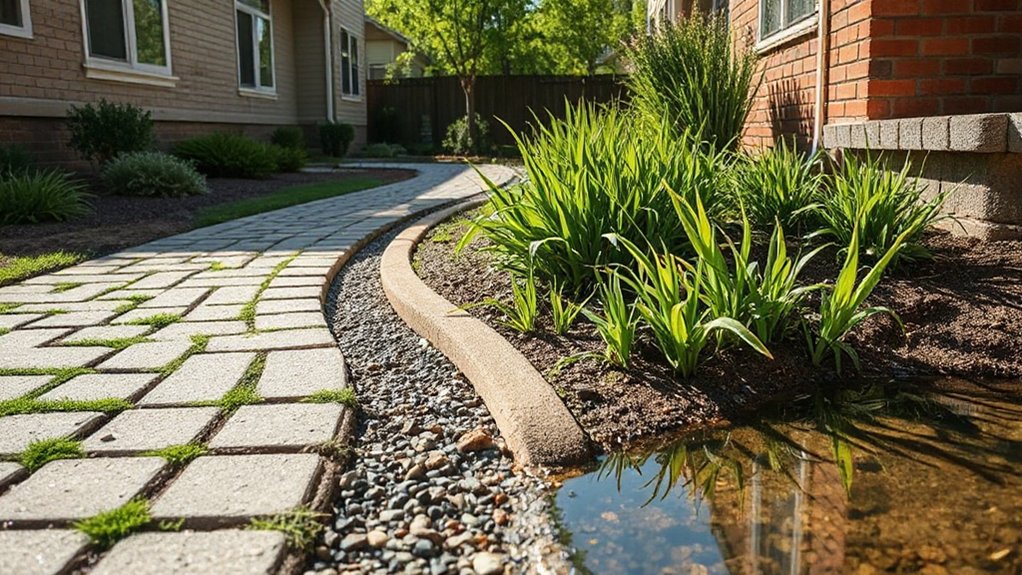
Water-smart drainage designs hinge on accommodating local rainfall patterns to protect structures and outdoor spaces. You optimize drainage by tailoring systems to seasonality, soil type, and impervious area, reducing runoff and erosion. Implementing these practices supports Rainwater harvesting and soil stabilization, while keeping landscapes functional year-round.
- Align grading and swales to capture peak storms without causing ponding.
- Use permeable pavers or porous surfaces to accelerate infiltration.
- Install native plant buffers to slow and absorb water, limiting sediment transport.
- Monitor drainage performance with simple, periodic inspections and adjust as climate shifts.
With precise layouts and durable materials, you safeguard foundations and outdoor rooms. This approach minimizes maintenance, enhances resilience, and leverages local rainfall for sustainable water management.
Landscape Integration: Boosting Biodiversity Around Hardscapes
Landscape integration isn’t an afterthought—it’s a proven way to boost biodiversity around hardscapes. You design adjacent green spaces that connect rather than isolate, creating functional links between habitats and microhabitats. Implement native plantings along edges, with varied heights to shelter pollinators, birds, and beneficial insects. Use permeable, softly textured surfaces that reduce heat islands while guiding wildlife movement. Establish Wildlife corridors that weave through courtyards, roofs, and planted embankments, enabling seasonal migrations and gene flow. Prioritize habitat enhancement at ground, mid, and canopy levels so species with different foraging strategies find refuges. Incorporate snags, fallen logs, and rustling leaf litter to support invertebrates and soil life. Monitor utilization and adjust plant palettes to sustain ongoing biodiversity gains without compromising accessibility or maintenance.
Case Study: Permeable Driveway in a Moist Climate
When you install a permeable driveway in a moist climate, drainage and durability become your core design concerns from day one. You’ll create a surface that moderates runoff, supports soil health, and resists erosion, while maintaining functional traction. To optimize performance, apply these steps:
- Select a permeable pattern and substrate that tolerate prolonged moisture without clogging.
- Balance pore size and compaction to sustain infiltration rates after traffic.
- Integrate edge details and vegetation buffers to reduce sediment input.
- Plan maintenance with seasonal cleanouts to preserve infiltration and aesthetics.
This approach enhances urban wildlife access and fosters aesthetic diversity around your curb appeal, aligning practical hardscape choices with environmental outcomes. You’ll achieve resilience, lower flood risk, and a visually engaging driveway suitable for moist climates.
Case Study: Green Alleys That Mitigate Urban Floods

Green alleys offer a practical model for urban flood relief by combining permeable pavements, biofiltration zones, and runoff collection. You’ll see how urban flood mitigation hinges on design decisions that optimize water flow, storage, and pollutant capture while supporting green infrastructure goals. In this case, the sustainable pavement benefits extend beyond drainage to cooler surfaces, improved longevity, and safer, more usable alleyways.
Green Alleys Overview
To mitigate urban flooding, Green Alleys are designed as multifunctional public spaces that curb runoff, capture stormwater, and improve resilience in dense neighborhoods. You’ll see how these corridors blend infrastructure with community value, promoting safer, cooler streets and year‑round usability. The following points summarize key outcomes:
1) Urban wildlife benefits as native plants and permeable surfaces create habitat corridors and pollinator support.
2) Aesthetic enhancement through cohesive materials, greenery, and lighting that elevate daily experiences.
3) Water management efficiency reduces peak flows, lowering street flooding risk during storms.
4) Social crucial increases as relative quiet, shading, and seating invite casual gatherings and neighborhood interaction.
Urban Flood Mitigation
Urban flood risk is rising in dense neighborhoods, but green alleys offer a practical defense. You implement space-efficient stormwater tools—bioswales, permeable substrates, and micro-cisterns—alongside traffic-calming greenery to slow runoff and store rain close to its source. This reduces peak flows, minimizes sewer surcharges, and enhances resilience without sacrificing accessibility. In this case study, you leverage urban agriculture to integrate edible plantings within shade and filtration zones, tying community value to flood mitigation. Green roofing on nearby structures further dampens roof-water discharge, amplifying flood protection and cooling effects. You coordinate maintenance to guarantee soil integrity and vegetation performance. The result is a compact, scalable strategy that protects vulnerable corridors while delivering co-benefits for neighborhoods and ecosystems.
Sustainable Pavement Benefits
Can sustainable pavement improve flood resilience in dense neighborhoods, and if so, how can green alleys prove it? You’ll see reduced runoff, delayed peak flows, and greater infiltration when permeable surfaces, above-grade voids, and curbside bioswales are integrated. This approach also lowers urban noise by absorbing tire and vehicle sounds, while preserving, or even enhancing, aesthetic appeal. To apply the lessons from Green Alleys, consider these steps:
- Install permeable pavers with sub-base reservoirs
- Add vegetated swales and micro-ditches alongside the alley
- Use reflective, low-emission coatings to maintain comfort and visibility
- Monitor flood volume, infiltration rates, and maintenance needs regularly
You gain resilience, municipal savings, and a calmer, more navigable urban corridor.
Life-Cycle Cost Savings From Durable Hardscapes
Durable hardscapes, by resisting wear and weather, deliver clear life-cycle cost savings over their entire lifespan. You’ll minimize frequent repairs, replacements, and disruptive maintenance cycles, reducing total ownership costs. Begin with upfront investments, then rely on lower long-term expenditures from fewer potholes, cracks, and surface repairs. Durable materials tolerate freeze–thaw cycles and heavy use, extending service intervals and limiting safety recalls or liability concerns. Maintenance planning becomes predictable, enabling accurate budgeting and reduced operational downtime for facilities. As you optimize the system, you’ll also support urban wildlife and aesthetic enhancement, since stable, well-graded surfaces reduce erosion and stormwater runoff while preserving visual appeal. This combination yields enduring value: lower lifecycle costs, steadier budgets, and a resilient capillary for sustainable development.
Local Sourcing: Choosing Low-Footprint Materials
When you source locally, you reduce transportation energy and support regional economies. Choose materials with low embodied impact, favoring recycled content or naturally durable options that minimize processing. Start by mapping nearby suppliers and evaluating provenance, transport distance, and manufacturing footprints to guide practical, low-footprint choices.
Local Materials Sourcing
Where you source materials matters as much as the design itself. Local materials sourcing reduces transport emissions, supports nearby economies, and strengthens project resilience. You’ll gain predictable delivery timelines and better quality control by selecting regionally available options. To maximize benefits, consider the following:
- Prioritize locally quarried stone, reclaimed concrete, and regionally produced aggregates.
- Choose species-diverse, site-adapted vegetation for ancillary hardscape elements.
- Verify supplier certifications and traceability to assure low embodied energy.
- Balance aesthetics with performance by testing materials for durability in your climate.
This approach also targets urban heat reduction and biodiversity enhancement, aligning with sustainable hardscaping goals. By prioritizing local sources, you reduce embodied carbon, support local ecosystems, and improve project accountability.
Low-Impact Material Choices
Local sourcing isn’t enough on its own—you need materials that keep footprints small across the board. You choose low-impact options by prioritizing locally produced, durable materials and avoiding unnecessarily heavy transports. Opt for permeable pavers and native aggregates that reduce runoff and maintenance while improving stormwater management. Favor recycled plastics for edging, decking, or stabilization, which diverts waste from landfills and minimizes virgin resource use. Incorporate organic mulches to conserve moisture, regulate soil temperature, and suppress weeds without synthetic additives. When feasible, select manufactured products with high recycled content and low embodied energy. Calibrate thickness, load ratings, and installation methods to maximize lifespan and reuse potential. Document sourcing, maintenance cycles, and end-of-life disposal to sustain low footprints over time.
Maintenance Practices That Sustain Performance
Regular maintenance underpins performance and longevity of sustainable hardscapes; simple, timely actions prevent costly repairs and preserve function. You’ll keep surfaces resilient, water management effective, and materials lasting longer with routine checks and proactive care.
- Inspect joints and edge restraints quarterly, reseal where needed to prevent erosion and weed growth.
- Clean debris from filters, grates, and drainage outlets to maintain proper flow and minimize standing water.
- Schedule seasonal pruning of adjacent vegetation to reduce root intrusion and pest habitats.
- Monitor outdoor lighting efficiency, replace worn components, and adjust glare to protect ecosystems and save energy.
DIY-Friendly Sustainable Hardscapes vs. Contractor Installs

If you’re DIY-ing, you can align hardscape choices with nature by prioritizing simple, repairable designs that minimize disruption and maximize long-term sustainability. Contractor installs offer advantages in precision, durability, and warranty-backed outcomes, but come with higher upfront costs and ongoing maintenance considerations. Weigh the cost and maintenance tradeoffs against your hands-on capability and project scope to decide where you’ll gain the most reliable, sustainable value.
DIY Friendly With Nature
DIY-friendly hardscapes let you balance nature and practicality, letting you install simple, low-impact features yourself while still aligning with sustainable goals. You gain hands-on control, lower costs, and faster results, while preserving ecological benefits. To maximize impact, focus on choices that support wildlife habitats and aesthetic enhancement.
- Build shallow rain gardens beside paths to slow runoff and attract pollinators.
- Use permeable pavers with gaps for soil and plant growth, reducing heat islands.
- Install native, drought-tolerant groundcovers to stabilize soil and provide cover.
- Add logs or stone shelters to create microhabitats for insects and small wildlife.
These steps keep projects feasible, durable, and aligned with conservation aims without relying on contractors.
Contractor Installs Advantages
Contractor installs bring efficiency, scale, and professional coordination that DIY efforts often can’t match. When you choose contractor services, you gain access to trained crews who understand sustainable materials, proper compaction, and long‑lasting drainage layouts. This reduces on‑site mistakes and material waste, supporting environmental goals without sacrificing performance. You’ll see consistent execution, from lattice and paver installation to soil stabilization, with precise alignment that enhances landscaping aesthetics. A contractor’s project management minimizes weather delays, ensures permit compliance, and coordinates delivery timelines, preventing gaps that waste resources. You’ll still influence design choices, including garden furniture placement and shade considerations, but with proven methods. In short, contractor installs deliver reliable, efficient outcomes that align with eco‑friendly hardscaping principles and durable, refined results.
Cost And Maintenance Tradeoffs
Choosing between DIY-friendly sustainable hardscape projects and contractor installs hinges on cost and ongoing maintenance. You’ll weigh upfront expenses, long-term durability, and how each option affects plant diversity and soil health. DIY paths can cut initial costs but may require more time, expertise, and potential corrective work. Contractor installs typically maximize efficiency and quality, with warranties and professional-grade materials, yet higher upfront prices. Consider maintenance rhythm, seasonal tasks, and replacement cycles to compare total cost of ownership. To help, reflect on these points:
1) Upfront vs. ongoing costs
2) Skill required and time commitment
3) Impact on plant diversity and soil health
4) Warranty, warranties, and service options
Measuring Performance: Environmental Benefits to Track
Measuring performance begins with identifying the environmental benefits that matter most to your project and establishing clear, trackable metrics. You’ll quantify outcomes like reduced heat island effects, improved stormwater management, and lower embodied energy, then tie each to a measurable indicator. Use continuous monitoring for performance metrics such as runoff volumes, pavement albedo, and lifespan predictions to guarantee accountability. Track material choices, including recycled plastics, and assess how their use reduces virgin resource extraction and waste. Document maintenance intervals, repair costs, and failure rates to verify long-term sustainability gains. Consider ecological co-benefits by evaluating urban wildlife presence and habitat quality where feasible. Align data reporting with project milestones, enabling transparent decision-making and iterative design refinements that sustain environmental performance over time.
Code and Zoning: Aligning Design With Regulations
Code and zoning requirements set the framework for sustainable hardscaping. You’ll navigate regulations early to avoid costly redesigns later, prioritizing compliance without sacrificing function. By understanding local codes, you’ll anticipate permitting steps, setbacks, and drainage criteria that influence material choices and layout. Regulatory compliance isn’t optional—it guides every decision from permeable surfaces to stormwater management. Zoning challenges may arise, but they’re manageable with preparation, clear documentation, and stakeholder engagement. You’ll align design goals with permitted uses, ensuring safety and long-term viability. To stay on track, consider these steps:
- Review applicable codes and building standards at the outset.
- Confirm setback, impervious surface, and drainage requirements.
- Document stormwater plans and material specifications.
- Communicate with permitting authorities early and often.
Climate-Smart Design for Driveways and Patios

Climate-smart design for driveways and patios prioritizes heat management, water efficiency, and materials that endure climate swings. You optimize shading, choose cool or permeable surfaces, and install proper drainage to reduce runoff and heat islands. Precision planning guides material selection—permeable pavers, crushed stone, or porous concrete—that balance load, durability, and maintenance. Integrate rain harvesting and automated irrigation strategies to minimize municipal demand, while selecting colors and textures that reflect rather than absorb heat. Urban agriculture considerations inform the layout, enabling compact productive spaces near hardscapes without sacrificing accessibility. Renewable energy integration, such as discreet solar lighting and microgrid-ready charging stations, enhances resilience and reduces emissions. You also design for longevity, enabling faster maintenance cycles and material reuse, ensuring sustainable performance through changing conditions.
Weather Resilience: Selecting Materials for Freeze–Thaw
Weather resilience starts with material choices that withstand repeated freeze–thaw cycles without spalling or cracking. You’ll prioritize durability, proven performance, and low maintenance to protect long‑term hardscape value.
- Choose dense, low-porosity pavers or concrete with proper sealers to reduce water intrusion.
- Favor frost‑resistant aggregates and reinforced substrates that resist cracking under freeze pressure.
- Consider Eco friendly materials, including recycled content, that meet performance specs and reduce embodied energy.
- Guarantee design integrates drainage and expansion joints to accommodate thermal movement and minimize damage.
You’ll also align projects with wildlife considerations by avoiding tight gaps and promoting wildlife corridors around edges and plantings. This approach sustains ecosystem function while maintaining resilient, long‑lasting surfaces.
Smart Drainage and Water Reuse Technologies
Smart drainage systems optimize rainwater management and reduce runoff, using permeable layouts and collector networks to keep surfaces safer and drier. Water reuse innovations let you capture, treat, and repurpose stormwater or greywater for irrigation and wash-down applications, lowering demand on potable supplies. You’ll see how integrating these technologies enhances resilience, saves costs, and supports sustainable hardscaping design.
Smart Drainage Systems
Smart Drainage Systems: Efficient, automated drainage and water reuse technologies that manage stormwater, reduce runoff, and reuse captured water for irrigation and non-potable uses. You’ll implement precision controls, sensors, and modular components to optimize flow, infiltration, and storage. This approach strengthens stormwater management and supports eco friendly paving by preventing puddling and erosion while sustaining landscape health.
- Monitor rainfall intensity and adjust valve timing in real time
- Channel runoff to beneath-surface reservoirs for reuse
- Provide overflow routes that protect foundations and soils
- Integrate with irrigation schedules to minimize waste and simplify maintenance
Water Reuse Innovations
What makes water reuse innovations practical for sustainable hardscaping? You deploy smart drainage linked to reuse systems that capture runoff, treat it to standard quality, and reuse it for irrigation or cooling. You optimize site hydrology with permeable pavements, reduce peak flows, and offset potable-water demand without sacrificing performance. Rainwater harvesting becomes a reliable supply, feeding designed storage and filtration that meet landscaping needs while lowering utility costs. Integrated check valves, pumps, and automatic controllers ensure consistent delivery and minimize losses. You select eco friendly sealants to protect joints and extend system life, reducing maintenance work and chemical exposure. In practice, these innovations create resilient landscapes, lower water footprints, and align with long-term sustainability goals.
How to Start Your Sustainable Hardscaping Project Today
To start your sustainable hardscaping project today, begin with a clear plan: define goals, set a budget, and map the site to optimize water use, heat reduction, and durability. You’ll shape a practical path from concept to installation, aligning urban aesthetics with functional design.
1) Assess site conditions and microclimates to select permeable surfaces and shading strategies.
2) Choose durable materials with low maintenance, recycled content, and local sourcing.
3) Integrate rain capture, drought-tolerant plantings, and runoff management for water efficiency.
4) Establish a phased timeline, cost controls, and performance metrics for ongoing assessment and adjustment.
This approach elevates aesthetic landscaping while delivering environmental and client-focused results.
Frequently Asked Questions
How Long Do Sustainable Hardscapes Typically Last?
Sustainable hardscapes typically last 25 to 50 years, depending on materials and maintenance. You’ll enhance eco friendly materials choices and long term durability by selecting permeable pavers, proper base, and regular sealing, inspection, and timely repairs.
Do Permeable Surfaces Require Special Maintenance?
Yes, permeable surfaces require regular drainage maintenance and inspections, plus timely debris clearing. You maintain material durability by resealing joints, sweeping, and inviting professional checks. You monitor drainage maintenance and protect material durability through proactive, consistent upkeep.
Can Sustainable Hardscapes Improve Property Value?
Yes, sustainable hardscapes can boost property value. You’ll use Eco friendly materials and water conservation strategies, enhancing curb appeal and durability while reducing maintenance costs, making your landscape more attractive to buyers without sacrificing practicality or performance.
Are There Grants or Incentives for Green Hardscapes?
Yes; you can access Government programs and Tax incentives. You qualify, you apply, you claim. You evaluate options, you compare benefits, you document costs, you maximize savings, you implement green hardscapes while leveraging available grants and credits.
What Are Common Installation Pitfalls to Avoid?
You should avoid common installation mistakes by planning ahead and checking drainage; prioritize proper base prep and compaction. Consider design considerations early, make certain edging is secure, and verify material compatibility to prevent failures and long-term maintenance.
Conclusion
You stand at the edge of your outdoor space, where sunlight meets shade and rain becomes a partner, not a problem. Imagine permeable paths guiding runoff like gentle rivers, cool surfaces reflecting heat, and materials that store energy, not drain it. With smart drainage, local rainfall is managed, not overwhelmed. Choose climate-smart, durable elements, and your hardscape becomes a living promise—resilient, efficient, and beautiful—ready to endure the seasons you’ll share with it. Your sustainable future starts now.
About the Author


