

A privacy-friendly garden blends tall solid panels with lighter touches for airflow and light. Consider tall panels for seclusion, then soften with lattice or trellis accents and living walls to maintain openness. Add decorative gates that boost curb appeal and pair fence design with thoughtful landscaping. Prioritize durable materials, weather-ready finishes, and low-maintenance options. Balance privacy with sightlines and breeze, and plan for future upgrades. If you keep exploring, you’ll uncover even more ways to refine the look and function.
Key Takeaways
- Combine privacy with openness using alternating solid panels and lattice or mid-height screens to allow light and airflow.
- Use mix-material designs (wood, metal, vinyl) to balance durability, style, and maintenance needs.
- Choose colors and textures strategically—bold accents with neutral bases for curb appeal.
- Plan gate design and access, ensuring sturdy hardware and easy pedestrian or wheelchair entry.
- Align fence layout with architecture and site conditions, incorporating curves or angles to maintain visual interest.
How to Define Privacy in Your Fence

You can define privacy in your fence by choosing materials, designs, and placements that block sightlines while maintaining airflow and light. You balance visibility with openness to create a nuanced boundary, not a solid wall. First, consider privacy perception: how you feel inside your yard depends on visual barriers that don’t feel aggressive. Second, evaluate fence height in relation to neighboring views and local codes; taller isn’t always better, and proportion matters. Third, select materials and textures that guide light and air without inviting chatter from adjacent spaces. Finally, plan strategic gaps or plant offsets to preserve breeze and sunlight while preserving seclusion. Use these principles to craft a fence that communicates privacy yet remains welcoming.
Tall Solid Panels: Pros, Cons, Styles
Tall solid panels offer strong security and privacy, but you’ll weigh installation considerations, wind load, and maintenance against light and air flow. You’ll balance privacy versus sun exposure and look for styles that fit current trends while remaining practical for your space. Start by evaluating options from vertical slat, solid board, and lattice-top designs to match your fence height, durability needs, and aesthetic goals.
Installation Considerations
Are tall solid panels the right choice for your fence? Installation considerations focus on practicality, durability, and compatibility with your landscape. Measure exact property lines, confirm local setbacks, and verify panel height relative to sightlines. Choose materials with proven weather resistance and installation reliability, then plan concrete footing or post anchoring that suits your soil type. Consider drainage and rising moisture, as poor footing can cause warping or instability over time. Think about maintenance access for cleaning and repainting, plus how panels interact with garden wildlife and plant growth. Guarantee seamless integration with existing fencing, gates, and terrain slopes. Finally, assess soil compatibility for posts and foundations, avoiding nutrient-absorbing root zones or erosion-prone areas.
Privacy vs Light Trade-offs
Privacy and light are the two big trade-offs with tall solid panels: they block sightlines and reduce glare, yet they also diminish natural illumination and airflow along the fence line. You weigh fence height against material transparency to balance privacy with a feeling of openness. Tall panels maximize seclusion, but they can feel oppressive and reduce daylight compared with lighter options. Consider solid panels for visual screening, then offset with perforated sections or gaps near the top to improve air circulation. Material transparency matters: higher transparency lowers privacy somewhat yet preserves a sense of openness and safer sightlines for neighbors. Choose a height that satisfies your privacy needs without overly compromising light and ventilation, and tailor the design to site conditions, local rules, and long-term maintenance needs.
Style Options and Trends
From a privacy-focused choice, tall solid panels move into style andTrend considerations that shape how they look and feel in your yard. You’ll find finishes range from clean monochrome to natural wood tones, with textures that add depth without sacrificing seclusion. Consider panel height and spacing to balance light entry and privacy, then pair with garden art to create focal points along the boundary. Styles vary from ultra-modern flat boards to horizontal slats that echo contemporary architecture, or decorative caps that soften edges. Outdoor lighting plays a pivotal role, highlighting texture after dusk and guiding movement along the fence line. For enduring appeal, match materials to climate and maintenance expectations, ensuring the fence remains cohesive with surrounding landscaping while staying visually compelling.
Living Walls for Natural Screens
Living walls create natural screens that pair beauty with function, delivering year‑round privacy while adding visual texture to your garden. You implement vertical plantings on sturdy structures or modular panels, optimizing space without sacrificing air movement. Choose drought‑tolerant species for low maintenance and seasonal interest; mix evergreen elements with flowering varieties to maintain coverage year round. Irrigation should be efficient and easy to service, using drip lines or capillary mats that target root zones without water waste. Consider framing materials that resist weather while blending with your fencing theme. Pruning stays strategic, removing growth before it competes for light or overwhelms supports. With proper selection and placement, living walls become a durable, elegant privacy solution that elevates your outdoor room without compromising openness.
Lattice and Trellis: Airflow and Shade

Lattice and trellis design governs airflow and shade, so you balance ventilation with sun protection for plants and outdoor spaces. Consider how gaps and density affect air movement and microclimates to prevent overheating while still enabling cooling breezes. By prioritizing airflow and shade balance, you create a more comfortable, healthier garden area with flexible, low-maintenance screening.
Airflow Considerations
A lattice or trellis can improve airflow around your garden fence, but placement and spacing matter. When you design for air, you balance ventilation with privacy, letting breeze pass while mixing in shade. This reduces stagnant air pockets and supports healthier plant growth. You’ll also notice calmer outdoor spaces, with less heat buildup and more comfortable seating areas. Consider how your fence interacts with urban wildlife and nearby noise patterns to maximize comfort without sacrificing aesthetics.
- Place openings at regular intervals to encourage steady air movement across the border.
- Space panels wider at the top or incorporate angled slats to direct airflow without exposing you to glare.
- Use permeable materials or lattice gaps to maintain transparency, supporting noise reduction and natural ventilation.
Shade Balance Benefits
Shade balance in lattice and trellis fencing blends airflow with posted shade to keep your yard comfortable and productive. You gain shade in hot spots without shutting out all light, so you can place seating, paths, and container plants with confidence. The lattice structure creates a calibrated Filter that reduces sun intensity while preserving visibility and air movement, contributing to even light distribution across your landscape. This balance supports shade benefits like protected perimeters for delicate bedding and cooler microclimates near doors or patios. You’ll notice improved evaporation control and more consistent soil moisture, reducing stress on understory plantings. For productive harvests and comfortable outdoor living, prioritize lattice-and-trellis layouts that optimize both shade and light control.
Decorative Gates That Boost Curb Appeal

Decorative gates instantly elevate curb appeal by blending function with style, inviting visitors while signaling your property’s personality. You’ll choose designs that balance practicality with visual impact, ensuring entry points feel welcoming without sacrificing security. Focus on materials and lines that complement your overall fence while still standing out as a focal feature. Use garden art and plant integration to soften metal or wood, creating a cohesive frontage that feels intentional rather than generic.
- Select a gate design that mirrors the home’s architecture and existing fence profile.
- Pair hardware and accents with garden art to create a curated vignette.
- Integrate climbing plants or planters to soften edges and add seasonal interest.
These touches boost curb appeal and reflect thoughtful, enduring style.
Wood Fencing: Species, Maintenance, Value
You’ll need to choose wood species with durability and appearance in mind, from cedar to treated pine, based on climate, maintenance, and cost. We’ll cover maintenance best practices that protect against rot and weathering and explain how those choices affect long-term value and longevity. This discussion starts with how your selection influences upkeep, performance, and overall fence value over time.
Species Selection Guide
Choosing the right wood for fencing hinges on how long you want the fence to last, how much maintenance you’ll perform, and the look you prefer. In this Species Selection Guide, you’ll compare woods for durability, workability, and value, with an eye toward Bird friendly plants and Pest resistant materials. Consider these essentials:
- Hardwoods and treated softwoods offer longevity with varying upkeep.
- Natural resistance reduces treatment needs without sacrificing performance.
- Compatibility with climate and soil boosts value and upright stability.
Gauge costs against expected life, then choose species that minimize ongoing care. Maintain with appropriate coatings and occasional cleaning to preserve appearance and strength. This approach keeps your privacy fence resilient, stylish, and low-stress.
Maintenance Best Practices
Maintenance matters because a well-kept wooden fence preserves value, extends life, and reduces long-term costs. In this section, you’ll focus on practical steps that prevent decay without overcomplicating upkeep. Inspect annually for loose boards, loose fasteners, and warping, addressing issues before they worsen. Clean surfaces to remove dirt, mold, and mildew, then dry thoroughly to prevent moisture damage. Apply protective treatments according to species and local climate, and consider fence staining to guard against ultraviolet exposure while maintaining color. Prioritize pest prevention by eliminating wood-to-soil contact, trimming vegetation away from panels, and using treated posts where appropriate. Schedule maintenance around seasons with ideal conditions, and document any repairs to guide future care. Consistent attention sustains appearance, performance, and overall project value.
Value and Longevity
Selecting the right wood and staying on top of maintenance directly boosts value and extends life. You’ll maximize fence value by choosing durable species and handling upkeep promptly, because material durability matters. Consider these points:
- Choose sturdy species with natural rot resistance to improve fence height possibilities and longevity.
- Schedule regular inspections and cleanings to prevent minor issues from escalating into costly repairs.
- Seal or stain periodically to preserve color, deter moisture intrusion, and sustain structural integrity.
For the best value, match boards to climate, trim properly, and address fasteners to reduce corrosion. By prioritizing fence height and material durability, you’ll preserve curb appeal and function, while lowering long-term replacement costs. Your investment pays off with fewer maintenance surprises and months—if not years—of dependable privacy.
Metal Fences: Wrought Iron, Aluminum, Modern Options
Metal fences offer a durable, low-maintenance option with distinct looks and security benefits. You’ll find wrought iron for classic elegance, with strong verticals and timeless detail, though it can require preventive care to avoid metal corrosion in damp climates. Aluminum provides lighter weight, rust resistance, and modern profiles that suit tight spaces, making installation simpler without sacrificing strength. Modern options blend steel, powder coatings, and modular designs to achieve clean lines and variable fence height for privacy or openness. When choosing, assess site exposure, soil conditions, and maintenance expectations. Consider security needs, as tall, well-anchored panels deter intruders. Portals and gates should align with fencing height and pedestrian access. Select finishes that resist weather while enhancing curb appeal.
Vinyl and Composite: Low-Maintenance Privacy
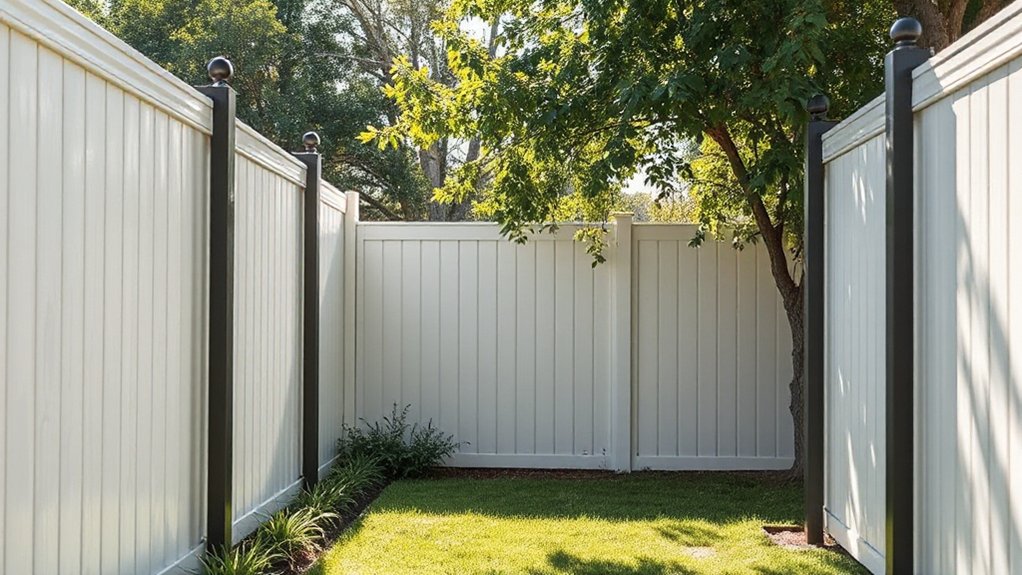
Vinyl and composite fences offer low-maintenance privacy with lasting appeal, combining durable polymer materials and smart design choices that resist weathering and wear. You’ll appreciate consistent performance and long-term aesthetics, with minimal upkeep needed to keep panels pristine. When evaluating options, focus on how the fence height and material durability align with your privacy goals and local conditions.
1) Choose a height that balances screening with sightlines for the yard and neighboring spaces.
2) Verify that the selected vinyl or composite materials resist cracking, fading, and moisture intrusion.
3) Consider simple, concealed fasteners and closed-board profiles for cleaner looks and easier cleaning.
Sustainable Fencing: Recycled Materials
Sustainable fencing hinges on recycled materials that deliver both durability and environmental benefits. You’ll find that recycled wood offers strong structural integrity with reduced new-wood demand, while remaining a natural-looking option for timeless borders. When you choose eco friendly materials, you support reduced landfill waste and lower lifecycle emissions, helping your landscape stay greener. Consider fencing panels made from salvaged timber, or woven screens created from reclaimed slats; these choices combine resilience with aesthetic texture. You’ll want to verify treatment methods and certifications to guarantee weather resistance and decay protection without harsh chemicals. Installation should optimize board alignment and drainage to extend longevity. By prioritizing recycled materials, you create privacy that’s responsible and stylish, aligning garden design with sustainable practice.
Concrete Panels for Ultra-Private Boundaries
Concrete panels deliver true privacy by blocking sightlines and reducing noise, so you can enjoy your yard without visual intrusion. The design impact matters—panel thickness, texture, and joints shape the look and your curb appeal. For longevity, you’ll want proper installation and low-maintenance materials to keep these boundaries sturdy with minimal upkeep.
Concrete Privacy Benefits
Are you seeking maximum seclusion in your yard? Concrete privacy panels deliver predictable, durable barriers that enhance privacy with minimal upkeep. You’ll gain a solid visual wall that blocks sightlines and reduces noise transmission, creating a calmer outdoor retreat. Concrete benefits include weather resilience, long service life, and consistent appearance that ages well without fading. For ideal results, consider panel height, staining, and placement to maximize privacy enhancement while preserving airflow and light. Below are key steps to leverage these advantages:
- Choose high-density panels with reinforced cores for greater wind resistance and stability.
- Plan precise spacing and alignment to minimize gaps and secure mounting.
- Apply low-maintenance finishes (stain or sealant) to sustain color and curb appeal.
Concrete panels offer dependable privacy and lasting value.
Design Impact Of Panels
The design of concrete panels for ultra-private boundaries shapes your outdoor experience as much as their function. You’ll notice how panel profiles influence perceived space, light, and texture from the moment you plan. Sleek, uniform slabs emphasize privacy, while beveled edges or subtle grooves add depth without visual clutter. The finish choice matters: a smooth surface can feel modern and calm, whereas a lightly textured face softens harsh lines. Pair panels with a purposeful fence color to unify your garden’s mood and resist weathering. Decorative accessories, like hidden fasteners or integrated planters, enhance practicality without breaking the clean line. In tight spaces, panel alignment guides sightlines, reinforcing seclusion while maintaining a balanced exterior.
Maintenance For Longevity
Regular maintenance is essential to keep ultra-private concrete panels looking sharp and performing well. To maximize longevity, follow a disciplined routine that shields panels from plant stress and moisture intrusion.
- Inspect seals and joints quarterly, reapplying sealant as needed to prevent cracks.
- Manage soil and planting near bases, incorporating wildflower planting away from the panel seams to reduce moisture buildup.
- Monitor for pests and treat promptly with targeted pest control to avoid structural damage and staining.
Supplemental practices include cleaning with a mild detergent, avoiding high-pressure washing, and ensuring proper drainage around foundations. Maintain a consistent irrigation schedule that avoids oversaturation. By prioritizing these steps, you uphold privacy, deter deterioration, and preserve the aesthetic integrity of your concrete boundaries.
Mixed-Material Fences: Style and Practicality
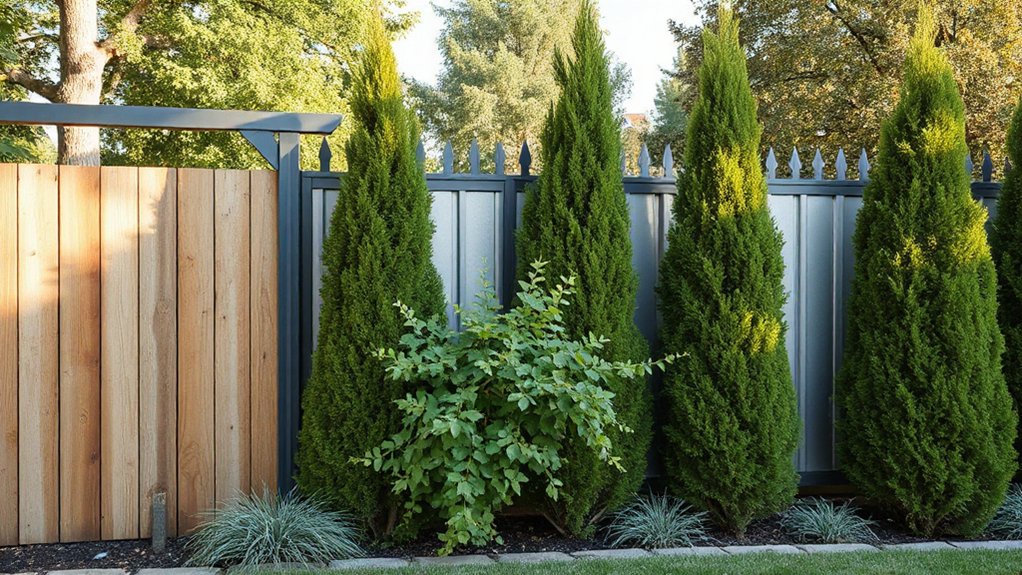
Mixed-material fences blend aesthetics with practicality, pairing wood with metal, vinyl, or composite to balance appearance and durability. You gain design flexibility by combining elements that suit climate and maintenance needs, without sacrificing curb appeal. For structure, use metal posts or rails to reinforce strength, then cap with wooden panels or composite infill for warmth. This approach minimizes warping, reduces maintenance, and accommodates varying ground conditions. Plan your layout to optimize airflow and light, avoiding overly dense screens that feel boxed in. Consider Plant integration zones where greenery can weave through slats or climb the metal framework, enhancing texture and privacy. Eco friendly options include responsibly sourced wood and recyclable materials, ensuring long-term sustainability while preserving the garden’s openness and charm.
Color, Texture, and Finish for Curb Appeal
Color, texture, and finish are the keys to curb appeal when fences frame your garden. You’ll boost impact by selecting hues that align with color psychology principles, shaping mood and perception at a glance. Balance bold accents with calmer neutrals to guide the eye and create harmony from curb to yard. Texture contrast matters too: pair smooth panels with a ribbed plank or rough timber for tactile interest that reads as deliberate design. Finish choices should sustain weather, color, and style over time.
- Choose a primary color grounded in psychology, plus one accent that pops.
- Mix textures for depth, avoiding uniform surfaces.
- Seal or paint with durable finishes that resist fading and peeling.
Fence Layouts for Privacy and Light
Could you maximize privacy without sacrificing light by choosing fence layouts that balance enclosure with openness? You balance shade and view by alternating solid panels with lattice sections or add mid-height screens to soften sightlines. Use staggered layouts and permeable gaps to invite breezes, reducing wind tunnel effects while keeping defined boundaries. Pair taller privacy elements with lower, decorative garden sculptures near sightlines to create focal points without blocking light. Place angles or curves to interrupt straight lines, enhancing enclosure while maintaining openness. Consider terrain and sun patterns when positioning panels so light travels between fences, not around them. Prepare soil thoroughly before install, ensuring stable posts. Thoughtful layout reduces glare, supports plant growth, and highlights landscape features. soil preparation matters for longevity and accurate fence alignment.
Gate Design: Security and Flow
A secure gate sets the tone for both access control and traffic flow in your garden design. You’ll want a sturdy, well-hinged gate that welcomes guests while deterring intruders, with smooth operation that doesn’t snag or rattle. Consider these essentials for Gate security and Flow design:
- Robust hardware and reliable latching to prevent forced entry.
- Alignment and clearance that ensure easy passage for pedestrians and wheelchairs.
- Clear sight lines and smart spacing to guide foot traffic without creating bottlenecks.
A thoughtful gate design balances security with aesthetics, complements fencing, and minimizes maintenance. Prioritize weather-resistant materials, keypad or smart-look access, and consistent hinge maintenance to keep flow uninterrupted and safe year-round.
Climate-Smart Fence Choices
When you choose climate-smart fencing, you’ll weigh material durability, recycled content, and low maintenance to reduce your ecosystem footprint. Consider climate-smart materials that resist heat, moisture, and pests, and pair them with seasonal adaptation strategies like modular designs or adjustable gaps to accommodate plant growth and weather shifts. This discussion starts with how material choices and seasonal tweaks together shape a fence that lasts, supports your garden, and adapts to changing conditions.
Climate-Smart Material Choices
Climate-smart fencing choices start with selecting materials that minimize environmental impact while maximizing durability and low maintenance. You’ll contrast longevity, embodied energy, and end-of-life recyclability to pick smarter options. Focus on local sourcing, reduced chemical use, and low water needs to keep maintenance minimal.
- Choose sustainably harvested wood or recycled composite with certified durability ratings to limit replacement cycles.
- Opt for metal panels with corrosion resistance and modular designs that enable easy repairs and end-of-life recycling.
- Consider alternatives like gabions or living walls, incorporating drought-tolerant plantings for added privacy and biodiversity.
Incorporate wildflower planting nearby to enhance pollinator habitats, and use rainwater harvesting systems to support irrigation reduces runoff and supports overall landscape resilience.
Seasonal Adaptation Strategies
Seasonal adaptation is about choosing fence designs and materials that perform reliably across changeable weather and planting cycles. You’ll prioritize climate-smart options that tolerate moisture, heat, and cold without warping or inset damage. Start with modular panels or adjustable posts that can handle shifting soil and seasonal pruning needs. Align fence height with plant height to maintain sightlines and airflow while shielding beds during peak growth. Use durable, low-maintenance materials like treated wood or composite that resist rot and pests, then plan seasonal maintenance windows rather than ad hoc fixes. Account for snow load, wind exposure, and sun exposure to minimize post-stress. Regularly reassess privacy needs as borders mature, adjusting screens and trellises to sustain both privacy and style year-round.
Budgeting Your Fence Project: Quick Wins to Long-Term Value
Smart budgeting sets the foundation for a durable fence project. You’ll maximize value by planning upfront, selecting materials with longevity, and aligning costs with long‑term maintenance. Focus on three practical steps:
1) Prioritize cost‑per‑year: compare upfront price, expected lifespan, and required upkeep.
2) Explore fence financing: low‑interest options or phased payments to fit cash flow.
3) Verify material warranties: choose products with robust coverage and clear claim processes.
DIY vs. Pros: Costs and Trade-offs
DIY projects can save money upfront, but they come with trade-offs in time, risk, and long-term maintenance. When you compare DIY to hiring pros, you weigh initial costs against quality and speed. Pros typically deliver consistent results, shorter timelines, and clearer warranties, which matters forFence height and layout accuracy. For fences with complex designs or hard materials, professional installation reduces mistakes that can lead to costly fixes later. Material durability varies by type; you’ll pay more for stronger options, yet durability can lower ongoing upkeep. If you choose DIY, you control budget and scheduling but accept potential mistakes and higher labor. In contrast, pros absorb risk, provide standardized guarantees, and optimize for wind loads and code compliance. Your choice hinges on time, skill, and long-term value.
Maintenance Milestones for Your Fence
Once you’ve weighed DIY versus hiring pros, you’ll want a clear maintenance plan that protects your investment. Maintenance milestones keep your fence functional and your yard cohesive with garden art and outdoor lighting accents. Planned checks prevent small issues from becoming costly repairs, preserving privacy and curb appeal.
- Inspect annually for rot, rust, or loose fasteners, and reseal or repaint as needed.
- Clean and treat against mold or algae, then reseal every 2–3 years to extend life.
- Update lighting and art placements seasonally, ensuring cords and fixtures remain weatherproof and safe.
Document dates, outcomes, and any replacements. Align upkeep with seasonal tasks, like pruning nearby plants and clearing debris, so the fence remains sturdy, stylish, and integrated with your landscape aesthetic.
Case Studies: Real Yards Balancing Privacy and Style
Case studies offer real-world examples of how homeowners balance privacy with style, showing practical layouts, plant choices, and fence designs that fit different yard sizes and climates. You’ll see compact urban yards layering evergreen screens with vertical trellises, while larger plots blend wood panels with trellis inserts to soften lines. In several cases, fences double as windbreaks and artful backdrops, enhancing Fence aesthetics without sacrificing openness. Plant selections emphasize year‑round privacy, using evergreens, viburnum, and dwarf conifers tuned to local sun. Urban wildlife interactions vary, with careful spacing and wildlife-friendly native species reducing conflicts. Each yard demonstrates measurable outcomes: improved seclusion, tested maintenance routines, and cohesive style that complements architecture. Real examples guide you toward resilient materials, thoughtful sightlines, and tailored privacy solutions.
Frequently Asked Questions
How Do Neighbors’ Views Affect Privacy Fence Choices?
Neighbors’ views matter; you should consider neighbor visibility when choosing your fence. Prioritize fence height considerations that balance privacy with light and appeal, ensuring you meet local rules and avoid unnecessary conflicts.
Which Fence Type Boosts Property Value the Most?
A prudent choice quietly boosts value: a solid wood or vinyl fence, renowned for material durability and curb appeal, outperforms others. You’ll enjoy lower maintenance, reduced repainting, and easier fence maintenance while your property looks consistently refined.
Can Fences Impact Home Resale Aesthetics?
Yes, fences can boost resale aesthetics. You’ll improve curb appeal while ensuring durability; prioritize fence maintenance and fencing material durability to keep looks sharp, competitive, and valuable, especially as buyers notice cohesive style with solid construction.
What Are Best Plants for Living Privacy Screens?
Climbing plants and evergreen shrubs form your best living privacy screens, you’ll want to choose diligently, and you’ll appreciate steady foliage year-round, while mild euphemisms emphasize beauty; you’ll nurture climbers and evergreens, ensuring dense coverage and reliable screening.
How to Blend Fencing With Existing Landscaping?
To blend fencing with existing landscaping, choose decorative lattice panels and guarantee color coordination with your plants; place lattice where year-round interest thrives, and let climbers weave through for cohesion, while using neutral tones to harmonize textures.
Conclusion
You’ll end up with a fence that fits your yard, your budget, and your daily life. Think of your privacy as a garden, not a wall: a living screen can soften edges and invite birds rather than block light. Case in point: a homeowner saved 20% over three years by combining solid panels with climbing vines. Start small, plan long, and let your fence grow with you—style, function, and value all in one.
About the Author


