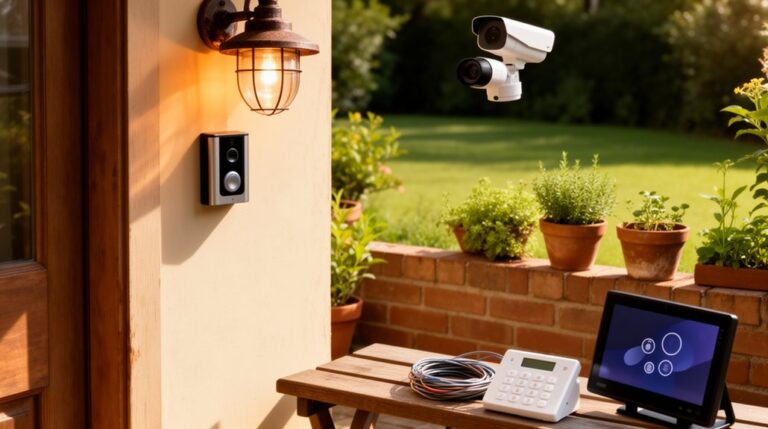
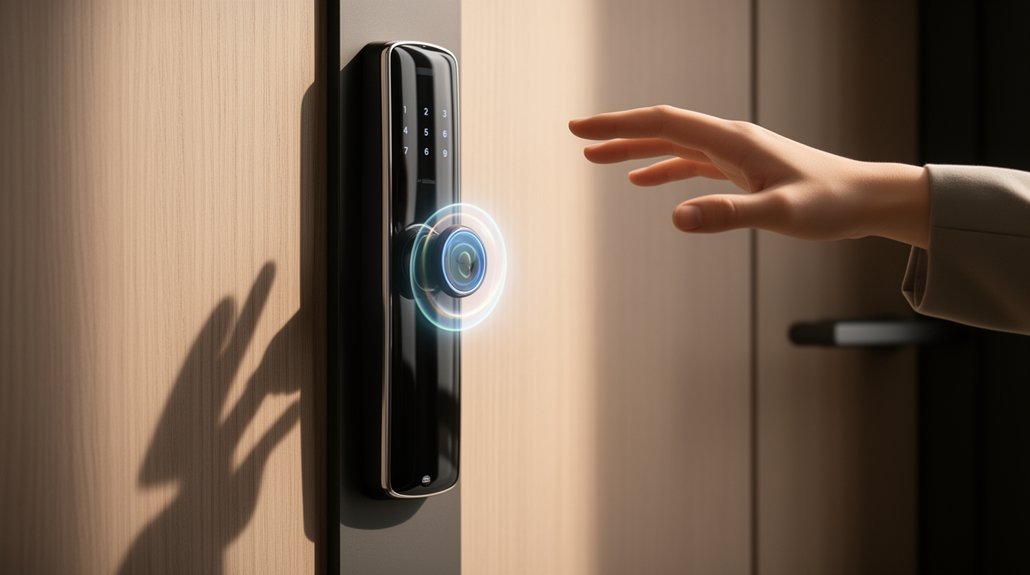
Hands-free entry with ultra-wideband (UWB) smart locks lets you gain access doors as you approach, without keys. You’ll get centimeter-accurate proximity, secure mutual authentication, and tamper-resistant hardware, plus rapid, low-latency handoffs. UWB supports privacy-by-design, local processing, and auditable logs, reducing keys and credential management. Beacons and hubs coordinate access tiers, while real-time alerts deter spoofing and enable swift revocation. If you push further, you’ll uncover deployment strategies, maintenance tips, and privacy safeguards that shape adoption.
Key Takeaways
- UWB hands-free locks use precise centimeter-level positioning to verify proximity and grant seamless access without keys.
- Strong cryptographic handshakes, mutual authentication, and tamper-resistant hardware prevent spoofing and protect credentials.
- Real-time unlocking occurs as authorized devices enter a secure zone, with immediate feedback and audit-ready logs.
- Architectures include beacon-to-lit for low-latency access and hub-centric for centralized policy management and updates.
- UWB enables scalable access control, dynamic permissions, and rapid revocation across homes and organizations.
Why UWB Hands-Free Locks Are a Smart Home Upgrade
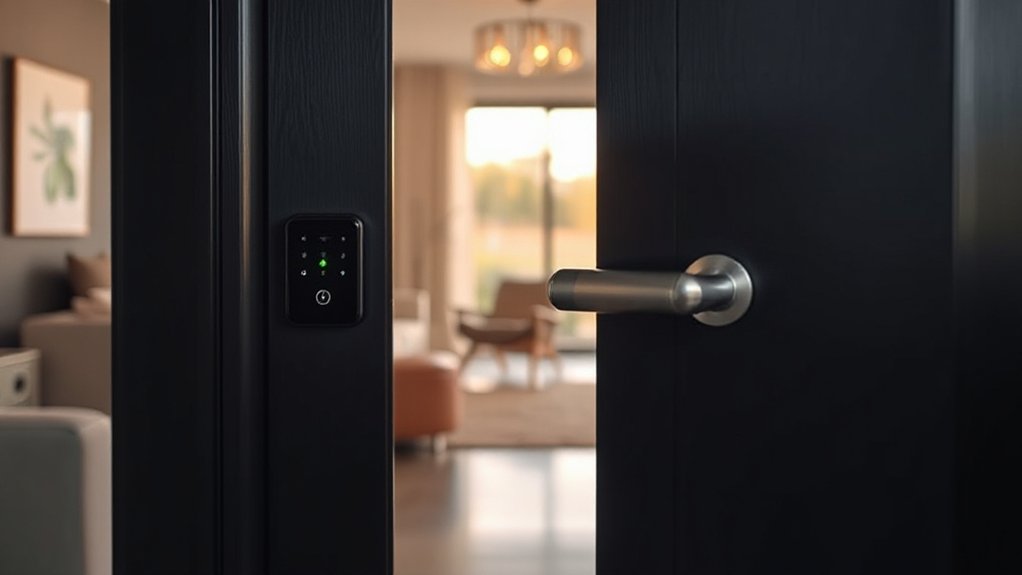
UWB hands-free locks offer a reliable, user-friendly upgrade to any smart home. You gain seamless access control without fumbling for keys, reducing the risk of lost credentials and unauthorized copy drafts. Ultra-wideband precision locates your device in real time, delivering fast, consistent unblocking from a distance. You’ll eliminate traditional key management hassles, including who holds spare keys and how to revoke access when someone moves out. With strong encryption and tamper resistance, these locks strengthen security posture beyond conventional options. They integrate with existing ecosystems, enabling scene triggers and remote management from apps, panels, or hubs. You’ll replace manual lock mechanisms with proactive credentialing, audit trails, and user-based permissions, ensuring predictable behavior for residents, guests, and service providers.
What UWB Hands-Free Entry Is and How It Works
UWB hands-free entry uses precise radio positioning to verify your device and gain access securely, without you pulling out a key. You’ll experience a seamless access as the system confirms proximity and authenticates the user credential in real time. In practice, this boils down to two core ideas: UWB entry mechanics and the hands-free access process.
UWB Entry Mechanics
When you enable hands-free entry with Ultra-Wideband (UWB), the system detects your authorized tag or device and confirms proximity with high precision. In UWB entry mechanics, short-range radio signals map your device’s location relative to the lock, enabling reliable door state decisions without line-of-sight. You benefit from rapid, passive unlocks as signals exchange time-of-flight measurements and distance estimates, while the lock verifies authorization in real time. The architecture emphasizes secure pairing, mutual authentication, and anti-spoofing to prevent relay attacks. For deployments, Smartphone integration accelerates onboarding and user management, simplifying credential updates. Battery optimization remains essential; intelligent wake/sleep cycles and event-driven sensing reduce power draw without sacrificing responsiveness. This approach delivers seamless, robust access control suitable for commercial and residential applications.
Hands-Free Unlock Process
Leveraging proximity data and secure authentication, hands-free access occurs automatically as your authorized device enters the lock’s secure zone. In this unlatch process, UWB radios measure distance with centimeter precision, while cryptographic handshakes verify credentials in real time. You don’t swipe or tap; your device broadcasts a signed token that the lock cross-checks against a trusted server or onboard whitelist, rejecting any spoofed signal. Once verified, the bolt retracts and the interface confirms access, delivering immediate feedback to the user. For sustained reliability, the system continuously monitors integrity and revocation lists, ensuring compromised keys are blocked. This design enhances user experience by reducing friction, while supporting streamlined user onboarding through predefined permissions, role-based access, and clear audit trails for security and compliance.
Key UWB Security Features Every Lock Should Have
You should expect robust security built into every UWB lock, starting with secure pairing protocols that resist interception and spoofing. The hardware must be tamper-resistant, protecting internal keys and firmware from physical manipulation. Throughout, privacy-by-design features guard user data and location, ensuring control remains confidential and auditable.
Secure Pairing Protocols
Secure pairing protocols are the backbone of UWB smart locks, ensuring that only trusted devices can initiate access. You’ll rely on cryptographic handshakes, mutual authentication, and short-lived session keys to prevent eavesdropping, replay, and impersonation. When you pair, you establish a trust relationship that persists across usage events, reducing friction without compromising security. Emphasize lightweight, hardware-accelerated algorithms to minimize latency, while maintaining robust resistance to relay and distance exploitation. You should implement out-of-band verification options to confirm device provenance before granting access. This framework supports essential concepts like user authentication and access control, translating identity checks into practical door policy. A well-designed protocol also negotiates fallback paths, detects tampering attempts, and preserves user experience, aligning security rigor with real-world usability.
Tamper-Resistant Hardware
Tamper-resistant hardware is the frontline that reinforces the trust established during secure pairing. You require a design that shrugs off probing attempts, signaling that any tampering is detected and logged. Focus on tamper resistance through mechanical hardening, seal integrity, and enclosure must-hold up against prying, drilling, and environmental stress. A robust package preserves cryptographic keys and prevents fault injections that could compromise authentication. Opt for reinforced mounting, anti-tamper screws, and sensor redundancy that triggers alarms when enclosure integrity is breached. Hardware durability matters, ensuring continued operation after shock, vibration, or temperature swings. Pair this with secure boot and verifiable device identity to maintain unwavering certainty that access remains controlled and auditable.
Privacy-By-Design Features
Privacy-by-design isn’t an afterthought—it’s a core feature set for UWB smart locks. You’re pursuing secure, scalable access, so you embed protections at every layer, from device firmware to cloud gateways. User privacy stays front and center through minimal data collection, deliberate data minimization, and strict role-based access. You implement authenticated pairing, frequent key rotation, and tamper-resistant audit trails to deter abuse. Data encryption governs both in-transit and at-rest information, ensuring even intercepted signals reveal nothing meaningful. You compartmentalize data so a breach in one subsystem doesn’t cascade. Privacy-by-design also demands transparent policies and user controls, so occupants understand what’s collected and can revoke privileges. In practice, these safeguards translate into measurable risk reduction and higher owner trust.
UWB Proximity: How Precision Unlocking Happens
UWB proximity grants access to doors with pinpoint accuracy by measuring the time a signal takes to travel between the key fob and the reader, then converting that timing into a precise distance. You gain consistent discoveries as the system verifies distance and angle, reducing spoofing risk. The process hinges on tight security protocols and real‑time anomaly checks, ensuring only valid credentials pass. You’ll notice rapid handoffs with minimal latency, supporting high-traffic environments without compromise. This precision hinges on robust hardware durability and meticulous calibration, so readings stay stable across temperature shifts and mechanical shocks. You benefit from continual firmware hardening and secure key management, which limits exposure from intercepted signals. In practice, proximity data guides access decisions, disabling entry points while preserving user convenience and operational integrity.
UWB vs Bluetooth and NFC: Choosing the Right Tech
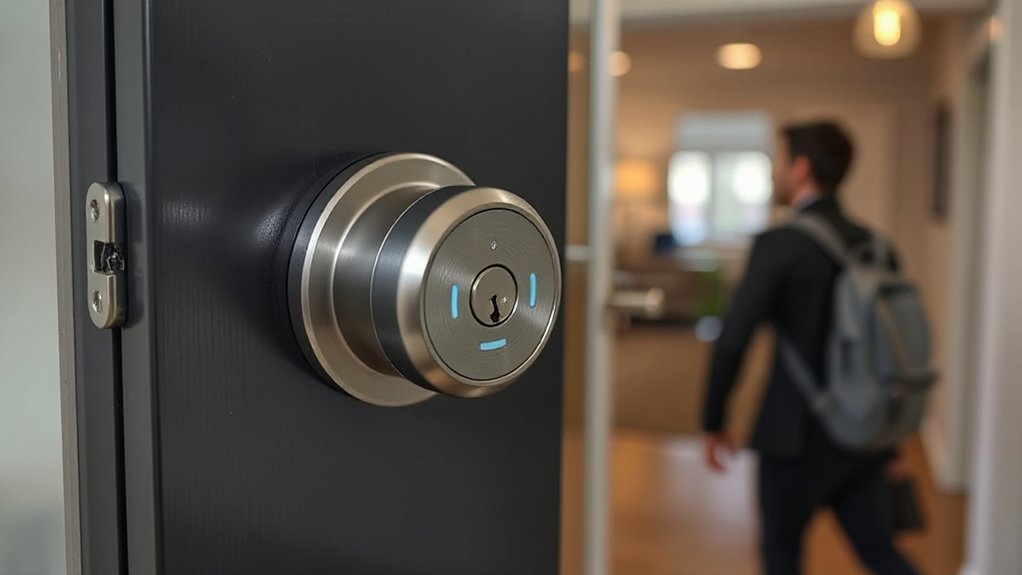
When you’re deciding between UWB, Bluetooth, and NFC for smart entry, the choice hinges on range, precision, and user experience. UWB delivers the tightest range and highest accuracy, making it ideal for secure, proximity-based access with fewer false positives. Bluetooth offers broad compatibility and simpler pairing, suitable for everyday convenience and legacy device support, though its precision and resistance to interference lag behind UWB. NFC excels for tap-to-unlock scenarios with minimal power draw and strong security, but limited range reduces convenience for hands-free entry. Consider user customization and how the tech integrates with your ecosystem. Aesthetic integration matters, too: UWB can be hidden within the door hardware, preserving clean lines while delivering robust performance. Choose the tech that aligns with your security posture and design goals.
Typical UWB Lock Architectures: Beacon-to-Lit vs Hub-Centric
You’ll weigh Beacon-to-Lit dynamics against Hub-Centric architecture to identify how each approach handles proximity data, latency, and reliability. We’ll compare the Proximity-Authentication flow and its impact on user experience, security posture, and deployment costs. This sets the stage for concrete tradeoffs in real-world lock ecosystems.
Beacon-To-Lit Dynamics
Beacon-to-lit dynamics describe how ultra-wideband systems pair a fixed beacon with a lit device to establish proximity-based access, a pattern favored for its low latency and precise ranging. You assess environments where a beacon broadcasts time-of-flight signals while the lit device responds, enabling rapid trust establishment without user intervention. In this arrangement, beacon lighting cues provide immediate situational feedback, while lit indicators confirm successful authentication and door status. The architecture minimizes power draw by restricting active scanning to brief windows, improving battery life for both sides. Deployment considerations include placement symmetry, obstruction handling, and interference mitigation to sustain consistent ranging accuracy. You’ll prioritize robust beacon calibration, secure key exchange, and clear beacon lighting semantics to reduce false positives and enhance user confidence.
Hub-Centric Architecture Tradeoffs
Hub-centric architectures shift the control plane from a fixed beacon guiding the lit device to a central hub coordinating multiple endpoints. In this setup, you trade a distributed beacon model for centralized decision logic, which can streamline management and diagnostics. You’ll gain unified policy enforcement, easier firmware updates, and consistent ranging performance across devices. However, hub-centric designs introduce single-point risk, bandwidth considerations, and latency implications as the hub handles more traffic. Dependency on hub resilience and power availability becomes a core architecture consideration, influencing fault tolerance strategies and maintenance cycles. You’ll also weigh integration complexity with existing ecosystems, OTA cadence, and security models. In practice, hub centric tradeoffs prioritize centralized control against potential bottlenecks, guiding deployment choices for scalable, maintenance-friendly UWB lock systems.
Proximity-Authentication Flow
How do proximity-authentication flows differ between beacon-to-lit and hub-centric UWB lock architectures, and what does that mean for end-user gain access latency and security guarantees? In beacon-to-lit setups, the lock continuously monitors a nearby beacon, enabling near-immediate access decisions as soon as the beacon is authenticated by the lit tag, trimming latency for Access control. Hub-centric designs centralize processing, so user authentication travels via a trusted hub, potentially introducing micro-delays but easing policy enforcement and key management. Beacon-to-lit favors lower latency and rapid revocation, while hub-centric strengthens centralized security analytics and anomaly detection. Choose beacon-to-lit for speed, hub-centric for unified policy. Regardless, consistent cryptographic handshakes and attribute verification preserve robust Access control and user authentication across both architectures, with tradeoffs defined by deployment goals and risk tolerance.
Real-Time Unlocking: Step-by-Step When Your Door Opens
Real-time enabling with UWB smart locks occurs the moment your device is in range and the door verifies your credentials, delivering a seamless, hands-free experience. You’ll feel a smooth disengage as the lock communicates status, confirms authorization, and disengages the bolt without you touching anything. Behind the scenes, microseconds matter; the system prioritizes low latency, secure cryptography, and reliable handoff to the strike.
- Visual cue: soft LED pulse indicating granted access
- Audible confirmation that’s crisp and non-disruptive
- Haptic feedback through the door handle for reassurance
- Uniform, unobtrusive mounting that preserves Smart lock aesthetics
- Clear on-device prompts guiding you through permissions and status
This flow emphasizes user interface design, ensuring a predictable, polished experience every time.
Reliability Essentials: Signal, Power, and Environment Factors
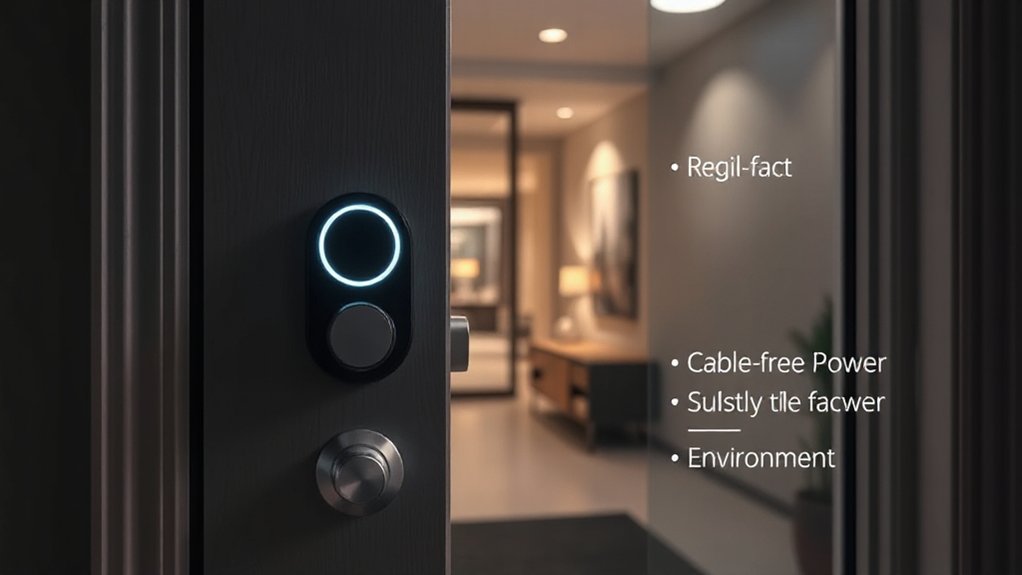
To keep hands-free access reliable, you must account for signal integrity, power readiness, and environmental factors that can disrupt operation. In practice, you’ll monitor UWB link quality, path loss, and interference to sustain consistent range and responsiveness. Prioritize robust power management: maintain hardware awake states, optimize battery life, and validate charging routines to prevent dropouts during access events. Environmental considerations—reflective surfaces, metal congestion, and temperature shifts—affect throughput and latency; implement adaptive scheduling and error correction to preserve performance. Leverage access analytics to detect pattern anomalies and predict failures before they occur. Pair this with disciplined user management to guarantee trusted devices, regular credential rotation, and access policy updates that align with evolving security profiles. Continuous testing and telemetry close the reliability loop efficiently.
Spoofing Resistance and Anti-Tamper Measures Explained
You’ll see how spoofing resistance basics shield UWB locks against replay and impersonation threats, and why strong authentication matters at every handshake. Anti-tamper mechanisms deter tampering, reverse engineering, and disable bypass attempts, ensuring the hardware and firmware stay trustworthy. Secure keying protocols bind credentials to devices and channels, so only authorized parties can open access without compromising the system.
Spoofing Resistance Basics
Spoofing resistance is about ensuring only legitimate devices can unbolt a smart lock. You rely on layered verification that stops impersonators before access is granted, using rapid, cryptographic checks and tight time windows.
- Clear device enrollment that binds each key to a unique hardware identity
- Regular firmware updates to patch spoofing vectors and improve validation
- Strong challenge-response protocols minimizing data exposure
- Tamper-aware hardware elements that detect unusual attempts
- Audit-ready logs that surface anomalies for rapid response
Spoofing prevention hinges on durable hardware and ongoing scrutiny; you’ll want devices built with hardware durability to resist physical and digital manipulation. In practice, this means robust cryptography, shielded components, and resilient key storage that endure real-world use without compromising security.
Anti-Tamper Mechanisms
Anti-tamper mechanisms are the front line against spoofing, combining hardware and software defenses to guarantee only legitimate hardware and authorized keys operate the lock. You’ll rely on tamper-evident seals, fortified enclosures, and secure boot processes to prevent circuit manipulation and counterfeit accessories. Mechanism safeguards include cryptographic attestation, shielded key storage, and anti-tamper softeners that trigger alerts if tampering is detected. In practice, you’ll see layered defenses: sensor fusion that flags irregular hardware changes, firmware integrity checks, and secure element enforcement that refuses cloned credentials. Regular auditing and rapid revocation capabilities ensure compromised components can’t gain access post-facto. This approach maintains resilience in hostile environments and sustains trust with property owners, installers, and service providers. Anti tamper-focused design delivers dependable, unobtrusive protection for modern UWB smart locks.
Secure Keyling Protocols
Secure Keyling Protocols are the backbone of spoofing resistance and anti-tamper measures in UWB smart locks. You’ll rely on robust authentication, rapid key refresh, and threat-aware handshakes to stop impersonation and relay attacks. These protocols enforce strict neighbor verification, time-synced nonces, and minimal data exposure, reducing exploitable surfaces. You’ll implement layered defenses that align with industry best practices, using fail-safes and integrity checks to detect tampering at every step. Cybersecurity protocols and encryption standards drive decision making, ensuring confidentiality, authenticity, and resilience against evolving attack vectors. Stay focused on scalable, auditable, and interoperable designs that protect access control ecosystems.
- Real-time anomaly alerts
- tamper-evident logging
- mutual authentication
- forward secrecy
- rapid key rotation
Real-World Use Cases: Homes, Apartments, and Offices
Smart locks powered by UWB have quickly proven their value across homes, apartments, and offices by delivering fast, contactless access with high precision. In homes, you gain seamless entry for residents and trusted guests, reducing friction from codes or keys and enhancing daily routines. Apartments benefit from controlled access, tenant turnover efficiency, and improved security without fumbling for cards or fobs. In offices, you experience streamlined workflows, door-to-door occupancy visibility, and robust BYOD compatibility that supports hot-desking and shared spaces. Across all environments, the emphasis is on reliable detection, low false positives, and a consistent user experience. Adoption hinges on predictable release, integrated access policies, and clear audit trails that reinforce security while elevating convenience. Smart Lock technology delivers measurable value, time savings, and user satisfaction.
Pairing and Enrollment: A Smooth Onboarding Guide
Pairing and enrollment should be fast and reliable from the start: a smooth onboarding flow reduces friction and sets the tone for trusted use. You’ll want a streamlined process that minimizes taps, confirms firmware compatibility, and guides you through a secure setup without jargon. Prioritize clear prompts, automatic device discovery, and layered security checks to prevent mispairing. Leverage customer feedback to refine every step, from app onboarding to hardware prompts. Align onboarding with branding strategies that convey reliability, privacy, and ease of use.
- Intuitive walkthroughs that highlight key security checks
- Real-time status updates during pairing
- Visual cues aligned with your branding colors
- Quick verification steps to confirm successful enrollment
- Feedback loops that capture user sentiment for continuous improvement
Ranging and Access Management for Families and Teams
Ranging and access management for families and teams hinges on precise, flexible controls that scale with your household or organization. You’ll define access tiers, time windows, and revocation rules without friction, ensuring doors respond to real-time context. UWB’s location accuracy enables dynamic permissions, so members gain access only when needed, and activity is auditable for security and accountability. The system should present a clean user interface that guides setup, assigns roles, and triggers automated alerts for anomalies. Emphasize fast enrollment, minimal latency, and reliable credential propagation across devices. Prioritize aesthetic design that reduces cognitive load while maintaining enterprise-grade reliability. In practice, you’ll balance convenience with control, delivering seamless entry experiences aligned with policy, privacy, and safety requirements.
Compatibility and Ecosystem Bridges: How It Fits Your Smart Home
To fit into a smart home, UWB smart locks must weave seamlessly with existing platforms, devices, and routines. You gain cohesive control, low-friction setup, and a unified user experience across ecosystems. Compatibility hinges on open APIs, native integration, and consistent security postures that protect every touchpoint. Smart lock aesthetics matter: finishes, form factor, and sensor placement influence adoption as much as function. You’ll notice that reliable scene triggers, voice assistants, and mobile apps align to deliver smooth, predictable access. Expect robust interoperability with major hubs, sensors, and door sensors, plus transparent firmware updates that don’t disrupt routines. User experience remains the north star, driving intuitive pairing, clear state feedback, and actionable risk signals.
- Consistent design language across devices
- Seamless scene and routine automation
- Clear, actionable status feedback
- Non-disruptive firmware updates
- Harmonized security policies tips
Installation Guide: Where to Place Beacons and Locks
Place beacons and locks where the signals stay strong and the doors stay accessible, starting with exterior doors and high-traffic entry points to minimize blind spots and interference. Position beacons to cover pivotal thresholds—front entries, garage access, and secondary doors—without cluttering sightlines or pedestrian paths. Mount locks at standard door heights, guaranteeing unobstructed sensing fields and reliable power access. Align beacons and locks along a single line of sight whenever possible to reduce multipath reflections and maximize range. Consider architectural features that support concealment, favoring discrete housings that blend with exterior aesthetics. Confirm weather-rated enclosures and proper cable management for durability. Plan for aesthetic integration by selecting finishes that complement fascia, trim, and landscaping, delivering secure access without compromising curb appeal.
Maintenance, Battery Life, and Replacement Cycles
Maintenance for UWB smart locks centers on reliable power, predictable replacement cycles, and minimal downtime. You’ll monitor power sources, optimize battery life, and plan proactive replacements to avoid outages. Expect a clear user interface that flags battery health, remaining life, and scheduled maintenance windows, minimizing guesswork. The emphasis on aesthetic design means hardware and firmware updates won’t disrupt the look or feel of your entryway.
- Battery health indicators that predict remaining life
- Clear maintenance reminders aligned with usage patterns
- Firmware updates that preserve the lock’s look and ergonomics
- Efficient power management without compromising performance
- Alerts that balance security needs with convenience
This approach keeps your system dependable, user-friendly, and visually cohesive while maintaining peak uptime.
Privacy in Practice: Data Minimization and Local Processing
Privacy isn’t an afterthought with UWB smart locks; it’s a design constraint built into every interaction. You’ll prioritize data minimization by collecting only what’s essential for authentication, authorization, and access logging. Local processing is preferred where feasible, reducing exposed data and latency between you and the lock. When cloud connectivity is required, edge-optimized encryption and strict tokenization keep identifiers isolated from broader systems. You’ll implement differential data handling, so non-essential telemetry never leaves the device. Clear user consent remains foundational: you disclose data types, purposes, retention periods, and data sharing boundaries, then obtain explicit approval before any transmission. Data privacy isn’t theoretical; it guides hardware, firmware, and service development. Balancing security, usability, and privacy helps sustain user trust and adoption.
Budgeting and Migration Path: From Keys/Bluetooth to UWB Locks
When moving from keys and Bluetooth to UWB locks, plan a clear budgeting and migration path that minimizes disruption and preserves security. You’ll adopt a phased approach with Smart budgeting guiding capex and opex, ensuring cost predictability. Build a migration strategy that prioritizes risk reduction, compatibility, and rapid ROI. Begin with pilot deployments, then scale across facilities. Align procurement, installation, and training to a single program. Measure progress with KPIs, and adjust timelines to maintain uptime. Consider license fees, replacement cycles, and maintenance. Communicate milestones to stakeholders upfront, and document rollback plans. Budget for contingencies and cybersecurity safeguards.
- Pilot first to validate performance and user adoption
- Define cost bands for devices, readers, and controllers
- Schedule staggered rollouts to preserve operations
- Track ROI with clear success metrics
- Plan training and change management for users
Frequently Asked Questions
Do UWB Locks Work With Existing Traditional Keys?
Yes, UWB locks don’t rely on traditional keys for daily use, but you’ll have key compatibility via a mechanical backup. You can still access your space if the electronic system fails or you’re out of range.
Can UWB Locks Function Without Wi-Fi or Bluetooth?
No, UWB locks don’t require Wi‑Fi or Bluetooth to operate; they use short-range wireless signals. You’ll benefit from robust wireless security and signal reliability, but still may need a hub for remote monitoring or future integrations.
How Vulnerable Are UWB Locks to Radio Interference?
Radio jamming and signal disruption can degrade UWB barriers, but modern designs mitigate effects with robust timing and fallback checks. You’ll notice brief release hesitations during interference, yet overall reliability remains high, though you should plan for occasional degraded performance.
Do UWB Locks Require Ongoing Firmware Updates?
Yes, you should expect ongoing firmware updates for UWB locks. They enhance security protocols and optimize battery longevity, addressing new threats and efficiency improvements while you maintain a future-proof, tightly controlled access system.
Are UWB Locks Compliant With Building Accessibility Codes?
You should verify that your UWB lock meets accessibility standards and regulatory compliance before installation; many models align with codes, but you must confirm against local requirements and applicable standards to guarantee lawful, safe operation.
Conclusion
UWB hands-free locks aren’t just an upgrade—they’re a revolution you can feel in your doorway. With flawless proximity, blazing-fast access, and ironclad privacy, you’ll never fumble for keys again. This isn’t smart tech luck; it’s precision engineering talking to your home. Migration is practical, costs are sensible, and security gets a quantum leap. Embrace UWB now, and watch your doors stop being doors and start being guardians—secure, seamless, unequivocally authoritative. Your future, opened.
About the Author