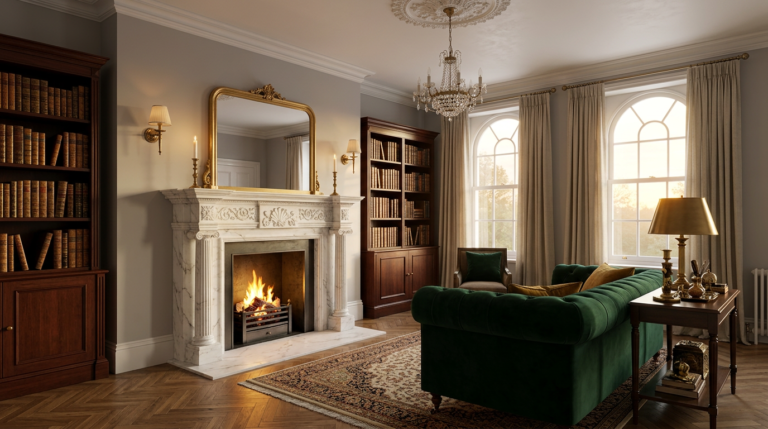
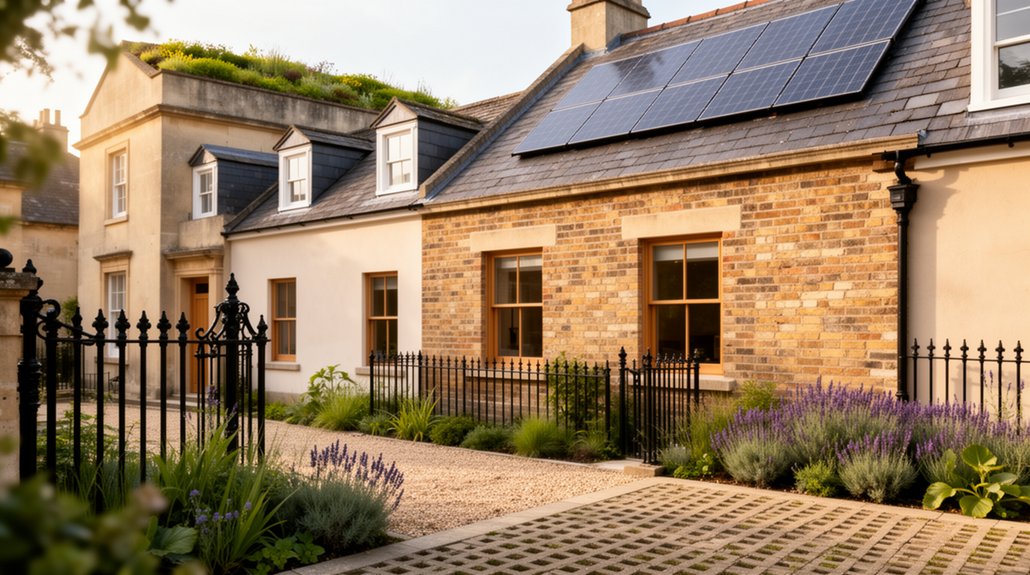
Eco-conscious renovation for a Bath Georgian townhouse starts with an energy-smart envelope: preserve original sash windows, use breathable lime plaster, and apply discreet insulation that respects period features. Improve heating with radiant systems and smart controls, while sealing gaps and embracing radiant heat to warm tall ceilings. For windows, opt slim double glazing or reversible secondary glazing. Integrate water-saving fixtures, discreet renewables, and low-impact finishes. You’ll discover practical, heritage-friendly strategies that balance comfort, heritage, and efficiency as you proceed.
Key Takeaways
- Prioritize breathable lime plaster and natural insulation (mineral wool) to preserve moisture balance in Bath’s Georgian walls.
- Preserve original sash windows; add discreet secondary glazing or smart perforated seals for energy efficiency without altering profiles.
- Use lime-based renders and permeable membranes on brick or stucco facades to sustain historic appearance and durability.
- Integrate discreet, reversible solar or micro-wind solutions with thorough heritage documentation and planning.
- Implement rainwater harvesting and high-efficiency fixtures to reduce water use while maintaining period aesthetics.
Bath Georgian Homes: What Makes Them Energy-Smart
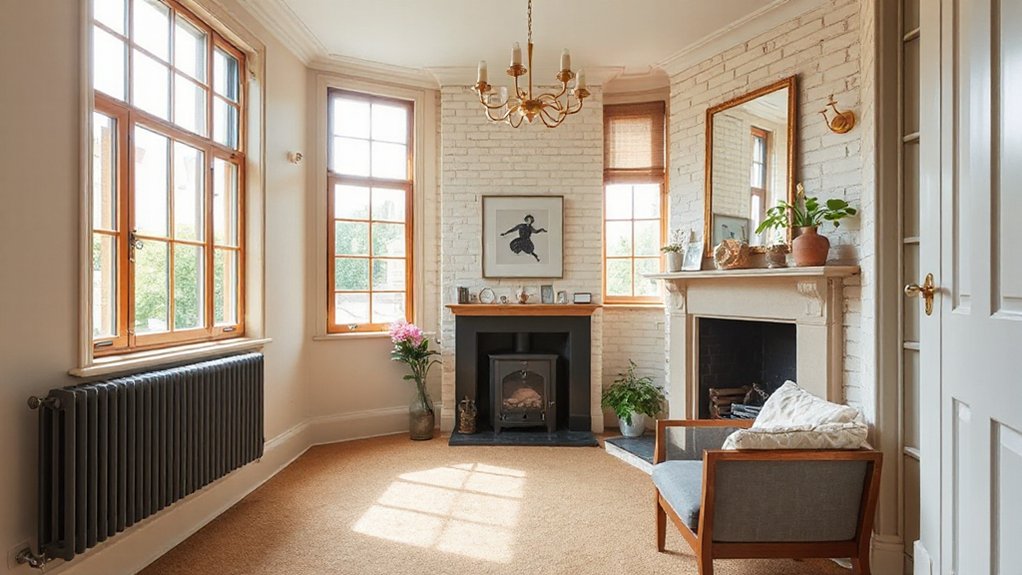
Georgian Bath homes are surprisingly energy-smart, thanks to timeless design choices that optimize insulation, airflow, and heat retention. You’ll notice compact floor plans, thick walls, and evenly distributed volumes that minimize drafts and maximize warmth. Original sash windows with well-maintained frames preserve interior heat while allowing controlled ventilation, complemented by strategic shading to reduce overheating in summer. Exterior aesthetics align with energy-minded goals, featuring brick or stucco facades that deliver thermal mass and durability. Garden design plays a supporting role, with thoughtfully placed greenery and permeable paths that moderate microclimates around the building envelope. You’ll also see careful chimney and fireplace positioning, reducing heat loss while maintaining charm. In sum, these features align elegance with efficiency, sustaining comfort without compromising the townhouse’s character.
Insulation Moves That Respect Period Features
You can boost comfort and energy efficiency without compromising your home’s period features by choosing insulation methods that respect timber frames, plaster, and historic stops. Focus on targeted, discreet solutions like cavity-aware options and surface finishes that conceal without altering profiles. This approach keeps the Georgian character intact while delivering modern warmth and performance.
Insulation With Care
When insulating a Georgian townhouse, you can improve comfort and energy efficiency without compromising period features by prioritizing breathable materials, discreet installation, and minimal disruption to decorative plasterwork and cornices. You approach insulation with care, selecting insulation materials that balance performance with permeability to prevent damp. Favor natural or mineral fibers over dense foams where possible, and verify breathability aligns with a breathable wall system. Focus on airtightness at junctions rather than heavy, visible fixings. Prioritize attic sealing to reduce drafts without compromising attic aesthetics or services. Use thin, compliant products behind cornices and around joinery, keeping drill holes minimal and revocable. Document membranes and layers for future maintenance, ensuring repairs respect the original fabric while delivering modern comfort.
Period-Respecting Methods
To preserve period features while boosting comfort, prioritize insulation moves that work with existing fabric rather than against it. You’ll favor discreet solutions that respect plaster, timber, and masonry while reducing heat loss. Begin with gaps around windows and doors using textile or foam-backed seals, then upgrade to breathable, non-thermal-drift options like natural wool or cellulose where appropriate. Focus on attic and floor void treatments that don’t compress historic ceilings or cornices, choosing loose-fill or quilted wraps that preserve room proportions. Integrate skylight or roofline retrofits only if they enhance daylight without altering character. Plan garden landscaping around thermal performance, using evergreen screening to limit wind exposure. Align paint color schemes with period cadence, avoiding modern tones that clash with the exterior palette. Use these choices to create a cohesive, energy-smart Georgian sensibility.
Heating Smarter for Old Walls and Tall Ceilings
You can boost comfort by insulating old walls effectively, without sacrificing character. Harness radiant heat smartly to keep tall ceilings evenly warmed and reduce energy waste. Focus on ceilings’ thermal performance to release a balanced, efficient climate throughout the townhouse.
Insulate Old Walls Effectively
Insulating old walls without compromising character starts with choosing breathable, high-performance options that suit Bath’s historic fabric. You’ll prioritize minimal disruption to the fabric while eliminating heat loss through thermal bridging. Begin by evaluating existing cavities, then select insulation layering that stays dry, vapor-permeable, and compatible with lime plaster. Consider internal dry-lining with wood wool or mineral wool boards, paired with airtight but breathable membranes to manage moisture. Avoid impermeable foams that trap humidity and risk damp. Seal around flues, windows, and cornices with precision, ensuring continuity of the fabric’s air barrier. Favor systems that preserve room dimensions and allow for redecoration. Document performance targets, monitor humidity, and plan incremental improvements to maintain comfort, efficiency, and the townhouse’s authentic feel.
Harness Radiant Heat Smartly
Smart radiant heat can be a game changer for a Bath townhouse with thick walls and tall ceilings, balancing comfort with the building’s historic fabric. You’ll harness radiant heating to warm occupants and surfaces rather than air, reducing drafts and dead spots. Pair radiant elements with smart controls to tailor zones, schedules, and temperatures to each room’s usage and sun exposure. In practice, place panels or underfloor routes where heat loss is greatest, prioritizing insulated cavities and existing timber floors. A responsive system learns occupancy patterns, delivering heat only when needed and lowering overall energy use. Opt for weather-compensating thermostats and app-based dashboards to monitor efficiency and fine-tune performance. This approach preserves character while delivering consistent comfort, without compromising architectural integrity.
Ceilings: Thermal Performance Boost
Ceilings can be a hidden lever for warmth in a Bath townhouse, where tall heights and thick walls invite heat loss if neglected. To boost thermal performance, target the ceiling as a radiant barrier and air-tight envelope, not a cosmetic afterthought. Insulate above the ceiling line with high-density mineral wool or rigid foam boards, then seal joints to minimize convection. Consider inflatable or removable insulation layers for historical ceilings where access matters. Improve Ceiling acoustics with thoughtful placement of linings to reduce sound transmission without compromising heat retention. Install radiant under-slab or ceiling-mounted panels if appropriate, feeding a smart, zoned system. Decorative cornices can conceal improved insulation details while maintaining period charm. Keep airflow balanced, and verify with a professional heat-loss assessment.
Windows and Glazing: Energy Savings That Fit Georgian Style
Windows and glazing aren’t just about looks—they’re pivotal for energy savings in a Georgian Bath home. You’ll balance authentic charm with modern efficiency by prioritizing precise fit and historic proportions. Double glazing is your first lever: choose slim-profile units that respect sash lines, minimize thermal bridging, and preserve character while cutting condensation and drafts. Consider secondary glazing as a reversible option for period rooms where full replacement isn’t desired. Window restoration can recover original depth, draught seals, and glass clarity, delivering immediate comfort without diluting heritage. Align glazing strategy with airtight detailing at frames and reveals. Favor low-emissivity glass for seasonal comfort, and plan controlled ventilation to avoid overheating. This approach keeps Georgian aesthetics intact while delivering demonstrable energy savings.
Sustainable Materials for Traditional Textures

Sustainable materials that mirror traditional textures can deliver authentic Bath character while improving long-term performance. You’ll prioritize materials that age gracefully, matching the city’s heritage without compromising modern resilience. Opt for lime plaster or breathable lime-limeputty finishes to achieve textured walls that breathe, reduce damp, and sustain indoor comfort. For floors, reclaimed oak or wide-plank southern softwoods with a low VOC finish provide genuine grain and warmth, aligning with traditional finishes while offering improved durability. Consider clay or cement-lime renders for exterior facades to preserve patina and reduce maintenance. When selecting textiles and wall coverings, choose natural fibers with subtle sheens and tactile surface texture to emphasize sustainable textures. Confirm compatibility with underlying structures to prevent moisture traps and guarantee long-term performance.
Water Efficiency That Suits a Georgian Footprint
Could you really achieve water efficiency in a Georgian townhouse without sacrificing character? You can, with targeted retrofits that respect architectural integrity. Focus on discreet, code-compliant systems integrated into existing plumbing where possible. Rainwater harvesting provides a practical supply for irrigation and cleaning, leveraging restored gutter lines and a compact tank hidden within the cellar or alongside the back wing. Greywater recycling, using a low-energy treatment unit, can feed non-potable uses like loos and outdoor taps, reducing mains demand without altering essential layouts. Prioritize high-efficiency fixtures—aerated taps, dual-flush toilets, and smart controls that adjust based on occupancy. Maintain aesthetics by choosing finishes and hardware that echo Bath’s period sensibilities while delivering measurable conservation gains. Regular maintenance guarantees reliability and long-term performance.
Passive Design Tweaks for Year-Round Comfort
Passive design tweaks can tighten comfort year-round in a Georgian townhouse without compromising its character. You optimize thermal mass with well-placed brickwork and masonry vents, pairing them with insulated shutters that modulate heat gain without sacrificing aesthetics. Use strategic shading—louvered screens on upper floors and deep eaves—to curb summertime sun while preserving winter daylight. Improve airtightness behind traditional plaster by detailing lime plaster and breathable membranes, then balance with a discreet mechanical ventilation with heat recovery system for fresh air. Seal gaps around doors and sashes, prioritizing continuous low-thermal-bridging joints. Integrate urban gardening on balconies or interior microgreens to stabilize indoor moisture and feel. Choose eco friendly cleaning practices to maintain a spotless, low-impact habitat.
Eco-Friendly Lighting and Electrical Upgrades
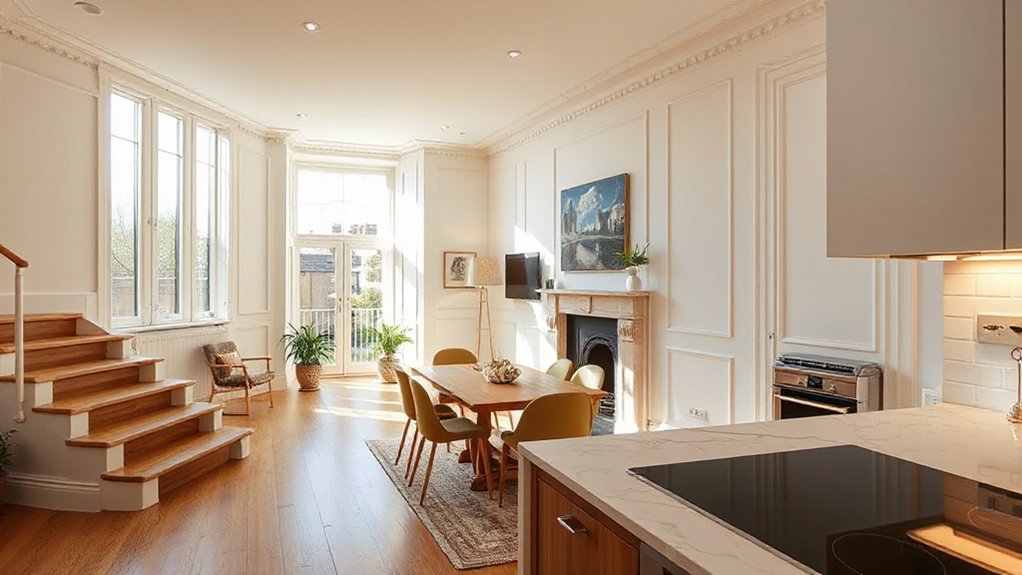
When upgrading lighting and electrical systems in a Georgian townhouse, prioritize efficiency without compromising historic character. You’ll lean into smart controls that respect period details, pairing concealed circuitry with modern performance. Implement LED retrofits across fixtures and call for dimmable options to preserve ambience at scale. Schedule electrical upgrades to meet current safety codes while minimizing invasive work on cornices, moldings, or plaster reveals. Choose smart lighting that integrates with scene presets to reduce energy use during daytime and long evenings alike. Prioritize high-quality transformers, efficient wiring, and surge protection to guard antique fabrics and prized joinery. Document changes for future maintenance, ensuring expandable infrastructure that accommodates evolving technology without visible disruption to the exterior or interior aesthetic.
Integrating Renewables in a Listed-Building Context
Integrating renewables into a listed building demands a careful balance between performance and preservation: you should prioritise discreet, reversible installations that respect historic fabric and planning constraints. In Bath’s Georgian context, plan first for minimal visual impact and reversibility, so tenant and conservation officer requests align with your retrofit goals. Solar panels should be sited on non‑listed or later additions, or integrated into falsed roofing where possible, ensuring colour, texture, and line remain legible. For wind turbines, focus on micro‑sites away from principal façades, with vibration isolation and noise controls to avoid disturbance. Choose reversible mounting systems and document every change for future heritage review. Prioritise energy monitoring to verify performance, and engage a conservation professional early to streamline approvals.
Low-Waste Finishes and Decorative Detailing Ideas
Low-waste finishes start with materials that minimize offcuts and avoid hazardous additives, so you’ll choose low-emission paints, natural plasters, and durable, recyclable surfaces that age gracefully in a Bath townhouse. You’ll prioritize decorative mosaics and restrained detailing that reduce waste while enhancing tactile quality. Opt for modular carpentry, bamboo or FSC-certified timber, and finishes you can repair rather than replace. Embrace lime-based plasters for breathability and longevity, paired with mineral-based pigments for stable tones. For detailing, select recessed profiles and concealed fixings, keeping sightlines clean and avoiding over-ornamentation. Document material provenance, favor locally produced options, and select finishes that develop character with time. The result is a timeless, low-waste aesthetic that aligns with modern living and Georgian rigor.
Professional Preservation Tips for Modern Retrofits
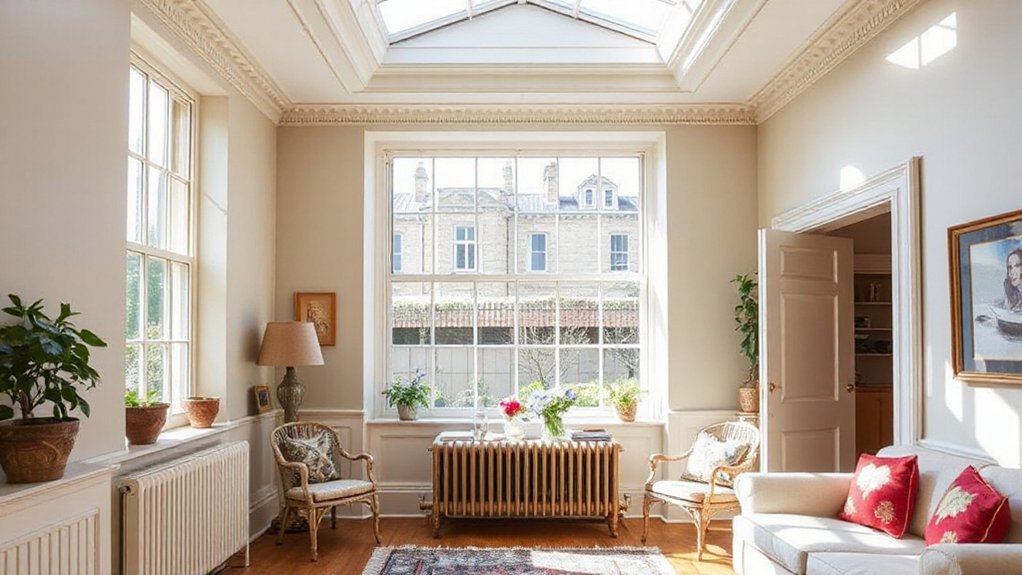
You preserve historic fabric first, prioritizing original materials and craftsmanship to guide every retrofit. Then you optimize insulation strategies to balance comfort with the building’s character, using discreet, performance-focused solutions. Finally, you modernize systems responsibly by upgrading efficiency without compromising heritage, coordinating with conservation guidelines and ongoing maintenance.
Preserve Historic Fabric
To preserve historic fabric during modern retrofits, start with a clear audit of original materials, detailing construction methods, finishes, and critical architectural features that define the townhouse’s character. You’ll map every element—from sash windows and plasterwork to cornices and floorboards—to establish preservation priorities aligned with Historic charm. Prioritize interventions that reinforce structure without compromising authenticity, using compatible materials and reversible techniques where possible. Document provenance, patination, and historic repairs to guide decisions, and engage specialists early for survey and restraint guidance. Embrace Sustainable practices by favoring durable, low-impact replacements and restoration over wholesale replacement. Apply precise workmanship standards, perform meticulous cleanups, and preserve patina as a design feature. Your approach protects character while enabling modern performance within responsible renovation discipline.
Optimize Insulation Strategies
Optimize insulation in a Georgian townhouse without compromising historic fabric by prioritizing airtightness and continuous protection around original assemblies. Begin with a targeted airtight envelope: seal penetrations, retrofit with mineral wool or aerogel where appropriate, and align gaps to existing sash and floor joints. Use a phased approach that minimizes disruption to historic surfaces, leveraging removable liners and reversible methods. Prioritize continuous insulation on lofts, cellars, and party walls, ensuring thermal bridges are eliminated at corners and around chimney breast recesses. Choose breathable, moisture-matured solutions to prevent damp. Integrate smart controls for ventilation that respond to occupancy and weather, reducing energy waste. Sustainably minded routines matter: Sustainable gardening supports microclimate benefits, and Eco friendly cleaning maintains materials without degradation. Maintain documentation for future preservation decisions.
Modernize Systems Responsibly
Modernize systems responsibly by integrating upgrades that respect historic fabric while delivering reliability and efficiency. You’ll balance performance with preservation, prioritizing reversible interventions and discreet installations that honor period detailing. Start with HVAC upgrades that use high-efficiency, heat-recovery designs and smart zoning to minimize disruption. Choose energy-efficient boilers, compact heat pumps, and targeted insulation upgrades that don’t compromise walls or plaster. Plan electrical modernization with braided cables, smart panels, and surge protection, all installed to maintain room proportions and ceiling heights. For aesthetics, align interior color schemes with original timber tones to avoid visual clashes. Consider garden landscaping as a backdrop to mechanical updates, ensuring external devices remain unobtrusive. 4 ideas below illustrate practical options:
- Reversible HVAC discreet enclosures
- Zoned smart controls
- Hidden-service electrical upgrades
- Low-profile outdoor units with screening
Ventilation, Noise Control, and Indoor Air Quality in Older Homes
Ventilation, noise control, and indoor air quality are critical in older Bath townhouses, where thick walls and historic windows can trap damp air and amplify street noise. You’ll prioritize balanced airflow through discreet mechanical ventilation with heat recovery to maintain warmth while exchanging stale air. Pair this with pressure testing to identify leaks around doors and sash windows, sealing where appropriate without compromising ventilation. For noise reduction, install decoupled, high-ety performance acoustic trays under flooring and use masonry detailing that dampens impact and external sound. Indoor plants act as a supplementary visual cue for air freshness, while choosing air filtration with appropriately rated filters helps capture particulates without overloading systems. Maintain routine upkeep, ensuring filters and seals remain effective.
Budgeting and Project Planning for Bath Georgian Renovations
After addressing ventilation, noise control, and indoor air quality, you’ll want a clear financial roadmap before touching a brick. You’ll map scope, costs, and timelines, then align them with your sustainability targets and local regulations. Budget with a contingency, and prioritize high-impact updates that boost energy efficiency and comfort. To stay on trend, pair precise interior color schemes with timeless Georgian detailing, and reserve funds for garden landscaping that enhances microclimates and accessibility. 4 key ideas follow:
1) Create a phased plan with milestones and go/no-go gates.
2) Build a transparent vendor and material shortlist, prioritizing recycled and certified options.
3) Allocate costs for permissions, surveys, and specialist contractors.
4) Track progress with weekly reviews and updated forecasts.
Frequently Asked Questions
How Can Daylighting Be Optimized Without Altering Georgian Window Geometry?
You’ll optimize daylighting by leveraging passive solar design and skylight integration, without altering window geometry; you’ll position interiors to maximize orientation, install high-contrast glazing, and use light shelves to bounce daylight deeper into rooms.
Which Era-Appropriate Materials Balance Eco-Credentials and Authenticity?
Certainly, era-appropriate materials balance eco-credentials and authenticity by prioritizing natural, durable choices; think timber, lime plaster, clay paints, and recycled bricks. Historical accuracy guides selection, while material durability ensures long-term performance and lower maintenance—you win sustainability, hands down.
What Tax Incentives Exist for Energy Upgrades in Bath-Listed Georgian Homes?
You can access Tax incentives and energy rebates for energy upgrades on Bath-listed Georgian homes, though eligibility varies. You’ll need advisory confirmation, but you typically qualify for grants, VAT relief, and incentive schemes when upgrades meet listed-building criteria.
How to Retrofit HVAC Without Compromising Ceiling Height and Plaster?
To retrofit HVAC without lowering ceilings, you install slim ducting, compact units, and ceiling‑mounted air handlers. You’ll pair smart thermostats with precise zoning, and use insulation materials that minimize bulk while preserving plaster aesthetics.
Are There Sustainable Landscaping Tweaks That Complement Interior Efficiency?
Yes—you implement native plantings, rainwater harvesting, and smart shade. You reduce runoff, thrive with drought-tolerant greens, and link garden design to interior efficiency, creating year-round climate resilience, curb appeal, and waterwise aesthetics that stay aligned with trends.
Conclusion
You can future-proof your Bath Georgian home without losing its soul. Prioritize airtight insulation, smart heating, authentic glazing, and sustainable materials that respect period features. Manage ventilation and noise for comfort, and plan with a retrofit mindset that minimizes waste. Stay budget-conscious and phased, because slow and steady wins the race. As the saying goes: measure twice, cut once—and you’ll preserve charm while gaining efficiency, lasting value, and a genuinely comfortable living space.
About the Author