
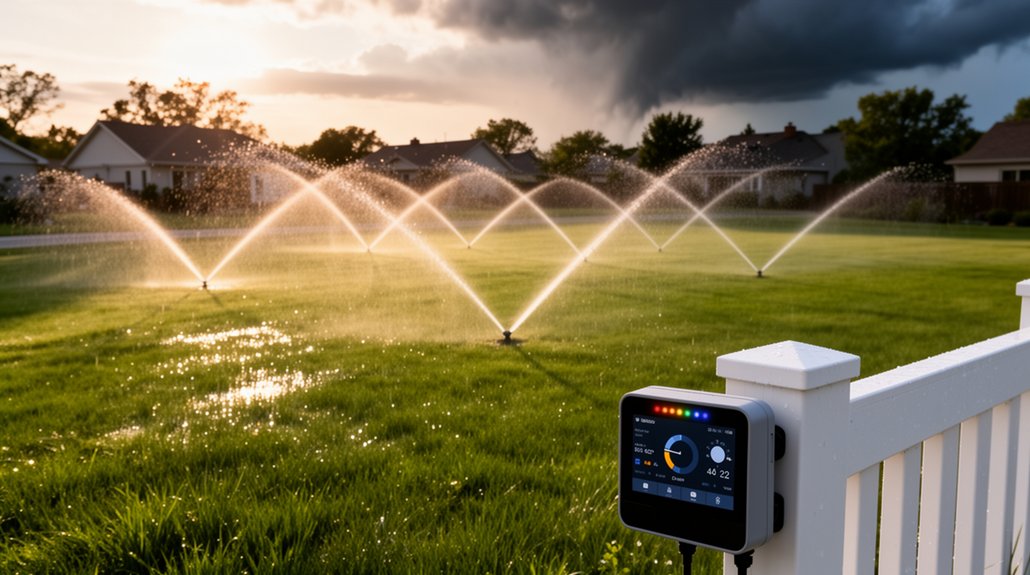
Smart irrigation uses weather forecasts and soil data to water your lawn only when needed, saving water and money while boosting turf health. Link a compatible controller to forecast sources, set ET- or rain-based schedules, and adjust runtimes for upcoming conditions. Consider rainfall, temp, humidity, and wind, plus soil moisture at different depths to avoid overwatering. Schedule changes by season and avoid watering after rain with forecast alerts. If you keep exploring, you’ll uncover more practical setup tips and templates.
Key Takeaways
- Use forecast-driven irrigation: adjust run times and days based on rain probability, temperature, humidity, and wind to avoid unnecessary watering.
- Link controllers to weather data: enable ET-based or rain-probability schedules and test with simulated forecast shifts.
- Pre-buffer after rain: postpone or reduce irrigation following rain events and rely on current soil moisture readings instead of forecasts alone.
- Schedule by soil moisture: irrigate when soil moisture is low, considering soil type (sand vs clay) and root depth for deeper, less frequent watering.
- Adapt seasonally: shorten cycles in spring, deepen watering in summer, reduce in fall, and minimize in winter to match turf growth and rainfall patterns.
What Smart Irrigation Is (and Why Forecasts Matter for Your Lawn)
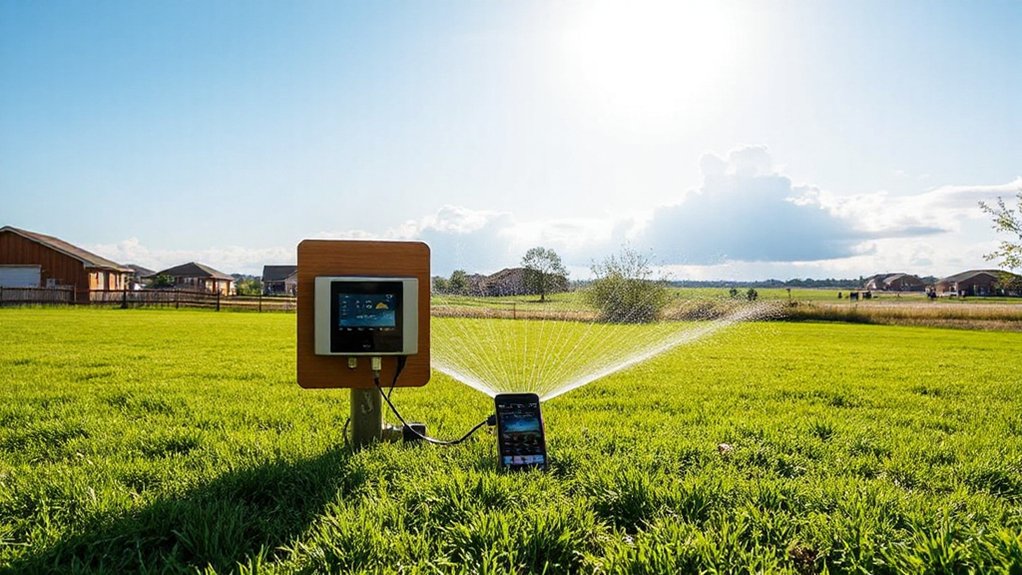
Smart irrigation uses sensors, weather data, and smart controllers to apply water only when your lawn needs it. You gain precise control over watering cycles, reducing waste and promoting uniform growth. This system interprets soil moisture, irrigation schedules, and forecast trends to decide when to run zones, how long, and with what frequency. By aligning irrigation with upcoming conditions, you protect turf health and conserve resources. You’ll notice improved lawn aesthetics through steady, balanced moisture delivery that avoids overwatering or drought stress. Garden compatibility matters: select zones by plant type, soil texture, and sun exposure to maximize efficiency. The approach emphasizes reliability and simplicity, enabling consistent results without manual oversight. In short, smart irrigation translates forecasts into actionable, on-demand watering decisions.
Weather Cues That Drive Irrigation: Rain, Temperature, and Humidity
Weather cues guide when you water: rain can preempt irrigation, while temperature and humidity set how quickly soil dries. With Rain-Based Scheduling, you’ll skip sprinkling after a storm and adjust for lingering soil moisture. Pair Temp and Humidity Cues with your plant needs to optimize efficiency and protect turf health.
Rain-Based Scheduling
How can you leverage rain to guide irrigation decisions? Rain-based scheduling uses forecasted and recent rainfall to prevent overwatering and conserve water. Start by noting inches of recent precipitation and soil moisture estimates from your irrigation controller or a simple moisture probe. If substantial rain is expected within 24 to 48 hours, skip irrigation or reduce cycle duration accordingly. After heavy rain, reassess lasting soil moisture before rewatering; drier soils rebound quickly, while compacted soils retain moisture unevenly. Track local rainfall probabilities to avoid unnecessary watering during storms. Rain also helps with pest prevention by maintaining healthy root zones, though avoid overwatering that promotes shallow roots or disease. Remember: consistent, modest applications protect soil structure, reduce soil compaction, and support uniform turf growth.
Temp and Humidity Cues
Temp and humidity directly shape how much and how often you should irrigate. When temps rise, soil dries faster, so you’ll need deeper, less frequent watering to prevent surface run-off and promote deep roots. Higher humidity slows evaporation but can foster fungal issues, so avoid overwatering and watch leaf moisture as a cue. Cooler air lowers plant demand, yet steady moisture remains essential during growth spurts. Track dew points and forecasted highs to adjust schedules, aiming for soil moisture that supports turf without saturating it. Lawn aesthetics benefit from consistent moisture without stress cycles, while Pest control improves when you avoid overly damp conditions that invite diseases. Use a deliberate, data-driven approach to sustain health and efficiency.
Quick Setup: Link Forecasts to Your Irrigation Controller
Link forecasts to your irrigation controller to automate watering based on upcoming weather. To get started, choose a compatible controller or a smart hub that supports weather integrations. Connect it to your Wi‑Fi, then create a basic schedule based on local evapotranspiration (ET) data or rain probability. Enable forecast-driven adjustments, setting thresholds for rain, wind, and temperature changes. Program irrigation zones with appropriate runtimes and seasons, emphasizing lawn aesthetics while avoiding overwatering. Verify that alerts and override options are active so you can pause schedules if conditions change. Test the setup by simulating a forecast shift and confirming the controller adapts within one or two cycles. Regularly review forecasts and adjust thresholds to maintain water conservation without stressing turf.
Soil Moisture Basics: When Weather Isn’t the Whole Story
Soil moisture often tells a truer story than weather forecasts alone: even with an accurate forecast, dry soil can sap plants while rainy days leave a surface that looks wet but doesn’t reach root zones. You’ll rely on soil moisture as a friend, not a stranger, because it reflects what’s happening underground. Understand that soil composition determines how fast water moves and how long it stays available. Sandy soils drain quickly, while clay retains moisture longer but can compact and limit root access. Aim to assess how deeply roots reach—Root depth matters for effective watering. Measure moisture at various depths to gauge true availability. Use this awareness to schedule irrigations that align with actual soil conditions, not just forecast expectations.
Forecast-Based Watering Rules: Cues, Thresholds, and Actions
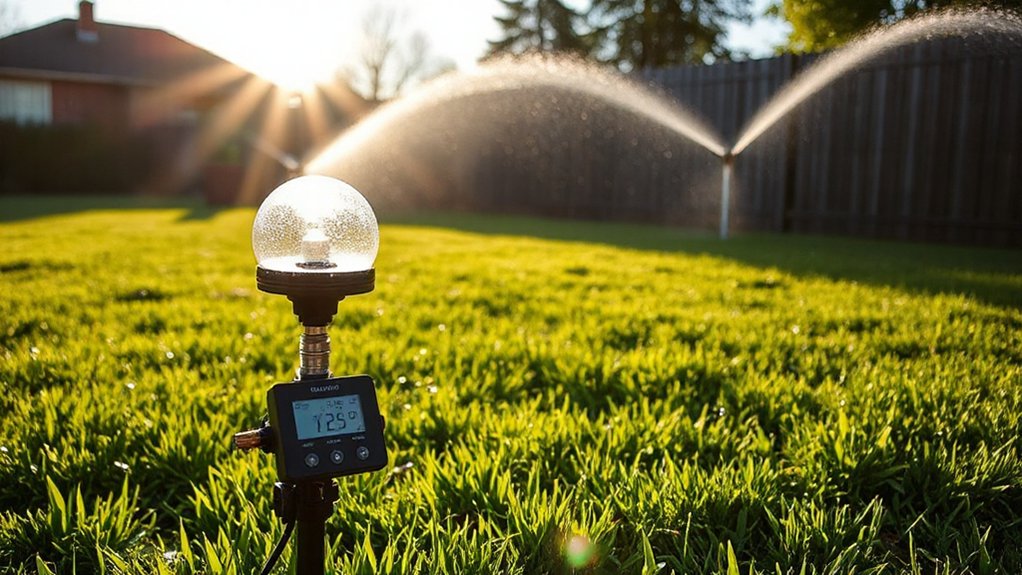
Forecast-based watering hinges on clear cues, thresholds, and concrete actions. You’ll monitor short- and mid-range forecasts for rain likelihood, temperature, and wind, then translate them into rules your system can execute. Cues include soil moisture readings, forecasted rainfall amounts, and evapotranspiration estimates. Thresholds specify when to irrigate—e.g., if rain probability stays below 40% for 48 hours and soil moisture falls under a target, trigger a cycle. Actions are precise: set irrigation duration, zone sequence, and runtime windows aligned with expected evapotranspiration. Weather prediction feeds timing, ensuring irrigation optimization without waste. Keep logs of events and adjust thresholds seasonally as conditions shift. This approach minimizes overwatering and maximizes turf health, delivering efficient, reliable water use.
Forecast Overrides for Storms and Heat Spells
When storms or heat spells threaten irrigation plans, implement clear overrides to protect turf and conserve water. You override automatic schedules when forecasted rainfall exceeds thresholds or heat indices spike for multiple days. In practice, suspend watering during rain events and shorten or skip cycles when soil moisture is already sufficient. Apply drought management principles by prioritizing deep, infrequent irrigation only after soil tests or historical rainfall patterns indicate demand remains elevated. Track residual soil moisture and local runoff risk before reactivating. Maintain records to refine overrides over time, learning from past storms and heat spells. This data informs future decisions and helps you meet water-saving goals without sacrificing turf quality.
- Override triggers based on rainfall and heat forecasts
- Use historical rainfall data to adjust timing
- Document outcomes for drought management planning
Seasonal Schedule Adjustments: Spring, Summer, Fall, Winter
As seasons shift, you’ll adjust watering to match spring growth and wetter periods, tightening or loosening schedules as needed. In spring, expect quicker root establishment and use shorter, more frequent runs; in summer, prioritize deeper, less frequent cycles to promote drought resilience. We’ll explore practical tweaks for spring, summer, fall, and winter to optimize water use while sustaining healthy landscapes.
Spring Schedule Tweaks
Spring is the moment to reset your irrigation schedule: as temperatures rise and plants wake up, you should incrementally adjust runtimes and frequencies to match growing needs. In spring, fine‑tune based on soil moisture and forecast accuracy, not calendar dates. Shorter, more frequent cycles support shallow roots, while avoiding runoffs in warming soils. Align adjustments with Garden design goals and pest control considerations to reduce plant stress and disease risk. Record changes and observe lawn response for two weeks, then refine.
- Increase frequency slightly as turf resumes growth, but keep total weekly water similar to late winter
- Match runtimes to soil moisture readings, prioritizing early morning sessions
- Integrate forecast alerts to avoid overwatering after rain events
Seasonal Watering Adjustments
Seasonal Watering Adjustments build on spring’s fine‑tuning by outlining how to adapt irrigation across the year. You’ll tailor schedules to seasonal needs, starting with lighter, more frequent cycles in spring and easing into deeper, less frequent applications in summer. As temperatures rise, adjust for evapotranspiration rates and rainfall gaps, maintaining soil moisture between 40 and 60 percent of field capacity. In fall, reduce irrigation while promoting root growth before dormancy, and in winter, minimize watering unless drought stress or heat waves occur. Integrate lawn fertilization and pest control plans with your schedule to prevent stress from rapid growth or disease. Use weather forecasts to pre-buffer irrigation, avoiding overwatering after rain events and aligning mowing cycles with moisture levels for best turf health.
Troubleshooting Forecast-Driven Irrigation: Common Issues and Fixes
Forecast-driven irrigation saves water and keeps crops on schedule, but it can misfire when forecasts are wrong or data gaps occur. You should diagnose issues quickly and implement fixes that restore reliability and conserve water. Common problems include inaccurate weather data impacting run times, sensor drift, and missed alerts. Prioritize sensor calibration to prevent data corruption from stale readings, and verify weather data accuracy with a secondary source when possible. Recheck zone valve wiring and controller logic after any forecast update, ensuring timers align with forecasted conditions. Maintain a simple testing routine after changes to confirm outputs match expected irrigation windows. Addressing data gaps with fallback schedules reduces risk of overwatering or underwatering.
- Verify sensor calibration and cross-check weather data accuracy with a trusted source
- Reconcile controller timing with forecast windows; fix wiring or logic as needed
- Establish a quick post-change test and adjust thresholds for alerts
Real-World Templates: Step-by-Step Schedules by Yard Type
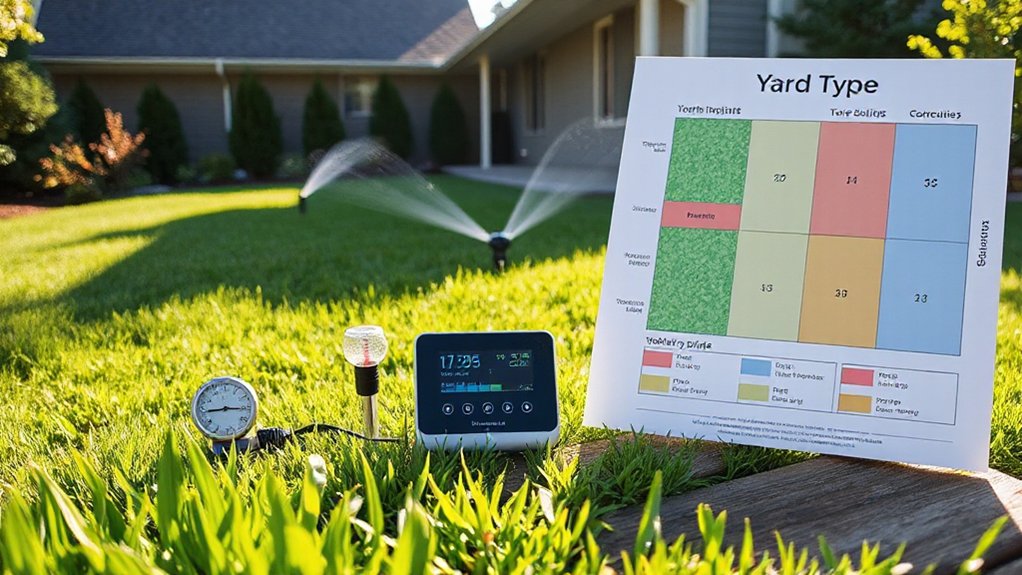
Real-world templates give you clear, step-by-step schedules tailored to yard type, so you can deploy irrigation quickly and confidently. In this section, you match templates to your lawn category—new turf, established turf, or mixed borders—then adapt for climate and soil depth. A by-type approach reduces guesswork: for sunny, high-evaporation lawns, schedule brief, frequent cycles; for shaded or cooler lawns, longer intervals with deeper soak. Use presets that balance groundwater use and root zone moisture, avoiding overwatering that promotes Lawn aesthetics issues and disease risk. Consider soil compaction: compacted soils require longer soak times to reach root zones, or prefer slower, deeper watering to encourage percolation. Always validate presets with a simple soil-moisture check after irrigation and adjust for forecast changes.
Frequently Asked Questions
How Accurate Are Forecast-Based Irrigation Suggestions?
Forecast-based suggestions are fairly accurate when your sensors are calibrated and data is properly integrated. You should perform sensor calibration regularly and verify data integration, since small errors compound; trust the system, but monitor forecasts and adjust irrigation accordingly.
Can I Override Forecasts With Manual Watering?
Yes, you can override forecasts with manual watering. Use manual control when it’s needed, aligning with user preferences, but guarantee alarms or auto-scheduling aren’t conflicting. Maintain water efficiency while prioritizing soil moisture and plant needs.
Do Weather Apps Differ in Irrigation Recommendations?
Yes, weather apps can differ in irrigation recommendations. Check soil moisture, forecast accuracy, and local evapotranspiration data; prioritize water conservation, adjust schedules based on rainfall predictions, and trust apps that calibrate to your yard’s soil conditions.
How Often Should Forecasts Be Updated for Schedules?
Forecast variability dictates updating forecasts daily during active seasons; otherwise, adjust weekly. You should refresh forecasts regularly, incorporating Seasonal adjustments, to keep schedules precise and efficient. You’ll adapt pruning and watering as storms roll in and recede.
What About Irrigation During Drought Restrictions?
During drought restrictions, you prioritize drought compliance and water conservation by irrigation only when permitted and use brief, soak-tested cycles, raising efficiency, mowing higher, and fixing leaks promptly to minimize waste while maintaining basic turf health.
Conclusion
This is the moment your sprinkler system stops wasting water and starts saving you real money, day after day. When forecasts drive every decision, your lawn looks flawless, rain sneaks past your toes, and your water bill drops like a stone. Don’t guess—trust the data, tune the thresholds, and let smart irrigation do the heavy lifting. If weather changes, your schedule changes faster. Precision, practicality, and zero waste—welcome to a greener, cheaper future.
About the Author