
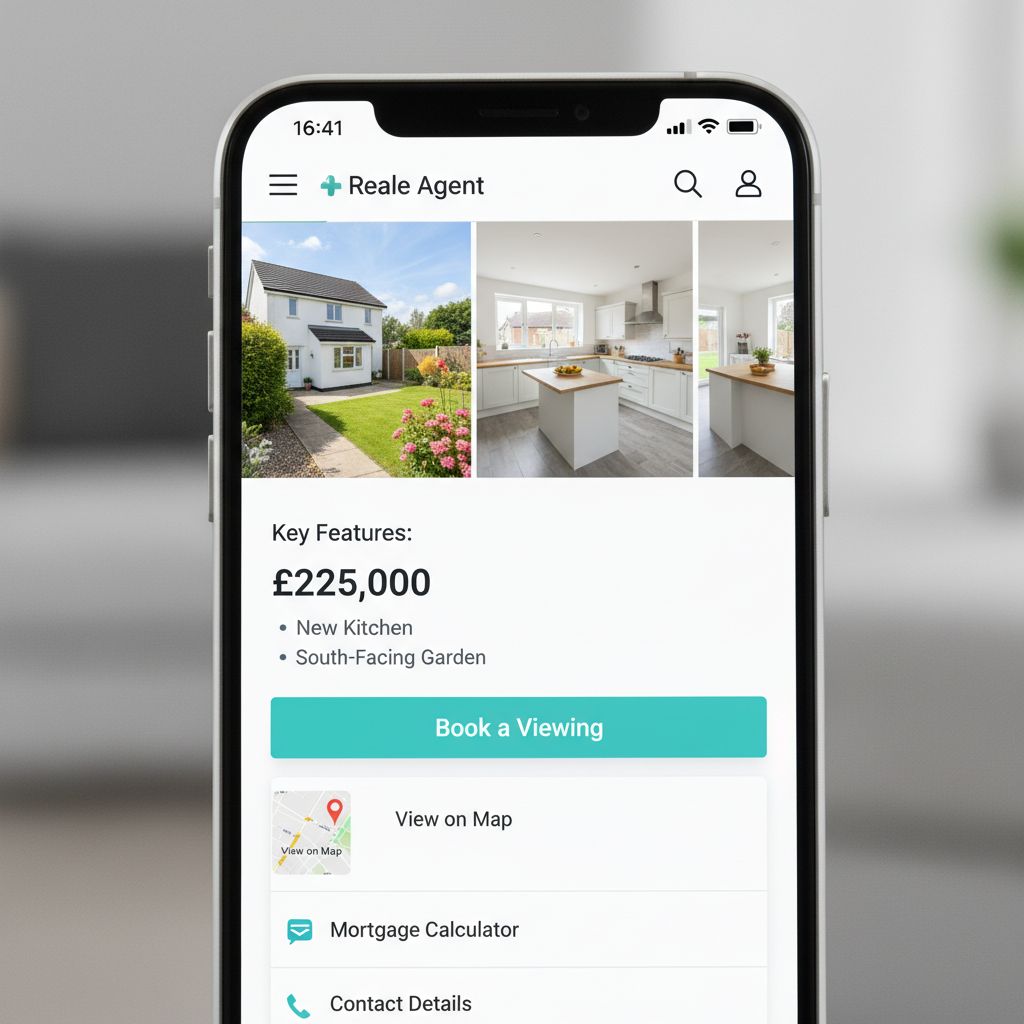
Buying your first home is one of the most significant financial decisions you will ever make — and one of the most confusing. Understanding what an estate agent actually does, who they work for, and how to get the best from them can make the difference between a smooth purchase and months of frustration.So let’s look at the role of estate agents in navigating the home buying process and understand this process.
Key Takeaways
- Estate agents primarily act for the seller, not the buyer — understanding this is the most important thing any first-time buyer can know before engaging with an agent.
- Agents can still be genuinely useful to buyers — they know the local market, can advise on realistic offer levels, and manage the communication chain that keeps a purchase progressing.
- Registering with multiple local agents increases your chances of hearing about suitable properties as soon as they come to market — or before they do.
- Viewing preparation matters — knowing what to look for and what questions to ask turns a viewing from a tour into a proper assessment of whether the property is right for you.
- Making an offer is a negotiation, not a formality — understanding how to make and structure an offer gives you a better chance of securing the property on the best possible terms.
- The period between accepted offer and exchange is when most sales fall through — staying proactive and maintaining regular communication with all parties is the most effective way to protect your purchase.
- You are entitled to know about all defects and material facts — sellers and their agents are legally required not to misrepresent the property, and you should raise any concerns through your solicitor.
Understanding Who the Estate Agent Works For
This is the single most important piece of context for any first-time buyer engaging with an estate agent — and the one most commonly misunderstood.
Estate agents in a residential sale are instructed by and act for the seller. Their legal duty of care runs to the seller. Their fee is paid by the seller. When an estate agent advises you on whether a property represents good value, whether your offer is likely to be accepted, or whether you should move quickly before someone else makes an offer, they are doing so as an agent whose interests and obligations are primarily aligned with achieving the best outcome for the person selling the property.
This does not mean estate agents are dishonest or that they cannot be helpful to buyers. Most are, in practice, helpful to both parties — a sale that falls through because a buyer was poorly supported costs the agent a fee, so there is a practical incentive to help both sides reach completion. But the alignment of interest is not neutral, and first-time buyers who understand this are better positioned to evaluate what an agent tells them.
The practical implication is that a first-time buyer should not treat an estate agent as an independent adviser on whether to buy a property or what to pay for it. For independent advice, buyers can engage a buying agent (a rare but available option who represents the buyer’s interests), instruct a surveyor, or take advice from their solicitor — all of whom have a duty of care to the buyer rather than the seller.
Getting on the Agent’s Radar Before You Are Ready to Offer
One of the most effective things a first-time buyer can do is register their requirements with multiple local agents before they are actively viewing — and in some cases before they have their mortgage in principle confirmed.
An agent with an actively managed buyer register will alert registered buyers when a new property matching their criteria comes to market — sometimes before the property appears on Rightmove or Zoopla, in a soft-launch or pre-portal approach designed to generate early interest. Being on these registers puts you in the position to hear about properties first and to book viewings before the listing is busy.
When registering, be specific about what you want. Agents deal with large numbers of registered buyers, and a vague description (“something in the area, three bedrooms, up to £350,000”) is harder to match accurately than a precise one (“three-bedroom terraced or semi-detached, parking, within the BB7 postcode, up to £350,000, must be within the catchment of [specific school]”). The more precisely you describe your requirements, the more useful the agent’s matching will be.
Confirm with each agent how they communicate new instructions to registered buyers — by email, by phone, or through a portal — and make sure they have your preferred contact details and method. An instruction that goes out by email to a buyer who has changed address and never gets a phone call may result in a missed opportunity.
Getting a Mortgage in Principle First
Before viewing seriously and certainly before making any offer, first-time buyers should have a mortgage in principle (MIP) — a conditional agreement from a lender indicating how much they are prepared to lend, based on an initial assessment of your income and credit history.
A mortgage in principle matters for several reasons:
It confirms your actual buying capacity, which prevents you from viewing and becoming attached to properties you cannot in practice afford.
Estate agents and sellers treat buyers with a mortgage in principle more seriously than unconfirmed buyers. When an offer is made, a confirmed MIP demonstrates that the buyer is in a genuine position to proceed — which matters particularly when the agent has a choice of multiple interested buyers to present to the seller.
It identifies any credit or income issues before you are emotionally committed to a specific property — allowing time to address them rather than discovering them at the point of an offer being accepted.
A mortgage in principle is not a guaranteed offer of lending — it is subject to a full assessment at the point of formal application. But it is the baseline credential that positions a first-time buyer as a serious participant in the market.
Making the Most of Viewings
Viewings are the buyer’s primary opportunity to assess the physical reality of a property against its online presentation — and to ask the questions that the listing does not answer.
Before the viewing, prepare a list of questions beyond the basics. What is included in the sale? How long have the current owners lived there and why are they selling? What are the neighbours like? Has the property ever flooded? Are there any disputes with neighbouring properties? What is the broadband speed? What are the council tax and utility costs? Are there any planned developments in the area?
These questions serve two purposes: they provide information that helps you assess the property, and they create an opportunity to observe how the agent responds. An agent who answers openly and specifically is easier to work with than one who deflects or provides vague assurances.
During the viewing, resist the temptation to make your decision in the first five minutes — either positively or negatively. Move through every room methodically. Check the condition of windows, doors, and sealant in bathrooms and kitchens. Look at the ceilings for signs of water damage or previous leaks. Check the boiler and ask about its age and service history. Open and close doors to assess fit. Look at the external walls for cracks, pointing, or damp. Turn on taps to check water pressure.
If you are seriously interested, request a second viewing at a different time of day. The light, the noise, and the feel of a property at 2pm on a Tuesday are different from the same property at 7pm on a Friday. A second viewing also allows you to look more carefully at the specific aspects that gave you pause in the first.
Take photographs (with the agent’s permission) for reference — it is easy to confuse details between multiple properties viewed in a short period, and photographs help maintain accurate recollection when you make your final decision.
Making an Offer
Making an offer on a property is a negotiation with an information asymmetry: the seller and their agent know more about the property’s history, the level of interest from other buyers, and the seller’s motivation than you do. Understanding this, and approaching the offer accordingly, improves your position.
Research the comparable market before making an offer. What have similar properties in the same road and surrounding streets actually sold for? This information is publicly available on the Land Registry and on Rightmove’s sold prices section. If you know that comparable properties have sold for £270,000–£285,000 and the asking price is £295,000, your offer strategy is better informed.
Consider your opening position. An opening offer at the full asking price in a busy market signals willingness to pay but removes negotiating headroom. An opening offer that is too low risks alienating the seller and making subsequent negotiation difficult. In most markets, an opening offer of 3–7% below asking price is a reasonable starting point — but the appropriate level depends on the specific property, its time on market, and the level of competing interest.

State your position clearly when making the offer. Agents will present your offer to the seller with context about your buying position. A first-time buyer with no chain, a mortgage in principle confirmed, and a solicitor instructed is in a stronger position than one who is unconfirmed and yet to appoint a solicitor. Make sure the agent knows and conveys your position accurately.
Do not bluff about competing offers or your financial position. Misrepresentations that come to light during the sale will damage trust and can complicate the transaction.
If your offer is rejected, ask the agent what the seller is looking for. Sometimes a refusal has a specific reason — the seller has a competing offer at a specific level, needs a specific completion timeline, or has a specific requirement in relation to fixtures. Understanding the seller’s real priorities occasionally reveals that the gap between positions is smaller than it appears.
The Period Between Offer Acceptance and Exchange
An accepted offer in England and Wales is not legally binding. Either party can withdraw before exchange of contracts without legal penalty. This vulnerability period — which typically lasts eight to sixteen weeks — is when most sales fall through, and it is where first-time buyers need to be most proactive.
Instruct your solicitor immediately on offer acceptance. Delay in conveyancing is one of the most common causes of sale collapse — problems that emerge late in the process are harder to manage than those identified and addressed early.
Commission your survey promptly. The survey is not just a mortgage requirement — it is your primary mechanism for understanding the physical condition of the property before you are legally committed. A RICS HomeBuyer Report is appropriate for most standard properties; a full structural survey provides more detail for older, unusual, or high-value properties.
Maintain regular contact with your solicitor. Conveyancing can stall at multiple points — waiting for search results, awaiting responses to enquiries, title issues requiring resolution. A buyer who checks in regularly and chases proactively is in a better position to identify and address delays than one who assumes it is being handled.
Keep in contact with the agent. The estate agent remains the hub of communication in the sale chain. If the agent is aware that you are engaged, proactive, and ready to proceed, they are more likely to communicate problems early and to advocate on your behalf if the seller becomes anxious about the pace of the transaction.
What the Agent Is Required to Tell You
Estate agents in England and Wales are subject to the Consumer Protection from Unfair Trading Regulations 2008, which prohibit misleading omissions — failing to provide material information that would affect a buyer’s decision. An agent who knows of a significant defect, a dispute, or a material fact that would influence a buyer’s decision, and who withholds that information, may be in breach of these regulations.
However, the primary mechanism for eliciting this information is the buyer’s solicitor’s enquiries and the seller’s Property Information Form — not the agent. Your solicitor will raise formal enquiries about the property’s condition, history, planning, boundaries, and any disputes. Any misleading answers to these enquiries from the seller may constitute misrepresentation, which can support a post-completion claim if loss results.
First-time buyers should read the seller’s Property Information Forms (provided through their solicitor) carefully, raise any questions or concerns in writing through the solicitor, and ensure they receive specific answers — not general assurances.
Working Effectively With the Agent: A Summary
The estate agent’s role in a first-time buyer’s purchase is most useful when it is understood clearly: they represent the seller, but they have a practical incentive to help the transaction complete. Used well, the agent is a source of local market intelligence, a channel for negotiation, and the key communication hub between all parties in the chain.
Used poorly — trusted as an independent adviser or treated with unnecessary suspicion — the same agent is either a source of one-sided information or an obstacle to effective communication. The first-time buyer who understands the agent’s position, engages with them professionally, asks good questions, and maintains their own independent advice through a solicitor and surveyor, is the buyer best placed to navigate the process successfully.
Buying your first home is genuinely complicated. The agents, solicitors, surveyors, and mortgage advisers around you all play specific roles in the process. Understanding those roles — and what each party’s interests and obligations are — is the most important preparation a first-time buyer can make before any of them become involved.
About the Author